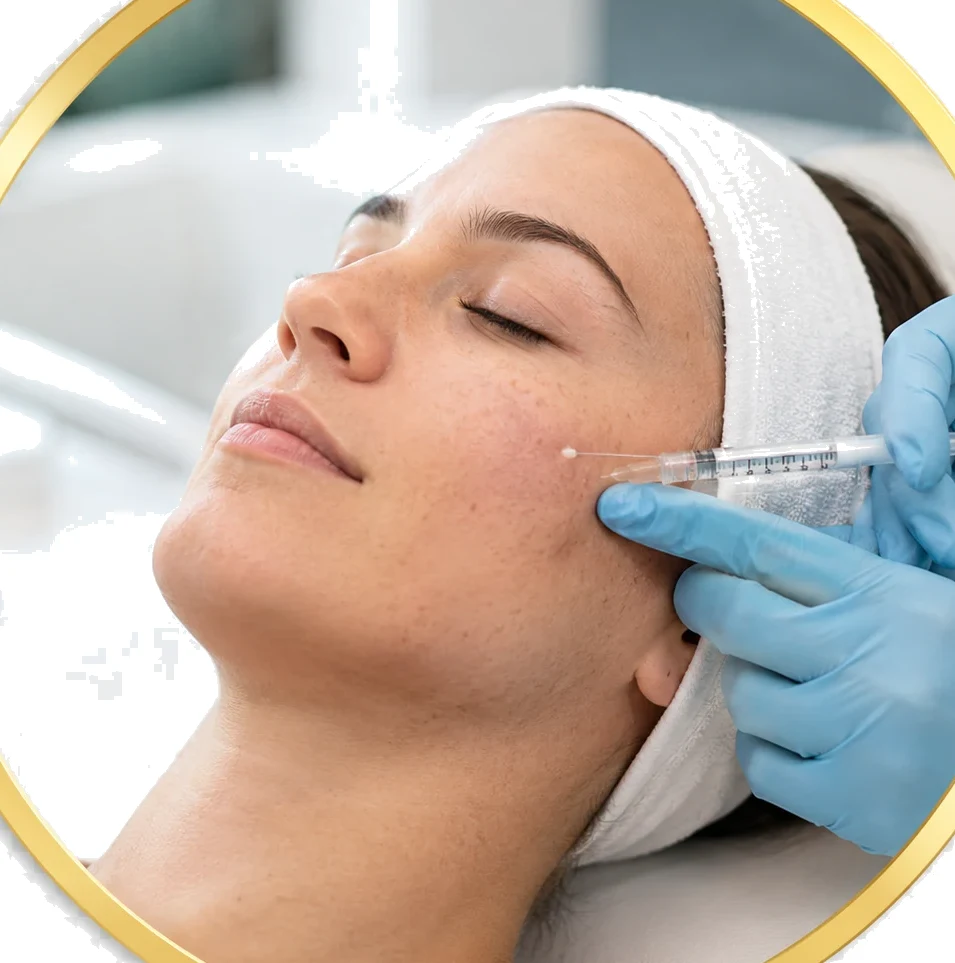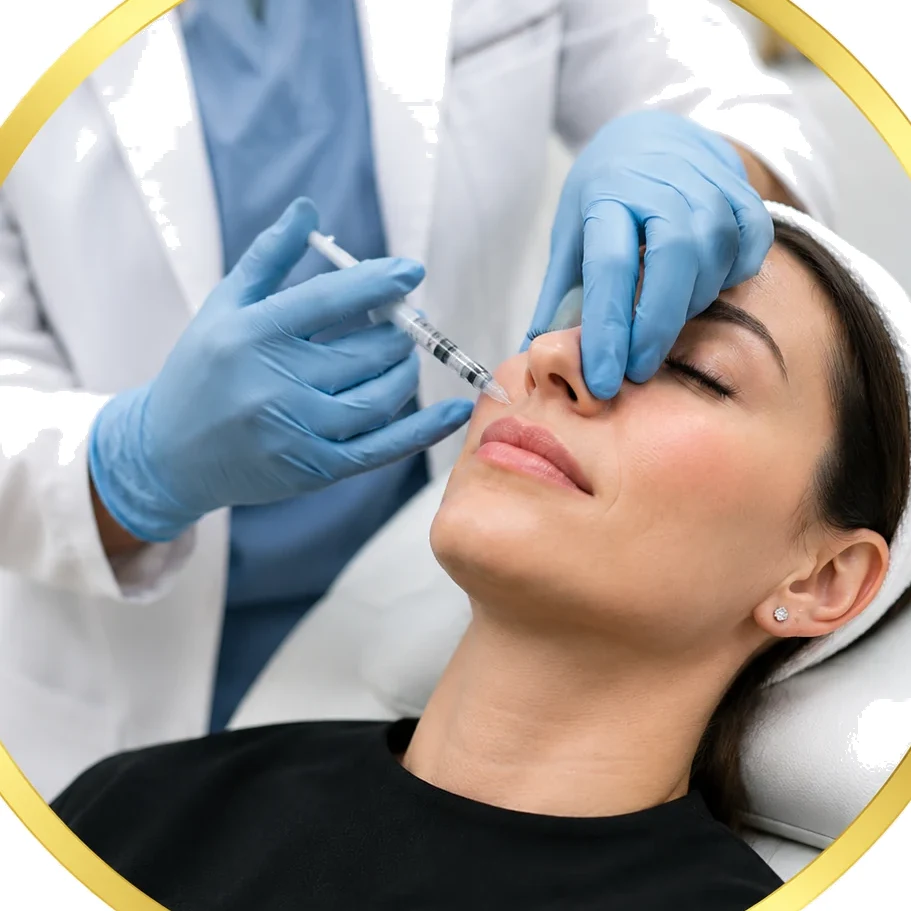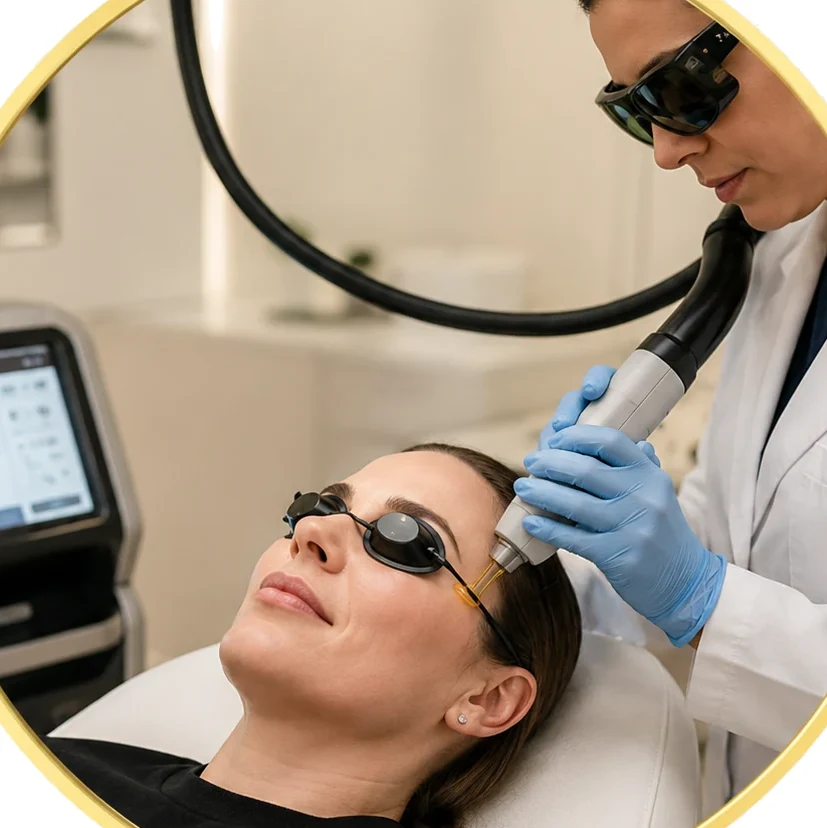

The main categories of botox alternatives are: topical actives (retinoids, peptides, spilanthol), energy-based devices (fractional lasers, radiofrequency, HIFU), minimally invasive procedures (microneedling, PRP, chemical peels, PDO threads), and injectables that are not Botox (dermal fillers, skin boosters, and alternative neurotoxins). If movement lines are your primary concern, a prescriber consultation is the right first step. For skin quality, hydration, and texture, non-toxin options often deliver meaningful results on their own.
Here is a quick orientation before you read further:
- Topical peptides and retinoids suit those who want a needle-free, preventive approach with consistent daily use
- Dermal fillers and skin boosters address volume loss and deep static lines, not muscle movement
- Microneedling, peels, and thread lifts target texture, collagen stimulation, and mild laxity
- Energy devices (RF, HIFU, fractional laser) remodel collagen and tighten skin without needles
- Alternative neurotoxins relax muscles like Botox but differ in onset, duration, and diffusion
Before pursuing any injectable or device-based treatment, a consultation with a qualified clinician is strongly recommended.
Pro Tip: Photograph your face in natural light before starting any treatment programme. Consistent reference photos are the most reliable way to track genuine improvement over weeks and months.
Table of Contents
- How Botox works and why it matters for choosing an alternative
- 1. Retinoids: the most evidence-backed topical option
- 2. Topical peptides and 'Notox' actives
- 3. Skin boosters and hyaluronic acid injectables
- 4. Dermal fillers for volume and static lines
- 5. Alternative neurotoxins (non-Botox neuromodulators)
- 6. Microneedling and PRP
- 7. Chemical peels
- 8. Laser resurfacing and light therapies
- 9. Radiofrequency, HIFU, and PDO thread lifts
- Side-by-side comparison of botox alternatives
- How to choose the right treatment for your skin concerns
- What the research says about efficacy and emerging options
- Key takeaways
- A clinic perspective on natural results and long-term skin health
- How Nexgen approaches botox alternatives in Cambridge
- Useful sources and further reading
How Botox works and why it matters for choosing an alternative
Botox relaxes muscles by blocking the neuromuscular signal that causes them to contract, which reduces the appearance of dynamic expression lines. The active ingredient, botulinum toxin type A, prevents acetylcholine release at the neuromuscular junction. The result is temporary muscle relaxation lasting roughly three to four months.
The distinction between dynamic and static wrinkles is the most useful framework for choosing any alternative:
- Dynamic wrinkles form during facial movement (frowning, squinting, smiling). Neurotoxins address these directly; topicals and devices do not replicate that mechanism.
- Static wrinkles are visible at rest and result from collagen loss, volume depletion, and skin thinning. Fillers, skin boosters, lasers, and retinoids all target these.
- Skin quality issues (texture, dullness, pore size, pigmentation) respond well to chemical peels, microneedling, and energy devices.
Skin boosters and biostimulators are regenerative tools that improve the dermal matrix. They are not direct substitutes for neurotoxin injections, and managing that expectation from the outset leads to better outcomes.
1. Retinoids: the most evidence-backed topical option
Retinoids (retinol, retinal, and prescription tretinoin) are the most clinically validated topical actives for reducing fine lines and improving skin texture. They work by accelerating cell turnover and stimulating collagen synthesis in the dermis.
Dermatologists consistently recommend a daily retinoid routine paired with SPF as a foundational prevention strategy, particularly for patients who want to delay or reduce their reliance on injectables. Tretinoin, available on prescription in the UK, produces the most pronounced results. Over-the-counter retinol and retinal are slower-acting but well tolerated by most skin types.
Expect a minimum of 12 weeks before visible improvement in fine lines. Redness and flaking are common in the first four to six weeks. Retinoids do not relax muscles, so they will not address forehead lines caused by repeated expression, but they do meaningfully improve static lines and overall skin quality.
Typical UK cost: £20–£120 per month depending on formulation (OTC vs. prescription).
2. Topical peptides and 'Notox' actives
Peptides such as Argireline (acetyl hexapeptide-8) and Snap-8 interact with the SNARE protein complex, which is the same pathway neurotoxins disrupt, producing a mild, localised muscle-relaxing effect when applied topically. Clinical studies report wrinkle depth reductions of roughly 30–49% for Argireline and up to approximately 38% for Snap-8 over 28 days in some trials, though penetration and study quality vary considerably across products.
Spilanthol, extracted from the Spilanthes acmella plant and often marketed as 'biobotox', produces a fast-acting tingling sensation and mild muscle relaxation. It is increasingly incorporated into professional topical blends, but its depth of penetration limits clinical parity with injected neurotoxins.
A botanical worth noting: topical Zanthoxylum piperitum extract improved lateral canthal lines by approximately 11–14% in human trials, with a modest synergistic improvement when combined with acetyl hexapeptide-8. These are real but modest effects.
The honest summary: topical peptides improve skin quality and offer mild wrinkle-softening, but they cannot reproduce the muscle paralysis of an injected neurotoxin. Formulation quality matters enormously. Clinic-grade peptide serums, particularly those delivered via microneedling, outperform standard over-the-counter products because absorption is the limiting factor.
3. Skin boosters and hyaluronic acid injectables
Skin boosters are injectable hyaluronic acid preparations designed to hydrate the dermis deeply and stimulate collagen production. Unlike dermal fillers, they are not volumising agents. They improve skin quality, radiance, and fine-line appearance by restoring the dermal matrix from within.
Skin boosters typically require an initial course of two to three sessions spaced four weeks apart, followed by maintenance every three to six months. Results include improved hydration, softer fine lines, and a more even skin tone. They do not address dynamic wrinkles or significant volume loss.
Biostimulating injectables (amino-acid cocktails, polynucleotides, and collagen-stimulating agents) work similarly but focus on triggering the skin's own regenerative response rather than adding hyaluronic acid directly. Both categories are regenerative rather than neuromodulatory.
Typical UK cost: £200–£500 per session depending on product and clinic.
4. Dermal fillers for volume and static lines
Dermal fillers, most commonly hyaluronic acid-based, restore volume lost through ageing and soften static lines that are visible at rest. They are the appropriate injectable choice when the concern is nasolabial folds, under-eye hollows, lip thinning, or cheek deflation, not expression lines.
Results are immediate and typically last 9–18 months depending on the product, area treated, and individual metabolism. Hyaluronic acid fillers carry the advantage of reversibility: hyaluronidase can dissolve them if the result is unsatisfactory or a complication arises.
In the UK, dermal fillers are now classified as prescription-only procedures under the Health and Care Act 2022. Only a registered healthcare professional (doctor, dentist, nurse prescriber, or pharmacist prescriber) may administer them legally. Checking your practitioner's registration with the General Medical Council, Nursing and Midwifery Council, or General Dental Council is a non-negotiable step before booking.
Typical UK cost: £250–£700 per syringe. Explore the range of injectable options available at medically led clinics.
5. Alternative neurotoxins (non-Botox neuromodulators)
Several botulinum toxin type A products are licensed and used in the UK beyond the Botox brand. These include Dysport, Xeomin, and others, each differing in formulation, diffusion profile, and unit potency. Clinical data shows that most type A products produce comparable efficacy in practice, though diffusion characteristics vary and units are not interchangeable between products.
Daxxify, distinguished by its peptide excipient, has shown a longer median duration in glabellar line studies compared with standard formulations. It is not yet widely available in the UK but represents the direction of next-generation neuromodulator development.
For patients who have experienced suboptimal results with one neurotoxin product, switching formulations under the guidance of an experienced prescriber is a legitimate clinical option. The mechanism is the same; the practical differences lie in onset speed, spread, and duration.
6. Microneedling and PRP
Microneedling uses fine needles to create controlled micro-injuries in the skin, triggering a wound-healing response that produces new collagen and elastin. It is one of the most cost-effective treatments for improving skin texture, fine lines, and mild laxity. Practitioners consistently rate it highly for its versatility and its ability to enhance the delivery of topical actives applied immediately after treatment.
Adding platelet-rich plasma (PRP) to a microneedling session amplifies the regenerative stimulus. PRP is derived from the patient's own blood, centrifuged to concentrate growth factors, and applied to the skin during or after needling. The combination is particularly effective for skin quality and early signs of ageing.
A standard course is three to four sessions spaced four to six weeks apart. Redness and mild swelling resolve within 24–72 hours for most patients. Results build gradually over three to six months as new collagen matures.
Typical UK cost: £150–£400 per session; PRP add-on typically £100–£200 extra.
Pro Tip: Avoid retinoids, AHAs, and active exfoliants for at least five days before a microneedling session. Compromised skin barrier increases the risk of irritation and post-inflammatory pigmentation.
7. Chemical peels
Chemical peels remove the outer layers of skin using acids (glycolic, lactic, TCA, mandelic, or enzyme-based) to accelerate cell turnover, improve pigmentation, and soften fine lines. The depth of the peel determines both the result and the recovery time.
- Superficial peels (glycolic, enzyme): minimal downtime, suitable for all skin types, best for glow and mild texture improvement. Repeat monthly.
- Medium peels (TCA 20–35%): address moderate fine lines, sun damage, and uneven tone. Expect five to seven days of peeling and redness.
- Deep peels: significant downtime and risk; performed by medical professionals only; rarely used now given the availability of fractional lasers.
Darker skin phototypes should approach TCA peels with caution due to the risk of post-inflammatory hyperpigmentation (PIH). A patch test and a clinician assessment are advisable before any medium or deep peel.
Typical UK cost: £60–£300 per session depending on depth and clinic.
8. Laser resurfacing and light therapies
Fractional lasers (ablative and non-ablative), IPL (intense pulsed light), and other light-based devices remodel collagen and improve skin texture, pigmentation, and mild static wrinkles. They do not relax muscles, so they are not a substitute for neurotoxins in treating dynamic lines.
- Non-ablative fractional lasers (e.g., 1927nm thulium, 1550nm erbium): minimal downtime (two to five days of redness), suitable for texture and pigmentation, require a course of three to five sessions.
- Ablative fractional lasers (CO₂, erbium): more significant resurfacing, seven to fourteen days' downtime, stronger results for deeper lines and skin laxity.
- IPL: targets pigmentation and redness; not primarily a wrinkle treatment but improves overall skin quality.
Energy-based devices carry a higher risk of PIH in Fitzpatrick skin types IV–VI. Modified protocols, longer wavelengths, and appropriate cooling reduce but do not eliminate this risk. A thorough skin assessment before treatment is non-negotiable.
Typical UK cost: £150–£800 per session depending on device and area.
9. Radiofrequency, HIFU, and PDO thread lifts
Radiofrequency (RF) and high-intensity focused ultrasound (HIFU) deliver thermal energy to the deeper layers of the skin and superficial musculoaponeurotic system (SMAS), stimulating collagen contraction and new collagen formation. Both are used for skin tightening and mild lifting without surgery.
RF is generally well tolerated across skin types. HIFU reaches deeper tissue planes and can produce more pronounced lifting in the mid-face and neck. Results develop over two to three months as collagen remodels and typically last 12–18 months. A single annual session is the usual maintenance plan.
PDO thread lifts offer a different mechanism: absorbable polydioxanone threads are inserted under the skin to provide immediate mechanical lift and stimulate collagen along the thread tract. They suit patients with mild to moderate laxity who want a visible lift without surgery. Results last 12–18 months as threads dissolve gradually.
Typical UK cost: RF £200–£600; HIFU £400–£1,200; PDO threads £500–£1,500 depending on area and thread count.
Side-by-side comparison of botox alternatives
| Treatment category | What it treats best | Downtime | Duration of effect | Sessions needed | Typical UK cost | Invasiveness | Evidence level |
|---|---|---|---|---|---|---|---|
| Topical retinoids | Fine lines, texture, collagen loss | None | Ongoing (daily use) | Continuous | £20–£120/month | Needle-free | Strong (long-term data) |
| Topical peptides / spilanthol | Mild dynamic lines, skin quality | None | Ongoing | Continuous | £30–£150/month | Needle-free | Moderate (variable studies) |
| Skin boosters (HA) | Hydration, fine lines, skin quality | Minimal (24 hrs) | 3–6 months | 2–3 initial + maintenance | £200–£500/session | Injectable | Good (clinical use) |
| Dermal fillers | Volume loss, static lines | Minimal (24–72 hrs) | 9–18 months | 1–2 | £250–£700/syringe | Injectable | Strong |
| Alternative neurotoxins | Dynamic expression lines | Minimal | 3–6 months | 1 per cycle | £150–£400/area | Injectable | Strong |
| Microneedling / PRP | Texture, fine lines, collagen | 24–72 hrs | 6–12 months | 3–4 | £150–£600/session | Minimally invasive | Good |
| Chemical peels | Pigmentation, texture, fine lines | up to 7 days | 1–3 months | 3–6 | £60–£300/session | Minimally invasive | Good |
| Laser / IPL | Texture, pigmentation, mild lines | 2–14 days | 12–24 months | 1–5 | £150–£800/session | Device-based | Strong |
| RF / HIFU / PDO threads | Skin laxity, lifting, tightening | Minimal–moderate | 12–18 months | 1–2 | £200–£1,500 | Device / minimally invasive | Good |
How to choose the right treatment for your skin concerns
Match the treatment to the problem. If your primary concern is forehead lines that appear only when you raise your brows, a neurotoxin is the most direct solution. If you want to improve skin quality, hydration, and fine lines at rest, non-toxin options are often sufficient and sometimes preferable.
Questions to ask at any consultation:
- What is your prescribing qualification and registration number?
- How many times have you performed this specific treatment?
- Can you show me before-and-after photographs from your own patients?
- What are the realistic outcomes for my skin type and concern?
- What is your emergency protocol if a complication occurs?
- Is the product you are using licensed for use in the UK?
Red flags to watch for:
- Clinics offering results or dramatic before-and-after claims
- No formal consent process or medical history review
- Prices significantly below the UK market average (often indicates unlicensed products)
- Practitioners unable to confirm their regulatory registration
- Treatments offered without a face-to-face or video assessment
Under UK law, botulinum toxin and dermal fillers are prescription-only medicines. Only a registered prescriber may legally administer them. The MHRA regulates the licensing of these products; the Care Quality Commission (CQC) oversees clinic registration in England. Always verify both.
Pro Tip: Bring a list of your current medications and any supplements to your consultation. Several common supplements (fish oil, vitamin E, aspirin) increase bruising risk with injectables and may affect your treatment plan.
What the research says about efficacy and emerging options
Evidence is strongest for injectables (neurotoxins and fillers) and energy-based devices. Topical peptides show promising, modest effects that depend heavily on formulation and delivery method.
Key findings from the published literature:
- Argireline studies report wrinkle depth reductions of approximately 30–49% in some trials; Snap-8 showed up to approximately 38% reduction over 28 days in one study. Both figures reflect optimal conditions and should not be taken as typical consumer-product outcomes.
- Botanical actives such as Zanthoxylum piperitum improved lateral canthal lines by approximately 11–14% in human trials, with modest synergistic benefit alongside acetyl hexapeptide-8.
- Combined approaches (microneedling plus peptide serums or PRP) consistently outperform single treatments because they address multiple ageing mechanisms simultaneously and improve topical delivery.
- Most topical botulinum toxin-like formulations remain early-stage. Peer-reviewed reviews note that SNARE-complex peptides have a plausible mechanism but limited large-scale clinical validation across the product space.
The area attracting most research interest is transdermal delivery: formulation carriers, microneedling-assisted absorption, and nanoparticle encapsulation are all being investigated as ways to close the gap between topical and injectable outcomes. For now, the clinician-led approach remains non-negotiable for anyone seeking predictable, measurable results.
Key takeaways
The most effective approach to reducing wrinkles without Botox is to match the treatment category to your specific concern: muscle movement, volume loss, or skin quality.
| Point | Details |
|---|---|
| Match treatment to wrinkle type | Dynamic lines need neurotoxins; static lines and texture respond to fillers, peels, lasers, and retinoids. |
| Topical peptides offer modest benefits | Argireline (acetyl hexapeptide-8) shows approximately 30–49% wrinkle reduction, and Snap-8 up to 38% reduction in some trials, but formulation quality determines real-world results. |
| Combined protocols outperform single treatments | Microneedling plus peptides or PRP targets multiple ageing mechanisms and improves topical absorption. |
| UK prescriber credentials are non-negotiable | Botulinum toxin and fillers are prescription-only in the UK; always verify GMC, NMC, or GDC registration. |
| Nexgen offers a structured assessment pathway | Nexgen's AI skin analysis and clinical consultation identify the right combination of treatments for your skin type and goals. |
A clinic perspective on natural results and long-term skin health
The patients who achieve the most satisfying outcomes are rarely those who arrive seeking a single treatment. They are the ones who understand that skin ageing is a multi-factorial process and are open to a plan that addresses it on several levels at once.
At Nexgen, the approach is to start with an honest assessment of what is driving the concern: is it muscle movement, volume loss, skin quality, or a combination? A 35-year-old with early dynamic lines and good skin quality needs a very different plan from a 52-year-old with static lines, mild laxity, and pigmentation. Applying the same protocol to both would be a clinical misstep.
The 'Notox' trend has genuine value in shifting the conversation toward prevention and skin health. A consistent retinoid and SPF regimen, combined with periodic skin booster sessions or microneedling, can preserve skin quality significantly and reduce the frequency of injectable treatments over time. That is not a compromise; for many patients, it is the better long-term strategy.
What concerns us clinically is the proliferation of at-home devices and unregulated topical products making claims that exceed their evidence base. Patients deserve clear, honest information about what each treatment can and cannot do. That is the standard we hold ourselves to.
How Nexgen approaches botox alternatives in Cambridge
Choosing between a retinoid programme, skin boosters, microneedling, and energy devices is genuinely complex, and the right answer depends on your skin's specific biology, not a generic protocol. Nexgen's approach starts with AI-powered skin diagnostics that map your skin's condition before a single treatment decision is made.
From that baseline, a clinician builds a personalised plan that may combine professional-grade topicals, skin boosters, microneedling, or device-based treatments into one of Nexgen's curated treatment programmes. The clinic's 98% patient satisfaction rate reflects the value of that structured, evidence-led process over guesswork.
If you are ready to understand exactly which treatments suit your skin and your goals, book a consultation at Nexgen in Cambridge. A clinical assessment takes the uncertainty out of the decision entirely.
Useful sources and further reading
For anyone who wants to go deeper into the evidence or verify UK regulatory requirements, these are the most authoritative starting points:
- MHRA (Medicines and Healthcare products Regulatory Agency): The UK body responsible for licensing botulinum toxin products and medical devices used in aesthetic treatments. Check here for product licensing status.
- DailyMed (NIH): US prescribing information for botulinum toxin products; useful for understanding formulation differences and clinical pharmacology.
- CDC: Botulism overview: Background on botulinum toxin's mechanism and safety profile from a primary public health source.
- MDPI Cosmetics: Peptides as Botox alternatives: Peer-reviewed review of topical peptide mechanisms and clinical evidence, including Argireline and Snap-8 data.
- Nature Scientific Reports: Zanthoxylum piperitum topical study: Human trials on the effects of Zanthoxylum piperitum extract on skin quality.