
TL;DR:
- Facial balancing with fillers is a proportion-led approach that restores natural harmony across the face rather than treating features in isolation. It involves staged injections guided by clinical analysis, with safety protocols and AI diagnostics supporting natural, balanced results. The procedure is best suited for adults with mild to moderate aging signs, performed by GMC-registered clinicians in regulated clinics.
Facial balancing with fillers is a full-face, proportion-led injectable approach that restores structural support and natural harmony across multiple facial zones rather than treating isolated features in isolation. If you are considering this treatment, the clearest next step is to book a medically supervised consultation with a GMC-registered clinician at a clinic such as Nexgen Clinic, where emergency vascular complication protocols are documented and in place. Nexgen Clinic reports a high patient satisfaction rate across its aesthetic programmes, which reflects the value of combining clinical expertise with personalised planning.
Table of Contents
- What does facial balancing with fillers actually mean?
- Who is a good candidate for facial balancing?
- Which areas and filler types does a balancing plan cover?
- What happens during a facial balancing appointment?
- What are the safety risks and how are they managed in the UK?
- How do you choose the right UK clinic and practitioner?
- How does AI-enhanced assessment improve your treatment plan?
- What does facial balancing cost in the UK?
- Key takeaways
- A clinician's perspective on what facial balancing really delivers
- Nexgen Clinic's facial balancing programmes
- Useful sources
- FAQ
What does facial balancing with fillers actually mean?
Facial balancing is a philosophy as much as a technique. Rather than asking "which line bothers you?", a practitioner assesses the face in thirds — the relationship between the brow and upper face, the midface and cheeks, and the lower face including chin and jaw. The goal is to restore natural proportion across those zones, not to create a new identity.
The core goals are:
- Natural harmony — results that read as "rested and refined" rather than treated
- Structural support — replacing volume lost to ageing rather than simply filling lines
- Preserved animation — maintaining natural movement and expression
- Proportional restraint — avoiding overfilling, which creates new imbalances
This differs from a single-area lip or cheek appointment. It also differs from a liquid facelift, which tends to focus on lifting effect alone. Facial balancing considers the whole face as a system, selecting injection sites based on how each area relates to the others.
Pro Tip: Bring photographs of yourself from 5–10 years ago to your consultation. They show your baseline anatomy and ageing pattern far more usefully than a celebrity reference, helping your clinician restore your unique balance rather than replicate someone else's features.
Who is a good candidate for facial balancing?
Good candidates are adults with mild-to-moderate volume loss, proportion concerns, or visible asymmetry who want subtle, non-surgical refinement. The treatment tends to be most effective for patients in their thirties onwards who are beginning to notice structural changes from ageing.
Fillers have clear limits. They cannot permanently tighten loose skin, and more product is not always better. When skin laxity dominates the presentation, regenerative skin treatments are often the wiser first step. Marked structural deficits may require surgical options such as a facelift or implants.
Filler is a medical implant placed near blood vessels and delicate structures. Serious complications, including vascular occlusion and, very rarely, vision loss, can occur. These events require immediate clinical management by a medically qualified practitioner with access to hyaluronidase and emergency escalation pathways. Choosing a clinician on price alone is not a safe basis for this decision.
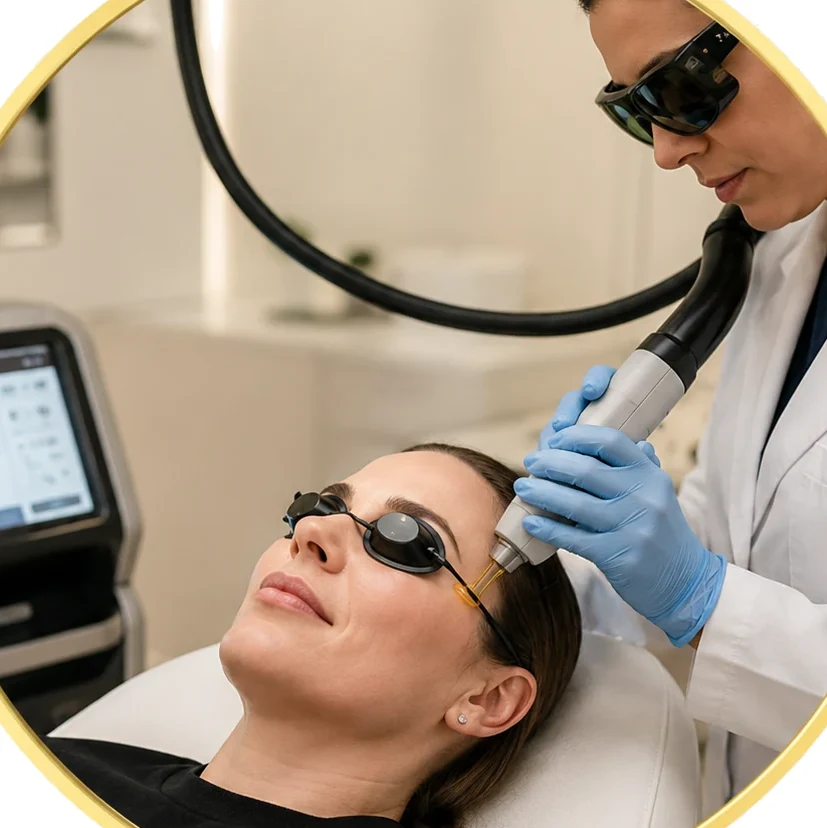
When tissue quality is the limiting factor, advanced facial treatments such as peels, lasers, or skin boosters may be recommended before structural filler to avoid a heavy or overfilled appearance.
Which areas and filler types does a balancing plan cover?
Most facial balancing plans prioritise temples, cheeks and midface, chin, and jawline, with selective treatment of tear troughs, nasolabial grooves, and lips as the individual assessment requires. Hyaluronic acid fillers are the most commonly used products because they integrate with tissue and can be dissolved if necessary.
| Treatment area | Goal | Filler property needed |
|---|---|---|
| Temples | Restore upper-face volume and frame | Firm, moderate depth |
| Cheeks / midface | Structural lift and projection | High G' (firmer) for deep support |
| Chin | Projection, length, symmetry | Firm, precise placement |
| Jawline | Definition and lower-face balance | Firm, moderate-to-high G' |
| Tear troughs | Reduce shadowing | Soft, superficial placement |
| Lips | Volume, symmetry, border definition | Soft, flexible product |
Neuromodulators (botulinum toxin) are often used alongside fillers to shape muscle activity and refine proportion. Skin boosters and Profhilo-style therapies address tissue quality when laxity or dehydration is present. Combining modalities typically produces better results than fillers alone when skin quality is a concern.
What happens during a facial balancing appointment?
A full-face balancing session follows a structured sequence. Here is the typical timeline from first contact to settled results:
- Consultation and facial analysis — medical history, skin assessment, facial mapping, and consent documentation
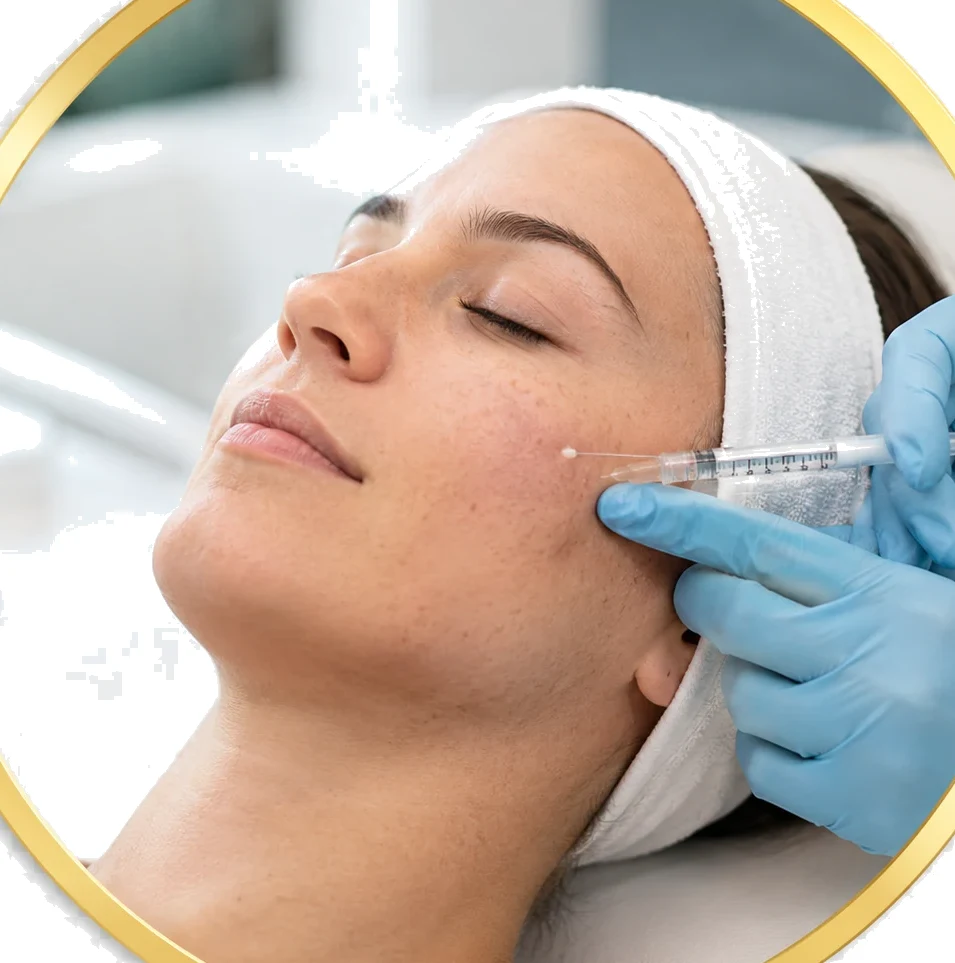
- Treatment day (30–90 minutes) — staged injections with topical or local anaesthesia, paced to allow assessment between zones
- First 48–72 hours — initial swelling and possible bruising; avoid strenuous exercise and direct heat
- Two to four weeks — product settles and integrates; final proportions become visible
- Review appointment — assessment of balance, touch-up if indicated
- Maintenance (every 9–18 months typically) — repeat sessions to sustain results as the product gradually metabolises
Spreading treatment across staged sessions, rather than attempting high-volume correction in a single visit, reduces vascular risk and allows tissues to adapt. A conservative, staged approach consistently produces more natural outcomes than single-session high-volume plans.
What are the safety risks and how are they managed in the UK?
Fillers are generally safe when performed by clinicians trained to recognise and manage complications, but rare serious events can and do occur. Understanding the risk profile is part of informed consent.
| Risk category | Examples | Frequency |
|---|---|---|
| Common | Swelling, bruising, redness | Very common, usually resolves within days |
| Less common | Nodules, localised infection, asymmetry | Uncommon with skilled technique |
| Serious | Vascular occlusion, skin necrosis, vision loss | Rare but requires immediate intervention |
Statistic: Nexgen Clinic reports a high patient satisfaction rate, reflecting the importance of medically supervised care and thorough pre-treatment planning.
Vascular occlusion occurs when filler inadvertently compresses or enters a blood vessel, restricting blood supply to tissue. Early recognition — blanching, pain, or mottling — followed by immediate hyaluronidase injection and escalation to A&E or ophthalmology is the required response. UK-trained doctors hold prescribing authority for hyaluronidase and receive foundation acute care training, making them better placed to manage these events than non-medically qualified injectors. Regulated premises, documented emergency protocols, and long-term complication management by medically qualified staff are non-negotiable requirements.
How do you choose the right UK clinic and practitioner?
The single most important decision in facial balancing is who performs it. Use this checklist before booking:
- Medical registration — confirm GMC or NMC registration via the relevant public register
- Clinic registration — the premises should be registered with the Care Quality Commission (CQC) or equivalent
- Emergency protocols — ask specifically about vascular occlusion management and hyaluronidase availability
- Facial balancing experience — request before-and-after images from comparable cases, not stock photography
- AI or diagnostic capability — objective skin analysis supports personalised planning
- Documented follow-up policy — review appointments and dissolving should be included or clearly priced
Sample questions to ask at consultation: "Who will perform my injections and what is their medical registration?" / "Can you describe your emergency protocol for vascular compromise?" / "Do you use AI skin analysis, and how does it change my plan?"
Red flags include bargain pricing with no explanation, pressure for immediate high-volume treatment, absence of written consent documentation, and unwillingness to share case-specific before-and-after images. The dermal fillers guide published by Nexgen Clinic covers practitioner selection in detail and is worth reading before any consultation.
How does AI-enhanced assessment improve your treatment plan?
AI augments clinician judgement by quantifying asymmetry, skin quality, and volume loss objectively. It does not replace anatomy knowledge or emergency preparedness, but it does make the consultation more precise and the treatment plan more defensible.
Nexgen Clinic's NexGen Facial Balance™ programme combines AI skin diagnostics with clinician-led facial mapping and staged filler delivery. The AI analysis provides objective metrics on proportion and skin condition, which then inform product selection and injection sequencing. Patients can see a simulation of proportional changes before treatment begins, supporting genuinely informed consent.
The goal of AI-assisted planning is not a perfect face. It is your face, at its most balanced and rested. Objective measurement reduces the risk of overcorrection and helps clinicians document outcomes across sessions.
Nexgen Clinic reports high patient satisfaction across its programmes, a result the clinic attributes to this combination of technology and medically supervised care. AI supports the process; the clinician's anatomy knowledge and emergency readiness remain the foundation of safe treatment. You can review the AI diagnostics technology Nexgen Clinic uses to understand how this translates into a personalised plan.
What does facial balancing cost in the UK?
Pricing varies considerably because full-face balancing commonly requires multiple syringes across several areas, and clinics price by product used and clinician time rather than a fixed menu item.
UK cost context: A single-area filler treatment in the UK typically starts from around £250–£400 per syringe. A full-face balancing plan addressing temples, cheeks, chin, and jawline across one or more sessions will commonly involve several syringes, placing total costs in the range of several hundred to over a thousand pounds depending on scope, clinician seniority, and what is included.
When comparing quotes, look beyond the per-syringe price. Ask whether the consultation, anaesthesia, review appointment, and dissolving (if needed) are included. A package that covers all of these from a medically qualified injector represents better value than a lower headline price with hidden add-ons. Spreading treatment across staged sessions can also make the overall cost more manageable while reducing risk.
Key takeaways
Facial balancing with fillers, when planned conservatively by a GMC-registered clinician using AI-assisted diagnostics, delivers natural, proportion-led results with a well-managed safety profile.
| Point | Details |
|---|---|
| Definition | A full-face, proportion-led filler strategy addressing structural support across multiple zones simultaneously. |
| Candidate suitability | Best for adults with mild-to-moderate volume loss or asymmetry; not a substitute for surgery when significant skin laxity is present. |
| Safety priorities | Choose a GMC-registered clinician on regulated premises with documented vascular occlusion protocols and hyaluronidase access. |
| Role of AI | AI skin analysis quantifies asymmetry and guides product selection; clinical judgement and emergency preparedness remain essential. |
| Nexgen Clinic | Nexgen Clinic's NexGen Facial Balance™ and NexGen Age Reset™ programmes combine AI diagnostics with medically supervised staged treatment. |
A clinician's perspective on what facial balancing really delivers
The conversation around facial balancing has shifted considerably in recent years, and not always in a helpful direction. Social media tends to showcase the dramatic end of the spectrum, which creates unrealistic expectations for patients who would genuinely benefit from a far more conservative approach. The most meaningful outcomes I see in practice are the ones where a patient looks at their results and says they look like themselves again, not like a filtered version of someone else.
What AI-assisted planning changes, in my view, is the quality of the conversation before treatment begins. Objective measurements of asymmetry and volume distribution give patients something concrete to engage with, and they shift the focus from "I want fuller cheeks" to "here is where your structural support has changed and here is how we address it proportionally." That is a more honest and more useful starting point.
The safety argument for medically qualified injectors is not a marketing position. It is a clinical reality. Vascular complications are rare, but when they occur, the window for effective intervention is narrow. A clinician who holds prescribing authority, understands vascular anatomy, and has a documented escalation pathway is not a luxury. For a treatment involving implantable materials near critical structures, it is the minimum standard.
*— Ms Sandra Petraskaite
Nexgen Clinic's facial balancing programmes
Nexgen Clinic offers medically led facial balancing from its Cambridge clinic, combining AI skin diagnostics with staged injectable programmes designed for natural, proportion-led results. The NexGen Facial Balance™ programme addresses structural volume loss across the key facial zones, while the NexGen Age Reset™ takes a broader regenerative approach that may include skin boosters, advanced facials, and injectables within a single coordinated plan.
Every consultation includes an AI-assisted facial analysis, a full medical assessment, and a bespoke treatment plan with documented emergency protocols in place. Follow-up appointments and review sessions are built into the programme rather than treated as extras. The clinic's precision treatments page outlines the full range of services available, and you can book a consultation directly through the Nexgen Clinic website. A consultation is the right first step: it costs nothing to understand your options from a medically qualified team before committing to any treatment.
Useful sources
- All Health and Care UK: Dermal Fillers in the UK — a thorough, UK-focused overview of filler types, risks, and what to expect from treatment
- JCCP Dermal Fillers Information Sheet — the Joint Council for Cosmetic Practitioners' patient guidance on filler safety and regulation
- OneMedicine: Dermal Fillers — What Can Go Wrong — clinical commentary on vascular complications and why UK-trained doctors matter
- ASPS: What You Need to Know About Facial Balancing — American Society of Plastic Surgeons guidance on realistic expectations and treatment limits
- Nexgen Clinic: Dermal Fillers in Cambridge — service detail on Nexgen Clinic's filler treatments, clinician credentials, and consultation process
- Nexgen Clinic Journal: Filler Techniques and Outcomes — case notes and clinical articles on filler approaches and natural-looking results
FAQ
What is facial balancing with fillers?
Facial balancing is a proportion-led injectable approach that uses dermal fillers across multiple facial zones to restore structural support and natural harmony, rather than treating a single feature in isolation.
How long do facial balancing filler results last?
Results typically last 9–18 months depending on the areas treated, the products used, and individual metabolism. Periodic maintenance sessions sustain the balance over time.
Is facial balancing filler safe?
Fillers are safe when performed by a medically qualified clinician with documented emergency protocols. Serious complications such as vascular occlusion are rare but require immediate intervention, which is why GMC registration and hyaluronidase access are essential criteria when choosing a practitioner.
How much does facial balancing cost in the UK?
A single-area filler treatment in the UK typically starts from around £250–£400 per syringe. A full-face balancing plan addressing temples, cheeks, chin, and jawline across one or more sessions will commonly involve several syringes, placing total costs in the range of several hundred to over a thousand pounds depending on scope, clinician seniority, and what is included. Always compare quotes on the basis of what is included, not the per-syringe price alone.
Does Nexgen Clinic offer facial balancing treatments?
Yes. Nexgen Clinic offers the NexGen Facial Balance™ programme from its Cambridge clinic, combining AI skin diagnostics with medically supervised staged filler treatment and a documented follow-up policy.
Recommended
- Expert Guide to Dermal Fillers in Cambridge
- Lip Fillers Cambridge: Achieve Natural-Looking Results
- Tear Trough Filler Cambridge - NexGen Clinic
- Dermal Fillers in Cambridge | Natural Facial Contouring | NexGen Clinic
Article generated by BabyLoveGrowth
Explore related NexGen treatments
- Explore our full treatment menu
- Book a consultation with our clinicians
- Contact our Cambridge team
- Read more articles in the NexGen Journal
Ready to explore your options?
Speak with a NexGen clinician for a personalised consultation. We’ll listen, assess, and recommend the safest and most effective route — always led by evidence, always tailored to you.
Book a consultation or get in touch with our Cambridge team.