
Peptide eye serums can visibly improve fine lines, puffiness and hydration around the eyes within 4 to 12 weeks of consistent use, but they work on the skin's surface and do not replace clinical treatments for deeper structural ageing. Evidence from clinical pilot studies supports measurable improvement, though results vary by formulation. A patch test is recommended before regular use, and the Advertising Standards Authority requires brands to hold evidence for any "clinically proven" claim they make.
TL;DR:
- Peptide eye serums typically show visible improvements in fine lines, puffiness, and hydration within 8 to 12 weeks of regular application.
- Results vary depending on the formulation, with strengths confirmed by controlled trials, but deeper structural aging requires clinical procedures beyond topical treatments.
- Effective products should contain specific peptides like palmitoyl tripeptides or tetrapeptides, supported by evidence and complemented by actives such as hyaluronic acid or niacinamide.
- Packaging quality influences efficacy, with airless pumps preferred, and a patch test is recommended before consistent use.
- When topical peptides no longer produce results, non-surgical options like Profhilo or Polynucleotides can treat volume loss and skin laxity more deeply.
Table of Contents
- How peptide eye serums work and which peptide types matter
- What the clinical evidence says about timelines and results
- How to choose a peptide eye serum
- How to use peptide eye serum correctly
- Safety, labelling and advertising claims: a consumer primer
- When topical peptides are enough and when they are not
- Where NexGen Clinics fits if topical products aren't enough
- Sources
- FAQ
How peptide eye serums work and which peptide types matter
Peptides are short chains of amino acids that act as signal molecules. Applied topically, they are designed to prompt skin cells to behave as though collagen and elastin have been damaged, encouraging the skin to produce more of both. This process is gradual and happens in the upper layers of skin, which is why results take weeks rather than days.
Not all peptides do the same job, so it helps to recognise a few names on an ingredient list:
- Palmitoyl tripeptides are linked to collagen signalling and are among the most studied peptide types in eye care.
- Tetrapeptides, including tetrapeptide-68, have been tested specifically for periocular wrinkles and skin roughness.
- Hexapeptides, sometimes marketed under trade names resembling "TriHex", target both collagen and elastin pathways in the same formulation.
The vehicle carrying these peptides matters as much as the peptides themselves. Hyaluronic acid helps draw moisture into the skin, while niacinamide supports the skin barrier and can reduce the appearance of discolouration. Peptides are relatively large molecules, so penetration past the outermost skin layer is limited, which is part of why formulation quality affects outcomes as much as the peptide chosen. Check the INCI name on the label rather than the marketing name, since the same peptide can appear under several branded terms.
What the clinical evidence says about timelines and results
The strongest evidence for peptide eye serums comes from controlled trials rather than brand-reported satisfaction surveys. A 12-week clinical study of a TriHex peptide formulation reported around 41% improvement in lines and crow's feet, 48% improvement in under-eye bags and 39% reduction in dark circles, measured through investigator scoring and subject questionnaires.
A separate review of peptide treatment trials found that improvements in fine lines and under-eye puffiness are commonly measurable within 8 to 12 weeks, with some studies reporting reductions of up to around 50% in under-eye bags over that period. This timeframe matters for anyone deciding whether a product is working: stopping at four weeks because nothing has changed may simply be too early.
A few points are worth holding onto when reading a claim like "reduces under-eye bags by half":
- That figure usually reflects a specific trial, product and time point, not a guarantee for every user or formulation.
- Investigator and subject-reported scores are useful but more subjective than instrumental measurements of skin texture or depth.
- A tetrapeptide-68 trial used both instrumental and subjective measures over 12 weeks and reported no adverse reactions in the study cohort, which is the kind of blinded, controlled design that carries more weight than an uncontrolled consumer trial.
How to choose a peptide eye serum
Shopping for a peptide eye serum is easier with a short checklist rather than a long list of marketing promises.
- Look for named peptides on the ingredient list, such as palmitoyl tripeptides, tetrapeptides or hexapeptide blends, rather than vague references to "peptide complex".
- Favour complementary actives like hyaluronic acid or niacinamide, and be cautious with retinol near the eye unless the product is specifically formulated for that area, since the periorbital skin is thinner and more reactive.
- Avoid added fragrance in eye-area products where possible, as it is a common source of irritation in sensitive skin.
- Check the packaging, since an airless pump protects active ingredients from oxidation better than a jar that is opened repeatedly.
- Ask what evidence supports the claims. A brand making a "clinically proven" statement should be able to point to a study type and sample, not just a satisfaction survey.
- Weigh price against evidence, not against packaging. A higher price is justified when it reflects a documented concentration and formulation quality, but similar performance can sometimes be found in mid-range products with the same active ingredients.
Pro Tip: Keep the product's outer box or batch details until you have used it for at least eight weeks. If you need to query a reaction or a claim later, that information is often requested by the retailer or manufacturer.
How to use peptide eye serum correctly
Getting the routine right affects how much benefit you see, and the order of application matters as much as the product itself.
- Cleanse the face first, then pat the skin around the eyes dry rather than rubbing.
- Apply the peptide serum using small dots, roughly a rice-grain amount per eye, pressed gently into the skin with a fingertip rather than dragged across it.
- Follow with a moisturiser, allowing a minute for the serum to settle before layering.
- Add SPF in the morning, since sun exposure is one of the main drivers of the fine lines peptides are meant to address.
- Patch test on the inner wrist or behind the ear for 48 hours before first use, and stop immediately if you notice persistent redness, stinging or swelling.
- Reassess at 8 to 12 weeks. If you see little change despite consistent twice-daily use, that is a reasonable point to consider a different formulation or speak to a clinician about in-clinic options.
Safety, labelling and advertising claims: a consumer primer
Cosmetic products sold in the UK must list ingredients using standardised INCI names, and the company responsible for the product must hold a Product Information File containing safety and substantiation data. This is a regulatory requirement, not a marketing choice, so a reputable brand should be able to produce this on request.
On advertising, the ASA has guidance specific to beauty and cosmetics claims, and has ruled that weak methodology or self-reported, uncontrolled studies are not sufficient to substantiate a "clinically proven" claim. A few flags are worth checking before you buy:
- Vague percentage claims with no stated study are harder to trust than a figure tied to a named trial and time point.
- Undisclosed "active complexes" that do not name the peptide on the ingredient list make it difficult to judge what you are actually using.
- Strong actives marketed for daily use near the eye, such as high-strength retinoids, warrant extra caution given how thin that skin is.
When topical peptides are enough and when they are not
Peptide eye serums are genuinely useful for surface texture, hydration and mild fine lines, and the trial evidence available supports that role reasonably well. What they cannot do is restore lost volume, correct deep static wrinkles or reverse significant skin laxity, since those changes sit below the layer a topical product can reach.
Some clinics use AI-driven skin analysis to map where a concern is genuinely structural rather than surface-level. A regenerative focus means looking at what the skin needs to rebuild, not just what it needs to look smoother this week. For readers whose fine lines, hollowing or dark circles have plateaued despite a consistent topical routine, a personalised assessment is usually the most useful next step before spending more on serums.
— Ms Sandra Petraskaite
Where NexGen Clinics fits if topical products aren't enough
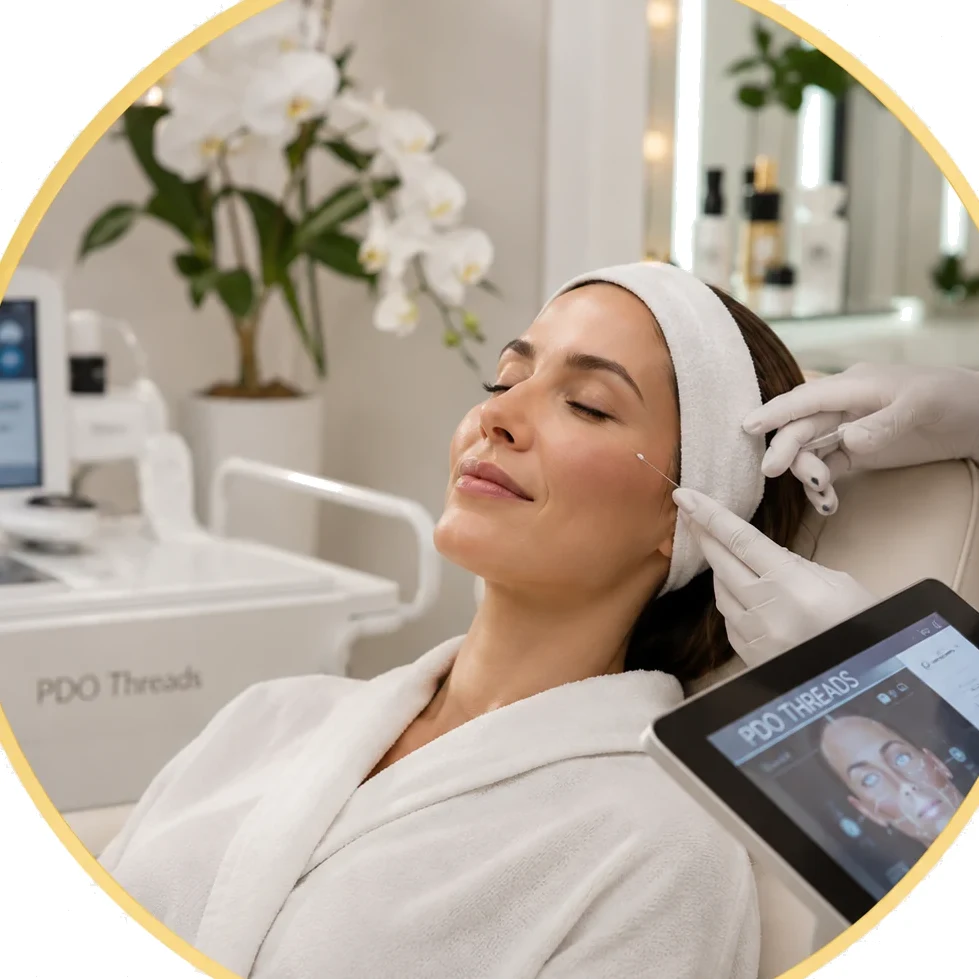
If your peptide serum has done what it can and you are still seeing hollowing, deeper static lines or persistent dark circles, the next step is usually a treatment that works beneath the skin's surface rather than on top of it. Some clinics offer a doctor-led approach built around AI-driven skin analysis that maps specific ageing patterns before suggesting a treatment plan.
For concerns around volume and structural laxity, Profhilo is designed to improve hydration and skin quality at a deeper level than a topical serum can reach, while Polynucleotides support regenerative repair for skin that has lost some of its natural bounce. Both sit alongside our wider treatment range, which includes Anti-Wrinkle Injections for dynamic lines that topical products cannot soften.
If a peptide serum has been used for 8 to 12 weeks without the desired change, booking a consultation with an aesthetic clinic can help determine realistic expectations and suitable approaches for your skin.
Sources
- Clinical pilot study of TriHex peptide‑containing eye treatment — PubMed (2018)
- Clinical trial summarising peptide treatment outcomes — PubMed (2024)
- Tetrapeptide‑68 trial for periorbital wrinkles — PubMed (2024)
- Beauty and cosmetics: creams — Advertising Standards Authority (ASA) guidance
FAQ
What does peptide serum do for eyes?
Peptide eye serums are designed to signal the skin to produce more collagen and elastin, which can gradually improve fine lines, puffiness and skin texture around the eyes. A 12-week clinical trial reported measurable improvement in lines, under-eye bags and dark circles using this mechanism.
Do peptides work for under eyes?
Evidence from controlled trials suggests peptides can improve the appearance of fine lines and puffiness around the eyes when used consistently for 8 to 12 weeks. A tetrapeptide-68 study found measurable wrinkle reduction with no adverse reactions reported, though results vary between formulations and individuals.
What is the best peptide for eyes?
There is no single peptide proven superior for every user, but tetrapeptides and hexapeptide blends such as TriHex-style formulations have the most published trial data behind them. The right choice depends on the formulation quality and complementary ingredients, not the peptide name alone.
What is the best peptide serum available?
No single product has an independently verified claim to being the best, since results depend on formulation, concentration and individual skin. Look for named peptides on the ingredient list, evidence from a controlled trial behind the claims, and a vehicle that includes supportive actives like hyaluronic acid.
How soon will I see results from a peptide eye serum?
Most clinical evidence points to visible change appearing between 8 and 12 weeks of consistent twice-daily use, not within the first few weeks. Stopping earlier than this is a common reason people conclude a product "doesn't work" when it may simply not have had enough time.
Ready to explore your options?
Speak with a NexGen clinician for a personalised consultation. We’ll listen, assess, and recommend the safest and most effective route — always led by evidence, always tailored to you.
Book a consultation or get in touch with our Cambridge team.