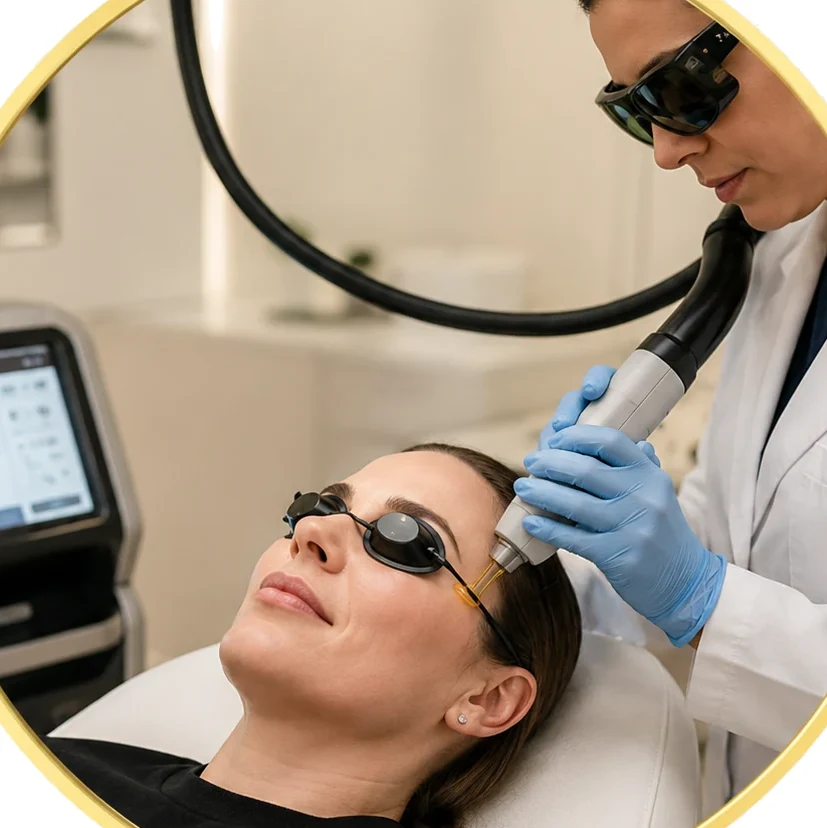
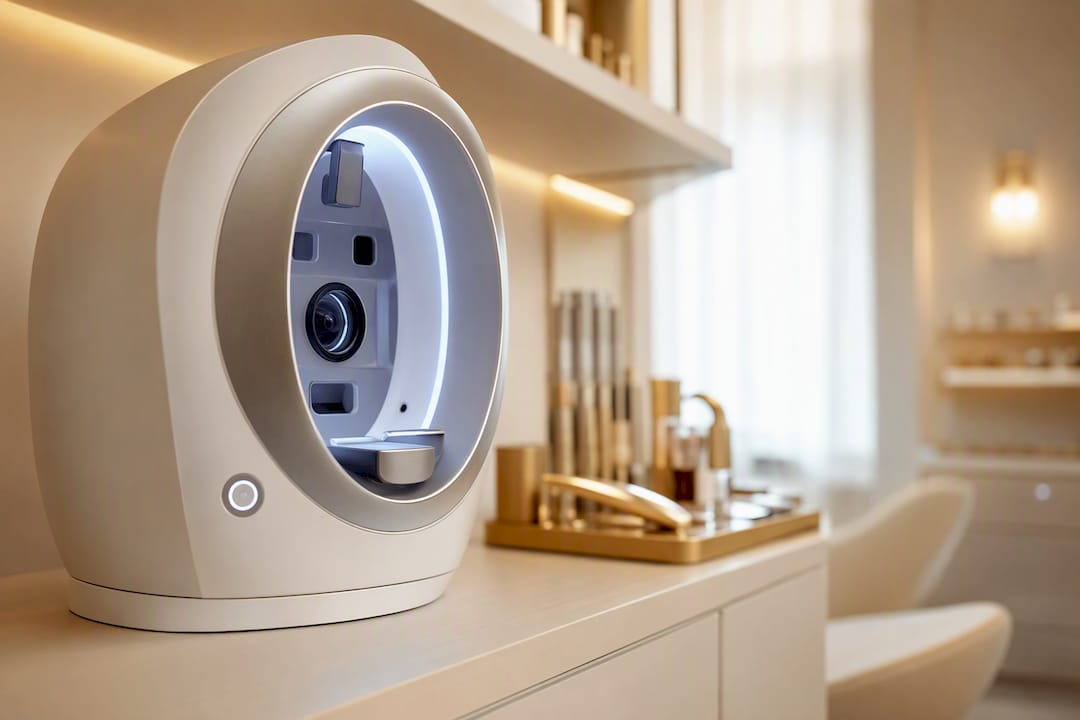
AI skin analysis reliably measures surface features like texture, pores, and pigmentation, and it excels at tracking change over time, but it is not a diagnostic replacement for a clinician. The technology reads what a camera can see; it cannot feel, biopsy, or contextualise a mole against your medical history.
Two things improve your results immediately: take photos in consistent lighting from the same angle each time, and check whether the tool publishes any validation data before trusting its scores.
- Do: Use AI scans to track texture, hydration, or redness over weeks and months.
- Don't: Treat any automated "diagnosis" as a substitute for a professional opinion.
For anyone who spots something unusual or wants a proper treatment plan, Nexgen Clinic offers clinically led assessment that goes well beyond what a phone camera can tell you. The sections below explain how the technology works, what it measures well, and where the evidence runs thin.
Key Takeaways
AI skin analysis works best as a tracking tool for surface metrics and falls short as a standalone diagnostic method, particularly for pigmentation and darker skin tones.
| Point | Details |
|---|---|
| Trust texture over pigmentation | Texture and fine-line scores stay consistent across scans; pigmentation and pore counts vary with lighting. |
| Check the evidence base | Favour tools with peer-reviewed validation and a dataset diversity statement before trusting their scores. |
| Standardise your photos | Same background, same daylight lighting, same angle, and a reference scale for genuine before-and-after comparison. |
| Know the red flags | New or changing moles, bleeding, or persistent rashes need a clinician. Not another app scan. |
| See a professional for real concerns | Nexgen Clinic pairs AI-informed assessment with clinician judgement for concerns an app alone cannot resolve. |
This article is general information, not a substitute for advice from a qualified doctor. Consult a qualified healthcare professional about your own circumstances before acting on anything here.
Table of Contents
- How does AI skin analysis actually work?
- What metrics does an AI skin scan actually measure?
- Can you actually trust the accuracy of these tools?
- How do you get a reliable scan and protect your data?
- How do you pick a trustworthy AI skin tool?
- What should you do with your results?
- What ethical and data security issues go beyond privacy consent?
- How do popular AI skin analysis platforms actually compare?
- How should you combine AI scans with your skincare routine?
- Expert perspective — AI as an adjunct, never the final word
- Nexgen Clinic: what we offer and how to book
- Sources
- FAQ
How does AI skin analysis actually work?
Most consumer tools rely on computer vision: a model trained on thousands of labelled photographs learns to associate visual patterns, a certain shadow pattern around the eyes, a texture irregularity on the cheek, with specific skin metrics. The quality of that training data determines what the model can recognise reliably and what it guesses at.
Clinical settings use something quite different. Multispectral and spectroscopic devices capture light beyond the visible spectrum, picking up subsurface information a standard camera simply cannot see, which is why smart mirrors and clinical skin scanners are not interchangeable with a smartphone app.
A typical consumer journey follows a simple pattern:
- You take a selfie under the app's recommended lighting conditions.
- The model segments your face and scores it against pre-set metrics.
- You receive a report, usually alongside product recommendations.
That third step is where commercial incentives creep in, worth remembering before you act on any suggestion.
What metrics does an AI skin scan actually measure?
Reports typically break your skin down into a handful of standard categories, each inferred differently from a single photograph.
- Texture and fine lines: Detected through surface contrast and shadow mapping, generally consistent between scans.
- Pores: Estimated from pixel density, but sensitive to camera resolution and how close you hold the phone.
- Redness: Colour-channel analysis, which shifts noticeably under warm indoor lighting versus daylight.
- Pigmentation: One of the least reliable outputs, since tone variation depends heavily on white balance and screen calibration.
- Hydration: Usually inferred from surface sheen, an indirect proxy at best.
- "Skin age": A composite score built from the metrics above, more a marketing figure than a clinical measurement.
Texture and fine-line scores tend to hold up across repeat scans. Pigmentation and pore counts swing the most when lighting or phone model changes.
Can you actually trust the accuracy of these tools?
The evidence is mixed, and worth reading carefully rather than taking at face value. A validation study using selfie images from 1,041 women found strong correlation between AI grading and dermatologist assessment for five facial signs, but pigmentation scoring was notably weaker, and accuracy dropped further for the darkest phototypes in the dataset.
Automated grading can match dermatologist judgement closely for certain signs, yet the same systems perform markedly worse on pigmentation and on darker skin tones, exactly the populations most historically underrepresented in training data.
A broader meta-analysis of AI skin-cancer classification tools reported pooled sensitivity of around 87% and specificity of around 77%, figures that look impressive in controlled research settings but come with a caveat: real-world image quality, lighting, and camera variability introduce noise those trial conditions rarely include.
This gap explains why most consumer apps stay firmly in cosmetic territory. Diagnostic claims trigger medical device regulation under MDR 2017/745, so app developers deliberately frame outputs as "wellness insights" rather than clinical findings. When you do see CE or UKCA marking on a tool, or a dataset diversity statement, treat that as a genuine trust signal rather than marketing gloss.
How do you get a reliable scan and protect your data?
Noise from poor image capture can dwarf the small improvements you're hoping to measure after a few weeks of a new serum, so consistency matters more than most people assume.
- Shoot against a neutral, non-reflective background in daylight, not artificial light.
- Keep the phone at the same distance and angle every time, ideally using a fixed marker.
- Include a reference object, a ruler or coin, so scale stays consistent across scans.
- Take two or three shots per session and keep the sharpest.
- Log context alongside each scan: recent products used, any treatments, medications, and the date.
- Before uploading anything, read the app's data-use terms and look for an opt-out from commercial data reuse.
- Check how long your images are retained, and whether you can request deletion.
Pro Tip: Store your reference photos in one dated folder on your phone rather than trusting the app's own gallery; if you ever switch tools, you'll still have a clean before-and-after record.
How do you pick a trustworthy AI skin tool?
Not all apps are built with the same rigour, and the differences matter more than the interface polish suggests.
- Look for published, peer-reviewed validation studies rather than in-house marketing claims.
- Favour tools developed with dermatologist input or clinical oversight somewhere in the process.
- Check for a dataset diversity statement covering different skin tones and age groups.
- Read the privacy policy before your first scan, not after.
Red flags are just as telling. Be wary of apps with no visible validation data, funnels that push you straight into a subscription or product purchase before showing results, or marketing language that uses the word "diagnose" without any regulatory marking behind it. A review of consumer dermatology apps found limited peer-reviewed evidence, sparse CE marking, and low reporting on dataset diversity across much of the market, so scepticism is a reasonable default position, not cynicism.
What should you do with your results?
Your best use of an AI scan is as a personal baseline, not a verdict. Run it under the same conditions every few weeks and watch the trend rather than fixating on a single number.
- Compare scores month to month, not day to day, small daily shifts are usually noise.
- A change of a point or two on any metric rarely means anything clinically meaningful.
- Larger, sustained shifts across several scans are worth paying attention to.
- See a clinician promptly if you notice a new or changing mole, unexplained bleeding, or a persistent rash that doesn't resolve.
Industry commentary describes the best consumer tools as a mirror with memory, useful for spotting drift over time, but never a substitute for a trained eye on anything that looks unusual.
What ethical and data security issues go beyond privacy consent?
Signing a privacy consent box does not settle every ethical question these tools raise. Training data itself carries risk: if a model was built predominantly on lighter skin tones, it doesn't just perform worse for other groups, it can quietly reinforce the idea that certain skin presentations are the "normal" baseline against which everyone else is measured.
There's also a commercial conflict baked into many apps. When the same company that scores your skin also sells the serum it recommends, the incentive to inflate a problem, or invent one, is real. That doesn't mean every recommendation is dishonest, but it means the business model deserves the same scrutiny you'd give a salesperson's diagnosis.
Data security matters beyond the consent screen too. Facial images are biometric data. Even when a company promises not to sell your photos, breach risk, third-party analytics partners, and vague retention policies all create exposure most users never think about until something goes wrong. Ask where images are stored, whether they're used to retrain future models without further consent, and whether you can request full deletion, not just account closure.
Finally, there's a subtler harm: some users develop anxiety from repeated low scores on metrics that were never clinically meaningful in the first place, chasing a "skin age" number that has no diagnostic value. A tool that quietly damages someone's relationship with their own reflection has failed, even if its accuracy stats look fine on paper.
How do popular AI skin analysis platforms actually compare?
The market splits into a few broad categories rather than a single tier of competing products. Basic consumer apps offer quick, free scans focused on entertainment value and light tracking, often bundled into skincare brand ecosystems to drive product sales. These are fine for casual curiosity but rarely publish validation data.
A second category, in-store or salon-based kiosks, uses slightly better hardware, often standardised lighting and fixed camera positioning, which reduces some of the noise a handheld phone introduces. Accuracy improves modestly, though the underlying model is often the same computer-vision approach as the app version.
The most rigorous tier sits inside clinical settings, where multispectral imaging and professional oversight combine AI-generated metrics with a trained clinician's interpretation. This is the category where AI functions as genuine decision support rather than a standalone verdict, consistent with evidence that AI assistance improves diagnostic accuracy for less experienced clinicians when used alongside professional judgement rather than instead of it.
For anyone weighing which category suits them, the honest answer depends on intent. Curiosity and light tracking suit a free app. Genuine skin concerns, unusual changes, or a serious treatment decision call for the clinical tier, where a professional reviews both the data and the person in front of them.
How should you combine AI scans with your skincare routine?
Treat an AI scan as one input into your routine, not the entire strategy. Use it to establish a baseline before you start a new product, then rescan under the same conditions every four to six weeks, roughly the timeframe most active ingredients need to show a visible surface effect.
Resist the urge to change three products at once because a scan flagged redness and dryness in the same report. Change one variable at a time, or you'll never know which adjustment actually moved the number. If a metric worsens after introducing a new active, that's useful signal, stop, wait, and reassess before adding anything else.
Where AI genuinely earns its place is as a conversation starter with a professional. Bring your scan history to a consultation rather than relying on the app's own product suggestions, a dermatologist or aesthetic clinician can interpret a texture or redness trend in the context of your full skin history, current medications, and treatment goals, something no photo-based algorithm can do. This is precisely where a service like private aesthetic consultation fits: it takes the tracking data you've gathered and turns it into an actual plan, rather than another set of numbers to worry about.
Expert perspective — AI as an adjunct, never the final word
The pattern in the evidence is consistent: AI performs best when it sharpens a clinician's judgement, not when it replaces it. Automated grading systems track surface change well, but they don't know your history, your medications, or what "normal" looks like for your skin specifically.
At Nexgen Clinic, AI-informed assessment sits alongside a clinician's eye, never in place of it. That combination, not the algorithm alone, is what should reassure anyone comparing a free app score against a real concern.
— Ms Sandra Petraskaite
Nexgen Clinic: what we offer and how to book
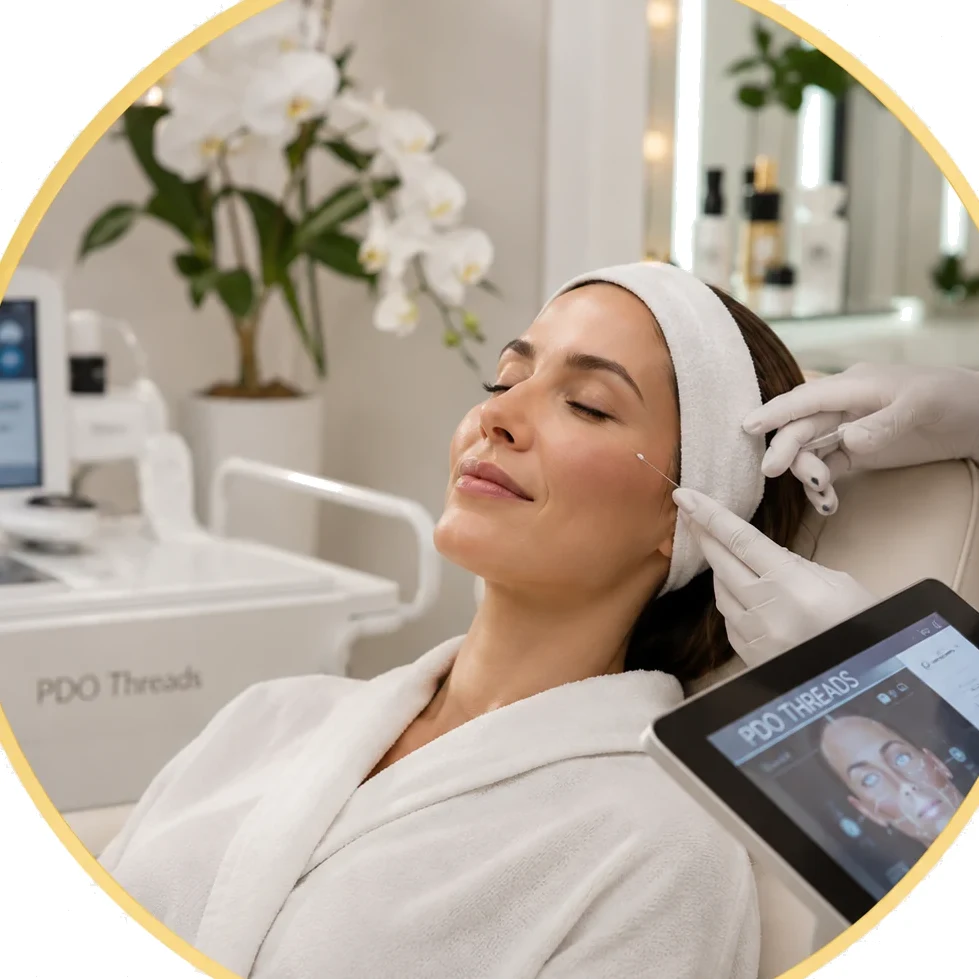
An app can tell you your redness score went up. It cannot tell you why, or what to actually do about it, that gap is exactly where Nexgen Clinic steps in. Based in Cambridge, our AI-informed consultations pair the same kind of skin measurement technology discussed throughout this article with a clinician who interprets the data against your history, your goals, and your skin type.
Our signature programmes, including the NexGen Age Reset™ and Facial Balance™, build on that assessment with professional aesthetic treatments matched to what your skin genuinely needs rather than a generic package. If hydration or texture scores are your concern, skin boosters in Cambridge address that directly, delivered by professionals who read your results in context. Curious what a full assessment involves? Book a private consultation and bring your scan history with you.
Sources
- Validation study of AI facial sign grading (PMC10087370)
- Systematic review and meta-analysis of AI for skin cancer classification (Nature, 2024)
- Safety and transparency issues in mobile AI skin apps (SkinAI Lab blog)
FAQ
Is there a free AI tool that can analyse my skin?
Several skincare brands and apps offer free scans, but few publish peer-reviewed validation data, so treat results as a rough guide rather than a clinical measurement.
Is there a free AI face analyser I can trust?
Free tools exist and can be useful for casual tracking, though the evidence gap around validation and dataset diversity means you should verify anything concerning with a professional rather than relying on the app alone.
What is the best skin analyser to use?
The best choice depends on your goal: a validated consumer app suits casual tracking, while a clinically led assessment, such as the AI-informed consultations offered at Nexgen Clinic, suits anyone with a genuine concern or treatment decision to make.
Can AI skin analysis diagnose skin cancer or serious conditions?
No. Consumer AI tools are built and marketed as cosmetic or wellness products specifically to avoid diagnostic claims, and any new or changing mole, bleeding, or persistent rash needs in-person clinical review.
Recommended
- NexGen Clinic Journal | Expert Aesthetic & Skin Health Insights
- Skin Boosters vs Profhilo: Which Treatment Is Right?
- Skin Glow Treatment Cambridge | NexGen Clinic
- NexGen Clinic | AI-Powered Aesthetic Medicine & Skin Treatments
Explore related NexGen treatments
- Explore our full treatment menu
- Book a consultation with our clinicians
- Contact our Cambridge team
- Read more articles in the NexGen Journal
Ready to explore your options?
Speak with a NexGen clinician for a personalised consultation. We’ll listen, assess, and recommend the safest and most effective route — always led by evidence, always tailored to you.
Book a consultation or get in touch with our Cambridge team.