The most effective anti wrinkle alternatives fall into five categories: prescription retinoids (tretinoin), over‑the‑counter retinol and peptide topicals (Argireline, SYN‑Ake), in‑clinic devices (microneedling, fractional lasers, radiofrequency, Ultherapy), dermal fillers and skin boosters for static lines, and daily sunscreen with antioxidants. If you have fine expression lines, start with a medically supervised topical regimen. If your wrinkles are deeper or established, a course of clinic-grade devices tends to deliver more visible change. For volume loss and static folds, fillers or skin boosters usually outperform anything topical.
- Fine lines and early ageing: prescription retinoid or peptide serum
- Textural changes and moderate wrinkles: microneedling, laser resurfacing or radiofrequency
- Static folds and volume loss: hyaluronic acid fillers or skin boosters
- Prevention at any age: broad-spectrum sunscreen and antioxidant serums
Pro Tip: Any prescription-only treatment, including tretinoin and injectables, should follow a face-to-face clinical assessment rather than an online questionnaire. It is the single biggest safety marker to check before you commit.
Key Takeaways
Choosing the right anti wrinkle alternative depends on matching your wrinkle type, dynamic or static, to treatments with matching evidence and realistic timelines.
| Point | Details |
|---|---|
| Match treatment to wrinkle type | Dynamic lines respond to peptides or device therapies; static folds respond better to fillers or boosters. |
| Prescription retinoids lead the evidence | Tretinoin and tazarotene show the strongest trial data for fine and coarse wrinkles respectively. |
| Devices need a course, not one session | Microneedling, RF and laser resurfacing typically require three to six sessions for visible change. |
| Prevention still matters most | Daily sunscreen and antioxidants address the primary cause of photoageing before it starts. |
| Nexgen Clinic offers tailored, clinician-led plans | Its bespoke programmes combine topicals, devices and injectables under face-to-face clinical assessment. |
Table of Contents
- What are the best anti wrinkle alternatives to Botox?
- Topical treatments: retinoids, retinol, bakuchiol and peptides
- Which clinic procedures reduce wrinkles without toxin injections?
- Do fillers and skin boosters replace Botox?
- Do natural remedies and home treatments actually work?
- How do you choose the right anti wrinkle alternative?
- What does the clinical evidence actually support?
- Thread lifts and peptide injections as minimally invasive middle-ground options
- Ten wrinkle-smoothing paths worth considering before Botox
- Where to go once you've weighed your options
- Sources
- FAQ
What are the best anti wrinkle alternatives to Botox?
Botox works by relaxing the muscles that cause dynamic wrinkles, the lines that appear when you frown, squint or raise your eyebrows. Every alternative on this list works through a different mechanism, whether that is stimulating collagen, exfoliating dead skin, or restoring lost volume, so the results and timelines vary considerably from one option to the next.
That distinction matters when you're choosing between them. A retinoid will never relax a muscle the way botulinum toxin does, but it can meaningfully improve skin texture and fine lines over several months. A dermal filler won't stop a muscle contracting either, yet it can soften a static nasolabial fold that toxin was never designed to treat. Matching the alternative to the type of wrinkle you actually have is the first decision, and it's one many people skip when they go shopping for "natural Botox alternatives" online.
Topical treatments: retinoids, retinol, bakuchiol and peptides
Prescription tretinoin remains the most rigorously tested topical option. A network meta-analysis of 22 to 23 randomised controlled trials, covering close to 3,900 participants, found tretinoin and isotretinoin significantly improved fine wrinkles compared with placebo, while tazarotene produced the strongest results for coarser, deeper lines, though with higher rates of irritation. Expect visible change from around 12 weeks, with peeling and redness common in the first month.
Over-the-counter retinol is gentler but noticeably less proven. A critical review of nine randomised, vehicle-controlled trials found four showed no significant difference from the inactive vehicle, and flagged methodological weaknesses in several others. Retail retinol can still help maintain skin quality, but treat marketing claims about OTC formulations sceptically.
Bakuchiol has emerged as a plant-derived alternative for people who can't tolerate retinoids. It doesn't carry the same trial weight as tretinoin, but it's a reasonable starting point for sensitive or reactive skin that flares under stronger actives.
Peptide serums containing Argireline or SYN‑Ake are marketed as topical neuromodulators that mimic Botox's muscle-relaxing effect. A trial of a 4% SYN‑Ake formulation reported up to a 52% reduction in wrinkle size over 28 days, but this is single-product data, and peptide penetration depends heavily on the carrier system used. Treat these results as promising rather than conclusive.
Sunscreen and antioxidants aren't glamorous, but they underpin everything else. Introduce one active ingredient at a time, give it several weeks before judging results, and speak to a clinician before layering multiple strong actives together.
Which clinic procedures reduce wrinkles without toxin injections?
Device-based treatments sit between topicals and injectables in both cost and results, and they're often the best fit for people who want measurable change without a needle near a muscle.
- Microneedling (with or without PRP): fine needles create controlled micro-injuries that stimulate collagen. Adding platelet-rich plasma, a technique explored in PRP facial rejuvenation research, can enhance healing and texture. Expect three to six sessions, mild redness for a day or two, and results building over several months.
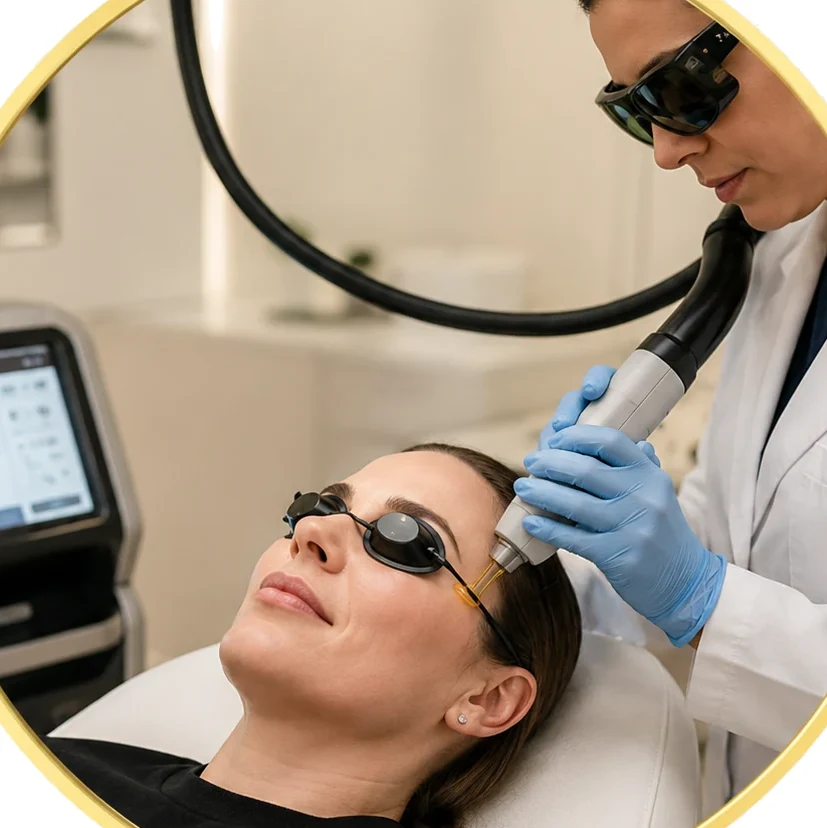
- Fractional laser resurfacing: targets deeper wrinkles and sun damage by resurfacing controlled zones of skin. Downtime ranges from a few days to two weeks depending on intensity, and results tend to be more dramatic than microneedling alone.
- Radiofrequency and RF microneedling: heats deeper skin layers to tighten and stimulate collagen remodelling. Sessions are quick, downtime is minimal, and it suits people wanting gradual firming rather than a single dramatic change.
- Microfocused ultrasound (Ultherapy): lifts and tightens by targeting the deeper structural layers usually addressed by surgery. Results appear over two to three months and can last a year or more.
- Chemical peels: exfoliate the outer skin layers to improve texture, tone and fine lines, with strength ranging from light lunchtime peels to deeper, more aggressive formulations.
- Microcurrent: a low-intensity, at-home or in-clinic option often used for temporary muscle toning and short-lived skin firmness rather than structural change.
Clinical reviews of device therapies consistently show moderate evidence for microneedling, laser resurfacing, and RF, with results depending heavily on device settings, session count and practitioner skill. Sensitive or reactive skin, active acne, and certain pigmentation conditions may need a modified approach or preconditioning with topical retinoids beforehand. Combining a retinoid regimen with periodic RF or skin boosters is common in staged treatment plans, since it addresses both surface texture and deeper support at once.
Do fillers and skin boosters replace Botox?
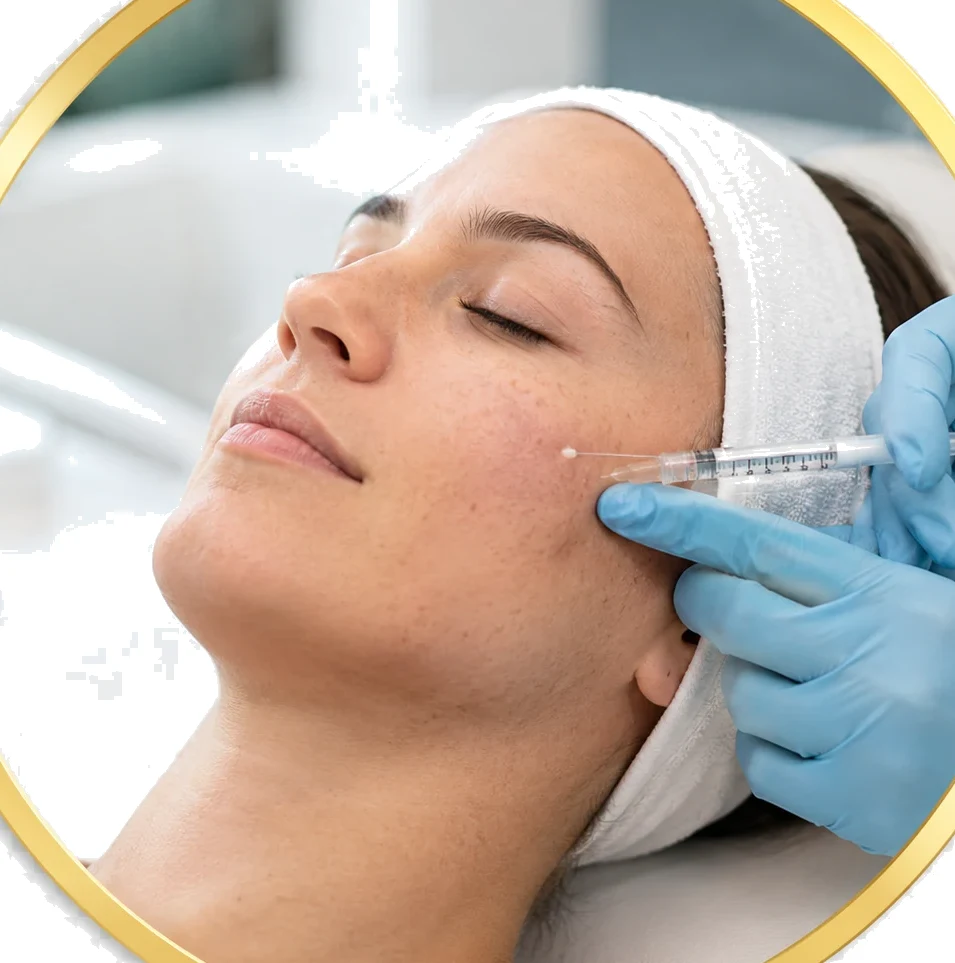
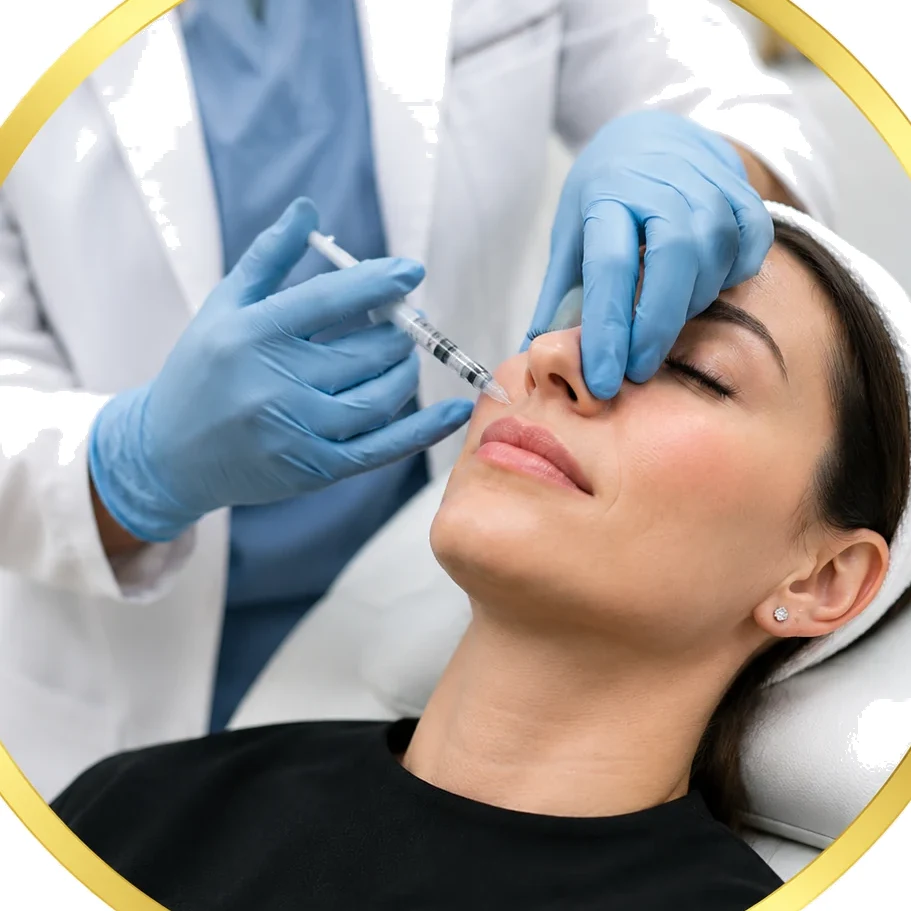
Not quite, and this is where a lot of confusion sets in. Botox addresses dynamic wrinkles, the lines that form from repeated muscle movement, like crow's feet or forehead lines. Fillers and skin boosters address static wrinkles and volume loss, the folds and hollows that remain even when your face is completely still.
- Dynamic lines (frown lines, crow's feet): typically respond best to muscle-relaxing treatments, not fillers.
- Static folds (nasolabial folds, marionette lines): respond well to hyaluronic acid fillers that restore lost structure.
- Skin quality and fine texture: biostimulating skin boosters improve hydration and elasticity over repeated sessions, offering longer-lasting texture benefits than a single filler treatment.
- Someone with volume loss from ageing, rather than expressive lines, is generally a better filler candidate than a toxin candidate.
Both fillers and skin boosters are prescription-only or medical-grade treatments in the UK, and JCCP and CPSA guidance is explicit that these decisions should follow a face-to-face clinical assessment, never a remote consultation. You can browse how injectables and anti-wrinkle options compare before booking anything.
Do natural remedies and home treatments actually work?
Sunscreen and antioxidant serums remain the strongest evidence-backed home measures, because chronic UV exposure is the primary driver of photoageing in the first place. No cream reverses that damage as reliably as preventing it does.
Facial massage and facial exercises have a devoted following, and small studies suggest modest, temporary improvements in facial fullness and circulation, but the evidence is nowhere near what supports retinoids or device therapies. Treat these as a pleasant addition, not a wrinkle treatment.
Diet, hydration and supplements follow a similar pattern: sensible hydration and a nutrient-rich diet support skin health generally, but no supplement has trial data matching a prescription retinoid. Bakuchiol and other botanical actives can be a reasonable step down from stronger ingredients for reactive skin, though expectations should stay modest. Watch for irritation and photosensitising ingredients, particularly with stronger plant extracts, and speak to a clinician if a product causes persistent redness or stinging.
How do you choose the right anti wrinkle alternative?
Matching the treatment to the wrinkle, rather than following whatever's trending, is the difference between a satisfying result and a wasted few months.
- Identify your wrinkle type: dynamic lines from movement usually respond better to muscle-focused or peptide approaches; static lines and volume loss respond better to fillers, boosters or resurfacing.
- Be honest about downtime tolerance: topicals need patience but no recovery; lasers and deeper peels can mean days to weeks of visible healing.
- Set a realistic budget band: topical regimens typically run to tens of pounds monthly; device courses often run into hundreds of pounds per session across a series; fillers and boosters vary by product and area, so ask for a written quote at consultation.
- Ask the right questions: Is the practitioner on a recognised register? Will you have a face-to-face assessment before any prescription-only treatment? How many sessions are realistically needed, and what's the follow-up plan?
- Watch for red flags: remote prescribing of prescription-only medicines, practitioners who aren't listed on accredited registers, and guarantees of dramatic, lasting results. NHS guidance on choosing a practitioner is a useful benchmark before you book anything.
What does the clinical evidence actually support?
The evidence strength varies sharply by category, and it's worth knowing where each option sits before you spend money on it. Prescription retinoids carry the strongest backing, supported by systematic trial data across thousands of participants. Device modalities like fractional lasers, RF and microneedling sit in moderate territory, well-studied but with outcomes that depend on technique and settings. Many OTC peptide and "natural Botox" claims remain limited, resting on single-product trials rather than independent, peer-reviewed confirmation.
Pro Tip: When a product claims "clinically proven" results, ask who ran the study and whether it was independent. A manufacturer-funded trial on their own formulation is a different standard of evidence to an independent, peer-reviewed meta-analysis.
A tailored, medically led plan tends to outperform any single product precisely because it adjusts to how your skin actually responds, rather than following a generic protocol.
Thread lifts and peptide injections as minimally invasive middle-ground options
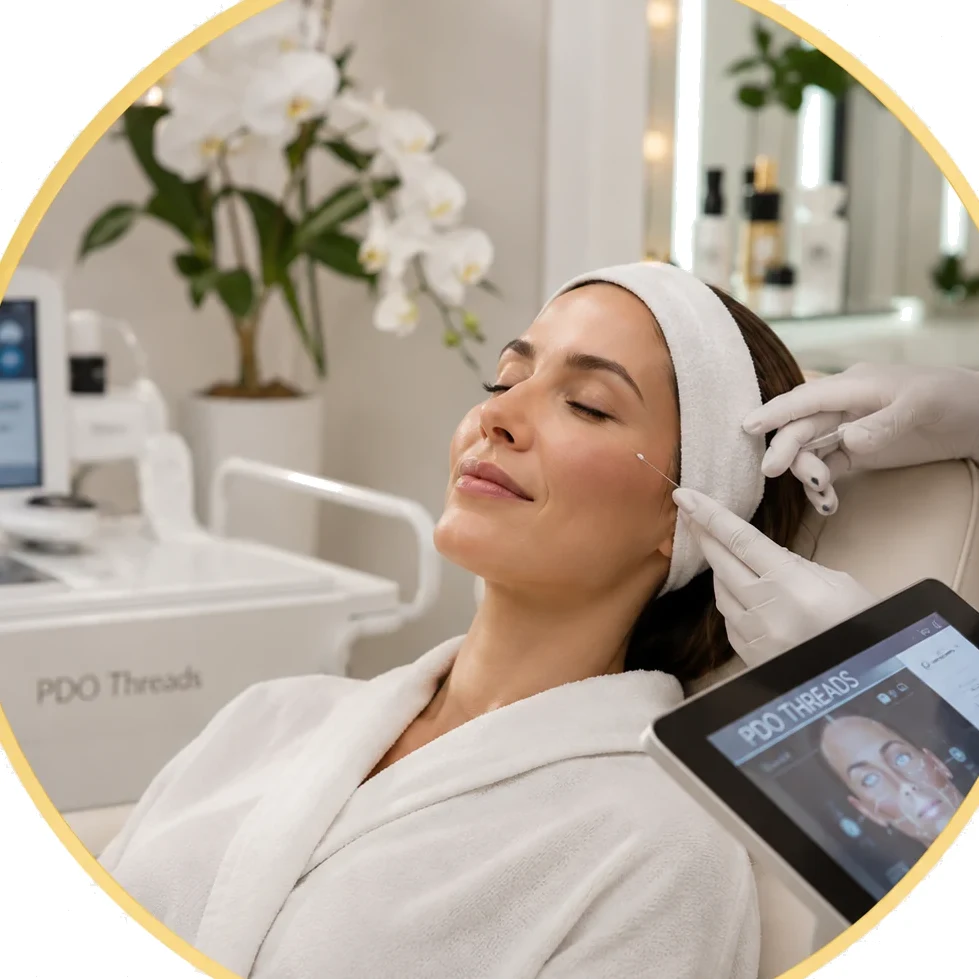
Between topicals and full injectable programmes sits a smaller category worth knowing about: thread lifts and non-Botox neuromodulator injections. Thread lifts use dissolvable, barbed sutures to lift and support sagging tissue mechanically, while also triggering a collagen response as the threads dissolve over several months. Results are visible almost immediately, with subtler collagen-driven improvement continuing for three to six months, and effects typically lasting one to two years depending on thread type and skin quality.
Peptide injections, distinct from topical peptides, are sometimes positioned as a gentler alternative to traditional neuromodulators, though the evidence base here is considerably thinner than for established botulinum toxin treatments. Risks with thread lifts include visible dimpling, thread migration or extrusion if placed incorrectly, so practitioner experience matters more here than with most topical or device treatments. Recovery is generally short, a few days of swelling or tenderness, but this remains a medical procedure requiring proper assessment beforehand, not a lunchtime add-on to book without consultation.
Ten wrinkle-smoothing paths worth considering before Botox
The conventional wisdom treats "Botox alternatives" as a single category, as if a drugstore serum and a course of fractional laser sit on the same shelf. They don't, and conflating them is why so many people end up disappointed with a £15 cream that was never going to do what a clinical device does.
What's underrated here is patience with topicals and impatience with device courses. People give up on tretinoin after three weeks because nothing's changed, when 12 weeks is the realistic marker. Then they'll book a single microneedling session expecting Botox-level results, when three to six sessions is the honest baseline for visible change.
If there's one thing worth prioritising, it's asking what evidence actually backs a product or procedure before asking how it's marketed. A "clinically proven" peptide serum resting on one manufacturer trial isn't the same tier of proof as a network meta-analysis spanning thousands of participants. Start with that question, and the rest of the decision gets considerably easier.
Where to go once you've weighed your options
If you've read this far, you already know that the right alternative depends on your wrinkle type, not on whichever product has the loudest marketing. That's precisely where a clinic-led approach earns its place: Nexgen Clinic builds tailored plans that combine topical regimens, device therapies and, where appropriate, fillers or skin boosters, guided by AI skin analysis rather than a one-size-fits-all protocol.
Its signature programmes, including NexGen Age Reset™, are designed around your specific ageing pattern, so you're not guessing whether a retinoid or a laser course suits your skin better. If you're ready to find out which combination of precision treatments fits your skin, book a consultation with Nexgen Clinic's Cambridge team and start with a proper assessment rather than another guessing game with over-the-counter products.
This article is general information, not a substitute for advice from a qualified doctor. Consult a qualified healthcare professional about your own circumstances before acting on anything here.
Sources
For deeper reading on efficacy and safety, the network meta-analysis on topical photoageing treatments remains the strongest single evidence source, alongside JCCP and CPSA prescribing guidance and NHS advice on choosing a practitioner.
- Comparative efficacy of topical interventions for facial photoaging: a network meta‑analysis - PMC
- Efficacy of over‑the‑counter vitamin A (retinol) — critical review - JCAD Online
- Choosing who will do your cosmetic procedure — NHS
FAQ
What do Koreans use instead of Botox?
Korean skincare routines lean heavily on layered hydration, sheet masks, and gentle exfoliation alongside topical retinoids and antioxidant serums, prioritising prevention and skin barrier health over dramatic intervention.
What is "poor man's Botox"?
The term usually refers to affordable topical peptides, like Argireline, marketed as mimicking Botox's muscle-relaxing effect. Evidence for these claims remains limited to single-product trials rather than the robust data behind prescription retinoids or actual toxin injections.
What did people use historically to prevent wrinkles?
Historical skincare practices across various cultures relied on natural oils, herbal extracts and sun avoidance long before modern retinoids existed, though none of these approaches have the trial evidence that prescription topicals now carry.
What can I use for wrinkles instead of Botox?
Prescription tretinoin, over-the-counter retinol, peptide serums, and in-clinic devices like microneedling, fractional lasers, RF and Ultherapy are the main evidence-backed alternatives, with fillers and skin boosters addressing static volume loss specifically.
How long does it take to see results from anti wrinkle alternatives?
Topical retinoids typically show change from around 12 weeks, while device treatments like microneedling or RF usually need three to six sessions over several months for visible improvement.
Recommended
- Injectables & Anti-Wrinkle | NexGen Clinic Journal
- Anti Wrinkle Treatment Cambridge | NexGen Clinic
- Skin Boosters & Profhilo | NexGen Clinic Journal
- Signature Packages | Curated Treatment Programmes | NexGen Clinic Cambridge
Explore related NexGen treatments
- Explore our full treatment menu
- Book a consultation with our clinicians
- Contact our Cambridge team
- Read more articles in the NexGen Journal
Ready to explore your options?
Speak with a NexGen clinician for a personalised consultation. We’ll listen, assess, and recommend the safest and most effective route — always led by evidence, always tailored to you.
Book a consultation or get in touch with our Cambridge team.