
TL;DR:
- Fat dissolving injections can permanently reduce small, localized fat pockets when administered by qualified medical practitioners using regulated products.
- Patients should verify product safety, undergo a face-to-face consultation, and have realistic expectations of subtle results over multiple sessions.
Fat dissolving injections permanently reduce small, localised pockets of subcutaneous fat when performed on appropriate candidates by a medically qualified practitioner using regulated products. They are not a weight loss treatment. The realistic outcome is subtle contouring, typically across 2–4 sessions, and results depend entirely on correct patient selection, product quality, and clinical technique.
Before booking, confirm three things:
- The practitioner holds a recognised medical qualification or is a registered prescriber.
- The product carries a UKCA mark or falls under MHRA oversight.
- A face-to-face consultation with a pinch test and documented informed consent is included.
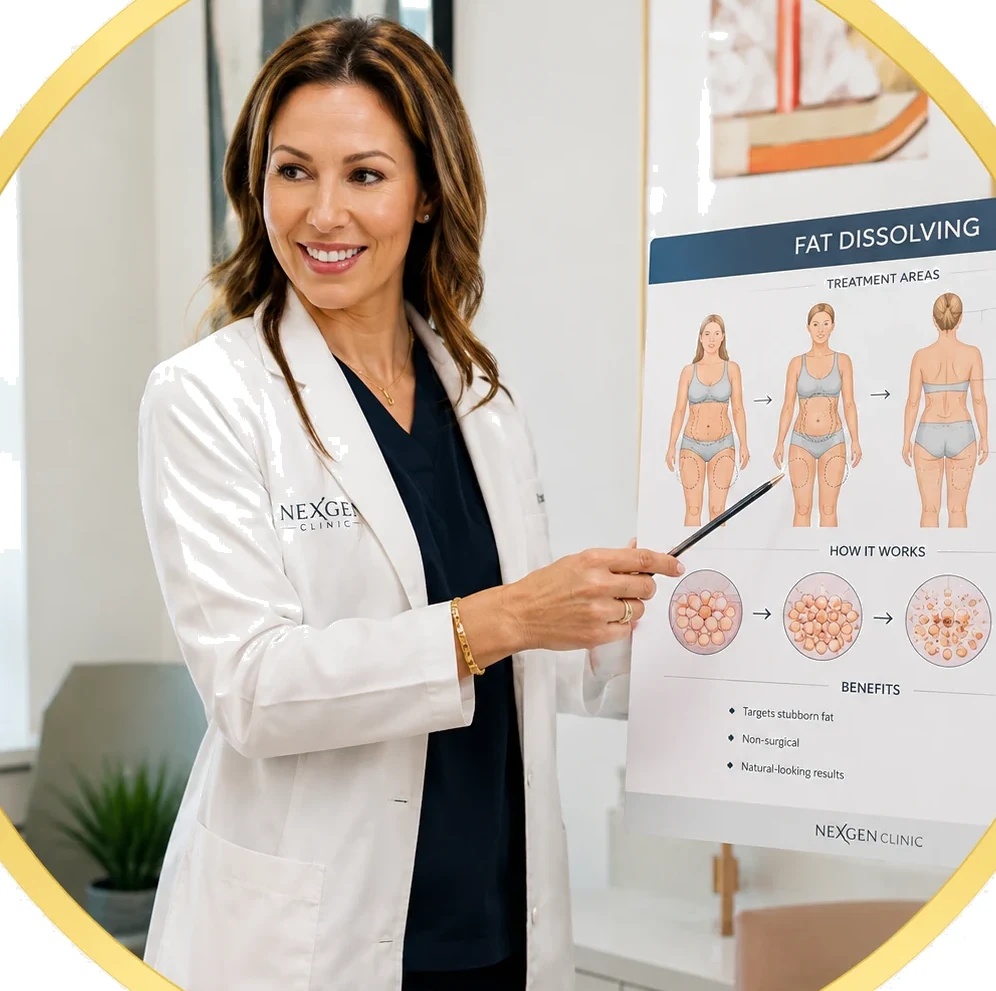
Nexgen Clinic offers exactly this: medically led, AI-personalised consultations in Cambridge where every treatment plan is built around your anatomy, not a one-size protocol.
Table of Contents
- How do fat dissolving injections actually work?
- Are you a suitable candidate for this treatment?
- What results can you realistically expect, and when?
- What are the risks, and how does UK regulation protect you?
- What should you ask at a consultation?
- How much do fat dissolving injections cost in the UK?
- How do injectable options compare to other fat reduction treatments?
- Key takeaways
- Why medically led care is the only sensible standard
- Nexgen Clinic's approach to fat dissolving treatment
- Useful sources
- FAQ
How do fat dissolving injections actually work?
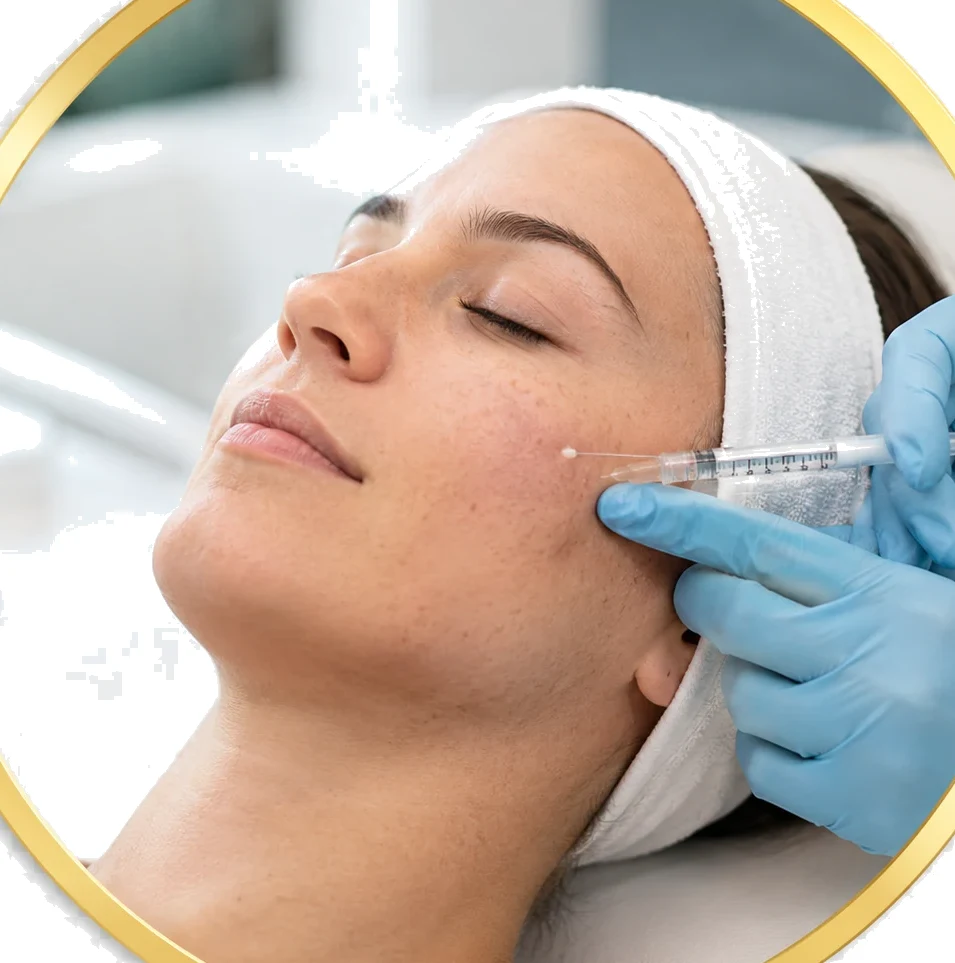
The clinical term is injection lipolysis, or adipocytolysis. The most studied active agent is deoxycholic acid (DCA), a bile-acid derivative that disrupts the phospholipid membrane of adipocytes. Once the cell membrane breaks down, the fat content is released and cleared by the body's lymphatic and immune systems over several weeks.
Phosphatidylcholine (PPC) is another ingredient with a longer history in aesthetic medicine, though its regulatory status in the UK is more complex. The MHRA has issued specific guidance on PPC-based products, and some formulations are subject to prescription-only restrictions.
The critical distinction is between medical-grade, regulated injectables and unregulated cosmetic "slimming" products. Controlled analyses have found that some social-media-popular products lack detectable active ingredients and show no demonstrable lipolytic effect in laboratory models. A product that trends on social media is not evidence of clinical efficacy.
Statistic callout: Clinical trials consistently report minor inflammatory side effects, including swelling, redness, and tenderness, as the most frequent post-treatment reactions. Practitioner qualifications correlate directly with safety outcomes.
Pro Tip: Ask the clinic to name the exact product brand before you consent, and request written confirmation of its UKCA or MHRA status. A practitioner who cannot answer this question clearly is a red flag.
Are you a suitable candidate for this treatment?
The pinch test is the starting point. A clinician pinches the target area to confirm that subcutaneous fat, not skin laxity or underlying muscle, is present in sufficient volume. If the pinch yields less than roughly 2 cm of tissue, the area is unlikely to respond well.
Absolute contraindications include pregnancy, breastfeeding, active skin infection at the treatment site, and known allergy to any component of the product. Relative contraindications, which require careful clinical judgement, include certain anticoagulant medications, autoimmune conditions, and a history of keloid scarring.
A properly run assessment should include:
- A face-to-face physical examination, not a video or online form.
- A full medical history review, including current medications and prior procedures.
- Standardised photographs taken before treatment begins.
- A documented informed consent process with time to ask questions.
- Discussion of a realistic multi-session plan with expected outcomes stated clearly.
Pro Tip: Bring a written list of all medications, supplements, prior aesthetic procedures, and any known allergies to your first appointment. This single step reduces the risk of a missed contraindication.
What results can you realistically expect, and when?
A typical course involves multiple sessions spaced weeks apart, though the exact number depends on the treatment area, the volume of subcutaneous fat present, and the product used. The submental area (under the chin) often responds in fewer sessions than larger body zones such as the abdomen or flanks.
Results do not appear overnight. The immune system takes time to clear the lysed fat cells, and the visible change is gradual. A rough timeline:
At 48 hours, expect noticeable swelling, redness, and tenderness. This is a normal inflammatory response, not a complication.
By 2–4 weeks, swelling subsides and early contouring becomes visible. Some patients notice firmness in the treated area as tissue remodels.
By 6–8 weeks post-session, the clearest indication of response is visible. If a second session is planned, this is typically when it is scheduled.
The framing that serves patients best is subtle contouring, not dramatic volume loss. Fat dissolving injections reduce a defined pocket; they do not replace liposuction for large-volume reduction.
Statistic callout: Clinical studies report high patient satisfaction when treatments are performed on appropriately selected candidates with realistic expectations set in advance.
What are the risks, and how does UK regulation protect you?
Common and expected side effects
Swelling, redness, bruising, and tenderness at the injection site are expected and typically resolve within 1–2 weeks. Temporary numbness or firmness in the treated area can also occur.
Rare but serious complications
Persistent nodules, infection or abscess formation, dermal necrosis, and nerve injury are rare but documented. A published case report describes dermal necrosis and chronic abscess formation following injections administered by a non-medical practitioner, underlining why clinical setting matters. Suspected necrosis or purulent discharge requires prompt antibiotics and active wound care; a medically led clinic will have a documented escalation and referral pathway before offering treatment.
The UK regulatory picture
| Product type | Regulatory status | Patient implication |
|---|---|---|
| Medical-grade DCA injectable | UKCA-marked medical device or MHRA-regulated medicine | Documented safety data; traceable batch numbers |
| PPC-based formulations | Subject to MHRA restrictions; some prescription-only | Requires prescriber involvement; check status before consenting |
| Cosmetic "fat dissolver" products | Unregulated cosmetic product | No mandatory clinical safety data; higher risk |
The General Pharmaceutical Council warned pharmacies about unregulated injectable products, including certain "fat dissolver" brands, following reports of serious harm. A regulatory review confirms the divide: some injectables carry UKCA marks while others remain cosmetic products with no clinical safety data.
Red flags for unsafe practice: unlicensed product with no UKCA or MHRA status; injector with no medical qualification or prescriber registration; no written consent paperwork; no batch number recorded in your clinical notes.
Pro Tip: Ask for the batch number of the product used at every session and keep a copy. If a complication arises, batch traceability is essential for investigation and insurance purposes.
What should you ask at a consultation?
A medically led consultation follows a clear workflow. The practitioner examines you in person, performs the pinch test, reviews your medical history, takes standardised photographs, and presents a multi-session plan with realistic outcome expectations. Consent is documented in writing before any treatment begins.
Questions worth asking directly:
- What is the exact product brand, and what is its UKCA or MHRA status?
- What are your medical qualifications and prescriber registration?
- How do you manage complications, and what is your referral pathway?
- Is your practice insured for this specific treatment, and does that cover the product you use?
Industry guidance confirms that using unlicensed or grey-market products can affect a practitioner's insurance cover, which directly increases patient risk. A clinic that cannot answer the insurance question clearly warrants caution. For broader context on cosmetic treatment safety standards, independent industry guidance is available.
How much do fat dissolving injections cost in the UK?
Pricing varies by treatment area, product, practitioner grade, clinic location, and what aftercare is included. As a realistic guide:
- Submental (chin) area: typically £200–£400 per session, resulting in a total cost for a standard course of £400–£1,600.
- Larger body zones (abdomen, flanks, thighs): typically £300–£600 per session.
Price callout: A full course of fat dissolving injections for the submental (chin) area typically involves 2–4 sessions, with total pricing generally ranging from £400 to £1,600 depending on clinic and product.
What is usually included: the injection itself, a post-treatment review call, and basic aftercare guidance. What is commonly charged separately: follow-up in-person appointments, ultrasound-guided assessment, and any complication management beyond routine aftercare.
Significantly lower prices often signal an unregulated product or an under-qualified injector. Neither is a saving.
How do injectable options compare to other fat reduction treatments?
Fat dissolving injections are typically used for small, localized subcutaneous fat pockets in patients who are not candidates for surgery and do not need large-volume reduction.
- Cryolipolysis (fat freezing): non-surgical, no needles, suited to larger treatment panels; results appear over 2–3 months; less precise for very small areas.
- Radiofrequency and ultrasound body contouring: primarily address skin laxity alongside fat; useful when tissue tightening is the primary goal alongside modest fat reduction.
- Surgical liposuction: appropriate for large-volume fat removal; requires general anaesthesia, carries surgical risks, and involves significant downtime; results are more dramatic and immediate.
When to prefer an alternative: insufficient subcutaneous fat on pinch test; need for large-volume reduction; skin laxity rather than fat volume as the primary concern.
Pro Tip: Combining modalities, such as injection lipolysis followed by a skin-tightening treatment, can produce better overall contouring than either alone. Guidance on combining cosmetic treatments safely is worth reviewing before planning a multi-treatment course. At Nexgen Clinic, AI-driven tissue analysis informs exactly this kind of personalised combination planning.
Key takeaways
Fat dissolving injections are safe and effective for localised subcutaneous fat when performed by a medically qualified practitioner using a UKCA-marked or MHRA-regulated product on a correctly selected candidate.
| Point | Details |
|---|---|
| Correct candidacy matters | A pinch test confirming subcutaneous fat presence is the first clinical step; skin laxity alone will not respond. |
| Verify product regulation | Only consent to treatment with a UKCA-marked or MHRA-regulated product; ask for the batch number. |
| Expect multiple sessions | A typical course is 2–4 sessions spaced 4–8 weeks apart; visible results develop over 6–8 weeks per session. For the submental area, total treatment costs are typically between £400 and £1,600. |
| Medically led care is non-negotiable | Rare complications including necrosis and nerve injury require medical management and a documented referral pathway. |
| Nexgen Clinic | Offers AI-personalised, medically led fat dissolving consultations in Cambridge with documented consent and product traceability. |
Why medically led care is the only sensible standard
The gap between what fat dissolving injections can genuinely deliver and what social media suggests they do is wide enough to cause real harm. Patients arrive expecting dramatic transformation after one session, having seen a viral product with no verified active ingredient. The clinical reality is more measured, and more reassuring: when the right patient, the right product, and the right technique come together, the results are consistent and lasting.
What concerns me most in the current UK market is not the treatment itself but the proliferation of unregulated products administered outside any clinical framework. Necrosis and abscess formation are not theoretical risks; they are documented outcomes linked specifically to non-medical practitioners using unlicensed products. The regulatory warnings from the General Pharmaceutical Council exist because real patients were harmed.
AI-driven assessment changes the consultation in a meaningful way. At Nexgen Clinic, tissue analysis guides not just whether a patient is suitable, but which areas will respond, in what sequence, and how to combine treatments for the best long-term outcome. That level of personalisation is what separates a safe, satisfying result from a disappointing or dangerous one.
The checklist in this article is not bureaucratic caution. It is the minimum standard every patient deserves.
Nexgen Clinic's approach to fat dissolving treatment
If you have read this far, you already know what a properly run treatment looks like. Nexgen Clinic delivers exactly that: a face-to-face consultation with a medically qualified practitioner, AI-driven tissue analysis to personalise your plan, UKCA-verified products with full batch traceability, and documented informed consent before anything is injected.
The clinic's fat dissolving service in Cambridge covers submental contouring and body zones, with a multi-session plan agreed at your first appointment. Nexgen Clinic's 98% client satisfaction rate reflects a consistent commitment to realistic outcomes and clinical safety, not volume throughput.
To book your consultation, visit Nexgen Clinic and bring your medication list, any prior treatment history, and your questions. The first appointment is a clinical assessment, not a sales conversation.
This article provides general information only and is not a substitute for professional medical advice. Confirm your suitability and the regulatory status of any product with a qualified medical practitioner before proceeding.
Useful sources
| Source | Relevance |
|---|---|
| Dermal Necrosis and Chronic Abscess Formation Following Fat Dissolving Injections — OSF Preprint | Case report documenting serious complications from non-medical administration; supports safety and regulation sections. |
| MHRA: Phosphatidylcholine (PPC) Fat Dissolving Injections — Consulting Room | MHRA regulatory position on PPC-based products; supports product regulation discussion. |
| The safety and efficacy of fat-dissolving injectables — Aesthetic Medicine Magazine | Peer-reviewed review of mechanism, regulatory classification, and social-media product concerns. |
| GPhC warns pharmacies on unregulated fat dissolver products — Health Professional Academy | Regulator warning on unlicensed injectables including named products; supports red flags section. |
| Fat Dissolving Treatments: Risks Practitioners Face — Hamilton Fraser | Industry and insurer guidance on training, product sourcing, and liability; supports clinic checklist section. |
| Fat Dissolving Injections: Managing Complications — Hamilton Fraser | Practical complication management protocols including the 3R framework; supports safety section. |
| BAAPS Conference Clinical Studies Summary | Clinical trial data on side effects and patient satisfaction in appropriately selected candidates. |
FAQ
What are fat dissolving injections used for?
Fat dissolving injections reduce small, localised pockets of subcutaneous fat, most commonly under the chin, on the abdomen, or around the flanks. They are not a treatment for generalised weight loss.
How many sessions will I need?
Most patients require 2–4 sessions spaced 4–8 weeks apart. The submental area often responds in fewer sessions than larger body zones.
Are fat dissolving injections safe in the UK?
They are safe when a medically qualified practitioner uses a UKCA-marked or MHRA-regulated product on a correctly selected candidate. Documented complications including necrosis are linked specifically to unregulated products and non-medical injectors.
What should I ask before consenting to treatment?
Ask for the exact product name and its UKCA or MHRA status, the practitioner's medical qualifications, how complications are managed, and whether the practice holds insurance covering this specific treatment.
Does Nexgen Clinic offer fat dissolving injections?
Yes. Nexgen Clinic provides medically led fat dissolving consultations in Cambridge, with AI-driven tissue analysis, documented consent, and full product traceability as standard.
Recommended
- Fat Dissolving Injections in Cambridge | Chin & Contour | NexGen Clinic
- Expert Guide to Dermal Fillers in Cambridge
- Dermal Fillers in Cambridge | Natural Facial Contouring | NexGen Clinic
- Skin Tightening Cambridge: Treatments at NexGen Clinic
Explore related NexGen treatments
- Explore our full treatment menu
- Book a consultation with our clinicians
- Contact our Cambridge team
- Read more articles in the NexGen Journal
Ready to explore your options?
Speak with a NexGen clinician for a personalised consultation. We’ll listen, assess, and recommend the safest and most effective route — always led by evidence, always tailored to you.
Book a consultation or get in touch with our Cambridge team.