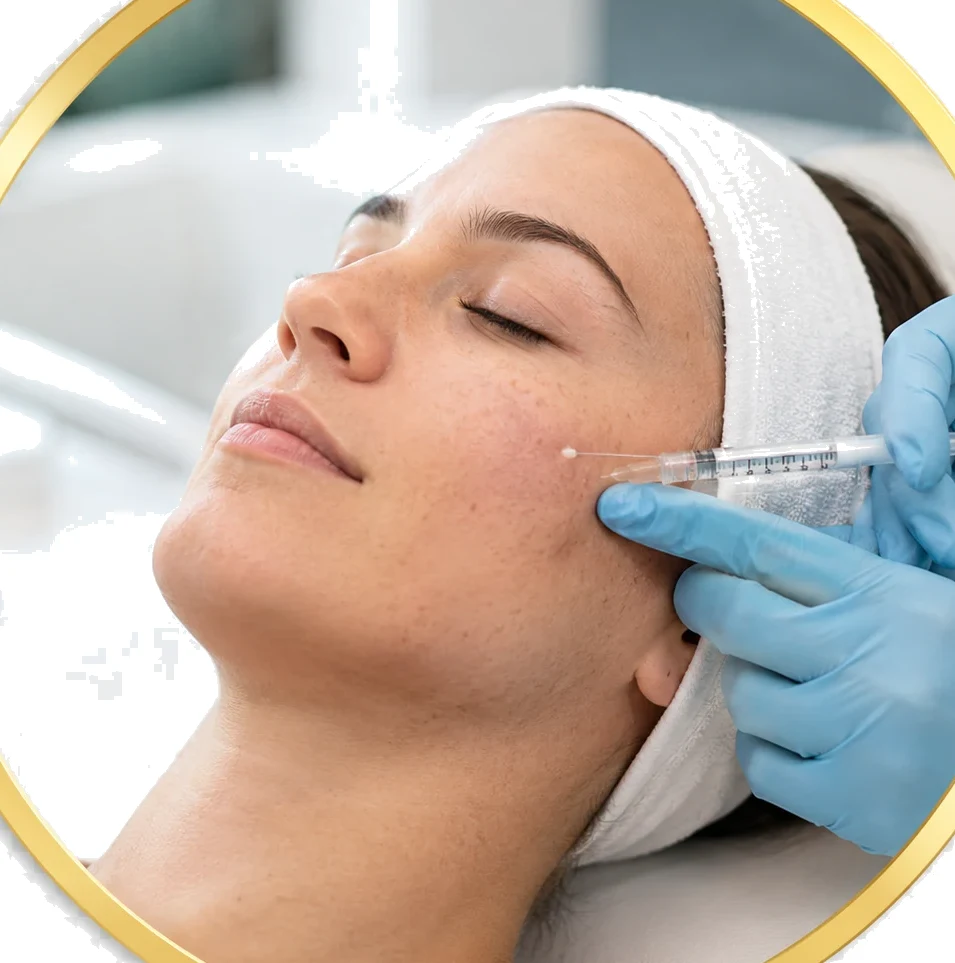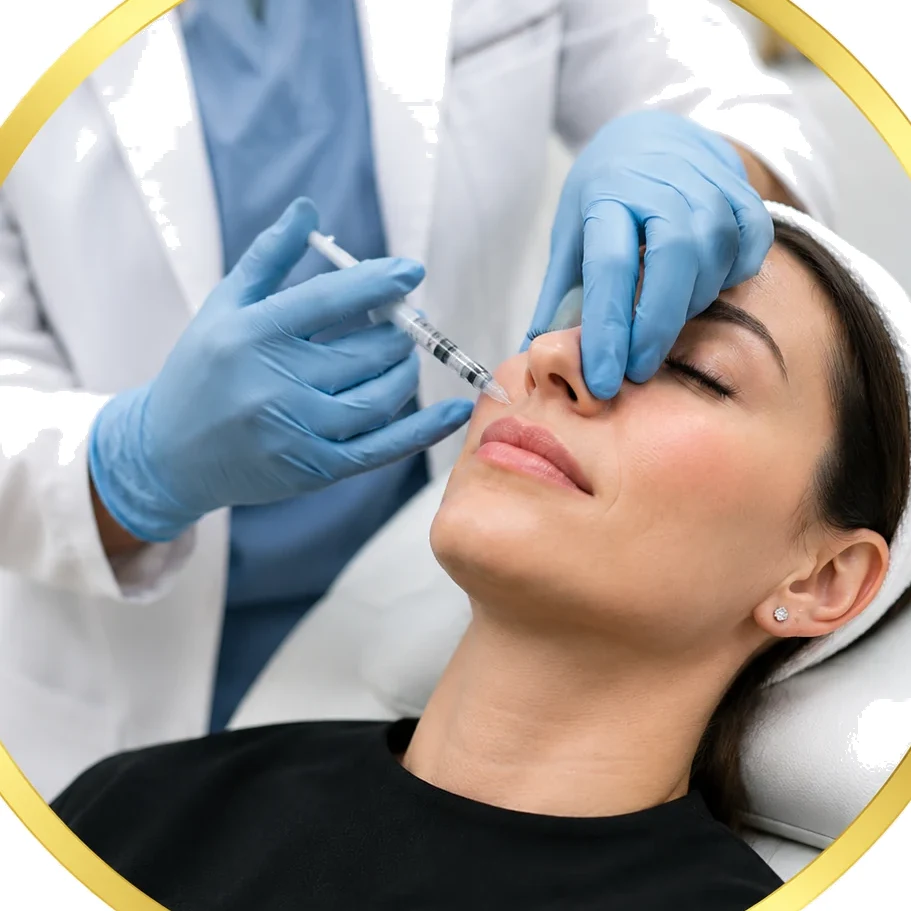

Most dermal fillers last somewhere between six months and two years, though the honest answer depends heavily on which product you have, where it's injected, and how your own body processes it. Hyaluronic acid (HA) fillers typically last 6 to 18 months. Calcium hydroxylapatite (CaHA) often lasts about one to two years. Poly-L-lactic acid (PLLA, sold as Sculptra) can deliver visible improvement for around two years or more because it works by stimulating your own collagen rather than simply sitting in the tissue. Polymethylmethacrylate (PMMA, sold as Bellafill) is designed to be a long-lasting, essentially permanent filler.
The biggest variable isn't the marketing claim on the product insert. It's biology: your metabolic rate, the depth of placement, how much the treated area moves day to day, and the specific chemistry of the gel all shift these ranges considerably.
- HA fillers generally last six to eighteen months, occasionally persisting longer in deep, static areas
- CaHA typically lasts about one to two years, sometimes longer
- PLLA (Sculptra) produces gradual effects often lasting for around two years or more
- PMMA (Bellafill) is effectively permanent or very long-lasting
- Fat grafting is variable but can last for multiple years if the graft survives
Pro Tip: If you're unsure which category a filler falls into, ask your practitioner directly before treatment. It changes not just how long results last, but how reversible they are if you change your mind.
One reassuring point worth knowing upfront: HA fillers, the most commonly used category, can be dissolved with hyaluronidase if you're unhappy with results or a complication arises. That safety net doesn't exist in the same way for PMMA or, to a lesser extent, PLLA, which is one reason the choice of filler matters as much as the choice of clinic.
Key Takeaways
Filler longevity depends primarily on product chemistry and injection site, with HA lasting 6 to 18 months, CaHA and PLLA often exceeding a year, and PMMA designed to be permanent.
| Point | Details |
|---|---|
| Duration varies by type | HA typically lasts 6–18 months, CaHA and PLLA often 12–24 months or longer, PMMA is effectively permanent. |
| Placement changes outcomes | Deep, structural areas like cheeks retain filler longer than mobile areas like the lips. |
| Manufacturing matters | Cross-linking and rheology, not HA concentration alone, determine how fast a filler degrades. |
| HA stays reversible | Hyaluronidase can dissolve HA filler within hours to days if correction is ever needed. |
| Plan with a specialist | Nexgen Clinic uses AI skin analysis to match filler type and placement to your longevity goals. |
This article is general information, not a substitute for advice from a qualified doctor. Consult a qualified healthcare professional about your own circumstances before acting on anything here.
Table of Contents
- What determines filler longevity by product type
- How your body breaks down filler over time
- Why lips, cheeks and other areas age filler differently
- How to make your filler results last longer
- Is filler reversible? Safety and complication management
- What the research says about how long fillers really last
- The NexGen Clinics view on planning for longevity
- Book a filler consultation built around your longevity goals
- Sources
- FAQ
What determines filler longevity by product type
Filler longevity isn't a single number you can look up. It's a range that shifts depending on the material's chemistry and how your body interacts with it. Here's what the evidence actually shows for each major category.
Hyaluronic acid fillers are the most widely used, and the most variable in how long they last. Manufacturers typically quote 6 to 12 months, but that figure undersells what happens in practice. A review of 33 MRI studies found HA detectable in the midface for at least two years in every patient examined, with isolated cases showing persistence at 15 to 27 months and, in rare individuals, considerably longer. That's a meaningful gap between what the packaging says and what imaging technology has actually confirmed sitting in real tissue.
Why the difference? HA gels are engineered using cross-linking agents such as BDDE, and the degree of cross-linking directly affects how resistant the gel is to breakdown. More heavily cross-linked, cohesive formulations tend to resist degradation for longer, which is why two HA products marketed for similar uses can behave very differently in the same patient.
Calcium hydroxylapatite behaves differently from HA in a way that matters for longevity. CaHA isn't just a space-filling gel. It works as a biostimulatory scaffold: microscopic calcium particles suspended in a carrier gel that gradually resorbs while stimulating your own fibroblasts to lay down new collagen. This dual action is why CaHA often delivers visible improvement for 12 to 24 months, sometimes longer, even though the carrier gel itself doesn't persist that long. The physicochemical properties of injectable fillers explain how this microsphere structure prolongs aesthetic benefit well past the point the original material has resorbed.
Poly-L-lactic acid, the active ingredient in Sculptra, takes the biostimulatory principle further. It doesn't provide immediate volume. Instead, it triggers a gradual collagen-building response over weeks to months, which is why results build slowly and then hold for an extended period, often reported at two years or more. Patients who want a fuller face on the day of treatment tend to find PLLA frustrating; patients who want a subtle, progressive improvement that outlasts a typical HA filler often prefer it.
PMMA sits at the opposite end of the spectrum from HA. Bellafill suspends tiny PMMA microspheres in a collagen carrier, and once the collagen carrier is absorbed, the microspheres remain in the tissue indefinitely, encapsulated by the body's own connective tissue. Clinical guidance from Mayo Clinic lists PMMA among the semi-permanent to permanent options. That permanence is the appeal for some patients and the concern for others: there's no meaningful way to reverse it if the aesthetic outcome, or your face, changes over time.
Fat grafting is the outlier because it's a surgical procedure rather than an injectable product. A surgeon harvests your own fat, processes it, and reinjects it into the treatment area. Survival of the transplanted fat varies considerably between patients and even between areas on the same patient. Some grafted fat is reabsorbed within months; the portion that survives the initial healing period can persist for years, occasionally becoming a permanent part of the facial contour.
How your body breaks down filler over time
Filler longevity, at the biological level, comes down to a competition between the product's engineering and your body's clean-up systems. Understanding this helps explain why two people can have the same filler injected in the same area and see very different results a year later.
Your body naturally produces hyaluronidase enzymes that break hyaluronic acid into smaller fragments for clearance. Reactive oxygen species (ROS), generated as part of normal tissue turnover and inflammation, also attack HA chains. Neither process is unique to filler. Your body degrades its own naturally occurring hyaluronic acid the same way, constantly recycling it. Injected HA filler is simply new material for the same enzymatic and oxidative machinery to work on, and how quickly that happens depends heavily on the gel's manufacturing.
This is where rheology comes in, a term worth understanding if you're comparing filler options. Two properties matter most:
- G' (elastic modulus): how well a gel resists deformation under pressure, relevant to how a filler holds shape under muscle movement
- Cohesivity: how strongly the gel holds together as a unit, which affects both how it integrates with tissue and how it resists enzymatic attack
Research on the material science of contemporary fillers makes a point that surprises many patients: the concentration of hyaluronic acid in a product tells you very little on its own. Two fillers with identical HA concentration can have wildly different persistence because the cross-linking architecture, not the raw material amount, governs how resistant the gel is to breakdown. This is also why manufacturing residues, like leftover BDDE from the cross-linking process, and chain architecture shape the degradation kinetics of a given filler formulation.
For CaHA and PLLA, a different set of physical properties matters: particle size and crystallinity. Smaller, more uniform particles tend to integrate differently with surrounding tissue than larger or irregular ones, which partly explains why formulations within the same filler class can still perform differently in practice.
Pro Tip: Ask your practitioner about the rheological profile of the product they're recommending, not just the brand name. A filler chosen for its G' and cohesivity to suit the treatment area tends to outperform one chosen purely on reputation.
The clinical takeaway is straightforward: filler placed deep, against firm structural tissue like bone or deep fat compartments, generally faces less mechanical stress and slower clearance than filler placed superficially in mobile, vascular tissue. That single principle underpins almost everything in the next section.
Why lips, cheeks and other areas age filler differently
The same filler, injected by the same practitioner, will not last equally long in every part of your face. Anatomy dictates a large part of filler longevity, and the differences are consistent enough that clinicians plan around them.
Lips break down filler fastest of almost any facial area. They're in near-constant motion (talking, eating, expressing emotion) and carry a rich blood supply. Both factors accelerate clearance: movement mechanically stresses the gel, and higher blood flow means more enzymatic activity reaching the area. Most patients notice lip filler softening within 4 to 6 months, even when the same product might last twice as long elsewhere.
Cheeks and the deep midface tend to hold filler considerably longer. These compartments are structurally supported by bone and deep fat pads, with far less repetitive mechanical movement than the mouth. The MRI review of 33 studies that confirmed HA detectable for two years or more concentrated specifically on midface compartments, which is part of why cheek augmentation has such a reputation for durability compared with lip treatments using the same filler.
Tear troughs occupy a middle ground. The skin here is thin and the area does move with facial expression, but it's less mechanically active than the lips and often treated with lower volumes, which changes the degradation profile again.
Temples and jawline are typically treated with higher-G' fillers designed for structural support rather than soft-tissue fill, and these firmer, more static areas tend to show good persistence, consistent with the general principle that deep, low-movement placement favours longevity.
The practical implication is that a like-for-like comparison of "how long does filler last" is almost meaningless without specifying the treatment area. Clinicians match filler type and volume to the anatomical demands of the site: a soft, low-G' HA for expressive, mobile lips; a firmer, more cohesive gel for structural support in the jawline or chin. This isn't just an aesthetic decision. It directly shapes how long you'll see results and when you might reasonably plan a top-up.
How to make your filler results last longer
You can't override your own biology, but there is a meaningful amount you can influence once a treatment has been carried out. The right habits in the days and months afterward genuinely affect how long results hold.
In the immediate aftermath, the priority is letting the filler settle without unnecessary disruption:
- Avoid strenuous exercise for roughly 24 to 48 hours, since raised blood pressure and sweating can increase early swelling
- Steer clear of extreme heat, including saunas and hot yoga, for a similar window
- Skip vigorous facial massage or pressure on the treated area until your practitioner confirms it's settled
Beyond the immediate recovery period, the biggest lever most patients underestimate is skin health generally. Daily sun protection matters more than most people realise, because UV exposure accelerates collagen breakdown and contributes to the oxidative stress that degrades filler material over time. Good hydration, and topical actives like retinoids or a well-formulated hyaluronic acid serum as part of a skincare routine, support the surrounding skin quality that makes filler results look their best for longer, even if they don't directly extend the filler's chemical lifespan.
Lifestyle factors carry real weight too. Smoking accelerates tissue ageing and impairs the microcirculation that filler relies on to integrate well. Chronic inflammation and significant weight fluctuations both alter the facial fat compartments filler is designed to complement, which can visually shorten how long a result appears optimal, independent of how long the material itself persists.
Pro Tip: Book a review appointment around the midpoint of your filler's expected duration rather than waiting until it's fully gone. A conservative top-up at that stage tends to look more natural than starting fresh once volume has noticeably dropped.
Many practitioners now recommend a staged approach: starting with HA for its flexibility and reversibility, then transitioning toward biostimulatory options like CaHA or PLLA once you know how your face responds and what your longevity priorities actually are.
Is filler reversible? Safety and complication management
Reversibility is one of the clearest practical distinctions between filler categories, and it should factor into your decision as much as expected duration.
Hyaluronic acid is the outlier in the best possible way: it can be dissolved with hyaluronidase, an enzyme that breaks down HA chains directly. The kinetics of hyaluronidase treatment show a genuine dose-response relationship, with significant reduction in filler projection occurring within hours to days of treatment, depending on the dose used. This is precisely why HA remains the recommended starting point for many patients, particularly those newer to filler or unsure about a specific look. If something doesn't sit right, there's a clear path to correct it.
CaHA and PLLA don't have an equivalent rapid reversal option. Because they work partly through your body's own collagen response, correcting an unwanted outcome tends to be slower and sometimes requires surgical intervention rather than a simple dissolving injection. PMMA carries the same limitation permanently, since the microspheres become encapsulated in tissue and are not designed to be removed.
Any sudden pain out of proportion to the injection, skin discolouration or mottling, or blanching (a whitening of the skin) after filler treatment can signal vascular compromise, a rare but serious complication that requires urgent medical review, not a wait-and-see approach.
Beyond emergencies, watch for persistent lumps or nodules that don't resolve within a few weeks, and any signs of infection such as increasing redness, warmth, or discharge at the injection site. These warrant a prompt call to your treating clinic rather than home remedies.
- Sudden severe pain, blanching, or discolouration: seek urgent care immediately
- Persistent nodules beyond a few weeks: arrange a clinical review
- Signs of infection: contact your clinic promptly, don't wait for it to resolve alone
The choice of filler, in other words, shapes not just how long your results last but how much control you retain if something needs correcting.
What the research says about how long fillers really last
The clearest evidence on filler longevity comes from imaging studies rather than patient self-reporting, and it tells a more reassuring, if more complex, story than the "6 to 12 months" figure most people expect.
| Evidence type | Key finding | What it tells us |
|---|---|---|
| MRI review (33 studies) | HA detectable ≥2 years in all patients studied; some cases 15–27 months, rare cases longer | Real persistence often exceeds product labelling in deep midface compartments |
| Physicochemical/mechanism studies | Cross-linking, rheology and particle properties drive degradation rate | Manufacturing choices matter more than raw HA concentration |
| Hyaluronidase kinetics studies | Dose-dependent reduction in projection within hours to days | HA remains reliably reversible if reversal is needed |
| Long-term clinical follow-up reviews | Wide heterogeneity in study design and formulations | Individual results can reasonably deviate from published averages |
The MRI-based review of 33 studies is the single most useful piece of evidence here, because it doesn't rely on patients or clinicians guessing whether filler is "still there." It shows it directly. That said, long-term safety and performance reviews are candid about a real limitation: study designs, patient populations, and filler formulations vary enough that averages should be treated as a guide, not a guarantee for any individual face.
The honest takeaway is to expect a range rather than a fixed number, and to plan reviews with a qualified practitioner who can adjust the plan as your results (and your face) evolve.
The NexGen Clinics view on planning for longevity
At Nexgen Clinic, we treat filler longevity as a planning question, not an afterthought raised after the syringe is already out. Our approach starts with AI-guided skin analysis, which maps your facial anatomy, skin quality, and ageing pattern before we discuss product choice. That assessment shapes whether a bespoke programme like NexGen Age Reset™ or Facial Balance™ leans toward HA, a biostimulatory option, or a combination.
We tend to recommend HA first for anyone newer to filler, precisely because of its reversibility profile. For patients focused on long-term structural support in areas like the cheeks or jawline, we often discuss CaHA or PLLA once we understand how their face responds and what maintenance rhythm suits their life. Fat grafting comes up less often, reserved for patients wanting a more permanent surgical solution.
If you're booking a consultation, bring a clear sense of your priorities: do you want maximum reversibility, or are you comfortable trading some flexibility for longer-lasting structure? That single question shapes most of the conversation that follows.
Book a filler consultation built around your longevity goals
Choosing between an HA filler that softens gently over months and a biostimulatory option that builds slowly but holds for years isn't a decision to make from a price list alone. It depends on your anatomy, your lifestyle, and how much flexibility you want to keep if your preferences change.
Nexgen Clinic's consultations start with AI-driven skin analysis rather than a generic chat about "what's popular," which means the filler recommendation you get is matched to how your specific face moves, ages, and holds material, not a one-size answer. Our dermal filler treatments in Cambridge cover the full range discussed here, from soft, reversible HA for lips through to longer-lasting structural options for cheeks and jawline, and every plan includes a maintenance schedule built around your specific longevity goals rather than a generic six-month reminder. If you're weighing up lip treatment specifically, our lip filler service sets realistic expectations upfront about how that particular area behaves. Explore the full range of precision treatments available, or go ahead and book a consultation to get an anatomy-matched longevity plan rather than a guess.
Sources
- Hyaluronic acid filler longevity in the mid-face: a review of 33 magnetic resonance imaging studies
- Facial fillers for wrinkles - Mayo Clinic
- The kinetics of reversible hyaluronic acid filler injection treated with hyaluronidase
FAQ
Does filler age you over time?
Filler itself doesn't accelerate ageing, but repeated over-filling or poor placement can distort natural facial contours over the years. Conservative, anatomy-matched treatment planned by a qualified practitioner is designed to support natural ageing rather than fight it.
What happens to fillers after 10 years?
Most HA fillers are fully cleared well before the 10-year mark, though MRI evidence shows isolated cases of persistence beyond two years in deep midface compartments. PMMA, being permanent, remains in the tissue indefinitely as encapsulated microspheres.
Why are people stopping fillers?
Some patients move away from repeated HA treatments toward biostimulatory options like PLLA or CaHA for longer intervals between appointments, while others prioritise a more conservative, natural look that requires less frequent maintenance overall.
Can fillers stay in your face for years?
Yes. CaHA and PLLA are designed to deliver benefits well beyond a year through collagen stimulation, PMMA is intended to be permanent, and even some HA fillers have been confirmed by MRI to persist for two years or more in certain areas.
Can filler results be reversed if I don't like them?
HA filler can typically be dissolved with hyaluronidase, often showing significant change within hours to days, though CaHA, PLLA and PMMA are considerably harder or impossible to reverse. This is worth discussing with your practitioner before choosing a filler type.
Recommended
- Lip Fillers Cambridge: Achieve Natural-Looking Results
- Dermal & Lip Fillers | NexGen Clinic Journal
- Expert Guide to Dermal Fillers in Cambridge
- Dermal Fillers in Cambridge | Natural Facial Contouring | NexGen Clinic
Explore related NexGen treatments
- Explore our full treatment menu
- Book a consultation with our clinicians
- Contact our Cambridge team
- Read more articles in the NexGen Journal
Ready to explore your options?
Speak with a NexGen clinician for a personalised consultation. We’ll listen, assess, and recommend the safest and most effective route — always led by evidence, always tailored to you.
Book a consultation or get in touch with our Cambridge team.