
TL;DR:
- Hyaluronic acid dermal fillers are the most predictable non-surgical treatment for softening nasolabial folds, with results lasting several months. Combining fillers with skin boosters or biostimulators enhances natural outcomes and increases longevity, while energy-based devices like RF and HIFU are suitable for mild skin laxity. A thorough clinical assessment and choosing a regulated practitioner are essential for safe, effective, and personalized treatment planning.
Hyaluronic acid (HA) dermal fillers are the most predictable non-surgical way to soften nasolabial folds, with results typically lasting several months. For deeper structural correction, combining fillers with skin boosters or biostimulators gives more natural, longer-lasting outcomes. Energy-based devices such as radiofrequency and high-intensity focused ultrasound (HIFU) suit patients with mild laxity rather than significant volume loss, while thread lifts and surgical options become relevant when skin has lost substantial support. All nasolabial folds treatment in the UK is accessed privately; the NHS does not routinely fund cosmetic procedures, so choosing a regulated practitioner is your most important first step.
Before your consultation:
- Bring photographs showing your face at rest and smiling, so your practitioner can assess dynamic versus static fold depth.
- Ask to see GMC registration (for doctors) or JCCP registration (for non-medical practitioners), plus evidence of indemnity insurance.
- Request a cooling-off period between consultation and treatment — this is standard good practice and a clear sign of a trustworthy clinic.
Table of Contents
- What are nasolabial folds?
- Why do nasolabial folds appear?
- What does each nasolabial folds treatment deliver?
- Dermal fillers for nasolabial folds: what to expect
- How do skin boosters and biostimulators improve smile lines?
- When do energy-based devices help with facial folds?
- Thread lifts and surgical options: when to consider them
- Skincare, prevention and what you can realistically do at home
- How to choose a safe clinic or practitioner in the UK
- Nexgen Clinic's approach to natural nasolabial fold improvement
- Key takeaways
- A practitioner's perspective on what patients often overlook
- Ready to find out which treatment suits you?
- Useful UK sources and further reading
- FAQ
What are nasolabial folds?
Nasolabial folds are the two creases that run from the sides of the nose down to the corners of the mouth. They are sometimes called smile lines or laugh lines, though the term "nasolabial fold" is the clinical term used by practitioners. The fold itself is not a wrinkle in the traditional sense; it is a skin crease that forms over a deeper boundary between the cheek fat compartments and the upper lip musculature.
Nasolabial folds differ from marionette lines, which continue downward from the mouth corners towards the chin, and from perioral lines, which are the fine vertical creases on the lip surface. Knowing which feature you are looking at matters, because each responds differently to treatment.
Why do nasolabial folds appear?
Several distinct processes contribute, and understanding which ones are driving your folds shapes the treatment plan your clinician will recommend.
- Chronological ageing: Skin loses collagen and elastin over time, reducing its ability to spring back after repeated movement.
- Volume loss: Bone resorption in the midface and redistribution of fat compartments cause the cheek to descend, deepening the fold.
- Repeated facial movement: Smiling, laughing and talking create the crease over decades of use.
- Sun damage: UV exposure accelerates collagen breakdown and thins the dermis, making folds appear earlier and more pronounced.
- Smoking: Reduces blood supply to the skin and degrades collagen more rapidly than age alone.
- Genetics: Skin thickness, fat distribution and bone structure are all partly inherited, which is why some people develop deep folds in their thirties while others show minimal change into their fifties.
- Significant weight loss: Reduces facial fat volume, which can deepen folds even in younger patients.
Where volume loss is the primary driver, fillers and fat grafting are the logical first-line options. Where skin laxity and collagen decline dominate, energy-based devices or biostimulators become more relevant. Most patients have a combination of both, which is why a thorough clinical assessment matters before any treatment begins.
What does each nasolabial folds treatment deliver?
The table below gives a practical overview of the main treatment categories. Cost ranges are indicative for the UK private market and will vary by clinic, practitioner experience, and the volume of product used.
Cost note: UK indicative ranges only. Prices vary by clinic, location, and individual treatment plan. Always confirm costs at consultation.
| Treatment | Best for | Effectiveness | Typical longevity | Downtime | Indicative UK cost | Common risks |
|---|---|---|---|---|---|---|
| HA dermal fillers | Volume loss, moderate to deep folds | High | results typically last several months | Minimal (a few days bruising/swelling) | Approximate UK cost varies by clinic | Bruising, swelling, rare vascular occlusion |
| Skin boosters / biostimulators | Skin quality, hydration, collagen stimulation | Moderate (texture/quality) | results last several months | Minimal | Approximate UK cost varies by clinic | Bruising, small papules (temporary) |
| Neuromodulators (Botox) | Adjunctive only; dynamic movement reduction | Limited for folds alone | results last a few months | Minimal | Approximate UK cost varies by clinic | Temporary weakness, asymmetry |
| Energy devices (RF, HIFU, laser) | Mild laxity, skin tightening, early ageing | Moderate | results last several months | Low to moderate (device-dependent) | Approximate UK cost varies by clinic | Redness, swelling, pigmentary change in darker skin |
| Thread lifts | Moderate laxity, structural lift | Moderate | results last around one year or more | 3–7 days | Approximate UK cost varies by clinic | Bruising, thread visibility, infection |
| Fat grafting / surgical facelift | Significant volume loss or laxity | High and durable | results last multiple years | Weeks | Approximate UK cost varies by clinic | Surgical risks, scarring, recovery |
Combined approaches, pairing HA fillers for structural volume with a skin booster or biostimulator for texture and longevity, consistently produce the most natural-looking outcomes. The filler restores the lost volume that creates the shadow of the fold; the skin-quality treatment improves the overlying dermis so results look softer and last longer. Nexgen Clinic's signature treatment programmes are built around exactly this layered philosophy.
Dermal fillers for nasolabial folds: what to expect
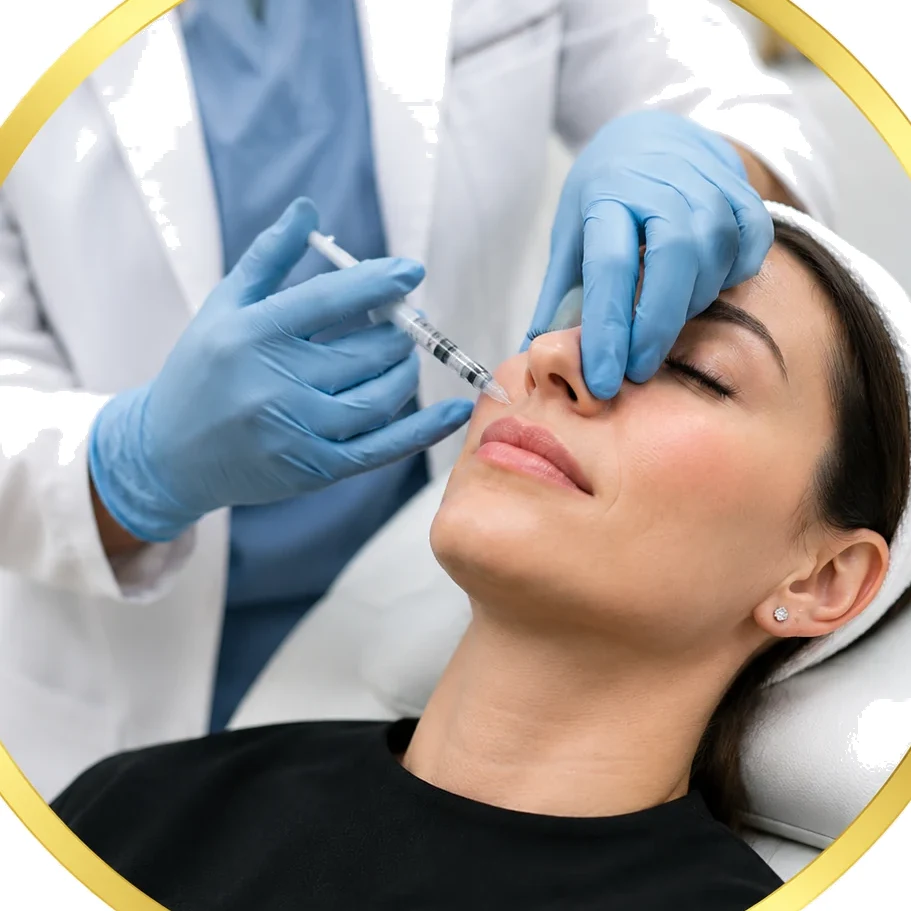
HA dermal fillers are the primary non-surgical choice for treating nasolabial folds because they restore the volume deficit that creates the crease, are reversible with hyaluronidase, and carry a well-established safety record when placed by a trained clinician. The filler physically lifts the overlying skin by supporting the tissue beneath it, softening the shadow the fold casts.
A typical treatment session:
- Consultation and assessment: Your clinician reviews your medical history, assesses fold depth at rest and in motion, and discusses realistic outcomes. Photographs are taken.
- Consent and cooling-off period: You receive written information about risks and are given time to reflect before proceeding.
- Marking and preparation: The injection sites are marked with the patient upright, since lying down shifts facial anatomy.
- Topical anaesthesia: A numbing cream is applied for 20–30 minutes, or a dental block may be offered for greater comfort.
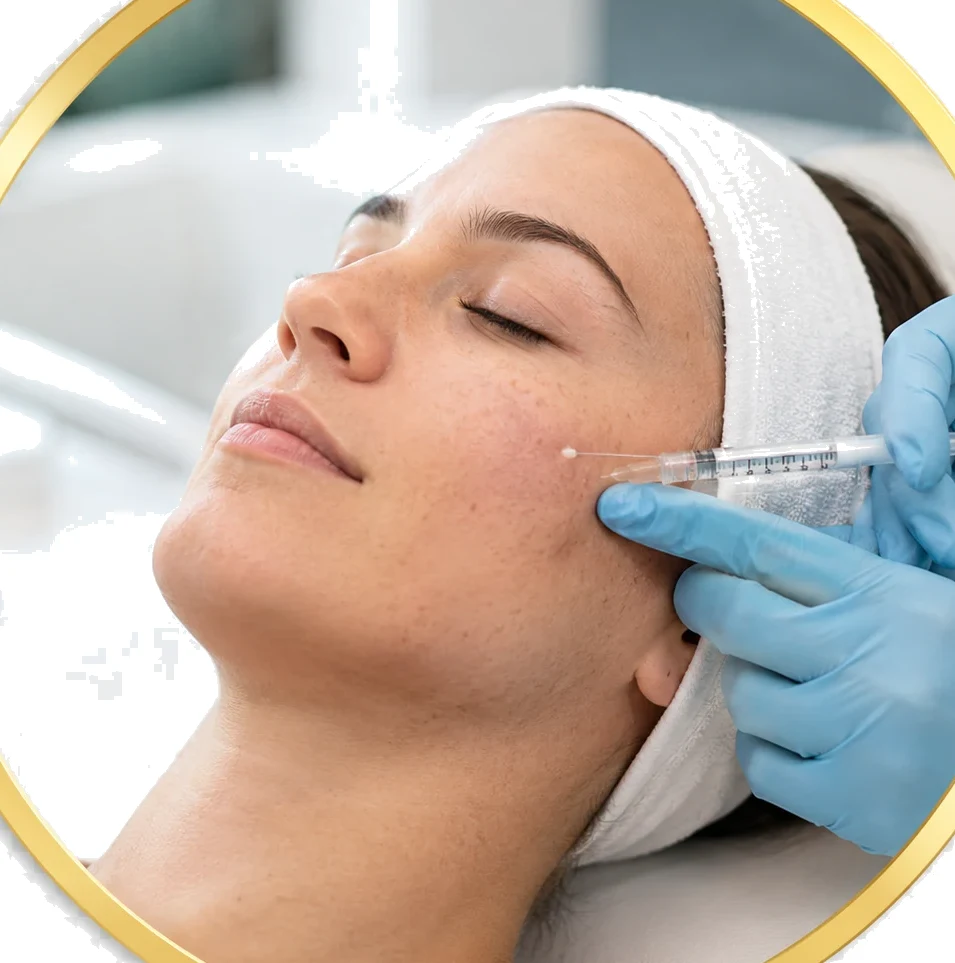
- Injection: Small aliquots of filler are placed using a needle or cannula, with the clinician moulding the product as they work.
- Immediate aftercare: Ice is applied to reduce swelling. You are advised to avoid strenuous exercise, alcohol, and lying flat for 24 hours.
Red flags to watch for after treatment:
- Severe, disproportionate pain not relieved by paracetamol
- Skin blanching (whitening) or a dusky, mottled discolouration around the treated area
- Any change in vision, including blurring or loss of part of your visual field
- Swelling or redness that worsens after 48 hours rather than improving
These signs may indicate vascular occlusion, a rare but serious complication. Contact your treating clinic immediately; a reputable clinic will have an emergency protocol and access to hyaluronidase.
Common side effects, bruising and swelling, typically resolve within 3–5 days. Results are visible almost immediately, though final settling takes 2–4 weeks as swelling subsides.
Pro Tip: Ask your practitioner about filler rheology before treatment. A softer, more cohesive product suits the superficial nasolabial crease, while a firmer product is better placed deeper for structural support. Incremental top-ups at 6–9 months tend to produce more natural results than a single large-volume session, and they reduce the risk of an overfilled appearance.
For more on technique and aftercare, Nexgen Clinic's dermal fillers resource covers the clinical detail behind different approaches.
How do skin boosters and biostimulators improve smile lines?
Skin boosters and biostimulators do not add structural volume the way fillers do. Instead, they work at the level of the dermis, stimulating collagen production and improving skin hydration, thickness, and elasticity. Used alongside fillers, they extend results and give the skin a healthier, more resilient quality that makes folds look softer even as the filler gradually metabolises.
- Skin boosters (e.g. Profhilo, Juvederm Hydrate): Deliver highly hydrated HA into the dermis, improving skin laxity and radiance. Profhilo spreads through tissue rather than staying in a fixed deposit, making it well suited to the perioral area. Two sessions four weeks apart is the standard starting protocol, with maintenance every 6 months.
- Calcium hydroxyapatite biostimulators (e.g. Radiesse): Provide both immediate volume and longer-term collagen stimulation. Particularly useful where mild volume replacement and skin quality improvement are both needed.
- Poly-L-lactic acid (e.g. Sculptra): A collagen stimulator that works gradually over 3–6 months. Results build slowly and can last up to two years, making it a good option for patients who want progressive, subtle improvement rather than an immediate change.
Good candidates for these treatments are patients with early to moderate fold depth, good skin elasticity, and realistic expectations about gradual improvement. They are less suitable as a standalone option for deep, structural folds where volume replacement is the primary need. Side effects are generally mild: temporary bruising, small papules at injection sites (usually resolving within days), and occasional swelling.
Nexgen Clinic's skin boosters content explains how these treatments are integrated into personalised plans.
When do energy-based devices help with facial folds?
Energy-based devices work by delivering controlled thermal or mechanical energy to the deeper layers of the skin, triggering a wound-healing response that stimulates new collagen and elastin. The main modalities used for nasolabial fold improvement are:
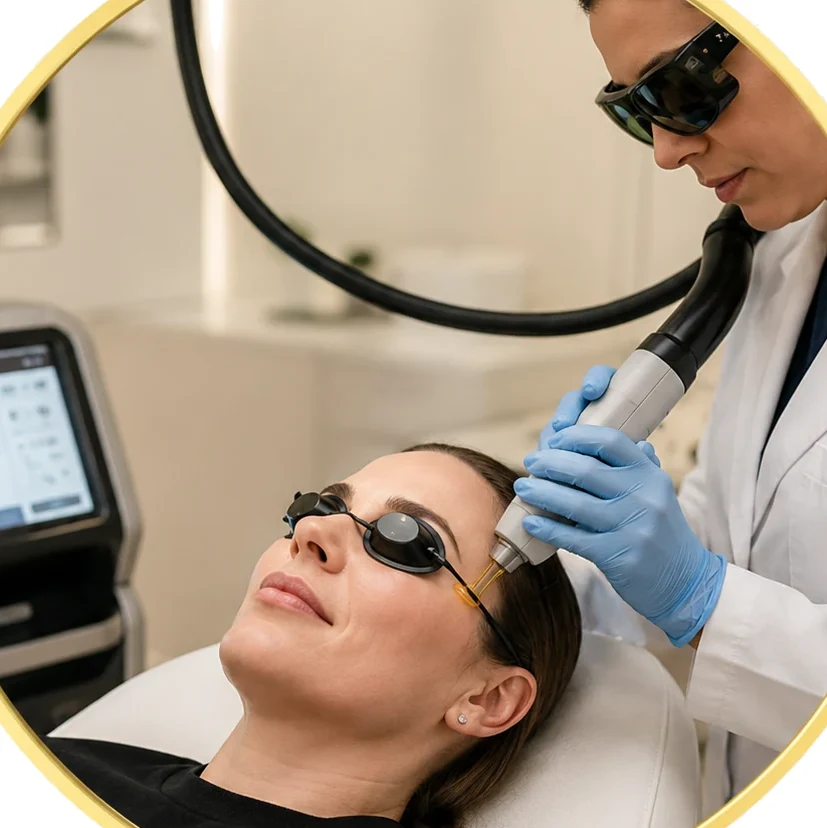
Non-ablative and ablative lasers target the dermis to remodel collagen without (non-ablative) or with (ablative) removal of the surface skin layer. Ablative treatments such as CO2 laser produce more dramatic results but require a longer recovery of 1–2 weeks and carry a higher risk of pigmentary change.
Microneedling with radiofrequency (RF) delivers RF energy through fine needles directly into the dermis, stimulating collagen at a controlled depth. Downtime is typically 2–5 days of redness and mild swelling. It suits patients with mild to moderate skin laxity and is generally safer across a wider range of skin tones than ablative lasers.
HIFU (high-intensity focused ultrasound) targets the SMAS layer beneath the skin, the same tissue plane addressed in a surgical facelift. It is best suited to patients with early skin laxity and mild fold depth, and results develop over 3–6 months as collagen remodels.
Energy devices are most effective for patients with mild to moderate folds driven by skin laxity and collagen loss rather than significant structural volume deficit. For deep folds with clear volume loss, devices alone will not produce meaningful correction; a volumising approach is still needed. Patients with darker skin tones (Fitzpatrick types IV–VI) should seek a practitioner experienced in treating their skin type, as the risk of post-inflammatory hyperpigmentation is higher with certain devices. Patch testing before a full treatment is advisable.
Thread lifts and surgical options: when to consider them
Non-surgical treatments have real limits. When skin laxity is significant, when there has been substantial bone or fat loss in the midface, or when a patient wants durable correction measured in years rather than months, surgical or minimally invasive structural options become the more appropriate conversation.
Decision cues for moving beyond non-surgical treatment:
- Moderate to severe skin laxity that does not respond adequately to fillers or devices
- Significant midface volume loss where fillers alone would require very large volumes
- Patient preference for longer-lasting results and tolerance for surgical recovery
- Previous filler treatments that have produced diminishing returns
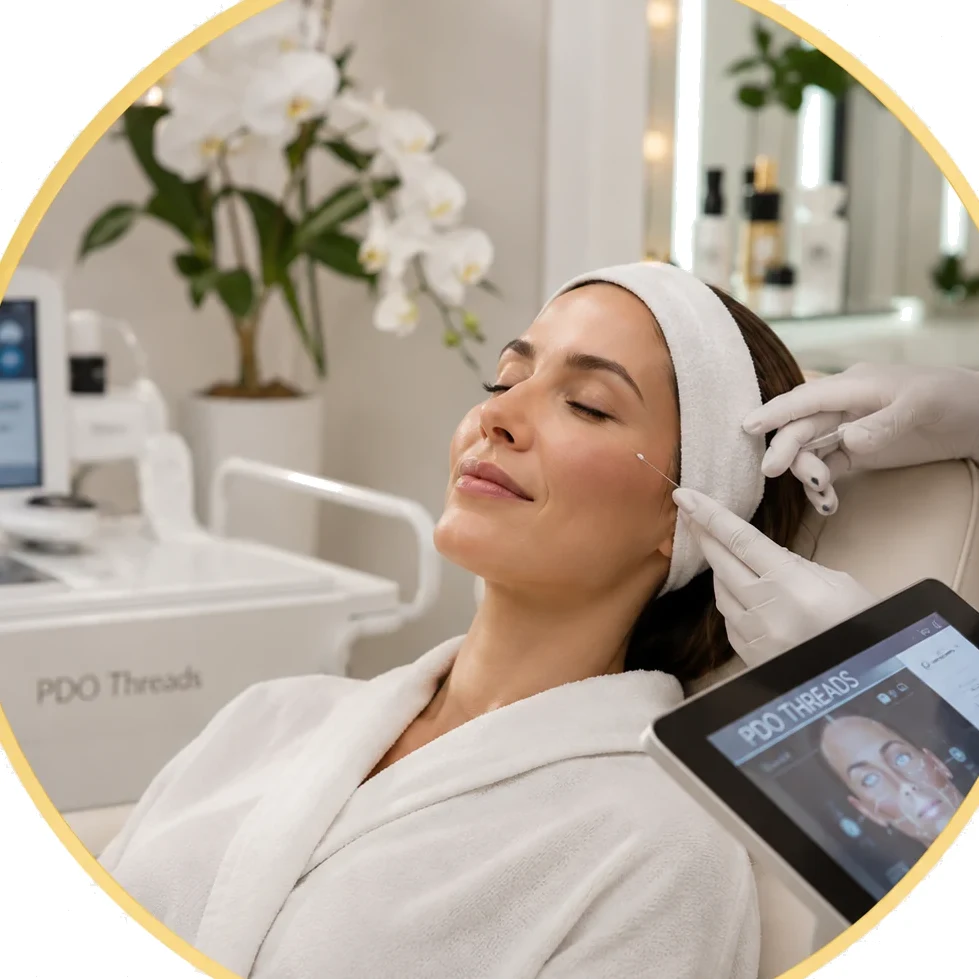
Thread lifts use absorbable PDO or PLLA threads inserted under the skin to physically lift soft tissue and stimulate collagen. Recovery is typically 3–7 days of bruising and swelling. Results last 12–18 months on average. They suit patients with mild to moderate laxity who want a mechanical lift without surgery, though they are not a substitute for a facelift in patients with significant tissue descent.
Fat grafting transfers the patient's own fat to restore midface volume, addressing the structural cause of deep folds. Results are longer-lasting than fillers, though some resorption occurs in the first 3–6 months. Recovery takes 1–2 weeks.
Midface lift and traditional facelift address the SMAS layer and redistribute or remove excess tissue. Results are the most durable of all options, lasting several years. Recovery is measured in weeks, and risks include scarring, nerve injury, and anaesthetic complications. A specialist surgical assessment from a GMC-registered plastic or maxillofacial surgeon is essential before proceeding.
Skincare, prevention and what you can realistically do at home
Topical skincare cannot erase an established deep nasolabial fold, but it does slow progression and improves the skin quality that makes any procedural treatment look better and last longer.
A practical daily routine:
- Morning: Apply a broad-spectrum SPF 30 or higher sunscreen as the final step. UV exposure is the single most modifiable cause of accelerated collagen loss.
- Evening: Use a retinoid (retinol, retinaldehyde, or prescription tretinoin) to stimulate collagen synthesis and accelerate cell turnover. Start at a low concentration and increase gradually to avoid irritation.
- Both AM and PM: A well-formulated moisturiser with ceramides or hyaluronic acid supports the skin barrier and keeps the surface hydrated, which makes folds appear less pronounced.
- Weekly or as directed: A vitamin C serum in the morning adds antioxidant protection and supports collagen production alongside the retinoid.
For clinic-grade topicals that complement procedural treatments, Nexgen Clinic's skincare supplies include professional-grade options suited to post-treatment skin.
Lifestyle factors that genuinely matter:
- Consistent daily sunscreen use is the most evidence-supported anti-ageing measure available without a prescription.
- Smoking cessation slows the accelerated collagen degradation that makes folds deepen faster.
- Maintaining a stable, healthy weight avoids the facial volume fluctuations that deepen folds over time.
Facial exercises are sometimes promoted as a remedy for smile lines. They may modestly improve muscle tone, but they do not restore lost volume or reverse structural collagen loss, and repeated movement is itself one of the causes of fold formation. Topicals and lifestyle measures are genuinely useful for prevention and skin quality; they are not a reliable substitute for procedural correction of established deep folds.
How to choose a safe clinic or practitioner in the UK
The UK cosmetic sector is not uniformly regulated, which means the responsibility for checking credentials falls largely on you as the patient. The NHS advises asking for proof of training, skills, and insurance before any cosmetic procedure.
Credentials to verify:
- GMC registration for doctors (searchable on the GMC website)
- JCCP registration for non-medical aesthetic practitioners; the JCCP and GMC have a formal memorandum of understanding.pdf) to align safety standards
- Evidence of specific training in the procedure you are considering
- Current indemnity insurance covering the treatment
Questions to ask at consultation:
- How many nasolabial fold treatments have you performed, and may I see before-and-after images?
- What is your protocol if I experience a complication, including out-of-hours?
- Do you have access to hyaluronidase on site?
- What does the consent process involve, and will I receive written information to take away?
- Can I have a cooling-off period before committing to treatment?
The GMC's guidance on cosmetic interventions stresses that patients should be given time to reflect before consenting, and that consent must be taken by the practitioner carrying out the procedure, not a receptionist or sales coordinator.
Red flags:
- Pressure to book and pay on the same day as consultation
- Time-limited discounts that expire if you do not commit immediately
- No written consent process or no offer of a cooling-off period
- Inability to explain complication management or provide emergency contact details
- The JCCP and CPSA Code of Practice requires clear risk information and appropriate follow-up; a practitioner who cannot provide this is not meeting the expected standard
Nexgen Clinic's approach to natural nasolabial fold improvement
Nexgen Clinic in Cambridge takes a medically led, AI-assisted approach to treating nasolabial folds. Rather than offering a single-product fix, the clinic combines AI skin analysis with a clinician assessment to build a bespoke plan that addresses the specific causes driving each patient's folds, whether that is volume loss, skin laxity, or a combination of both.
The NexGen Age Reset™ programme integrates dermal fillers, skin-quality injectables, and evidence-led device treatments to produce subtle, natural-looking results that improve over time rather than appearing done. The Facial Balance™ programme focuses on overall facial harmony, ensuring that treating the nasolabial area does not create imbalance elsewhere. Both programmes are designed around the principle that the best outcomes come from layered, complementary treatments rather than a single large intervention.
Clinician oversight is central to the Nexgen Clinic model. Every treatment plan is reviewed by a medically qualified practitioner, and the clinic reports a 98% client satisfaction rate. For patients who want to understand their options before committing, an initial AI-assisted skin analysis consultation provides a clear picture of what is driving their concerns and what realistic improvement looks like.
Key takeaways
Hyaluronic acid dermal fillers remain the most predictable non-surgical option for nasolabial folds, and combining them with skin-quality treatments consistently produces the most natural and durable results.
| Point | Details |
|---|---|
| HA fillers are first-line non-surgical | They restore volume, are reversible, and typically last 9–18 months in the nasolabial area. |
| Combined approaches outperform single treatments | Pairing fillers with skin boosters or biostimulators improves texture and extends results. |
| Energy devices suit mild laxity | RF, HIFU, and laser work best for early ageing and skin tightening, not deep structural volume loss. |
| Credentials matter more than price | Always verify GMC or JCCP registration, indemnity insurance, and request a cooling-off period. |
| Nexgen Clinic offers a layered, medically led approach | AI skin analysis and signature programmes (Age Reset™, Facial Balance™) combine treatments for personalised, natural outcomes. |
This article provides general information only and is not a substitute for professional medical advice. Confirm your suitability for any treatment with a qualified clinician.
A practitioner's perspective on what patients often overlook
The most common mistake patients make when researching nasolabial fold treatment is treating it as a single-product decision rather than a structural one. They arrive having already decided they want "filler" or "Botox," when the real question is: what is actually causing the fold to look the way it does?
Deep nasolabial folds are almost always the result of midface volume descent, not just surface skin change. Placing filler directly into the fold line without addressing the cheek volume that has dropped above it can produce a result that looks filled rather than lifted. The most natural outcomes come from restoring support higher up in the face first, then addressing the residual crease. This is a technique and assessment question, not just a product question, which is why the practitioner's experience and their willingness to have an honest conversation about your anatomy matters far more than the brand of filler they use.
Patients also underestimate how much skin quality affects the final result. A well-placed filler in skin that is thin, sun-damaged, and dehydrated will look different from the same filler in skin that has been prepared with retinoids, sunscreen, and a skin booster course. The procedural result and the skin condition around it are inseparable. Investing in skin quality before and after treatment is not a luxury add-on; it is what makes the difference between a result that looks natural at six months and one that looks natural at eighteen.
Ready to find out which treatment suits you?
Nexgen Clinic offers a medically led consultation that goes beyond a quick assessment. Using AI skin analysis alongside a clinician review, the team identifies the specific structural and skin-quality factors driving your nasolabial folds and builds a plan around your goals, not a standard menu. There is no obligation to proceed on the day; a cooling-off period is built into the process.
Treatments available include dermal fillers, skin boosters, biostimulators, and device-based options, all delivered under medical supervision in Cambridge. To book your consultation or find out more about what is involved, visit Nexgen Clinic or browse the full treatment options. Bring your medical history, any current skincare products, and photographs if you have them. The consultation determines suitability and cost; nothing is booked or charged until you are ready.
Useful UK sources and further reading
- NHS: Cosmetic procedures — explains why cosmetic treatments are not routinely funded and what to consider before proceeding privately.
- NHS: Choosing who will do your cosmetic procedure — practical guidance on checking training, insurance, and aftercare arrangements.
- GMC: Cosmetic interventions — professional standards — the standards doctors must meet when offering cosmetic treatments, including consent and competence requirements.
- JCCP and GMC Memorandum of Understanding — explains how the two bodies cooperate to raise safety standards for non-surgical aesthetics.
- JCCP and CPSA Code of Practice (2023) — the practitioner standards covering risk disclosure, consent, and follow-up that you can use as a checklist when choosing a clinic.
- Nexgen Clinic — Cambridge-based clinic offering medically led nasolabial fold assessment and treatment; contact point for booking a consultation.
FAQ
What is the best treatment for nasolabial folds?
Hyaluronic acid dermal fillers are widely regarded as the most effective non-surgical option, restoring the volume loss that creates the fold and lasting several months. Combining fillers with skin boosters or biostimulators improves skin quality and extends results.
How do you get rid of nasolabial folds without surgery?
HA fillers, skin boosters, biostimulators, and energy-based devices such as HIFU and radiofrequency all reduce the appearance of smile lines without surgery. The right combination depends on whether volume loss, skin laxity, or both are the primary cause, which a clinician assessment will determine.
Does Botox work on nasolabial folds?
Botulinum toxin plays a limited, adjunctive role; it can reduce the dynamic muscle movement that deepens folds over time, but it does not restore volume and is not a primary treatment for static nasolabial creases. Fillers remain the preferred option for direct fold correction.
How do celebrities and others achieve smooth nasolabial areas?
Most visible improvements in public figures are achieved through a combination of HA fillers for volume restoration, skin boosters for skin quality, and sometimes surgical midface lifting for more structural correction. Natural-looking results come from layered, incremental treatment rather than a single large-volume session.
How much does nasolabial fold treatment cost in the UK?
Costs for HA filler sessions, skin boosters, and surgical options vary widely across clinics and individual treatment plans in the UK. Always confirm prices at your consultation.
Recommended
- Lip Fillers Cambridge: Achieve Natural-Looking Results
- Dermal & Lip Fillers | NexGen Clinic Journal
- Jawline Filler Cambridge | NexGen Clinic
- Injectables & Anti-Wrinkle | NexGen Clinic Journal
Explore related NexGen treatments
- Explore our full treatment menu
- Book a consultation with our clinicians
- Contact our Cambridge team
- Read more articles in the NexGen Journal
Ready to explore your options?
Speak with a NexGen clinician for a personalised consultation. We’ll listen, assess, and recommend the safest and most effective route — always led by evidence, always tailored to you.
Book a consultation or get in touch with our Cambridge team.