PDO thread lifts commonly cause mild, temporary reactions such as swelling and bruising. Serious complications, including deep infection or nerve injury, are uncommon and are mostly linked to technique, thread count, and patient selection. If you're weighing up a thread lift, understanding this distinction, and choosing a practitioner who manages it well, matters more than the headline risk figure.
TL;DR:
- Most mild reactions, like swelling and bruising, occur in nearly a third to a quarter of cases and typically resolve within a few weeks with simple management.
- Late-occurring issues such as thread migration or persistent numbness are rare but require prompt clinical attention to prevent permanent damage.
- Higher risk groups include older patients, those with skin conditions or on blood-thinning medication, and those with multiple threads or improper placement.
- Technical skill significantly influences safety; shallow placement or tension errors increase the likelihood of dimpling, visible threads, or migration.
- Thorough pre- and post-treatment care, along with choosing an experienced practitioner, substantially reduces complication risks.
Table of Contents
- PDO threads risks: sequelae versus complications explained
- How common are PDO thread side effects?
- Moderate and serious PDO thread complications explained
- Who should avoid PDO threads: contraindications and higher-risk groups
- Why practitioner skill changes your risk of PDO thread complications
- How to reduce your risk before and after PDO threads
- Checking regulatory and safety standards before you book
- NexGen Clinics' approach to assessing and minimising thread lift risk
- The evidence says less about threads and more about hands
- Considering a thread lift? Start with a proper skin assessment
- Sources
- FAQ
PDO threads risks: sequelae versus complications explained
Clinicians drawing conclusions about thread lift safety rely on a distinction that patients rarely hear about before treatment: the difference between "sequelae" and "complications". Getting this right changes how you interpret almost everything that happens to your face after the procedure.
Sequelae are the expected, transient reactions your body has to any needle or cannula passing through skin. Swelling, bruising, and mild soreness along the thread path fall into this category. They're not a sign anything has gone wrong; they're the normal early inflammatory response, usually resolving within a few weeks.
Complications are different. These are unplanned, unwanted outcomes that need active management, ranging from infection to a thread that has migrated out of position. A systematic review of thread-lift outcomes notes that studies vary widely in how they report these events, but the underlying pattern holds: early, self-limiting reactions are one thing, and late complications requiring intervention are another entirely.
The timing matters for a practical reason. Events that appear in the first few days are almost always sequelae:
- Swelling and puffiness along the insertion points
- Bruising or discolouration under the skin
- Mild to moderate soreness when touching the treated area
- Slight tightness or pulling sensation as threads settle
Events that appear or persist weeks later, such as a palpable ridge, a visible thread beneath thin skin, or lasting numbness, warrant a call to your clinic rather than a wait-and-see approach.
How common are PDO thread side effects?
The honest answer, backed by pooled data, is that mild reactions are the rule rather than the exception. A meta-analysis of thread-lifting complications found swelling in roughly 34% of cases, ecchymoses (bruising) in around 26%, and pain in about 11%. These are the events almost every patient should expect to some degree, not evidence of a botched procedure.
Pooled data point: across multiple studies, swelling affects roughly a third of patients, bruising just over a quarter, and pain around one in nine. Visible threads, skin dimpling, and temporary numbness each occur in single-digit percentages.
Study heterogeneity is worth flagging here. Different research teams count events differently, follow patients for different lengths of time, and use varying thread brands and techniques, so treat these figures as useful ranges rather than fixed probabilities for any individual.
Management is usually simple:
- Cold compresses in the first 24 to 48 hours reduce swelling and bruising.
- Paracetamol, rather than aspirin or ibuprofen, controls discomfort without increasing bleeding risk.
- Arnica gel or tablets are widely used, though evidence for their effectiveness is mixed.
- Antibiotics are reserved for confirmed or strongly suspected infection, not used routinely.
Sleeping slightly elevated for the first few nights and avoiding vigorous facial massage in the initial week both help minimise bruising and swelling in most patients.
Moderate and serious PDO thread complications explained
Beyond the expected reactions, a smaller group of complications can occur that need proper clinical attention. Understanding what they look like helps you recognise a problem early rather than waiting until it becomes harder to correct.
Skin dimpling happens when a thread pulls unevenly on the skin surface, usually because it was placed too shallow or tensioned incorrectly. Case series document dimpling alongside asymmetry and thread extrusion as recurring themes, most often traced back to technique rather than the thread material itself. Visible or palpable threads occur when the device sits too close to the surface, particularly in patients with thin skin. The Frontiers meta-analysis puts visible threads at around 10% and dimpling at roughly 7%.
Migration and extrusion, where a thread moves from its original position or pushes through the skin, are less common but more disruptive, often requiring removal. A multicentre cohort study of 2,000 cases found an overall complication rate of 12.4%, with skin retraction affecting 6.35% of patients and asymmetry affecting 2.9%.
Rare but serious events include deep infection, pooled at around 2% in the Frontiers analysis, persistent paresthesia (temporary nerve irritation, roughly 6%), and, very rarely, vascular compromise, where a thread compresses or damages a blood vessel. Any of these needs urgent clinical review, not a wait-and-see approach.
Pro Tip: If a treated area becomes increasingly red, hot, or painful more than 72 hours after your thread lift, rather than settling, contact your clinic the same day. Worsening symptoms after the initial 48 to 72 hour window are the clearest signal that something needs medical attention rather than time.
Standard corrective measures include gentle massage for dimpling, steroid injection for stubborn lumps or granulomas, thread removal for extrusion or migration, antibiotics for confirmed infection, and, in rare vascular cases, urgent surgical referral.
Who should avoid PDO threads: contraindications and higher-risk groups
Some patients simply aren't good candidates, and a responsible clinic will say so at consultation rather than after treatment.
Absolute contraindications include active skin infection at the treatment site, pregnancy or breastfeeding, uncontrolled autoimmune or connective tissue disease, and known allergy to the thread material. These rule out treatment outright, at least until the underlying issue resolves.
Relative contraindications require more judgement:
- Anticoagulant or antiplatelet medication, which raises bruising and bleeding risk
- A personal or family history of keloid scarring
- Recent dental work near the treatment area, which can increase infection risk if timing overlaps
- Active acne or inflammatory skin conditions in the planned thread pathway
Age and thread count both matter more than most patients realise. The same 2,000 case cohort identified older age and higher thread count as independent predictors of complications, meaning more threads placed in older, less elastic skin carries measurably higher risk. For significant skin laxity, surgical referral, rather than threads, is usually the more appropriate route.
Why practitioner skill changes your risk of PDO thread complications
Much of what goes wrong with thread lifts traces back to how they're done, not what they're made of. Placement plane, vector direction, and thread selection all interact, and getting any one of them wrong shifts the risk profile considerably.
Shallow placement is one of the most common technique errors, producing visible ridging or dimpling because the thread sits too close to the skin surface instead of within the subcutaneous plane. Cutting or anchoring a thread under excessive tension is another frequent mistake, one that often leads to migration or early relapse of the lift.
Thread material choice adds another layer of nuance. PDO (polydioxanone), PCL (polycaprolactone), and permanent threads behave differently in tissue, with different absorption timelines and different tolerances for tension. A systematic review and case report on PDO thread use notes a lack of standardised insertion technique across the field, and proposes tools like ultrasound mapping to reduce the risk of migration and vascular injury by helping practitioners visualise anatomy before placement.
Pro Tip: Ask your practitioner directly which plane they place threads in and why they've chosen that vector for your face. A confident, specific answer is a reasonable proxy for how much formal training they've had, since vague answers here often reflect vague technique.
How to reduce your risk before and after PDO threads
Reducing risk starts well before the appointment and continues for weeks afterwards. A thorough consultation should cover:
- Full medical history, including medication, allergies, and any autoimmune conditions.
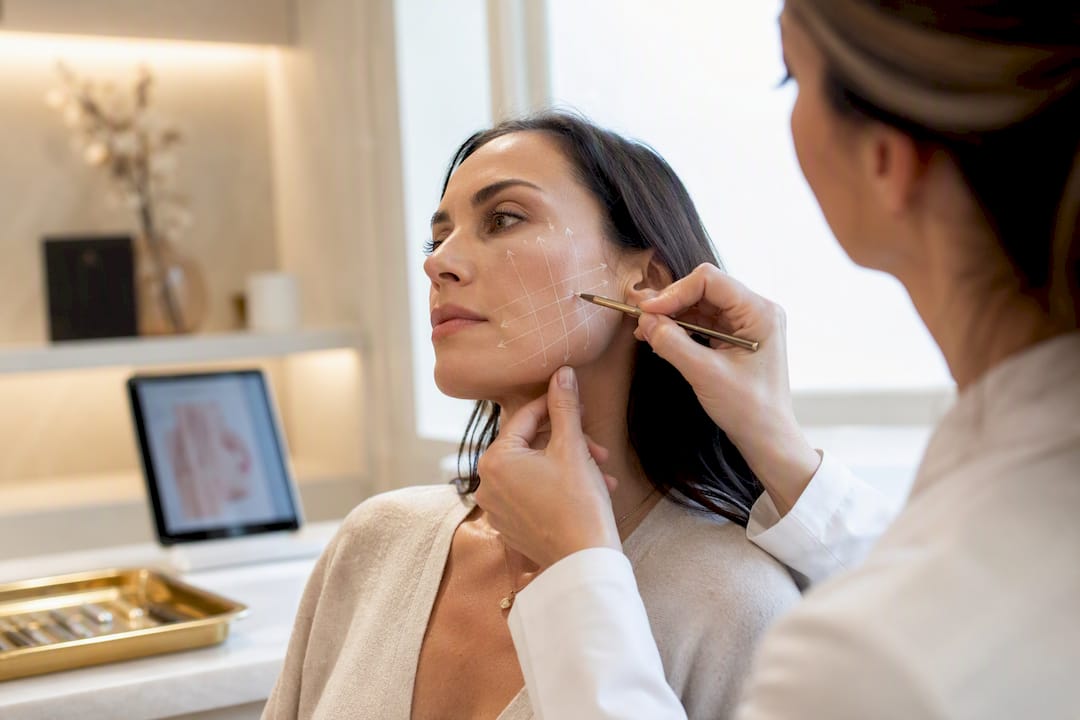
- Photographic assessment and a written treatment plan showing thread type, count, and placement areas.
- Clear, documented consent covering expected sequelae, possible complications, and off-label use where the device isn't specifically cleared for lifting.
- Confirmation of the device batch and the practitioner's registration and training.
Before treatment, avoid scheduling around major dental work, discuss any blood-thinning medication with your prescriber first, and stop smoking where possible, since smoking slows healing and raises infection risk.
Aftercare then does much of the remaining work:
- Avoid vigorous facial massage, dental treatment, and strenuous exercise for around two weeks.
- Sleep on your back, slightly elevated, for the first few nights.
- Avoid opening your mouth excessively wide (shouting, extensive dental work, very hard chewing) for one to two weeks.
- Contact your clinic promptly if pain worsens rather than improves after 72 hours, or if you notice a visible thread or new lump.
A clinic-backed aftercare guide is worth reviewing before you book, so you know exactly what recovery should look like day by day. Supporting skin quality generally, with products such as a collagen face mask designed for the upper and lower face separately, can complement recovery, though it's not a substitute for following your clinic's specific instructions.
Checking regulatory and safety standards before you book
Cosmetic lifting claims for PDO threads sit in a grey area worth understanding. Many devices are cleared by regulators for soft-tissue approximation, and the lifting effect itself is often an off-label use of that clearance, which is standard in aesthetic medicine but should be disclosed to you as part of consent.
Clinic governance matters just as much as the device. In England, thread lifting falls under regulated surgical activity, meaning premises should be appropriately registered and treatment carried out by a suitably qualified healthcare professional, not simply a beautician with a certificate.
Before booking, it's reasonable to ask about:
- The specific device brand and its regulatory clearance
- The practitioner's professional registration (GMC, GDC, NMC, or equivalent)
- Written aftercare instructions and a complaints procedure
- Batch record keeping for traceability
NexGen Clinics' approach to assessing and minimising thread lift risk
At Nexgen Clinic, risk reduction starts before a single thread is chosen. AI-supported skin analysis maps your skin quality, laxity, and facial anatomy in detail, feeding into a bespoke treatment plan rather than a one-size-fits-all thread count. This assessment, combined with documented consent covering expected sequelae and realistic outcomes, is the same standard we'd want for our own family.
If you're exploring PDO thread lifts at our Cambridge clinic, bring specific questions: which thread material, how many threads, which plane, and what the realistic recovery timeline looks like for your skin type. A good consultation should answer all of these clearly, not vaguely.
The evidence says less about threads and more about hands
The research reviewed here points to an uncomfortable truth for an industry that likes to sell thread lifts on the material alone: the thread matters far less than the hands placing it. They're telling you about variation in training, technique, and patient selection across the clinics generating that data.
Conventional advice tends to reassure patients that "PDO dissolves naturally, so it's safe", which is true but incomplete. It skips past the fact that age and thread count are measurable predictors of complications, and that shallow placement or poor vector choice cause most of the visible problems patients actually complain about.
If there's one thing to prioritise above all else, it's this: ask about technique before you ask about price. A slightly more expensive practitioner who explains their approach to plane and tension confidently is a better bet than a cheaper one who can't.
— Ms Sandra Petraskaite
Considering a thread lift? Start with a proper skin assessment
An advantage of clinics combining aesthetic treatments with advanced skin analysis technology is the ability to tailor treatment plans before any decision about thread count or placement is made. That matters directly for risk: since age and thread count are known predictors of complications, a plan built around your specific skin, rather than a standard package, is one of the more sensible ways to keep your risk profile low.
Nexgen Clinic offers PDO thread lifts from its Cambridge clinic alongside complementary regenerative treatments such as polynucleotides, for patients who want a broader conversation about skin quality rather than a single isolated procedure. Consultations typically cover medical history, realistic expectations, and full written consent, which is important groundwork before treatment. If you're ready to find out whether a thread lift suits your skin, book a consultation through our treatments page or visit the Nexgen Clinic homepage to see the full range of options available to you.
Sources
- A meta-analysis of complications of thread lifting
- Incidence and predictors of complications after polydioxanone thread lift: a multicentre retrospective cohort study
- Complications of thread lift about skin dimpling and thread extrusion (PMC)
FAQ
Why do some plastic surgeons dislike PDO threads?
Some surgeons are sceptical because thread lifts produce more modest, shorter-lived results than surgical facelifts, typically lasting 6 to 12 months, and because outcomes vary considerably with practitioner skill.
Can a PDO thread lift go wrong?
Yes. While most reactions are mild and temporary, complications including thread migration, dimpling, and rarely infection or nerve irritation can occur, most often linked to technique or patient selection rather than the thread material itself.
Are PDO threads risky overall?
The overall complication rate reported in a large multicentre cohort was 12.4%, with most events being manageable rather than severe; serious events like deep infection occur in around 2% of cases according to pooled meta-analysis data.
Is it worth getting PDO threads?
For patients with mild to moderate skin laxity who choose an experienced, appropriately registered practitioner, PDO threads can offer a worthwhile, low-downtime option, though results are more subtle and shorter-lived than surgery.
What's the difference between a sequela and a complication?
A sequela is an expected, temporary reaction like swelling or bruising that resolves on its own within a few weeks, while a complication is an unplanned adverse event, such as infection or thread migration, that requires active treatment.
Recommended
- PDO thread lift: what to expect and how to choose safely
- PDO Thread Lifts in Cambridge | Non-Surgical Lifting
- Brow thread lift: what to expect and who it suits
Ready to explore your options?
Speak with a NexGen clinician for a personalised consultation. We’ll listen, assess, and recommend the safest and most effective route — always led by evidence, always tailored to you.
Book a consultation or get in touch with our Cambridge team.