Yes, jowls can often be improved without surgery, and for mild to moderate sagging, the results can look genuinely natural. Severe skin excess is different: no injectable or device reliably replaces what a facelift does when the skin envelope has stretched significantly. The most reliable non-surgical routes fall into four groups, and which one suits you depends on what is actually causing your jowls, not just how visible they are.
- Structural volume loss — dermal filler placed along the jawline, chin and mid-face restores support and camouflages the jowl.
- Skin laxity with reasonable elasticity — energy-based tightening (Ultherapy's microfocused ultrasound, Thermage radiofrequency, or RF microneedling) stimulates collagen over months.
- Mild to moderate descent, or a short-term lift before an event — PDO or Silhouette Soft thread lifts offer mechanical repositioning.
- Dull, thin or crepey skin quality — Profhilo and other skin boosters improve the tissue itself rather than lifting it.
A GMC-registered practitioner assessing all four factors, rather than selling a single treatment, is what separates a natural outcome from an overdone one. At Nexgen Clinic, that structured assessment is the starting point for every jowl consultation.
Key Takeaways
Non-surgical jowl treatment works best when a structural treatment restores lost volume and a skin-quality treatment refines the envelope afterwards, rather than relying on either alone.
| Point | Details |
|---|---|
| Match treatment to cause | Volume loss needs filler, laxity needs energy devices, descent needs threads. |
| Combine for natural results | Pairing structural and skin-quality treatments outperforms single modalities. |
| Know the finger-lift test | If the jowl doesn't smooth with a gentle push, surgery may be the better route. |
| Budget for maintenance | Most non-surgical results last 6 to 24 months and require repeat sessions. |
| Nexgen Clinic's approach | Combines AI-led skin analysis with GMC-registered practitioners and a structure-plus-envelope treatment plan. |
Table of Contents
- How non-surgical jowl treatments work at a tissue level
- Comparing the main non-surgical treatments for jowls
- Dermal fillers for a natural, camouflaged jawline
- Thread lifts: a short-term mechanical solution
- Does Ultherapy really tighten jowls?
- Radiofrequency and RF microneedling for skin tightening
- Can Profhilo and skin boosters improve jowl appearance?
- Why combining treatments gives more natural-looking jowls
- How do you choose the right non-surgical treatment?
- What results and timeline should you expect, and what does it cost?
- What are the risks of non-surgical jowl treatments?
- How Nexgen Clinic approaches non-surgical jowl treatment
- What conventional advice on jowls gets wrong
- Ready to explore non-surgical jowl treatment options?
- Sources
- FAQ
How non-surgical jowl treatments work at a tissue level
Jowls rarely have one cause. Four things typically happen at once: the skin envelope loosens, the fat pads that once sat high on the cheek descend and pool along the jawline, deep and skeletal volume is lost from the mid-face and chin, and the platysma muscle in the neck pulls downward on the lower face as it weakens. Understanding which of these dominates in your case is what a proper consultation should establish before any treatment is recommended.
Each non-surgical option addresses a different piece of that puzzle:
- Fillers rebuild structural support along the jawline and chin, restoring the vectors that used to hold the lower face up.
- Energy devices (ultrasound, radiofrequency) heat tissue to trigger neocollagenesis and immediate thermal contraction of existing collagen.
- Threads create mechanical traction and provoke a secondary collagen response around the suture.
- Lipolytic injections or fat-reducing devices shrink localised fat pads that contribute to jowl bulk.
Pro Tip: Think of it as "structure plus envelope." Restoring lost volume gives the face its underlying shape back; tightening or improving the skin afterwards refines the surface. Treating only the skin envelope on a face that has lost significant structural volume tends to look hollow rather than lifted.
Comparing the main non-surgical treatments for jowls
No single method wins on every measure. The table below reflects how these categories typically perform on severity match, mechanism, and durability.
| Method | Best for | Primary mechanism | Sessions | Downtime | Typical longevity | Typical cost range | Main risks |
|---|---|---|---|---|---|---|---|
| Dermal filler | Mild to moderate, volume-driven | Volume replacement | 1 per area | Minimal, 24 hours swelling | 12 to 24 months | £300 to £900 per session | Bruising, lumps, rare vascular occlusion |
| Thread lift (PDO/Silhouette Soft) | Mild to moderate descent | Mechanical lift plus collagen stimulation | 1, occasionally repeated | Several days | Under 12 to around 18 months | £600 to £1,800 | Bruising, thread visibility, migration |
| Ultherapy (MFU) | Mild to moderate laxity, good skin quality | Deep collagen remodelling (SMAS) | Usually 1 | Redness, tenderness, 1 to 3 days | 12 to 24 months | £1,500 to £3,000 | Modest results, transient nerve tingling |
| Thermage/RF microneedling | Mild laxity, skin quality concerns | Thermal skin tightening | 1 to 3 (RF microneedling series) | 1 to 3 days redness | 6 to 12 months, repeat maintenance | £400 to £1,200 per session | Redness, swelling, rare burns |
| Profhilo/skin boosters | Mild laxity, poor skin quality | Skin bioremodelling, hydration | 2 initial, then maintenance | Minimal | 6 to 12 months | £300 to £900 per session | Bruising, temporary lumps |
Fillers and thread lifts tend to give the most immediately visible change, while Ultherapy and skin boosters work more subtly and take longer to show. Combining a structural treatment with a skin-quality treatment generally produces the most natural-looking outcome, because neither modality is being asked to do a job it wasn't designed for. Evidence strength also varies: microfocused ultrasound is the most studied non-surgical tightening option, though effect sizes remain modest, while much of the RF device literature is heterogeneous across settings and follow-up periods.
Dermal fillers for a natural, camouflaged jawline
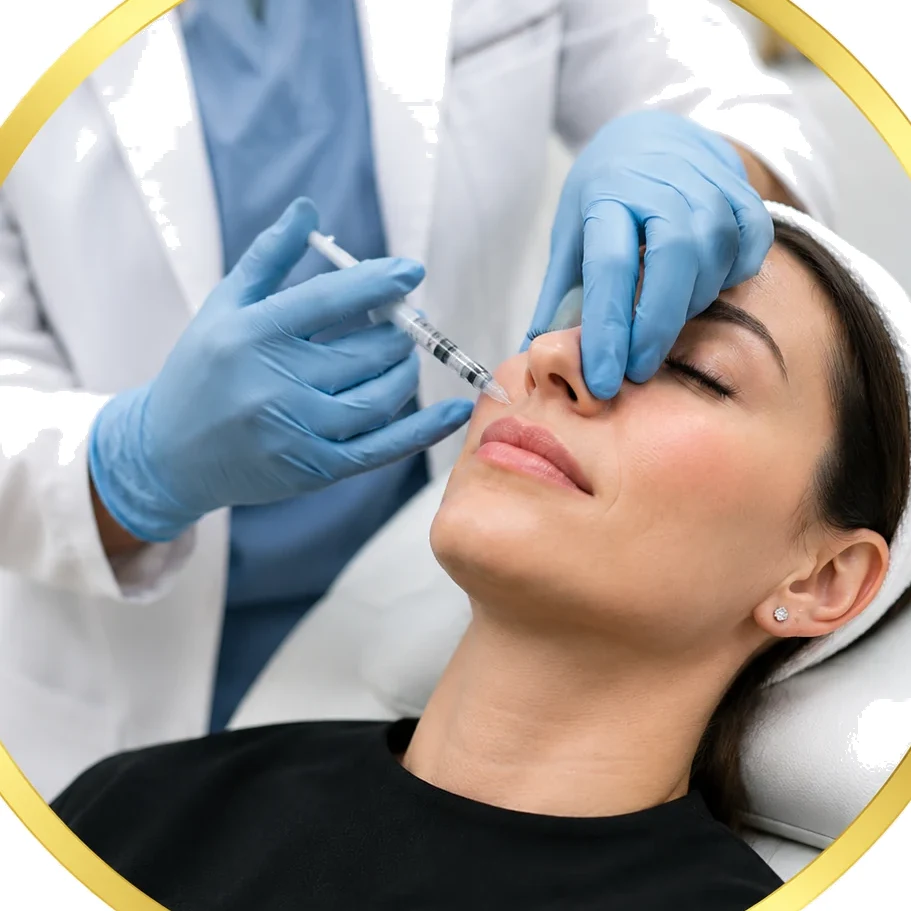
Filler for jowls rarely goes into the jowl itself. Skilled practitioners target the pre-jowl sulcus (the hollow just in front of the jowl), the mandibular angle, the chin, and often the mid-face, restoring the structural vectors that have deflated with age. Product choice matters here: a filler's rheology and cohesivity (its G' value) determine whether it holds shape under the skin or spreads and looks soft. Deeper, structural products are usually chosen for the jawline; softer ones for finer camouflage work.
Filler doesn't reposition tissue. It supports and disguises, typically lasting 12 to 24 months depending on the product used.
Pro Tip: A staged approach, treating the chin and mid-face first, then reassessing the jawline at a follow-up visit, avoids the overfilled, widened lower face look that comes from treating everything in one sitting. Jawline filler works best as part of that sequence, not as a single fix.
Thread lifts: a short-term mechanical solution
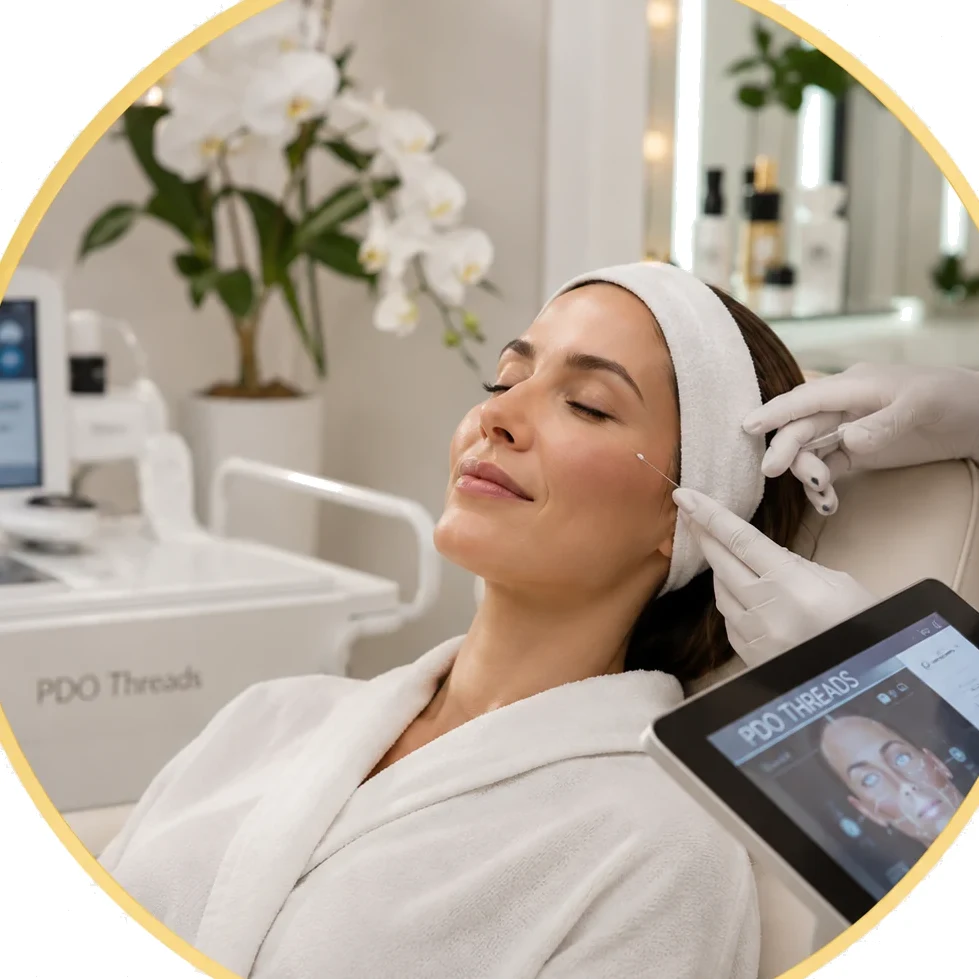
PDO threads, barbed sutures and Silhouette Soft devices are inserted under the skin and mechanically hitch descended tissue upward, while also provoking a modest collagen response around the thread track. A prospective study of PDO thread lifts found measurable improvement in neck laxity, with visible effects typically lasting up to around 18 months, shorter than most energy-based or filler options.
Expect bruising and soreness for several days, with a small risk of thread visibility or migration under thin skin. Threads suit mild to moderate descent, or patients wanting a short-term lift before a specific event, rather than long-term correction on their own.
Pro Tip: Pairing threads with a biostimulator or filler tends to outlast threads used alone, because the volume support keeps the lifted tissue from settling back as quickly. PDO thread lift options are often planned this way from the outset.
Does Ultherapy really tighten jowls?
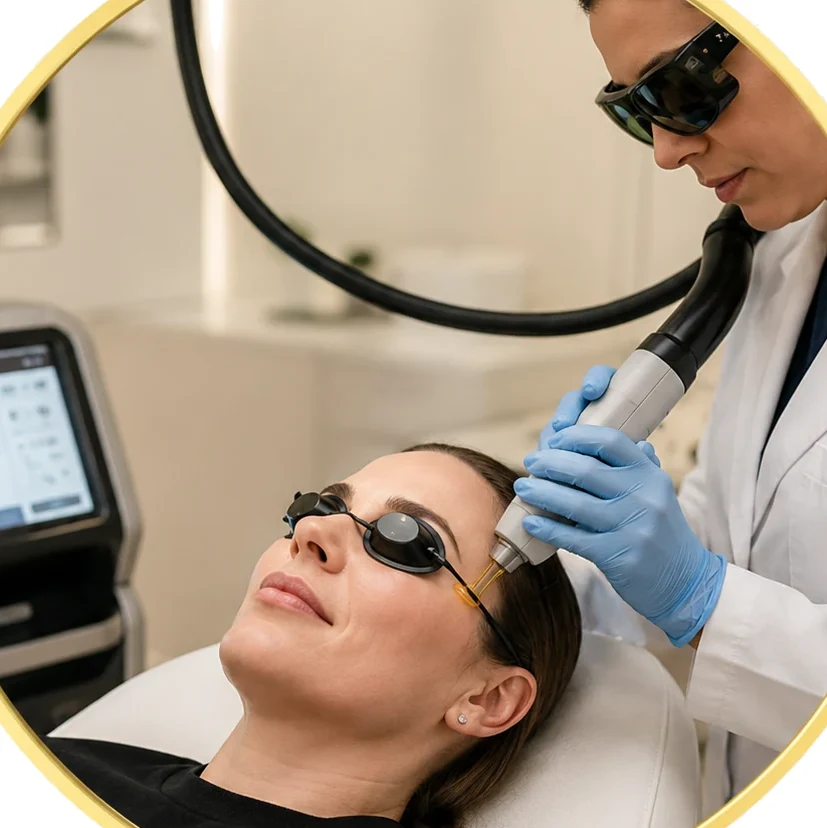
Ultherapy delivers microfocused ultrasound energy to precise depths, including the SMAS layer that surgeons tighten in a facelift, triggering collagen remodelling over the following months. It suits people with mild to moderate laxity, reasonable skin quality, and a normal to low BMI. It is a poor match for heavy jowls or significant skin excess.
Most patients need a single session. Downtime is minimal, usually redness and tenderness for a day or two, but results build gradually, becoming visible over 3 to 6 months and lasting roughly 12 to 24 months. Effect sizes are genuinely modest compared with surgery, and setting that expectation upfront prevents disappointment.
Radiofrequency and RF microneedling for skin tightening
Radiofrequency devices split into three distinct categories that get confused often. Surface RF (Thermage) heats the skin from the outside. RF microneedling delivers fractional thermal injury deeper into the dermis via fine needles. RF-assisted lipolysis (RFAL) combines subdermal energy delivery with fat emulsification, targeting both tightening and localised fat.
- Thermage typically needs one to three sessions and suits general skin tightening with minimal downtime.
- RF microneedling works as a series, stimulating collagen through repeated fractional injury.
- RFAL is more targeted, often used where jowl fat and skin laxity coexist.
A 2026 prospective study of RFAL combined with RF microneedling for premature jowl and neck laxity found 67% of patients described 'marked' improvement at three months, with investigator-rated marked improvement rising from 33% at three months to 55% at six months. Common side effects across RF techniques include redness, swelling, and rarely, thermal injury when dosimetry controls are poor. Devices such as Exion fractional RF microneedling illustrate how modern platforms combine fractional delivery with real-time temperature feedback to manage that risk.
Can Profhilo and skin boosters improve jowl appearance?
Profhilo and similar skin boosters are bioremodelling injections that hydrate the dermis and modestly improve skin texture and firmness. They don't reposition sagging tissue. What they do is improve the quality of the skin envelope itself, which can make small to moderate laxity look noticeably smoother and fresher, particularly on skin that looks tired or crepey rather than structurally displaced.
A typical protocol runs two sessions a month apart, followed by maintenance every 6 to 12 months. Downtime is minimal and tolerability is good, making boosters an easy addition to almost any treatment plan. Skin boosters work best as one part of a broader plan rather than a standalone answer to true jowl descent.
Why combining treatments gives more natural-looking jowls
The "structure plus envelope" logic explains why combination plans consistently outperform single treatments for natural results: restore deep support first, using filler or a biostimulator, then address the skin layer with an energy device or a booster once the structural work has settled.
Two common pathways illustrate this. For early laxity with minimal volume loss, a course of RF microneedling or Ultherapy alone may suffice. For a jowl with genuine deflation, filler along the jawline and chin comes first, followed several weeks later by a tightening device once swelling has resolved. For a jowl with focal fat, a fat-reducing approach or RFAL may precede structural filler.
This staged sequencing also protects against overfilling, since the practitioner can judge how much lift the skin treatment achieves before adding more volume.
Pro Tip: Leave four to six weeks between filler and any subdermal energy treatment in the same area, so swelling has resolved and the practitioner can accurately map tissue with ultrasound where needed. A curated route through this is available via signature treatment packages that sequence structure and envelope work deliberately.
How do you choose the right non-surgical treatment?
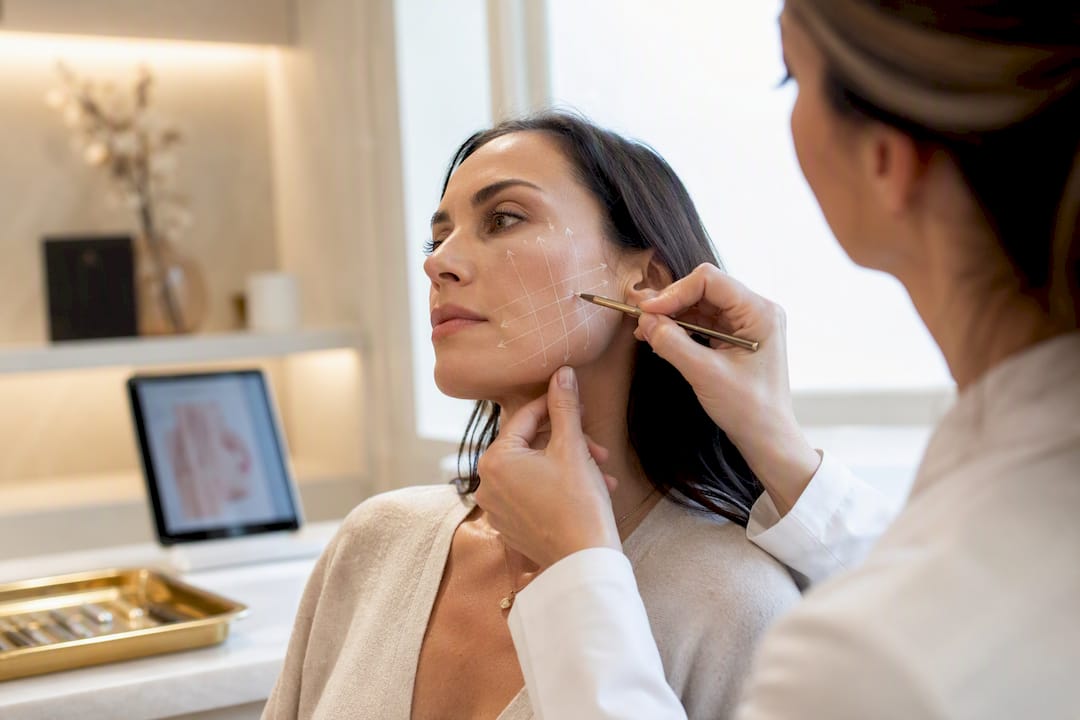
Start with a simple self-check: gently push the jowl upward with a finger. If it smooths out easily, non-surgical treatment is likely to help. If a fold of loose skin remains regardless, surgery may be the more honest answer. A proper consultation should cover severity, your goals, medical history, a photographic baseline, and a realistic conversation about what the chosen treatment can and cannot do.
Questions worth asking any clinician:
- Are you GMC-registered, and how much experience do you have with this specific technique?
- What is your complication protocol if something goes wrong?
- Can I see before-and-after photos of patients with a similar presentation to mine?
- Do you document outcomes objectively, not just visually?
Watch for red flags: promises of "facelift results without surgery," transformation in a single session, subdermal energy devices used without temperature monitoring, or lipolytic injections placed near the jaw without a clear discussion of nerve risk.
Pro Tip: Ask for a staged plan with review points built in, rather than a single all-in-one pitch. A clinician confident in their assessment will want to check progress before committing you to more treatment.
What results and timeline should you expect, and what does it cost?
Filler produces visible contouring almost immediately, settling fully within 2 to 4 weeks as swelling resolves. Energy-based treatments work more slowly: expect gradual change building over 3 to 6 months as collagen remodels. Threads deliver an early mechanical lift that is often most obvious in the first few weeks, then fades gradually, with visible effect typically gone by 12 to 18 months.
Costs vary by clinic and by how many areas need treating, but as a rough guide: single-session filler sits around £300 to £900, thread lifts £600 to £1,800, Ultherapy £1,500 to £3,000, and RF microneedling series £400 to £1,200 per session. Combination plans stack these costs, so a written quote after consultation is essential rather than relying on headline pricing.
If you're on a GLP-1 weight-loss medication, it's worth waiting until your weight has stabilised before committing to structural filler or energy-based tightening, since ongoing weight change will alter the treated area.
What are the risks of non-surgical jowl treatments?
Expected, short-lived side effects across most modalities include bruising, swelling, transient numbness and tenderness at the treatment site. These typically resolve within days.
More specific risks deserve a direct conversation before treatment: lipolytic injections near the jowl carry a risk to the marginal mandibular nerve if placed incorrectly; subdermal lasers and RFAL devices can cause thermal injury without proper temperature monitoring; threads can occasionally extrude or migrate; and filler carries a rare but serious risk of vascular occlusion if injected into or near a blood vessel. Clinical reviews of subdermal techniques note that swelling and transient paraesthesia are relatively common while serious nerve injury is rare when protocols are followed correctly.
Look for a GMC-registered practitioner, temperature monitoring on any subdermal energy device, ultrasound mapping when heat is used near existing filler, and a clear escalation plan if something doesn't go to plan. If skin excess is significant or the deeper SMAS layer has stretched substantially, non-surgical treatment will not reliably correct it, and a referral to a plastic surgeon is the honest recommendation.
How Nexgen Clinic approaches non-surgical jowl treatment
Nexgen Clinic builds every jowl consultation around AI-led skin analysis paired with a medically led assessment, identifying whether volume loss, skin laxity, fat descent or muscle dynamics is driving your particular presentation. That assessment feeds into a structured plan following the structure-plus-envelope model: restoring deep support first, then refining the skin layer, with objective photo documentation at each stage.
Relevant services include jawline and jowl-focused dermal filler, PDO threads, RF microneedling, and Profhilo-style skin boosters, matched to your assessment rather than sold as a one-size-fits-all package.
Nexgen Clinic reports a very high client satisfaction rate across its treatment programmes, alongside a commitment to GMC-registered practitioners and documented complication protocols at every stage of care.
What conventional advice on jowls gets wrong
Most articles on this topic rank treatments by popularity rather than by what's actually causing the sagging in front of you. That's backwards. A thread lift and a course of Ultherapy solve completely different problems, and picking one because it's trending rather than because it matches your anatomy is why so many non-surgical results look either underwhelming or oddly overdone.
The bigger issue is how these treatments get marketed as competitors rather than complements. Filler alone on a face with genuine skin laxity looks inflated. An energy device alone on a face that has lost significant structural volume looks tightened but hollow. The strongest results I've seen in this category come from restraint, and from practitioners willing to treat in stages and reassess, rather than promising a single transformative session.
If there's one thing worth prioritising above device choice, it's the finger-lift test and an honest conversation about whether you're a non-surgical candidate at all. Skipping that step is where most disappointment starts.
Ready to explore non-surgical jowl treatment options?
If you've read this far weighing fillers against threads against energy devices, you already understand why a single-treatment approach rarely delivers the natural result most people want. Nexgen Clinic's advantage isn't offering one of these treatments well; it's assessing which combination your face actually needs before recommending anything.
Every consultation starts with AI-led skin analysis and a medically led discussion of whether your jowls are volume-driven, laxity-driven, or both, followed by a staged plan rather than a single sales pitch. That means you're not left guessing whether filler, threads or RF microneedling is right for you. Browse the full range of precision treatments available, or if you'd prefer a pre-built combination plan, the signature treatment packages bundle structure and envelope work into a single, sequenced programme. Book a consultation to get an honest, anatomy-led assessment before committing to any single treatment.
This article is general information, not a substitute for advice from a qualified doctor. Consult a qualified healthcare professional about your own circumstances before acting on anything here.
Sources
For deeper reading, see the RFAL and RF microneedling study, the jowl rejuvenation treatment guideline, and the independent review of non-surgical jowl treatments. These inform general understanding only; a clinic consultation is needed to apply any of it to your own face.
- The use of radiofrequency-assisted lipolysis with radiofrequency microneedling in premature jowl and neck laxity following facialplasty
- A dermatologist's guide to nonsurgical rejuvenation of the neck and jawline
- Fibre‑Optic Subdermal Diode‑Laser Rejuvenation of the lower face (Endolift®) — review
- Best non-surgical treatments for jowls/sagging skin — SpaLens
FAQ
Can you tighten jowls without surgery?
Yes, mild to moderate jowls often respond well to non-surgical options like dermal filler, Ultherapy, RF microneedling or thread lifts. Significant skin excess is harder to correct without surgery and usually needs a surgical opinion.
What is the best non-surgical treatment for sagging jowls?
There isn't one best option; it depends on whether volume loss, skin laxity, or fat descent is driving your jowls. A combination of structural filler and an energy-based tightening treatment tends to give the most natural, lasting result.
Can sagging jowls be reversed?
Non-surgical treatments can meaningfully improve the appearance of sagging jowls by restoring volume and stimulating collagen, but they don't reverse ageing entirely or replace the tissue repositioning a facelift achieves.
What is the most effective treatment for sagging jowls?
For mild to moderate laxity, microfocused ultrasound has the strongest independent evidence base among energy devices, though results are modest compared with surgery. Combining it with structural filler generally produces a more noticeable, natural-looking improvement than either alone.
How long do non-surgical jowl treatments last?
Filler typically lasts 12 to 24 months, thread lifts up to around 18 months, and energy-based treatments like Ultherapy or RF microneedling generally last 12 to 24 months with periodic maintenance.
Recommended
- Jawline Filler Cambridge | NexGen Clinic
- Injectables & Anti-Wrinkle | NexGen Clinic Journal
- Lip Fillers Cambridge: Achieve Natural-Looking Results
- Non-Surgical Facial Rejuvenation Cambridge
Explore related NexGen treatments
- Explore our full treatment menu
- Book a consultation with our clinicians
- Contact our Cambridge team
- Read more articles in the NexGen Journal
Ready to explore your options?
Speak with a NexGen clinician for a personalised consultation. We’ll listen, assess, and recommend the safest and most effective route — always led by evidence, always tailored to you.
Book a consultation or get in touch with our Cambridge team.