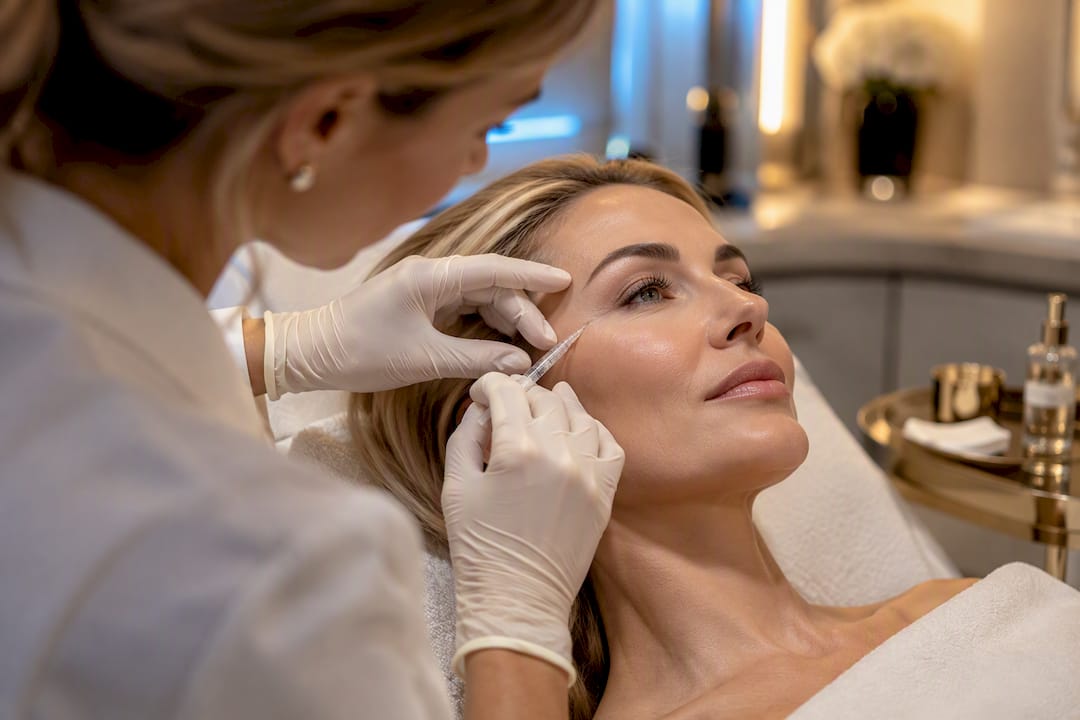
Preventative aesthetics uses low-dose treatments and daily skincare to slow specific visible signs of ageing before they set in, but it cannot stop the biological ageing process itself. A neuromodulator used to soften a frown line before it becomes fixed, paired with daily SPF and a retinoid, is a realistic example of the approach. Results depend on personalised timing, conservative dosing and consistent maintenance, and any programme should sit under proper clinical oversight.
TL;DR:
- Preventative treatments like micro-dosed neuromodulators can delay wrinkle formation but lack long-term randomized evidence for reliable prevention.
- Collagen stimulation through biostimulators and skin boosters produces subtle skin quality improvements, not immediate volume restoration.
- Daily SPF and retinoids have the strongest, most consistent evidence for delaying visible photoaging, while procedural interventions are less proven long-term.
- Starting preventative treatments too early can risk unnatural flatness, and delaying too late shifts focus to more invasive correction options.
- Patient assessment should include skin quality, muscle activity, lifestyle, and family history to personalize a gradual, conservative long-term prevention plan.
Table of Contents
- What is preventative aesthetics and how does it differ from correction?
- Which treatments count as preventative and what can they actually do?
- When should you start, and who is a good candidate?
- How do clinicians build a personalised prevention plan?
- What does the evidence actually show, and what are the 2026 UK rules?
- Which everyday habits actually delay visible ageing?
- How does Nexgen Clinic approach preventative planning?
- Why gradual, conservative prevention is the responsible choice
- Ready to plan your own preventative programme?
- Sources
- FAQ
What is preventative aesthetics and how does it differ from correction?
Preventative aesthetics, sometimes called prejuvenation, treats the mechanisms of ageing before they produce visible damage rather than fixing damage that has already appeared. The philosophy behind it is straightforward: a muscle that repeatedly folds skin along the same crease will eventually etch that crease permanently, so softening the movement early can delay when the line becomes fixed rather than dynamic.
Corrective aesthetics works on the opposite timeline. It addresses volume loss, deep static wrinkles, sagging skin, or sun damage that has already occurred, usually with higher doses, larger treatment areas, or more invasive interventions. A person having filler to restore lost cheek volume in their fifties is undergoing correction. A person in their late twenties having a small dose of neuromodulator to stop a frown line from becoming permanent is practising prevention.
One useful way to picture this is the concept of collagen banking: the idea that stimulating collagen production earlier, while the skin still has good baseline elasticity, builds a reserve that slows the visible effects of collagen loss later. This isn't a promise against ageing, but a 2026 review in a Springer dermatology journal frames it as part of a broader "in and out" model, combining topical agents, oral supports and procedural interventions rather than relying on any single treatment.
The practical differences between the two approaches show up clearly when you compare them side by side.
- Goals: prevention slows the onset of specific signs; correction reverses signs already visible.
- Dosing: prevention typically uses smaller, more conservative doses spaced further apart; correction often needs higher volumes or repeated sessions to achieve visible change.
- Timeline: prevention is a long-term, low-intensity commitment measured in years; correction is often a shorter, more intensive course aimed at a specific result.
- Cost pattern: prevention spreads modest spending over a long period; correction can require a larger single outlay to reverse advanced changes.
- Reversibility of inaction: skipping prevention rarely causes harm, it simply means natural ageing proceeds; delaying correction can mean the underlying problem (volume loss, deep static lines) becomes harder to treat.
None of this means prevention is free of commitment. Skipping a scheduled top-up, ignoring SPF, or treating irregularly undermines the whole point of an "in and out" strategy, because the benefit comes from consistency rather than any single appointment.
Which treatments count as preventative and what can they actually do?
Four broad categories dominate preventative aesthetics: neuromodulators, biostimulators and skin boosters, energy-based devices, and topical or oral supports. Each targets a different ageing mechanism, and each comes with a different strength of evidence behind it.
Neuromodulators used at low dose
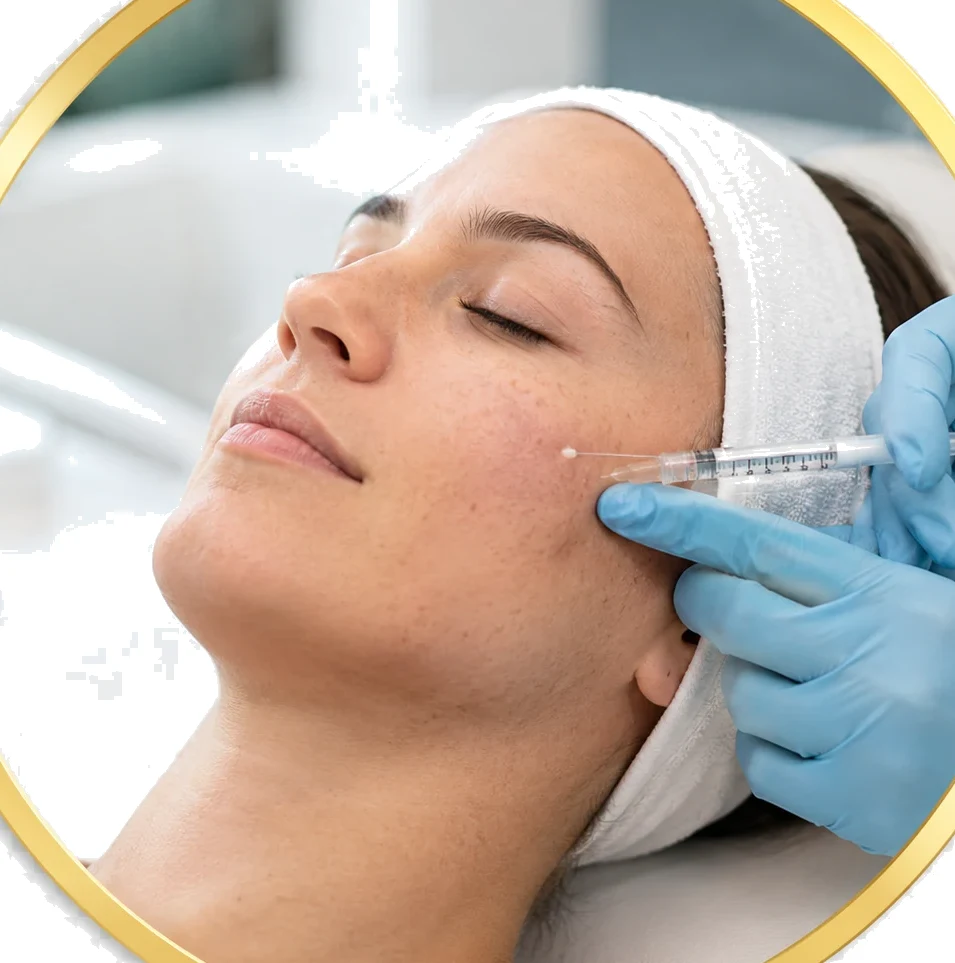
Botulinum toxin type A, delivered in the small, carefully placed doses that clinicians call micro-dosing, relaxes the specific muscles responsible for repetitive expression lines, frown lines and crow's feet. The rationale for using it preventatively is mechanical: fewer years of repeated folding should mean the skin takes longer to develop a permanent, static version of that line.
A 2025 systematic review found that early botulinum toxin application may reduce muscle hyperactivity and delay the formation of dynamic wrinkles, though the authors describe the evidence base as heterogeneous, with inconsistent study designs and no long-term randomised data confirming that starting young genuinely prevents wrinkles decades later. Micro-dosed treatments typically last 10 to 14 weeks, similar to standard therapeutic doses, though many clinics adjust intervals based on how quickly a patient's muscle activity returns. Practitioner surveys reinforce that clinical practice supports conservative dosing, while large-scale prevention trials in young, wrinkle-free populations remain scarce.
Biostimulators and skin boosters
Products in this category, such as poly-L-lactic acid formulations and calcium hydroxylapatite, work differently to fillers. Rather than adding volume directly, they stimulate the skin's own collagen production over weeks to months, producing a gradual firming effect rather than an immediate one. Intradermal hyaluronic acid treatments, often called skin boosters, work through a separate mechanism: they hydrate the deeper skin layers and can improve texture and radiance without changing facial shape.
Statistic callout: Meta-analyses comparing resurfacing and biostimulatory approaches show measurable improvements in skin texture and collagen markers, though outcomes vary by device, protocol and skin type, which is why no single number applies universally.
The realistic expectation here is subtlety. These treatments improve skin quality incrementally. They are not a substitute for volume restoration once significant fat or bone loss has occurred.
Energy-based devices
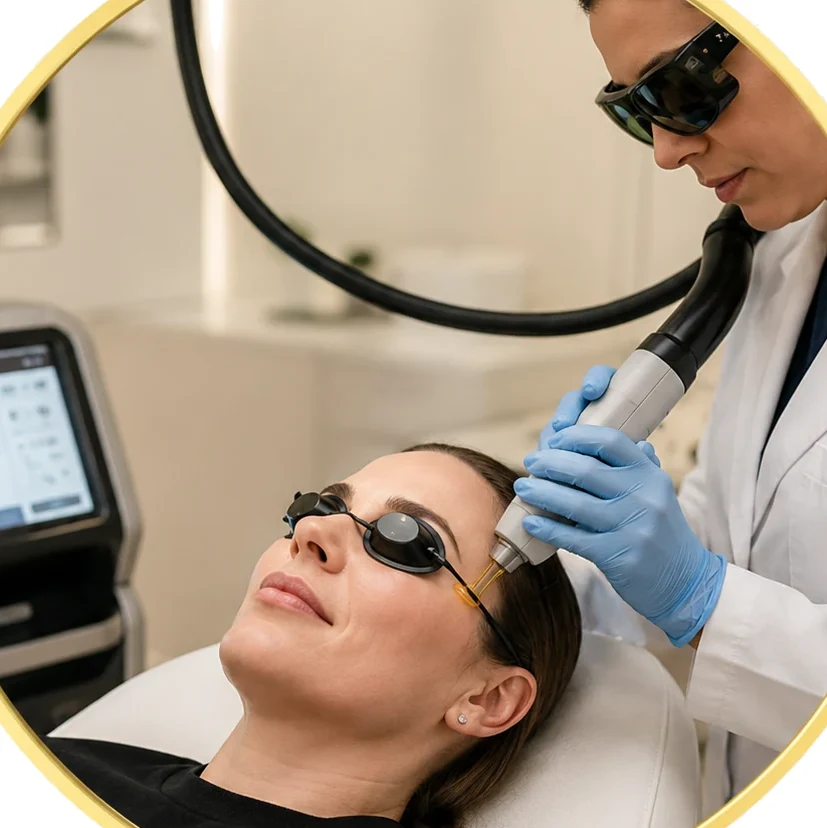
Radiofrequency microneedling, fractional resurfacing lasers (technologies in the same family as Fraxel or CO2 lasers) and similar energy devices target texture, tone, and mild laxity by triggering a controlled healing response that encourages new collagen. They tend to suit people with sun damage, early textural changes, or enlarged pores rather than those with significant sagging. Maintenance usually means one to three sessions initially, followed by periodic top-ups, and downtime varies considerably between device types, from almost none with lighter treatments to several days of visible redness with more aggressive resurfacing.
Topicals and photoprotection
Daily sunscreen and topical retinoids sit apart from the procedures above because they carry the strongest evidence of the group. Clinical reviews consistently identify sunscreen and retinoids as the highest-evidence interventions for delaying visible photoageing, backed by decades of randomised trial data rather than emerging procedural evidence.
What preventative aesthetics cannot reliably do matters just as much as what it can achieve:
- It cannot stop volume loss caused by fat pad atrophy or bone remodelling, which are structural processes no injectable currently reverses on a preventative basis.
- It cannot undo cumulative UV damage that has already occurred; SPF prevents further damage, it does not repair the past.
- It cannot substitute for surgical correction once skin laxity has progressed beyond what non-surgical tightening can address.
- It cannot promise a fixed outcome, because individual genetics, sun exposure history and lifestyle all influence how someone's skin ages regardless of treatment.
When should you start, and who is a good candidate?
There is no single age that suits everyone, because skin ageing depends on genetics, sun exposure, smoking history and family patterns as much as the calendar. That said, certain practical markers help decide whether preventative treatment makes sense right now rather than later.
- Watch for dynamic-only lines. If a line appears only when you frown, smile or raise your eyebrows and disappears at rest, that is the clearest preventative window. The muscle movement is creating the crease, but it has not yet become fixed.
- Consider family history. If a parent developed deep glabellar lines or significant volume loss relatively early, that pattern often, though not always, repeats, and it can justify starting monitoring or light treatment sooner.
- Notice early textural change. Subtle thinning, reduced bounce, or the first signs of enlarged pores and dullness are reasonable triggers for topical intervention or a skin booster, well before any injectable is necessary.
- Avoid starting purely because of age. Treating a completely smooth, unlined face purely because a birthday has passed is a poor rationale. Prevention responds to signs, not to a number.
- Recognise the risk of starting too early. Overtreating very young, mobile faces can lead to an unnatural flatness of expression and unnecessary long-term cost with no proportionate benefit.
- Recognise the risk of starting too late. Waiting until static lines and volume loss are well established shifts the conversation from prevention to correction, usually at a higher cost and with more intensive treatment required.
- Screen for psychological readiness. Anyone seeking treatment out of significant distress about minor or invisible flaws, rather than a genuine aesthetic preference, should be screened for body dysmorphic concerns, and a responsible clinician will defer or decline treatment rather than proceed.
None of these markers work in isolation. A clinician weighing them together, rather than a rigid age cutoff, is what separates thoughtful preventative planning from a generic sales pitch.
How do clinicians build a personalised prevention plan?
A responsible preventative programme starts with assessment, not a treatment menu. Before recommending anything, a clinician needs a clear picture of skin quality, underlying anatomy, muscle activity patterns, lifestyle factors and what the patient actually wants to achieve, because two people with similar-looking skin can need very different plans depending on how their muscles move and how their skin has aged so far.
A thorough assessment typically covers:
- Skin quality markers, including hydration, texture, pigmentation and elasticity.
- Underlying bone and fat pad anatomy, since structural support influences how skin will age over time.
- Dynamic muscle activity, observed while the patient talks, smiles and frowns naturally.
- Sun exposure history, smoking status, sleep patterns and skincare habits.
- The patient's own priorities, whether that's softening one specific line, general skin quality, or a longer-term maintenance plan.
Facial balancing as a long-term principle
Rather than treating one feature in isolation, clinicians increasingly plan across the whole face, a practice often called facial balancing. The idea is to avoid over-treating one area, such as the forehead, while ignoring cheek support or skin quality elsewhere, which can create an unbalanced result even when each individual treatment looked reasonable on its own. Feature interviews with practising clinicians consistently point to conservative dosing and whole-face planning as the defining philosophy behind sustainable preventative work, rather than aggressive early intervention.
Pro Tip: Ask your clinician to document the exact dose and injection points used at each visit. This record lets future treatments be adjusted by measured outcome rather than guesswork, which matters enormously once you're several years into a maintenance programme.
A typical cadence for someone in an active preventative programme might look like a neuromodulator review every three to four months, a skin quality assessment every six months, and an annual step back to reassess whether the whole plan still matches how the face has changed. Combinations are usually sequenced deliberately: topical retinoids and SPF run continuously in the background, injectables are reviewed on their own natural cycle, and any device-based treatment is scheduled around downtime and skin recovery rather than stacked on top of everything else at once.
Before booking anything, a few consultation questions are worth asking directly: what specific outcome is realistic for me, what happens if I stop treatment, how will you adjust the plan if my skin changes faster or slower than expected, and what would make you recommend I wait rather than proceed today. A clinician who answers the last question honestly, rather than deflecting it, is one worth trusting with a long-term plan.
What does the evidence actually show, and what are the 2026 UK rules?
The evidence supporting preventative aesthetics is genuinely mixed, and being honest about that gap is part of doing this properly. Photoprotection and topical retinoids sit on the strongest ground, backed by decades of randomised trial data showing they reduce visible photoageing. Procedural interventions sit on considerably shakier ground.
The 2025 systematic review referenced earlier concluded that early botulinum toxin use may delay dynamic wrinkle formation, but the authors were explicit that the studies reviewed used inconsistent methodologies and follow-up periods, making firm long-term conclusions premature. That is not a reason to dismiss the approach, but it is a reason to be sceptical of any clinic or article promising reliable prevention from injectables alone.
Facial balancing, conservative dosing and combination approaches, rather than aggressive single treatments, represent the practical philosophy that experienced clinicians actually apply when planning preventative work.
Common adverse events across preventative procedures include:
- Temporary bruising or swelling at injection sites, usually resolving within a week.
- Mild headache following neuromodulator treatment, typically short-lived.
- Asymmetry if dosing or placement is uneven, which is why documentation and a skilled injector matter.
- Rare but serious risks including vascular occlusion with filler-type products, which is why proper training and emergency protocols matter more than marketing claims.
Regulation is catching up with demand. The UK government's consultation on licensing non-surgical cosmetic procedures set out measures to improve safety and provider accountability across England, shifting emphasis towards licensing and clearer consent standards. Practically, this means choosing a clinic with proper medical oversight and transparent consent processes matters more than it ever has, and it is worth asking any provider directly how they document consent and manage complications before booking.
Which everyday habits actually delay visible ageing?
Procedures get most of the attention, but the highest-evidence interventions in preventative aesthetics happen at home, every single day, without a needle in sight.
Daily SPF is the single most important habit. Sunscreen applied consistently, rain or shine, prevents the cumulative UV damage that drives a large share of visible photoageing, and its benefit compounds over years in a way no procedure can replicate.
Retinoids need a gradual introduction. Starting two to three nights a week with a lower concentration, then building tolerance over several weeks, reduces the irritation and peeling that cause most people to abandon retinoids too early. Pairing retinoid nights with a decent moisturiser makes the adjustment period considerably easier.
Lifestyle factors compound quickly. Smoking accelerates collagen breakdown, poor sleep visibly affects skin tone and puffiness, high alcohol intake dehydrates skin over time, and chronic stress has measurable effects on skin barrier function. None of these are dramatic on their own, but stacked together over a decade, they shift someone's skin age meaningfully.
Statistic callout: A 2026 review framing prevention as an "in and out" strategy notes that adherence to topical and lifestyle interventions is frequently the weakest link in long-term success, more so than the procedures themselves.
- Budget-wise, consistent low-cost maintenance (SPF, a retinoid, occasional skin boosters) spread across years tends to work out considerably cheaper than delaying everything and later needing more intensive corrective treatment in a shorter window.
How does Nexgen Clinic approach preventative planning?
Nexgen Clinic builds preventative programmes around AI-assisted skin analysis rather than a one-size-fits-all treatment list. The technology maps skin quality, texture and early ageing patterns in detail, which gives a more objective starting point than a purely visual assessment before deciding what, if anything, needs treating now versus later.
That assessment feeds into two signature programmes: NexGen Age Reset™, focused on broader skin quality and collagen support, and Facial Balance™, which applies the whole-face planning principle described earlier rather than treating features in isolation. Both are designed around the same conservative philosophy this guide has covered throughout, favouring gradual, well-documented adjustments over dramatic early intervention.
The clinic reports a high client satisfaction rate as a proof point of its approach, though as with any clinic-reported metric, it is worth treating as one input among several when choosing a provider rather than the only one.
A typical Nexgen Clinic consultation involves:
- An AI-assisted skin scan to establish a detailed baseline.
- A discussion of your specific goals, family history and lifestyle factors.
- A recommended cadence for reviews, tailored to what the assessment actually shows rather than a fixed calendar.
- Honest guidance on which signs, if any, genuinely warrant treatment now.
Explore the clinic's approach to AI-powered aesthetic medicine and skin treatments for more on how assessment shapes each individual plan.
Why gradual, conservative prevention is the responsible choice
The temptation in this field is to treat prevention as a race, starting earlier, dosing more, stacking treatments before there's any visible sign to justify them. That instinct misreads what the evidence actually supports. The strongest data we have backs sunscreen, retinoids and conservative, well-documented procedural top-ups, not aggressive early intervention chasing a trend.
Prevention, done properly, is preservation. It is not a permanent transformation, and any clinician who frames it that way is overselling what a micro-dose or a skin booster can deliver. The responsible approach is patient: watch for genuine clinical signs, treat conservatively, document everything, and adjust as the face actually changes rather than as a calendar suggests it should. Choosing a credentialled clinician who is willing to say "not yet" is, in my view, the single best marker of whether a preventative programme is being run properly.
— Ms Sandra Petraskaite
Ready to plan your own preventative programme?
Unlike a generic skincare counter recommendation or a one-off cosmetic procedure booked on impulse, Nexgen Clinic builds every preventative plan around a proper AI-assisted skin assessment first, so treatment decisions are based on what your skin actually shows rather than a standard age-based script.
A consultation at Nexgen Clinic starts with that assessment, followed by an honest conversation about whether now is genuinely the right time to treat anything at all. If treatment is appropriate, options range from anti-wrinkle injections for early dynamic lines to skin boosters for hydration and texture, alongside biostimulatory options like Profhilo and Polynucleotides for gradual collagen support. Follow-up cadence is set individually rather than on a fixed rota, reviewed against how your skin responds rather than a blanket schedule. Anyone weighing longer-term cosmetic decisions and wanting a clearer sense of what to expect before committing may also find this practical guide to permanent cosmetic treatments useful context on managing expectations.
Browse the full range of treatments available at Nexgen Clinic and book a private consultation to find out whether a preventative plan makes sense for your skin right now.
Sources
- Proactive Aesthetic Strategies: Evaluating the Preventive Role of Botulinum Toxin in Facial Aging
- Preventive and integrative approaches in dermatology
- The licensing of non-surgical cosmetic procedures in England: consultation outcome
- The Quiet Power of Preventive Aesthetics
FAQ
Is preventative Botox actually a thing?
Yes. Clinicians use small, conservative doses of botulinum toxin to soften repetitive muscle movement before a line becomes permanently etched, and a 2025 systematic review found this may delay dynamic wrinkle formation, though the long-term evidence remains limited. It works best on lines that currently only appear during expression, not on skin that is already smooth at rest and in motion.
What are the new regulations for aesthetics in 2026?
The UK government's consultation outcome on non-surgical cosmetic procedures sets out measures to improve provider licensing and accountability in England. Readers should check a clinic's governance, training standards and consent processes before booking any procedure.
How long does preventative Botox last?
Micro-dosed neuromodulator treatments typically last 10 to 14 weeks, similar to standard therapeutic doses, though individual muscle activity affects how quickly the effect wears off. Nexgen Clinic reviews cadence individually based on how a patient's skin and muscle movement respond over time, available through anti-wrinkle injections.
What is the most popular aesthetic treatment?
Neuromodulator treatments and dermal fillers remain among the most widely booked procedures in aesthetic medicine, alongside skin quality treatments like skin boosters. At Nexgen Clinic, dermal fillers start from £180 one-off and lip fillers start from £160 one-off, both listed on the treatments page.