
An advanced facial can make pores look smaller and skin look smoother, but it cannot close them or shrink them for good. What it can do is clear congestion, reduce excess oil and, with some treatments, stimulate collagen so the skin around each pore looks firmer. The right choice depends on why your pores are visible, your age, your skin tone and how much downtime you can accept. This guide explains the options, what happens in the treatment room, the considerations, and how to choose.
TL;DR
- Pores are openings for oil and sweat ducts. You cannot permanently close them, but you can change how visible they look.
- Visible pores usually come from oil production, follicle size, sun damage and loss of skin elasticity with age, so the best treatment depends on the cause.
- Younger skin tends to benefit most from sebum control. Older skin tends to need rejuvenation as well as sebum control.
- Microneedling, lasers and radiofrequency stimulate collagen but carry considerations, especially pigment changes in darker skin. Choose a qualified, experienced practitioner.
- Daily SPF is the cheapest pore treatment there is. Book a consultation before committing to a course.
Table of Contents
- What makes pores look large
- Can a facial shrink or close pores?
- Advanced facial options for pores
- Comparing the main approaches
- How to choose for your age and skin type
- What happens during an advanced facial for pores
- Considerations, downtime and aftercare
- Choosing a provider
- Our perspective
- Pore-focused care at NEXGEN Clinic in Cambridge
- Making results last
- FAQ
- Sources
What makes pores look large
A pore is the opening of a duct that carries oil and sweat to the skin's surface. DermNet describes enlarged pores as depressions in the facial skin containing these duct openings, and notes that they look more visible with increased sebum production, larger hair follicles, loss of skin elasticity with age, and sun damage.
That list matters, because each cause points to a different treatment:
- Oily, congested skin: pores fill with oil and debris, stretch and look darker. Cleansing, extraction and oil control help most.
- Age-related change: as collagen and elasticity fall, the skin around the pore loses support and the opening looks wider. Collagen-stimulating treatments are more relevant.
- Sun damage: years of UV exposure weaken the collagen around pores. Prevention matters as much as treatment. Our guide to sun damage face treatment covers this in more depth.
- Genetics and follicle size: some people simply have larger follicles. Improvement is possible, but expectations should be realistic.
A published review of facial pores reached the same conclusion: because different factors cause enlarged facial pores, treatment should be individualised. That is why we begin every treatment with an assessment, not a menu.
Can a facial shrink or close pores?
No facial closes pores permanently. Pores are not muscles and they do not open and shut. What changes is the amount of oil and debris inside them, the texture of the skin around them and, with some treatments, the collagen supporting them. Results are an improvement in appearance, and they are rarely permanent without maintenance, because oil production and ageing continue.
Two simple habits support everything else. Daily sunscreen helps prevent further sun-induced collagen damage that contributes to larger pores. A good make-up primer and foundation can also cover imperfections for a smoother look on the day, though this is cosmetic cover, not treatment.
If you are choosing home products to support a clinic programme, it helps to match them to your age and the cause of your concern. Tailored skincare for different ages is one place to compare ingredient approaches before you decide.
Advanced facial options for pores
The phrase "advanced facial" covers a wide range. Below, the main types are grouped by what they do to the skin.
Deep-cleansing and hydrating facials
These treatments cleanse, exfoliate, extract congestion and infuse hydration and antioxidants in a single session. A HydraFacial is the best-known example. They suit oily or congested skin, blackheads and dull skin, and need little or no downtime. The effect on pores is mainly visual: once the pores are clear, they look smaller and the skin looks more even. The benefit is not permanent, so these facials are usually repeated on a regular schedule.
Chemical exfoliation
Professional acid peels, often salicylic-based, dissolve oil and dead skin inside the pore and can smooth texture. They are another route for congestion-prone skin. Strength and aftercare vary, and they can irritate sensitive skin, so they should be chosen after a skin assessment.
Microneedling
Microneedling uses fine needles to create controlled micro-injuries that trigger the skin's repair response and new collagen. It is used for texture, scarring and visible pores. It does involve downtime and some considerations (see below), and results build over several sessions rather than appearing at once. We cover how it fits with other options in our treatments overview.
Laser and radiofrequency
A 2022 review in the Journal of Cosmetic Dermatology compared the evidence on treatment options for enlarged pores. It explains that fractional CO2 lasers ablate the epidermis and heat the dermis underneath, nonablative fractional lasers create microscopic thermal wounds, and radiofrequency reduces sebum and increases dermal collagen.
The same review reports that fractional CO2 laser treatment has reduced dilated pore counts by up to 54.5% in some studies, and that radiofrequency has lowered sebum production by as much as 78.5% in one study. These are results from specific studies, not guarantees, and individual response varies. Our article on what laser skin tightening can and can't do sets realistic expectations for collagen-focused devices.
Regenerative and skin-quality treatments
Treatments such as polynucleotides and Profhilo are not pore treatments in the strict sense. They are aimed at hydration, skin quality and tissue support. For some clients, improving how firm, hydrated and elastic the skin is makes the surface look finer, which is why we sometimes combine them with a texture-focused plan. We would not promise that either one shrinks pores.
Comparing the main approaches
| Approach | Main action | Best suited to | Downtime | Sessions |
|---|---|---|---|---|
| Deep-cleansing or hydrating facial | Clears congestion, exfoliates, hydrates | Oily, congested or dull skin | Little to none | Repeated regularly for upkeep |
| Professional chemical exfoliation | Dissolves oil and dead skin in the pore | Congestion, uneven texture | Mild peeling or redness | A course, planned at assessment |
| Microneedling | Stimulates collagen, smooths texture | Visible pores with scarring or loss of firmness | Redness for a few days | A course, spaced by weeks |
| Fractional laser | Resurfaces and stimulates collagen | Texture, scarring, sun damage | Longer, depends on the device | Planned at assessment |
| Radiofrequency | Reduces sebum, builds collagen | Oily skin with early laxity | Minimal to moderate | A course |
The table is a guide to how treatments differ, not a prescription. Your own plan depends on your skin.
How to choose for your age and skin type
The 2022 review recommends that younger patients focus on controlling sebum production, while older patients focus on rejuvenation as well as sebum control. In practice, that gives a sensible starting framework:
- Twenties and early thirties, oily or congested skin: start with deep-cleansing facials, targeted exfoliation and a consistent home routine with daily SPF.
- Mid-thirties to forties, oiliness plus early loss of firmness: add a collagen-stimulating treatment such as microneedling, alongside sebum control.
- Fifties and beyond, sun-damaged or thinning skin: prioritise rejuvenation and skin quality, with oil control as a secondary aim.
- Darker skin tones: choose treatments and settings with extra care (see the considerations section below).
Before booking, ask yourself three questions. How much downtime can you accept? Is your main issue oil, texture or loss of firmness? Do you have a history of pigmentation, cold sores, keloid scarring or active acne? Your answers narrow the options quickly, and a practitioner will want to know all of them.
What happens during an advanced facial for pores
The exact steps depend on the treatment, but the process follows a clear pattern.
- Consultation and skin assessment. We look at your skin type, oil levels, texture, sun damage, medical history, medication and goals. We tell you honestly if a treatment is unlikely to give you the result you want.
- Preparation. Your skin is cleansed and, where needed, numbing cream is applied for needle- or laser-based treatments.
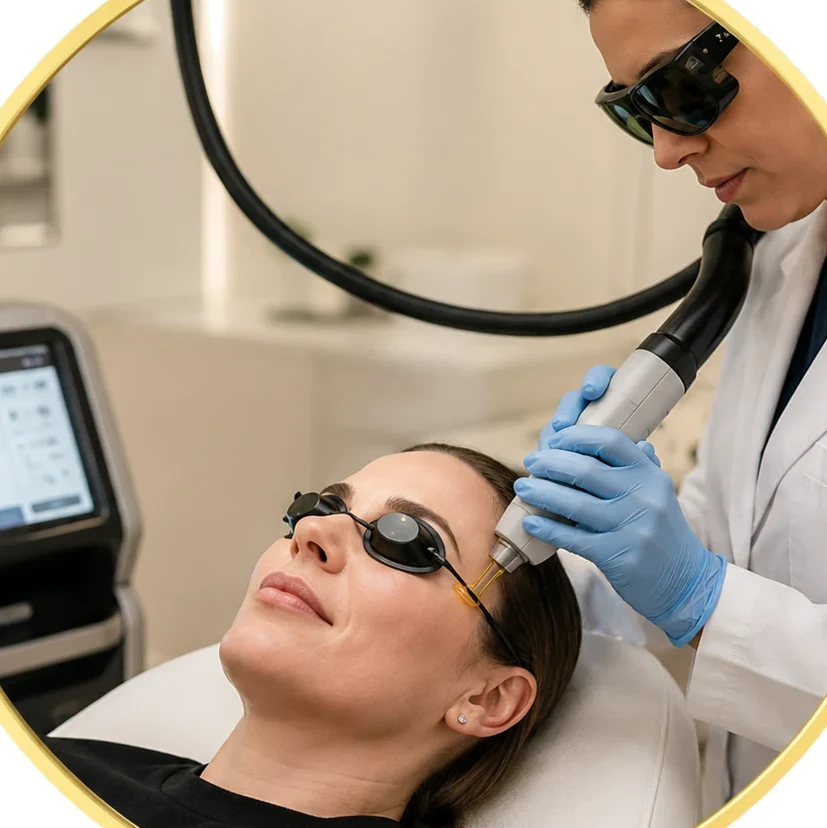
- Treatment. A cleansing facial involves exfoliation, extraction and hydration. Microneedling involves gliding a device over the skin in passes. Laser or radiofrequency involves short pulses of energy with cooling and eye protection.
- Finishing and protection. A soothing product and SPF are applied, and you receive written aftercare.
- Review. For treatments that work through collagen, results build over weeks. We usually plan a follow-up to judge progress before recommending further sessions.
How many sessions you need depends on the treatment and on your skin. Collagen-based treatments are normally planned as a course with a gap of several weeks between sessions, and maintenance is separate. We agree the plan with you at the consultation instead of selling a fixed package.
Considerations, downtime and aftercare
Pore treatments that go beyond cleansing are medical aesthetic procedures, and the considerations are real. Be wary of anyone who describes them as without risk.
Microneedling
The NHS patient information from Chelsea and Westminster says microneedling may cause redness, pain or tightness, pinpoint bleeding, infection, and temporary or permanent pigment changes. The same leaflet advises avoiding sun exposure for 7 days, keeping the area clean and moisturised, and avoiding swimming, saunas and sweaty exercise for 72 hours or until swelling and bleeding have resolved.
Laser resurfacing
An NHS leaflet on laser resurfacing states that hyperpigmentation is a common consideration, particularly in darker skin types or in those who tan easily, occurring in up to 37% of patients and usually fading within 6 months. It also reports hypopigmentation (skin lightening) in up to 16% of patients, which can be permanent. Aftercare includes avoiding sun and UV exposure and using SPF 30 or above daily for 6 months. After fractional CO2 treatment specifically, NHS Tayside advises avoiding direct UV light for 4 to 6 weeks.
The British Association of Dermatologists notes that lasers and microneedling carry considerations including pain, swelling, infection, scarring and pigment changes, that laser can cause lighter patches more often in people of colour, and that it should only be performed by a highly experienced laser operator. If you have darker skin, read our guide to laser on dark skin in the UK before booking anywhere.
Who should be careful
Tell your practitioner before treatment if you are pregnant, prone to cold sores, take isotretinoin or other medication that affects the skin, scar easily, or have active infection or inflammation. These can change what is safe.
When to contact your clinic or doctor
After fractional laser treatment, NHS Tayside advises contacting the treating department if redness or swelling gets worse in the first 1 to 2 days, pain becomes severe, bleeding occurs, pus is present, cold sores appear, or you develop a fever. The same sensible rule applies after microneedling: do not wait to see whether signs of infection settle. Contact the clinic that treated you, or your GP or NHS 111 if you cannot reach them.
Choosing a provider
Chemical peels, microneedling and laser are usually not available on the NHS, and the BAD advises that you seek them only from reputable and qualified providers. In practice, check these things before you pay a deposit:
- Who will carry out the treatment, and what are their qualifications and experience with your skin tone?
- Is there a proper consultation and medical history before treatment?
- Will you be told the considerations and the realistic outcome in writing?
- What is the aftercare, and who do you call if something goes wrong?
- Does the clinic recommend a plan that fits you, or one fixed package for everyone?
The last question matters most. Pores respond to different approaches, and a clinic that recommends the same treatment to every client is not assessing your skin.
Our perspective
Pore concerns are among the most common we hear, and also the most misunderstood. Many people arrive expecting a single treatment to "close" their pores. We explain early on that this is not possible, and that the better question is what is making the pores look prominent in your case.
With over 15 years of experience in aesthetics, our approach is consultation-led. We look at your skin condition, your facial features, your concerns and your long-term goals before we recommend anything. For some clients that means a simple cleansing and exfoliation programme with disciplined sun protection. For others it means a collagen-stimulating course or a regenerative treatment to improve overall skin quality. Sometimes the honest answer is that a smaller plan will do, and we would rather tell you that than add treatments you do not need.
We also think natural results come from restraint. The aim is skin that looks healthy and well cared for, not skin that looks treated. And because pore appearance changes with oil, age and sun exposure, we plan around maintenance as well as the first course.
— Ms Sandra Petraskaite
Pore-focused care at NEXGEN Clinic in Cambridge
At our Cambridge clinic we offer medically led skin treatments including HydraFacial, microneedling, laser treatments, polynucleotides from £180 per session and Profhilo from £250 per session. Every plan starts with an individual assessment of your skin health and goals, so you only receive treatments that make sense for you. You can see the full range on our treatments page.
If you are unsure where to start, book a consultation. We will look at your skin, explain what is realistic and give you a clear recommendation. You can also read about our policies and procedures before you visit, or start from our homepage.
Making results last
Whatever treatment you choose, results hold better with a few habits:
- Use SPF every day, including in winter and on cloudy days.
- Cleanse gently once or twice daily and avoid harsh scrubbing, which irritates skin and does not shrink pores.
- Keep skin hydrated. Dehydrated skin can look rougher and more congested.
- Follow aftercare exactly and avoid picking at skin after treatment.
- Plan maintenance with your clinician rather than waiting for the old texture to return.
If acne scarring is part of the picture, our article on clinician skill versus device in acne scar laser care explains why the person holding the device matters as much as the device itself.
FAQ
Can a facial permanently shrink pores?
No. Pores are natural openings in the skin and cannot be closed. A facial can clear congestion and improve the texture around the pore, and collagen-stimulating treatments can make pores look smaller for a period. Because oil production, ageing and sun exposure continue, results need maintenance.
What is the best facial for large pores?
It depends on the cause. Oily, congested skin generally responds well to deep-cleansing facials and exfoliation, while loss of firmness and sun damage call for collagen-stimulating options such as microneedling or laser. A skin assessment is the best way to decide, as treatment should be individualised.
Is there downtime after a pore-tightening treatment?
Cleansing and hydrating facials usually need little or none. Microneedling typically causes redness and tightness, and you should avoid sun for 7 days and sweaty exercise or saunas for 72 hours, according to NHS guidance. Laser treatments can need longer, with several weeks of strict UV avoidance after fractional CO2.
Are these treatments safe for darker skin?
They can be, but the risk of pigment change is higher, so the choice of device, settings and practitioner matters a great deal. The British Association of Dermatologists advises that laser should be performed by a highly experienced operator. Tell your practitioner about your skin tone and any history of pigmentation before treatment.
How soon will I see a difference?
Cleansing facials show an immediate smoother, brighter look. Collagen-based treatments work gradually over several weeks as the skin repairs, which is why they are planned as a course with a review, not a single visit.
Sources
- DermNet: Enlarged pores
- Facial Pores: Definition, Causes, and Treatment Options (PubMed)
- Acne Action: How to Minimize Facial Pores
- The efficacy and adverse effects of treatment options for enlarged facial pores (Journal of Cosmetic Dermatology, 2022)
- Chelsea and Westminster NHS: Microneedling post-treatment information
- NHS leaflet: Laser resurfacing
- NHS Tayside: Fractional carbon dioxide (CO2) laser
- British Association of Dermatologists: Melasma patient information
Recommended
- Glass Skin Facial: AI Assessment Beyond the Instant Glow
- Azelaic Acid vs Niacinamide for UK Skin: When 15–20% Azelaic
- Laser Skin Tightening: What It Can and Can't Do
- Red vs Blue Light for Skin: What 31 Trials Mean
Explore related NexGen treatments
- Explore our full treatment menu
- Book a consultation with our clinicians
- Contact our Cambridge team
- Read more articles in the NexGen Journal
Ready to explore your options?
Speak with a NexGen clinician for a personalised consultation. We’ll listen, assess, and recommend the safest and most effective route — always led by evidence, always tailored to you.
Book a consultation or get in touch with our Cambridge team.