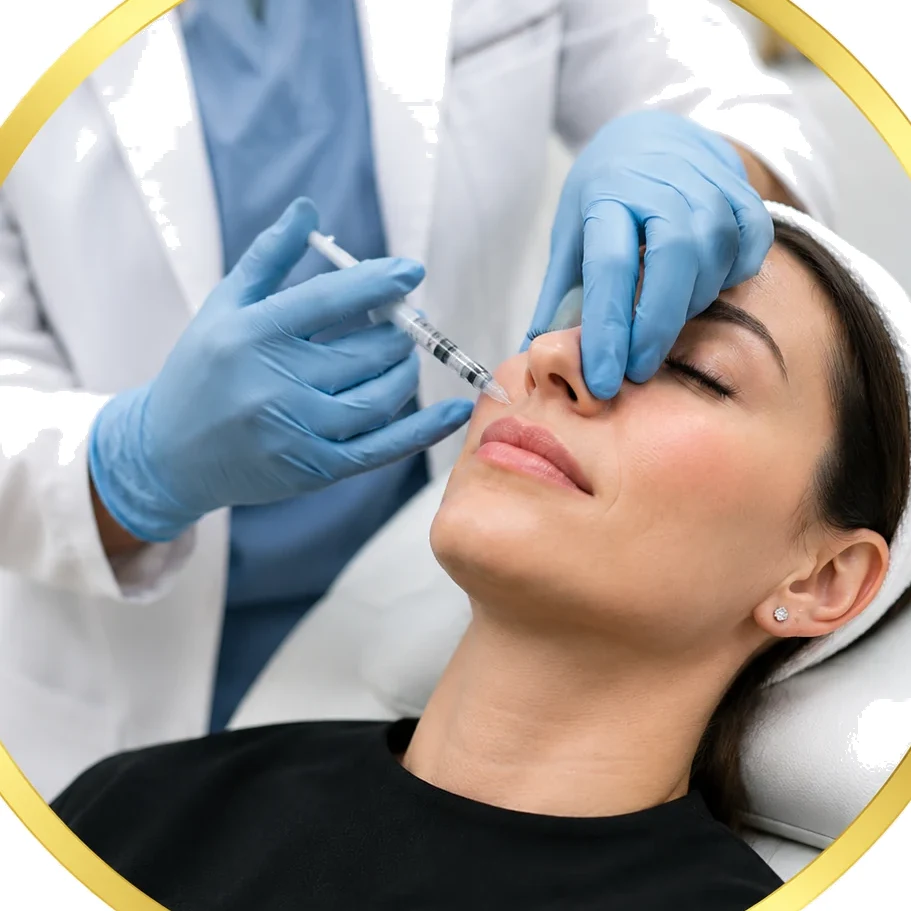

A thread lift is generally low risk when performed by an appropriately trained clinician in a properly governed clinic, but it is not without risk. Early effects like swelling and bruising are common and usually settle within weeks, while late complications such as visible threads or migration are less frequent but harder to predict. Before you book, check who is doing the procedure and where.
TL;DR:
- Most early complications, such as swelling and bruising, are self-limiting and typically resolve within two weeks, with around 34% of patients experiencing swelling.
- Late issues like visible threads, skin dimpling, extrusion, and migration are less common but often require clinical intervention, with deep infections affecting about 2% of cases.
- Proper screening is essential, as individuals with active skin infections, blood disorders, or significant skin laxity should avoid thread lifts, which are not a substitute for surgical facelifts.
- Choosing a qualified, well-governed clinic with documented practitioner training and traceable, single-use threads significantly reduces risks and improves outcomes.
- Most problems that arise within the first four weeks are manageable through simple treatments, but delayed complications warrant prompt professional review.
Table of Contents
- Thread lift safety: early and late complications explained
- What the research says about thread lift complication rates
- Who should not have a thread lift
- How to choose a safe clinic: a pre-consultation checklist
- Aftercare and the warning signs that need urgent attention
- What a safety-conscious clinic should be able to show you
- Why the "safe or not" debate misses the real question
- Considering a thread lift? Here's what safe practice looks like at Nexgen Clinic
- Sources
- FAQ
Thread lift safety: early and late complications explained
Most people who research thread lift safety want to know one thing: what actually goes wrong, and how often? The honest answer splits into two timeframes.
In the first days after treatment, swelling, bruising and mild pain are expected. These are your tissue's normal response to a foreign material being threaded under the skin, and they are almost always self-limiting.
Late complications are the ones that worry practitioners more, because they can appear weeks or months later and sometimes need active correction. The Cleveland Clinic's overview of thread lifts notes that complications are uncommon overall but advises patients to return to their treating clinician the moment something feels wrong rather than waiting it out.
Documented late issues include:
- Visible or palpable threads beneath the skin surface, particularly over bony areas or in thin skin.
- Skin dimpling, where the thread pulls unevenly on the tissue it is anchored to.
- Thread extrusion, where the material works its way back out through the skin. A PMC review of thread lift complications links this and dimpling to specific insertion techniques and thread types, with non-absorbable materials associated with more persistent problems.
- Migration, where the thread shifts from its original position.
- Infection, ranging from mild localised redness to deeper tissue infection requiring antibiotics.
- Nerve-related symptoms, reported rarely in case literature but taken seriously when they occur.
Management follows severity. Mild swelling needs nothing beyond time and cold compresses. Visible threads or minor dimpling often resolve with massage or, if not, a straightforward in-clinic removal. Infection usually responds to oral antibiotics, though deeper infections can need surgical drainage. Migration or persistent extrusion typically means removing the offending thread under local anaesthetic. Almost everything that goes wrong in the first four weeks is manageable; problems that surface later tend to need a proper clinical reassessment rather than reassurance.
What the research says about thread lift complication rates
Numbers help here, but they need context. A 2026 meta-analysis pooling 26 studies and 2,827 patients found swelling in roughly 34% of cases, bruising (ecchymoses) in around 26%, visible or palpable threads in about 10%, and skin dimpling in roughly 7%.
Statistic callout: Across 2,827 patients pooled from 26 studies, swelling affected around 34% and bruising around 26%. Visible threads (10%) and dimpling (7%) were less common, while deep infection sat near 2% in some pooled analyses.
The caveat matters as much as the figures. Heterogeneity across the studies was high, meaning results varied a lot depending on thread type, technique, and how long patients were followed up. Treat these as useful ranges for a conversation with your practitioner, not fixed odds for your own face.
Who should not have a thread lift
Thread lifts are not suitable for everyone, and a reputable clinic will screen for this before booking rather than after paying a deposit.
- Active skin infection at or near the treatment site, or any uncontrolled systemic illness.
- Blood-clotting disorders or use of anticoagulant medication that has not been cleared with a prescriber.
- Immunosuppression, which raises infection risk and slows healing.
- Pregnancy or breastfeeding, where elective cosmetic procedures are generally deferred.
- Significant skin laxity, where a thread lift cannot deliver the lift a surgical facelift would.
- Pressured sales tactics, no cooling-off period, or no written consent form — these are behavioural red flags, not medical ones, and they matter just as much.
Save Face's UK safety guidance is blunt about the first point above: PDO thread lifts are not a substitute for a surgical facelift, and setting that expectation correctly at consultation avoids most patient disappointment.
How to choose a safe clinic: a pre-consultation checklist
Reducing your own risk mostly comes down to who you choose, not which thread brand they use. Save Face's guidance is direct on this: the practitioner's training and the clinic's governance affect outcomes more than the material itself.
- Ask about training and case volume. A clinician should be able to describe thread-specific training and roughly how many procedures they have performed, plus any complications they have managed personally.
- Check premises registration. In England, providers offering thread lifts should meet the standards set out for non-surgical cosmetic procedures. The Review of the Regulation of Cosmetic Interventions specifically recommends stronger oversight, product traceability, and registries for exactly this category of treatment.
- Ask for device traceability. You should be able to find out the thread brand, material, and batch number used on you, in case of a future product recall.
- Confirm consent is procedure-specific, following the Montgomery principle of informed consent, and that you get a reasonable cooling-off period before treatment day rather than same-visit pressure to sign.
- Ask who manages complications and who pays. A clinic confident in its own safety record will have a clear answer, not a vague one.
Nexgen Clinic's own guide to choosing an aesthetic clinic in Cambridge walks through a similar checklist in more depth if you want to prepare specific questions before your consultation.
Pro Tip: Ask your practitioner for their personal complication rate, not just the published literature figures. A clinician who can quote their own numbers has almost certainly been auditing outcomes properly.
Aftercare and the warning signs that need urgent attention
Recovery is mostly about protecting the threads while they settle. Sleep on your back where possible, avoid vigorous facial massage or excessive jaw movement for the first week or two, and use cold compresses to manage swelling in the first 48 hours.
- Swelling and bruising typically improve over one to two weeks and settle fully within a month, matching the timeline reported for most patients in the Cleveland Clinic's overview.
- Final results usually settle by around six to eight weeks once initial swelling has resolved.
- Seek urgent review if you notice spreading redness, pus, fever, pain that worsens rather than improves, or a thread visibly pushing through the skin.
Corrective options range from a short course of antibiotics for infection to in-clinic thread removal for extrusion or migration, and occasionally minor surgical correction. A partner resource on post-procedure aftercare and monitoring covers similar principles for recognising when a cosmetic procedure needs follow-up rather than watchful waiting.
What a safety-conscious clinic should be able to show you
A clinic serious about safety documents it, rather than just claiming it. That means being able to show you training records, procedure-specific consent forms, and evidence that threads come from single-use, traceable, sterile packs.
Nexgen Clinic publishes educational guidance on its PDO thread lift procedures, uses AI-driven skin analysis to personalise treatment planning, and reports a 98% client satisfaction rate across its aesthetic services.
Ask any clinic you are considering, including Nexgen Clinic, to show you equivalent proof before you commit to treatment.
Why the "safe or not" debate misses the real question
The public conversation about thread lifts tends to swing between two extremes: dismissing them as gimmicky, or overselling them as facelift alternatives. Neither view survives contact with the actual evidence.
What the pooled data really shows is a procedure where the ceiling on safety is set almost entirely by the operator, not the thread. That is an uncomfortable finding for an industry that markets by brand name and thread type, because it means two patients getting the identical product can have very different outcomes depending purely on who is holding the needle. If you take one thing from this article, take that: ask about training before you ask about the thread.
I'd also push back gently on the framing that a thread lift is a low-commitment, no-downtime alternative to surgery. It is lower risk than a surgical facelift, but "lower risk" is not without risk, and the late complications, dimpling, extrusion, migration, are exactly the kind of thing that shows up after you have already told everyone how pleased you are with your results. Ask realistic questions about longevity and the possibility of needing corrective care, and you will make a far better decision than anyone chasing a discount offer.
— Ms Sandra Petraskaite
Considering a thread lift? Here's what safe practice looks like at Nexgen Clinic
Nexgen Clinic approaches thread lifts the way this article suggests you should judge any provider: with documented training, personalised assessment, and procedure-specific aftercare rather than a one-size-fits-all package. Every treatment plan starts with AI-driven skin analysis, so what you get reflects your own skin and ageing pattern rather than a generic protocol.
If you are weighing up whether a PDO thread lift suits your goals, or whether a different approach, such as a nasolabial folds treatment or a regenerative option, might serve you better, the clinic's treatment pages set out what each procedure involves. Book a consultation through Nexgen Clinic to get a personalised assessment and a straight answer on whether a thread lift is right for you, and what safety measures will be in place if it is.
Sources
- A meta-analysis of complications of thread lifting
- Complications of thread lift about skin dimpling and thread extrusion
- Review of the regulation of cosmetic interventions
- Thread Lift: What to Expect, Benefits & Complications
FAQ
Are thread lifts risky?
Thread lifts carry a real but generally modest risk profile. Common effects like swelling and bruising are frequent and temporary, while more serious complications such as infection or nerve symptoms are uncommon and depend heavily on practitioner skill.
Why do plastic surgeons not like thread lifts?
Some surgeons are sceptical because thread lifts cannot replicate the results of a surgical facelift, and outcomes vary widely depending on operator technique and thread quality. Save Face's guidance specifically warns against marketing thread lifts as a facelift substitute for this reason.
Is it safe to have a nose thread lift after two years?
Threads used for nasal contouring are generally absorbable and expected to dissolve well within that timeframe, so a repeat procedure after two years is not inherently unsafe. Any new treatment should still involve a fresh consultation to reassess your skin and check for any residual thread material.
What are the potential side effects of a thread lift?
Common side effects include swelling, bruising and mild pain in the days following treatment. Less common but more serious effects include visible or palpable threads, skin dimpling, thread migration, extrusion and infection.
How do I know if my clinic follows proper thread lift safety standards?
Ask to see evidence of practitioner training, procedure-specific consent documentation, and confirmation that single-use, traceable threads are being used. A clinic that documents its training, consent process and aftercare protocols openly is demonstrating the standard you should expect from any provider.
Recommended
- PDO thread lift: what to expect and how to choose safely
- Brow thread lift: what to expect and who it suits
- PDO Thread Lifts in Cambridge — Non-Surgical Lifting
Explore related NexGen treatments
- Explore our full treatment menu
- Book a consultation with our clinicians
- Contact our Cambridge team
- Read more articles in the NexGen Journal
Ready to explore your options?
Speak with a NexGen clinician for a personalised consultation. We’ll listen, assess, and recommend the safest and most effective route — always led by evidence, always tailored to you.
Book a consultation or get in touch with our Cambridge team.