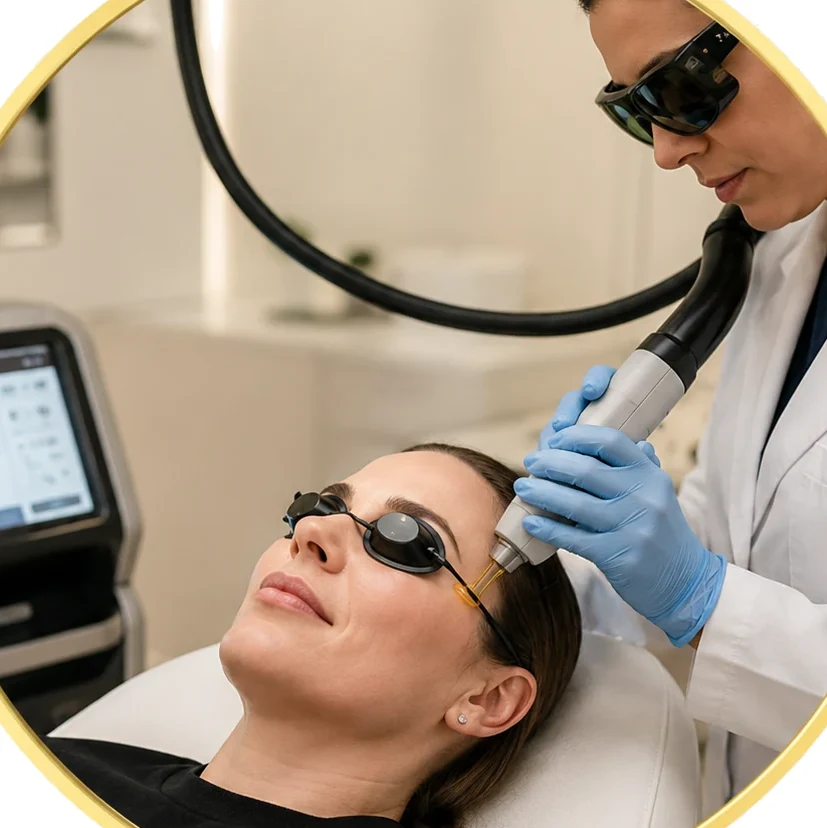
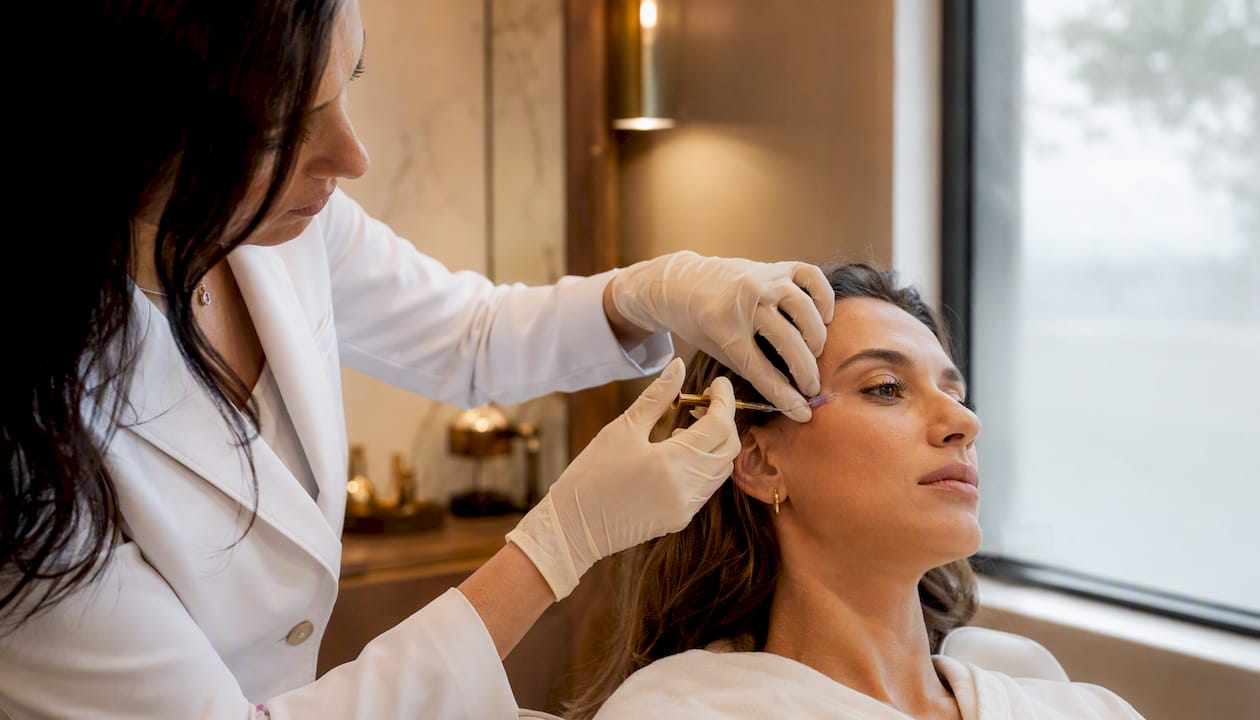
A brow thread lift is a minimally invasive procedure in which dissolvable or semi-permanent threads are placed beneath the skin to reposition a descended brow, making it a suitable non-surgical option for adults with mild-to-moderate brow ptosis who want a visible but natural-looking improvement without surgical downtime.
- What it does: PDO (polydioxanone) and similar threads create an immediate mechanical lift, then stimulate collagen over the following weeks to sustain the result.
- Typical duration: Most patients see noticeable benefit for around 6–12 months, with some reporting improvement beyond that as collagen remodelling continues.
- Main advantages: Minimal downtime (most people return to daily activities within 24–48 hours), no general anaesthetic, and an immediately visible change.
- Main limitations: The lift is subtler than surgical correction; it cannot remove excess or redundant skin; and repeat treatments are needed to maintain results.
- Patient-reported outcomes measured with tools such as FACE‑Q show high satisfaction in well-selected cases, though the MHRA and GMC both stress that practitioner qualification and device regulation compliance are non-negotiable.
Key takeaways
A brow thread lift offers a clinically supported, minimally invasive route to brow repositioning for adults with mild-to-moderate descent, with results typically lasting 6–12 months and a complication profile that is manageable in experienced hands.
| Point | Details |
|---|---|
| Candidacy | Best suited to mild-to-moderate brow ptosis with good skin elasticity and realistic expectations. |
| Typical results | A vertical lift of approximately 1.2–1.3 cm and meaningful brow angle correction; most patients report satisfaction at three months. |
| Main risks | Swelling (~34%), bruising (~26%), visible threads (~10%) and skin dimpling (~7%) based on pooled meta-analysis data. |
| Consultation questions | Ask about thread type, insertion technique, number of threads, anaesthesia, follow-up policy and complication management. |
| Nexgen Clinic | Offers medically led PDO thread lifts with AI skin analysis, personalised planning, and structured follow-up as part of every treatment. |
This article is general information, not a substitute for advice from a qualified doctor. Consult a qualified healthcare professional about your own circumstances before acting on anything here.
Table of Contents
- What is a brow thread lift and how does it work?
- Thread materials and techniques used for brow lifting
- What happens during a brow thread lift appointment
- Who is a good candidate and what results are realistic?
- Brow thread lift versus surgical brow lift and neuromodulators
- Recovery timeline and aftercare after a brow thread lift
- Risks, complications and how clinics reduce them
- Typical costs and retreatment intervals
- How to choose a qualified practitioner
- What the clinical evidence shows
- A perspective on safety-first brow lifting
- Brow thread lifts at Nexgen Clinic: what to expect when you book
- Sources
- FAQ
What is a brow thread lift and how does it work?
A brow thread lift involves placing fine threads, typically made from absorbable materials, into the subcutaneous tissue above the brow to physically reposition the soft tissue upward. The threads carry tiny barbs or cogs that grip the tissue and hold it in its new position once the practitioner applies gentle traction. The result is visible immediately on the treatment table.
The biological mechanism adds a second layer of benefit. As absorbable threads dissolve over three to six months, they trigger a mild inflammatory response that stimulates new collagen production, a process called neocollagenesis. This collagen scaffolding can sustain some of the lift even after the thread itself has gone, which is why many patients notice results persisting well beyond the thread's resorption window.
The procedure sits firmly in the middle ground between a topical treatment and surgery. It cannot excise redundant skin, tighten the underlying frontalis muscle, or address the deep structural changes that a coronal or endoscopic brow lift corrects. For mild-to-moderate brow descent, that distinction rarely matters. For significant hooding or functional eyelid impairment, it does. The anatomical perspectives of brow-lifting using threads confirm this positioning: thread lifting acts as an intermediary between surgical and non-surgical approaches, with technique details such as cannula tunnelling and reverse insertion being critical to reliable outcomes.
Practitioner skill influences the result more than almost any other variable. The MHRA regulates the medical devices used in this procedure, and the GMC sets standards for the practitioners who perform it. Choosing a clinician who works within both frameworks is the single most important decision a prospective patient makes.
Thread materials and techniques used for brow lifting
Common thread materials
Four materials appear most frequently in clinical practice for brow lifting.
- PDO (polydioxanone): The most widely used absorbable material. PDO threads dissolve in roughly 3–6 months but the collagen response they trigger can sustain visible improvement for 12 months or longer. They are well-tolerated and have a long safety record in surgery.
- PLLA (poly-L-lactic acid): Slower to resorb (up to 12–18 months), with a more prolonged collagen-stimulating effect. Often chosen when a practitioner wants a longer-lasting result from a single treatment.
- PCL (polycaprolactone): The slowest-resorbing of the common absorbable materials, sometimes persisting for two years or more. Useful where sustained lift is the priority.
- Polypropylene: A non-absorbable material used in Silhouette Soft and similar suspension thread systems. These threads are not resorbed and rely on permanent anchoring; they carry a different long-term risk profile and are less commonly chosen for brow-specific lifting.
Cog/barbed threads versus smooth threads
Smooth threads have no surface features and work primarily through neocollagenesis rather than mechanical lift. For brow repositioning, where an immediate, directional lift is the goal, barbed or cog threads are the standard choice. The cogs grip the dermis and subcutaneous fat, allowing the practitioner to hold the brow in its new position without suturing the thread to a fixed anchor point.
APTOS-style threads use a bidirectional barb pattern, gathering tissue from both directions toward a central point. Silhouette-type threads use absorbable cones on a non-absorbable suture to create a suspension effect. Both can be used at the brow, though their insertion geometry differs from standard unidirectional cog threads.
Technique: cannula tunnelling and reverse insertion
The anatomical approach most commonly described for reliable brow lifting uses an 18G cannula to create tunnels through the loose areolar tissue beneath the frontalis muscle. This subgaleal-frontalis plane allows the thread to travel through tissue with fewer adhesions, reducing discomfort and the risk of irregular surface contour.
Reverse insertion, where the thread is introduced from a distal point and anchored in firmer tissue closer to the hairline, secures the thread in tissue dense enough to hold the cogs under tension. This avoids placing the entry point at the hairline itself, which can be uncomfortable and conspicuous.
| Thread type | Material | Resorption | Lift mechanism | Typical brow use |
|---|---|---|---|---|
| PDO cog | Polydioxanone | 3–6 months | Mechanical + neocollagenesis | Most common first-line choice |
| PLLA cog | Poly-L-lactic acid | 12–18 months | Mechanical + prolonged collagen | Longer-lasting result sought |
| PCL cog | Polycaprolactone | Up to 24 months | Mechanical + extended collagen | Maximum duration priority |
| Silhouette Soft | Polypropylene + PLLA cones | Non-absorbable suture | Suspension + collagen | Moderate-to-significant descent |
| APTOS-style | PDO or PLLA | Variable | Bidirectional gathering | Lateral brow tail lifting |
Thread lengths for brow lifting typically run 6–8 cm, with two to four threads placed per brow depending on the degree of descent and the technique used.
What happens during a brow thread lift appointment
A typical appointment runs 30–60 minutes from anaesthesia to completion. Here is what to expect at each stage.
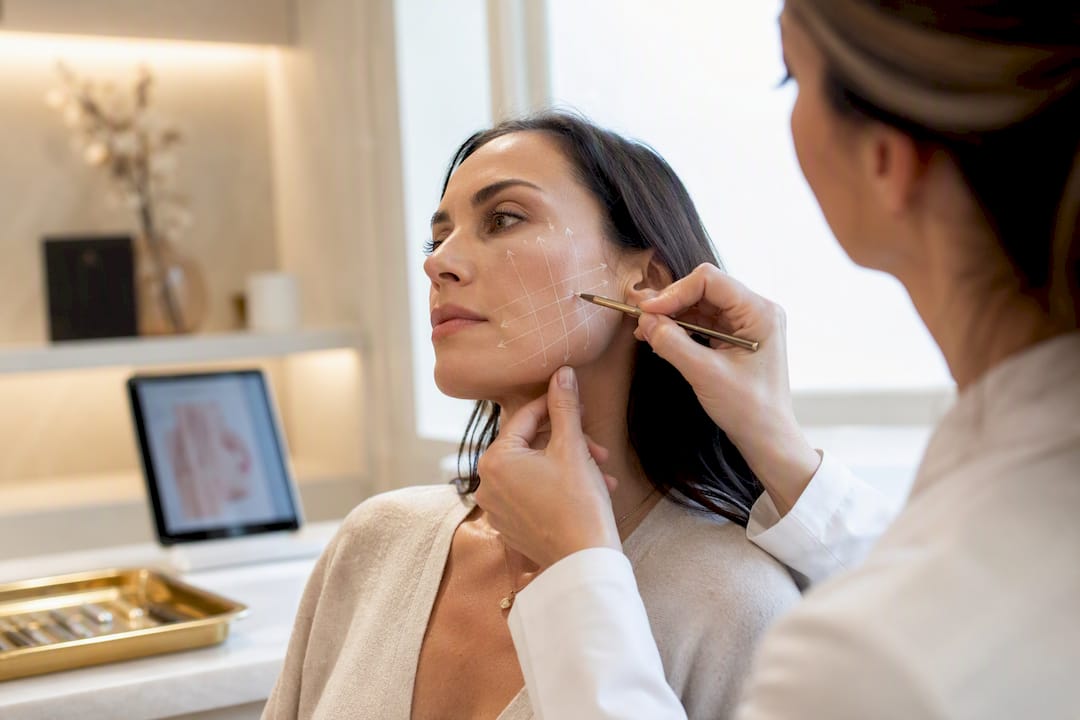
- Consultation and photography. Before any treatment begins, the practitioner reviews your medical history, photographs the brow at rest and in animation, and marks the proposed entry points and thread vectors on your skin with a skin-safe marker.
- Anaesthesia. Topical anaesthetic cream is applied 20–30 minutes before the procedure. For patients with lower pain tolerance or where deeper insertion is planned, a small amount of local infiltration anaesthetic may be injected at the entry points.
- Entry point preparation. A fine needle or cannula creates a small opening in the skin at the planned entry site, usually above the brow tail or at the lateral forehead.
- Cannula or needle insertion. The practitioner advances the cannula through the subcutaneous tissue along the pre-marked vector, creating the tunnel described above. The thread is then loaded and drawn through.
- Lift manoeuvre. Once the thread is in position, the practitioner applies gentle upward traction to engage the cogs against the tissue. You will feel a tugging or pressure sensation at this point, which is normal and brief.
- Thread trimming and entry point closure. Excess thread is trimmed flush with the skin surface. Entry points are small enough to close without sutures in most cases.
- Immediate review. The practitioner assesses symmetry and brow position before you leave. Some mild swelling is expected immediately, so the final settled result is assessed at a follow-up appointment.
Questions to bring to your consultation:
- Which thread material and brand will be used, and why?
- How many threads per brow, and what is the planned vector?
- Will topical or infiltration anaesthesia be used?
- What does the aftercare plan include, and what is the follow-up schedule?
- What happens if I experience a complication?
Who is a good candidate and what results are realistic?
The ideal candidate for a brow thread lift is an adult with mild-to-moderate brow descent, reasonable skin elasticity, and realistic expectations about the degree of change achievable without surgery.
Candidate checklist:
- Mild-to-moderate brow ptosis (the brow sits at or slightly below the orbital rim but there is no significant skin redundancy)
- Adequate skin thickness and elasticity (thin, crepey skin increases the risk of visible threads or dimpling)
- No active skin infection, uncontrolled autoimmune condition, or blood-clotting disorder
- Realistic expectations: a subtle repositioning, not a dramatic surgical transformation
- Willingness to maintain results with repeat treatments every 12–18 months
Contraindications include very thin skin prone to dimpling, severe static forehead rhytides, and significant excess skin that only surgical excision can address. Patients who want a dramatic, long-lasting change are better served by a surgical consultation.
What does a realistic result look like? A retrospective PDO thread series measured a vertical change of approximately 1.2–1.3 cm and a statistically significant angular correction of the inner brow of around 4.00°–4.44°, with 26 of 29 patients reporting satisfaction at three months. Those numbers sound modest, but the angular change at the inner brow opens the eye, softens a heavy expression, and shifts the perceived age of the face in a way that photographs confirm. Small objective gains can produce significant perceived improvement because brow angle, not raw height, is what the eye reads as youthful or tired.
Combining threads with botulinum toxin (to relax the depressor muscles that pull the brow down) or with dermal fillers placed beneath the brow tail can extend and refine the result. HIFU (high-intensity focused ultrasound) is another adjunct some clinicians use to tighten the deeper tissue planes before or after thread placement.
Brow thread lift versus surgical brow lift and neuromodulators
Choosing between threads, Botox, and surgery depends on four factors: the degree of brow descent, your skin quality, how much downtime you can accept, and whether you want a permanent or maintained result.
When Botox is the right first step: For mild brow descent driven primarily by overactive depressor muscles (orbicularis oculi, corrugator), a small dose of botulinum toxin placed at the lateral brow can produce a 1–2 mm lift with no downtime and at a fraction of the cost. This is often the sensible starting point for patients in their thirties with early brow heaviness. The effect lasts 3–4 months and requires no recovery.
When threads are the natural next option: Once the brow descent is more established, or when Botox alone no longer produces a satisfying result, threads offer a more structural correction. The lift is immediate, the downtime is minimal, and the result lasts considerably longer than a neuromodulator cycle.
When surgery is the sensible recommendation: Severe hooding, functional eyelid impairment (where the brow descent encroaches on the visual field), or significant excess skin all require surgical correction. No thread technique can substitute for the tissue excision and deep-plane repositioning that a coronal, endoscopic, or direct brow lift provides.
Decision checklist:
- Mild descent, good elasticity, minimal downtime needed → Botox first, threads if more lift is wanted
- Moderate descent, realistic expectations, willing to maintain → brow thread lift
- Severe descent, excess skin, or functional impairment → surgical referral
- Any degree of descent combined with volume loss → threads plus fillers or skin boosters
Recovery timeline and aftercare after a brow thread lift
Recovery is one of the procedure's genuine advantages. Most patients in the barbed thread case series returned to daily activities the day after treatment, with no serious complications reported in the selected cohort.
- Hours 0–48: Expect soreness at the entry points, mild swelling, and possible bruising. Sleep on your back with your head slightly elevated to reduce swelling. Avoid touching or pressing the treated area.
- Days 3–7: Bruising and swelling typically peak around day three and then begin to resolve. Some patients notice mild dimpling or puckering of the skin along the thread path; this usually settles as the tissue relaxes around the thread.
- Days 7–14: Most visible bruising has faded. The brow position begins to settle into its final resting place. Avoid vigorous facial massage, saunas, and high-impact exercise during this window.
- Weeks 4–6: The early changes have fully settled. This is the appropriate point for a follow-up assessment and photography to compare with baseline images.
Aftercare do's and don'ts:
- Sleep on your back for at least the first week
- Apply a cold compress (not directly on the skin) in the first 24 hours to reduce swelling
- Avoid alcohol and blood-thinning supplements for 48 hours post-procedure
- Do not massage the brow area unless your practitioner specifically instructs you to
- Contact the clinic promptly if you notice increasing pain after day two, oozing from an entry point, or prolonged asymmetry beyond two weeks
Risks, complications and how clinics reduce them
Thread lifts have a well-characterised complication profile. Understanding the difference between early self-limiting events and later complications helps you weigh the procedure's benefits honestly.
A meta-analysis pooling data from 26 studies and 2,827 patients reported the following pooled proportions:
- Swelling: approximately 34% of cases
- Ecchymoses (bruising): approximately 26%
- Visible or palpable threads: approximately 10%
- Skin dimpling: approximately 7%
Statistic to keep in perspective: swelling and bruising are early, self-limiting events in the vast majority of cases. Visible threads and skin dimpling are the complications most likely to require clinical review or, rarely, thread removal.
The meta-analysis also reported high heterogeneity across studies, meaning these pooled figures should be interpreted as indicative rather than precise. Individual risk varies with skin type, thread choice, and practitioner technique.
How clinics reduce risk:
- Selecting patients carefully (avoiding very thin skin, active infection, or severe laxity)
- Choosing the correct thread type and length for the anatomy
- Placing threads at the correct depth, avoiding the superficial dermis where visibility is highest
- Using cannula tunnelling to reduce trauma and surface irregularity
- Providing a clear follow-up schedule and a documented complication-management plan
Rare but serious complications include thread migration, infection, and nerve injury. These are uncommon in experienced hands but underscore why practitioner selection matters. Thread removal is possible if a complication does not resolve, though it requires a skilled operator and occasionally a surgical referral.
Pro Tip: Ask your practitioner to show you their complication-management protocol before you consent. A clinician who cannot explain what they would do if a thread became visible or migrated is not yet ready to perform the procedure.
Typical costs and retreatment intervals
London and major city clinics tend to sit at the higher end; regional clinics with equally qualified practitioners can offer the same procedure at a lower price point.
Several variables push the cost upward: a higher thread count per brow, the use of PLLA or PCL threads (which cost more than PDO), combination with botulinum toxin or fillers in the same session, and the inclusion of a detailed pre-treatment imaging or AI skin analysis.
PDO threads dissolve in 3–6 months, but the collagen response they trigger means many patients retain a noticeable result for 12 months or longer. PLLA and PCL threads extend that window further. Most practitioners recommend a retreatment assessment at 12–18 months, though some patients with good collagen response find they can extend the interval.
Package pricing that bundles threads with a neuromodulator session and a follow-up appointment can reduce the per-treatment cost and simplifies the maintenance schedule. Ask whether your consultation fee is deducted from the treatment cost, and confirm what the follow-up policy covers. Nexgen Clinic's signature packages offer combined treatment programmes that include follow-up, which is worth considering if you plan to maintain results over time.
How to choose a qualified practitioner
The single biggest risk factor in a brow thread lift is not the thread material or the technique. It is the practitioner performing it.
Practitioner checklist:
- Holds a medical qualification (doctor, dentist, or nurse prescriber with appropriate aesthetic training)
- Has specific, documented training in thread lift techniques, not just general aesthetics
- Can show before-and-after photographs of brow thread lifts they have personally performed
- Works in a clinic that meets CQC standards or equivalent regulatory requirements
- Uses threads that are CE-marked or UKCA-marked medical devices, in line with MHRA guidance
- Provides a written consent document that includes the specific thread type, complication rates, and follow-up plan
- Has a clear protocol for managing complications, including access to a surgical referral pathway if needed
Red flags to walk away from:
- No face-to-face assessment before treatment (online-only consultations for an invasive procedure)
- Unwillingness to name the thread brand or explain the insertion technique
- A price-first sales approach with no discussion of candidacy or contraindications
- No documented before-and-after outcomes or outcome measures such as FACE‑Q scores
- Inability to explain what happens if a complication arises
At consultation, ask specifically: which thread type and brand, how many threads per brow, what anaesthesia will be used, what the follow-up schedule is, and whether the practitioner has access to published outcome data for the technique they use. A practitioner who welcomes these questions is one worth trusting. For further guidance on practitioner selection and what to look for in a PDO thread provider, Nexgen Clinic's blog covers the key considerations in detail.
What the clinical evidence shows
The evidence base for brow thread lifting is growing but remains limited by small study sizes and significant heterogeneity between trials.
Key findings from the literature:
- A systematic review summarising six studies with 419 patients found a generally favourable safety and efficacy profile, with follow-up periods averaging 10–11 months. Ecchymosis and oedema were the most commonly reported events. The authors called for larger, longer-term trials.
- The PDO thread retrospective series of 29 patients showed a vertical brow change of approximately 1.2–1.3 cm and an inner brow angular correction of 4.00°–4.44°, with 26 of 29 patients satisfied at three months.
- The barbed thread case series of 38 patients with mild-to-moderate ptosis reported no serious complications and improved FACE‑Q scores at 6 and 12 months.
- The meta-analysis of 26 studies and 2,827 patients reported pooled complication proportions as follows:
| Complication | Pooled proportion |
|---|---|
| Swelling | ~34% |
| Ecchymoses | ~26% |
| Visible or palpable threads | ~10% |
| Skin dimpling | ~7% |
The high I² heterogeneity across studies means these figures should be read as a general signal rather than a precise individual risk estimate.
Evidence gaps: Most studies are small, retrospective, and lack standardised outcome measures or long-term follow-up beyond 12 months. Operator skill is rarely controlled for, which makes it difficult to separate technique-related outcomes from material-related ones. Readers should discuss these limitations with their practitioner and ask how the clinic's own outcomes compare with published data.
A perspective on safety-first brow lifting
There is a tendency in aesthetic medicine to present thread lifts as a straightforward, low-risk procedure that almost anyone can have. The evidence does not quite support that framing.
The complication rates from the meta-analysis are not alarming, but they are not trivial either. Swelling in roughly one in three patients and bruising in roughly one in four are early events that resolve, but visible threads in one in ten patients is a complication that requires clinical management. That figure comes from pooled data across many operators and many thread types. In a well-selected patient treated by an experienced clinician using the right thread for their anatomy, the individual risk is likely lower. In an under-selected patient treated by someone with limited thread experience, it is likely higher.
What this means practically is that the consultation matters as much as the procedure itself. Patient selection, honest discussion of what threads can and cannot achieve, and a clear plan for the rare case where something goes wrong are what separate a good outcome from a disappointing one. At Nexgen Clinic, the approach is to combine a conservative thread plan with adjunct treatments such as botulinum toxin or skin boosters where they add genuine value, rather than placing more threads to compensate for poor patient selection.
The other point worth making is that small objective gains are not the same as small perceived gains. A 1.2 cm vertical lift and a 4° angular correction at the inner brow may not sound dramatic, but they change the way a face reads at conversational distance. That is the goal: a result that looks like you, rested.
Brow thread lifts at Nexgen Clinic: what to expect when you book
Nexgen Clinic's medically led approach to PDO thread lifting begins with a detailed face-to-face consultation that includes AI-assisted skin analysis and photographic baseline assessment. Rather than a one-size approach, the treatment plan is built around your specific brow anatomy, skin quality, and aesthetic goal, with a clear recommendation on thread type, number, and any combination treatments that would genuinely improve the outcome.
Every treatment includes a structured follow-up appointment and a documented complication-management protocol. Pricing is transparent, and combination packages are available for patients who want to address brow position alongside skin quality or volume in a single programme.
To book a consultation or explore the full range of non-surgical treatments available, visit Nexgen Clinic's treatments page and request an appointment online.
Sources
- Anatomical perspectives of brow‐lifting using threads: Clinical cases with techniques
- Eyebrow lifting with barbed threads: A simple, safe, and effective ambulatory procedure - PubMed
- A meta-analysis of complications of thread lifting (Frontiers in Surgery)
- Doi
FAQ
How long does a brow thread lift last?
Most patients see noticeable results for 6–12 months. PDO threads dissolve in 3–6 months, but the collagen they stimulate can sustain the lift beyond that window, with some patients reporting improvement for up to 18 months depending on thread type and individual skin response.
Why do some plastic surgeons caution against thread lifts?
Surgeons who specialise in brow lifting often note that threads cannot address excess skin, deep muscle activity, or significant structural descent, all of which require surgical correction. They also point to the risk of visible threads and the need for repeat treatments, which over time may approach the cost of a one-time surgical procedure.
How much does a brow thread lift cost in the UK?
A brow thread lift cost varies with clinic location, practitioner seniority, the number of threads placed, and whether combination treatments such as botulinum toxin are included in the same appointment.
What are the main downsides of a thread lift?
The result is subtler than surgery, temporary, and requires maintenance. Most early events resolve without intervention; visible threads and dimpling may need clinical review.
Can Nexgen Clinic advise whether I am a suitable candidate?
A face-to-face consultation at Nexgen Clinic includes a clinical assessment of brow position, skin quality, and your aesthetic goals, alongside AI-assisted skin analysis and photographic documentation. This is the only reliable way to determine whether a thread lift, a combination approach, or a surgical referral is the right recommendation for your anatomy.
Recommended
- PDO Thread Lifts in Cambridge | Non-Surgical Lifting | NexGen Clinic
- Skin Boosters vs Profhilo: Which Treatment Is Right?
- Skin Boosters & Profhilo | NexGen Clinic Journal
Explore related NexGen treatments
- Explore our full treatment menu
- Book a consultation with our clinicians
- Contact our Cambridge team
- Read more articles in the NexGen Journal
Ready to explore your options?
Speak with a NexGen clinician for a personalised consultation. We’ll listen, assess, and recommend the safest and most effective route — always led by evidence, always tailored to you.
Book a consultation or get in touch with our Cambridge team.