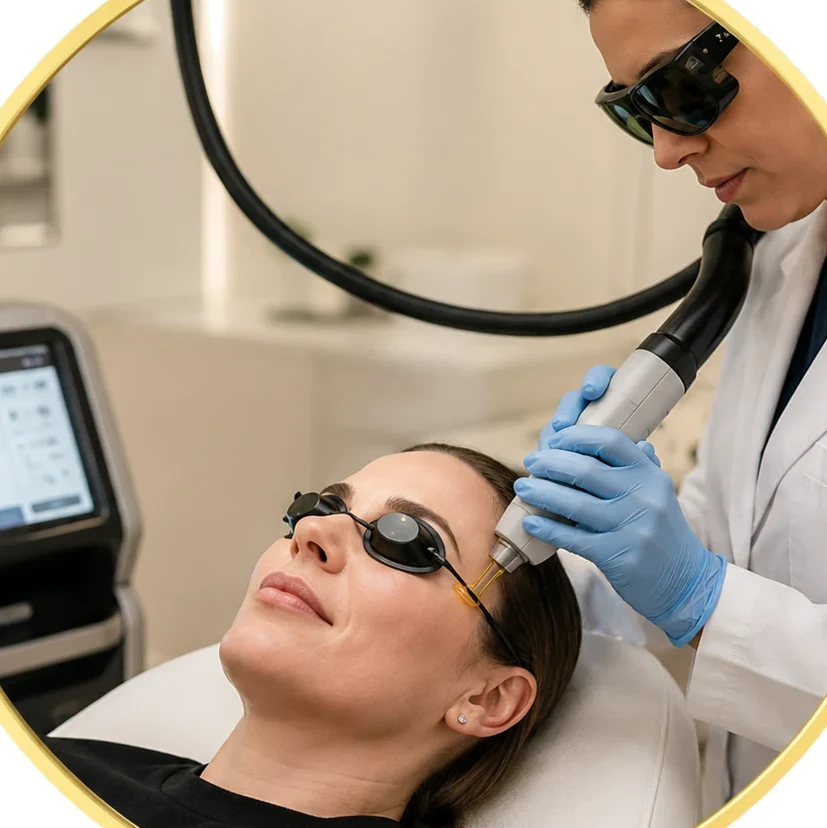

Most clinics in England charge between about £250 and £550 for one 1ml syringe of cheek filler, according to Beautay's 2026 pricing research. A full treatment often needs more than one syringe, so the total you pay depends on how much product your face needs, who injects it and where the clinic is. This guide explains how to read a quote, what jawline filler costs by comparison, and what a low price can hide. At NEXGEN Clinic in Cambridge, dermal fillers start from £180, and your exact price is confirmed after a consultation.
TL;DR
- Typical UK cheek filler is £250 to £550 per 1ml syringe, with a median near £300 (Beautay). Jawline filler usually starts a little higher, from around £350 per TreatCompare.
- Most people need 1 to 2ml in total, so a realistic budget is often £300 to £1,000 across one or two sessions. This is our reading of the ranges, not a fixed price.
- Regional pricing matters: London and the South East are usually 15 to 25% above the North, Midlands and Scotland. The East of England sits close to the national average.
- A very cheap offer is a warning sign. The government urges people to check qualifications and insurance and to avoid suspiciously cheap treatments.
- Ask what the quote covers: one syringe, the full plan, the consultation and any follow-up.
Table of Contents
- What cheek filler costs in England in 2026
- Why prices differ so much
- How much filler do your cheeks need?
- Jawline filler cost
- What the procedure involves
- How long cheek filler lasts, and what that means for cost
- The risks you should price in
- How to judge a quote
- Our perspective on cheek filler pricing
- Prices at NEXGEN Clinic
- Ways to keep the cost sensible without cutting corners
- FAQ
- Sources
What cheek filler costs in England in 2026
Prices vary, and no single figure is "the" price. These are the ranges published by independent UK price guides this year.
| Treatment | Typical published price | Source |
|---|---|---|
| Cheek filler, 1ml | £250 to £550 (median about £300) | Beautay |
| Cheek filler, starting price | from £300 | TreatCompare |
| Jawline filler, starting price | from £350 | TreatCompare |
| Lip filler, 1ml | median £220, range £150 to £400 | Beautay benchmark |
If you search around, you will see wider spreads. Some pages quote £150 for a syringe of any filler, others quote well over £1,000 for a full face plan. The difference is usually the area, the product, the injector's training and what is included.
A national price check is also useful for spotting outliers. On 7 October 2026, a review of 24 UK provider websites recorded published per-millilitre prices across six cities. Only some of the pages published a price at all, which tells you something: many clinics expect you to ask.
Why prices differ so much
Where the clinic is
Beautay's regional index puts Central London at 115, the East of England at 99, the North West at 91 and the North East and Yorkshire at 88, against a UK average of 100 (Beautay). Clinics in Cambridge and the wider East of England therefore tend to sit near the middle of the national range. A cheaper postcode does not make a treatment safer or less safe: it only changes overheads.
Who is injecting
The injector's training, insurance, on-site medical support and experience are the largest part of what you pay for. A doctor, dentist or nurse prescriber with a facial anatomy focus will usually charge more than someone with a short course behind them. For cheeks this matters. The area sits close to blood vessels, and the rare but serious complication of vascular occlusion is why medical experts describe filler as a medical procedure, not a beauty treatment.
The product and the technique
Fillers differ in firmness and in how they lift tissue. A firmer product placed deep to support the midface is not the same job as a soft product to hydrate the skin. Your practitioner should be able to tell you which product they intend to use and why.
What the quote includes
Many sites quote a price per ml, and that can mislead. Practitioners often treat by the result rather than the volume, so a published price for 1ml may not cover the total if you need 2ml. Ask whether the figure is for the first syringe or for the full plan, and whether a review appointment is included.
How much filler do your cheeks need?
Volume drives the final bill more than any other factor. TreatCompare's guidance gives these rough bands:
| Goal | Typical volume | Typical cost at £250 to £550 per ml |
|---|---|---|
| Subtle enhancement, younger skin | 0.5 to 1ml | £125 to £550 |
| Moderate restoration, ages 35 to 50 | 1 to 2ml | £250 to £1,100 |
| Significant correction | 2 to 3ml, often over two or more sessions | £500 to £1,650 |
The cost column is our own arithmetic applying the national per-ml range to those volumes, not a quote from any clinic, and a half-ml is not always charged at half a syringe.
A common question is whether 0.5ml makes a difference. The same source says it can make a visible, subtle change in contour for people with good baseline structure. For most adults seeking natural results, a gradual approach is usually better than one large session: two or three sessions for significant volume is a common recommendation.
Jawline filler cost
Jawline filler is priced in the same way, by the syringe, and it often needs more product than a subtle cheek treatment because the area is longer. TreatCompare lists jawline from £350, slightly above cheeks. Chin, jawline and midface work are often planned together, because changing one alters how the others look.
At NEXGEN Clinic, dermal fillers start from £180. Our guide to jawline contouring options explains how we assess the lower face before we recommend any product. We do not publish a single price for each area, because the amount depends on your anatomy.
What the procedure involves
A typical appointment follows these steps, as described in one UK treatment guide:
- Consultation. Your practitioner assesses your facial structure, midface volume and skin quality, and takes your medical history.
- Planning. You agree the areas, the amount and whether to stage the treatment.
- Injection. The practitioner places hyaluronic acid filler in and around the cheeks. The Cleveland Clinic notes that the procedure can take from a few minutes to a couple of hours, and that you often see results straight away.
- Aftercare. Swelling and bruising are common. Initial swelling can take several days to settle, and the settled look can take longer to appear.
How long cheek filler lasts, and what that means for cost
Common hyaluronic acid cheek fillers usually last 12 to 18 months, depending on the product, your metabolism and lifestyle. Repeat treatment is advised before the filler has fully gone. Spread over that time, a £300 to £600 treatment works out at roughly £17 to £50 a month. That is our own arithmetic, and your result will vary.
The risks you should price in
A lower fee is false economy if something goes wrong. Be aware of the following.
- Vascular occlusion. Rare, but serious complications range from bruising to vision loss. Ask whether hyaluronidase, the enzyme that dissolves hyaluronic acid filler, is kept on site.
- Persistent puffiness. Moorfields Private explains that people with poor tissue elasticity or a tendency to fluid retention may be at higher risk of lasting swelling. Their article is about the under-eye area, but the point about assessing skin and structure first applies to volume treatments in general.
- Future surgery. If you may have a facelift or eyelid surgery, tell your practitioner. Residual filler can make surgery more complex, and it may be dissolved beforehand.
The government is developing a licensing regime for non-surgical cosmetic procedures in England. Until it is in place, the advice is to check your provider's qualifications and insurance yourself. Clinics and practitioners can also be checked through registers such as JCCP and Save Face, as noted in guidance on consultations. If you have a medical condition, are pregnant or breastfeeding, or take blood-thinning medication, raise it at the consultation, because your practitioner may advise against treatment or ask you to see your GP first.
How to judge a quote
Use this checklist before you pay a deposit.
- Is a face-to-face consultation offered first? It should be, and without pressure.
- Who is the prescriber and who injects? Ask for names, qualifications and insurance.
- What is the total? Ask for a breakdown covering product, consultation, review and any possible complication costs.
- Is there pressure? Time-limited deals and "offer" pricing are a reason to step back.
- Is hyaluronidase available? Ask directly.
- Will they say no? An honest practitioner will tell you when you do not need treatment, or need less.
Our article on aesthetics insurance questions lists what clinicians should be able to answer about cover.
Our perspective on cheek filler pricing
We see many people arrive having compared a handful of per-syringe prices, and the cheapest figure is rarely the best guide. Cheeks are one part of a face, and the lift people want is often a result of skin quality, support in the midface and balance with the jawline, not just volume.
With over 15 years in aesthetics, our approach is consultation-led. We look at your facial features, skin condition, concerns and long-term goals before we suggest a product, and we would rather recommend less, or a different treatment, than sell a syringe you do not need. In some faces, skin-quality treatments such as Profhilo or polynucleotides are a better first step than volume. Where volume is right, we prefer to build gradually so that friends notice that you look rested, not that you have had something done.
That is why we do not advertise a flat price per cheek. A figure that ignores your anatomy is a number that would change on the day.
— Ms Sandra Petraskaite
Prices at NEXGEN Clinic
Our published starting prices for related treatments are:
| Treatment | Price |
|---|---|
| Dermal fillers | from £180 |
| Lip fillers | from £160 |
| Profhilo | from £250 per session |
| Polynucleotides | from £180 per session |
| PDO threads | from £350 |
These are starting points. We confirm your price after assessment, once we know the area, the volume and the plan. If you want to see what we offer, our treatments page lists everything, and you can book a consultation at our Cambridge clinic to get a personal recommendation and a written quote. If you are considering alternatives to volume, such as Sculptra for the face, we can explain how the timeline and cost compare.
Ways to keep the cost sensible without cutting corners
- Stage the treatment. Starting with 1ml and reviewing after a few weeks spreads cost and lowers the risk of overfilling.
- Treat the cause. If dullness or dehydration is the real issue, a skin-quality treatment may do more than volume.
- Plan maintenance. Returning before the product has fully gone often means you need less.
- Choose the practitioner first, then the price. Qualifications and aftercare are what you cannot recover if they are missing.
FAQ
How much are cheek fillers in the UK?
Most UK clinics charge about £250 to £550 per 1ml, with a national median near £300 (Beautay). A full cheek treatment commonly uses 1 to 2ml, so many people spend between £300 and £1,000 in total. London tends to be higher than the rest of the country.
How much is jawline filler?
Jawline filler generally starts from around £350 per syringe, and a full contour may need more than one (TreatCompare). At NEXGEN Clinic, dermal fillers start from £180, and we confirm the amount after assessing your face. Book a consultation for a written quote.
Does 0.5ml of cheek filler make a difference?
It can. For someone with good underlying structure, 0.5ml can give a visible but subtle change in contour. People with more volume loss usually need 1 to 2ml, often over more than one session.
How long do cheek fillers last?
Hyaluronic acid cheek filler usually lasts 12 to 18 months, depending on the product and the individual. Your practitioner should advise when to return, ideally before it has fully gone.
Is cheap filler safe?
Not necessarily. The government advises people to check qualifications and insurance and to avoid treatments that look suspiciously cheap. Ask who is injecting, what insurance they hold and whether hyaluronidase is available on site.
Sources
- Beautay: UK pricing data
- Beautay: UK Aesthetics Pricing Benchmark 2026
- TreatCompare: dermal filler cost in the UK
- TreatCompare
- UK dermal filler published price observations
- Aestheticc: cheek filler guide
- GOV.UK: crackdown on unsafe cosmetic procedures
- GOV.UK
- Royal College of Surgeons: your consultation
- Moorfields Private: risks of under-eye filler
- Cleveland Clinic: cheek filler
Recommended
Ready to explore your options?
Speak with a NexGen clinician for a personalised consultation. We’ll listen, assess, and recommend the safest and most effective route — always led by evidence, always tailored to you.
Book a consultation or get in touch with our Cambridge team.