Full face rejuvenation is a personalised, non-surgical treatment plan that restores facial balance by combining injectables and skin procedures for a natural, refreshed look. It typically suits adults with moderate volume loss, dynamic lines, and a preference for subtle, staged results rather than dramatic change. Because it involves prescription-only medicines and rare but serious risks, it should only be carried out at a medically led clinic with a written complication protocol.
TL;DR:
- Full face rejuvenation should be staged to ensure natural results and minimize risks, rather than attempting to treat multiple areas in one session.
- Safe treatment relies on clinics with clear complication protocols, practitioner training, and immediate access to reversal agents like hyaluronidase.
- Results typically last from several months to over a year, with maintenance appointments every four to six months to sustain subtle, natural improvements.
- Candidates usually have moderate aging signs, good skin elasticity, and should avoid treatment if they have active skin infections or severe skin laxity requiring surgery.
- Use of AI skin analysis and layered treatment planning at clinics like NexGen ensures a personalized, safe, and measurable approach to facial rejuvenation.
Table of Contents
- What is full face rejuvenation and why treat the whole face?
- The core treatments and what each one contributes
- Who is a good candidate for full face rejuvenation?
- How practitioners plan and sequence your treatment
- What are the risks, and how do you choose a safe clinic?
- How long do results last, and what maintenance do you need?
- NexGen Clinics' approach to natural, safe results
- Preparing for treatment and what aftercare looks like
- How does full face rejuvenation affect confidence and satisfaction?
- What does full face rejuvenation cost?
- Surgical versus non-surgical: which route fits you?
- What's next for full face rejuvenation technology?
- The gap between "natural results" and how most clinics actually deliver them
- Book a full face consultation with NexGen Clinic
- Sources
- FAQ
What is full face rejuvenation and why treat the whole face?
Think of the face like a house renovation. Repainting one wall while ignoring a crumbling ceiling never looks finished, and treating a single wrinkle or hollow cheek in isolation creates the same mismatch. Ageing happens across the whole face at once, through bone remodelling, fat loss, skin laxity, and repeated muscle movement, so a plan that addresses only one feature can leave the rest looking comparatively tired. Newsweek's coverage of full-face rejuvenation describes how combining hyaluronic acid fillers with neuromodulators aims for balanced, natural results rather than isolated fixes.
A whole-face approach sets out to achieve several things together, not as separate projects:
- Restore lost structural volume in the cheeks, temples, and jawline
- Soften dynamic lines caused by repeated expression
- Improve skin texture, tone, and hydration
- Refine facial contours and proportion
Most patients pursuing this approach are in their late thirties through fifties, motivated by a face that looks "tired" or "different" in photos rather than by any single wrinkle. The goal is a face that still looks like them, just less depleted.
The core treatments and what each one contributes
A full face programme draws from a toolkit of procedures, layered according to what each area needs rather than applied uniformly.
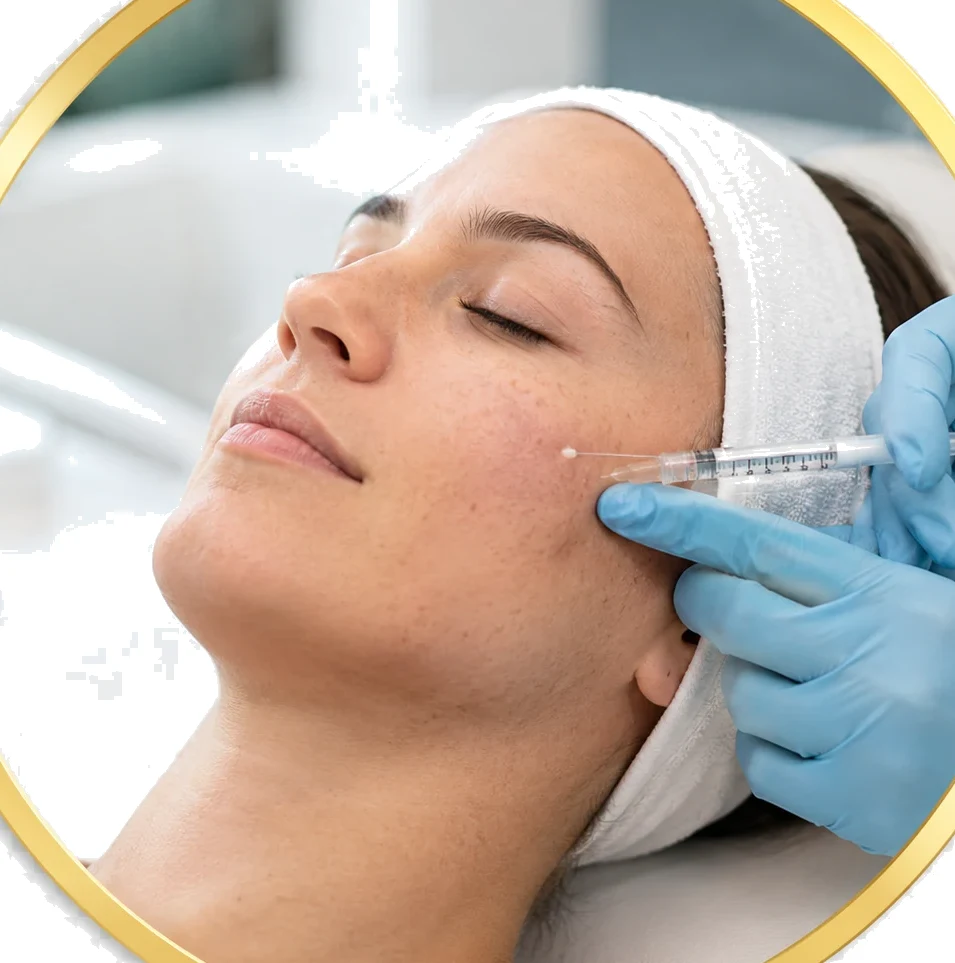
- Dermal fillers rebuild structural volume in the cheeks, temples, and jawline. Hyaluronic acid (HA) fillers are reversible and widely used for immediate contouring, while biostimulator fillers work more slowly to encourage the body's own collagen production.
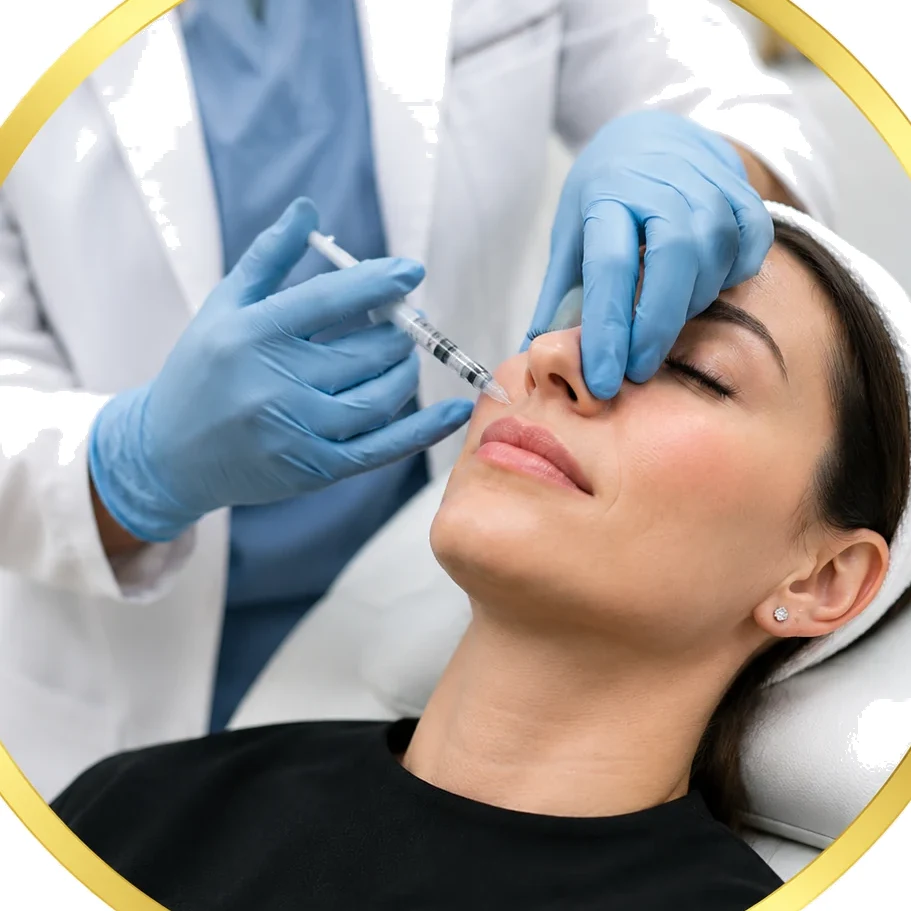
- Neuromodulators (botulinum toxin) soften dynamic lines from frowning or squinting and help harmonise movement across the upper face, so one area doesn't look frozen while another still moves freely.
- Skin boosters and biostimulators improve hydration and skin quality from within, addressing the dullness and crepiness that filler alone cannot fix.
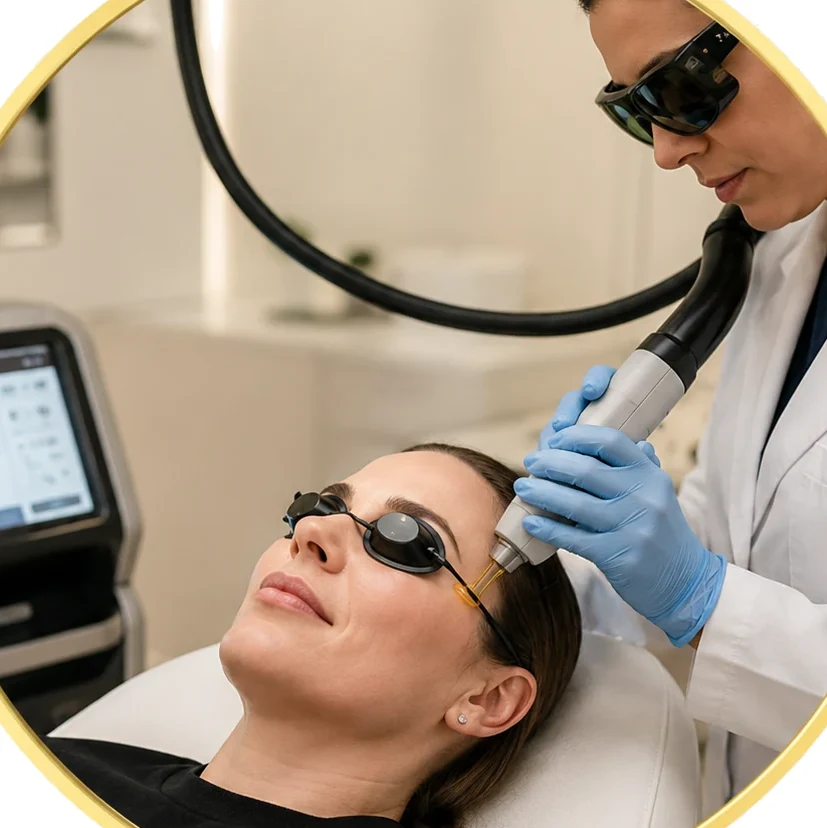
- Energy devices and resurfacing treatments target texture, enlarged pores, and mild skin laxity through controlled heat or light.
- PDO threads offer a mechanical lifting effect and are often chosen for jawline or mid-face laxity where filler alone would look overfilled rather than lifted.
Pro Tip: Ask your practitioner which single treatment they'd skip if budget were limited. A good clinician will have a clear rationale for sequencing, not a one-size list of add-ons.
The dermal and lip filler category on the NexGen Clinic journal breaks down how these materials behave differently depending on where they're placed.
Who is a good candidate for full face rejuvenation?
Full face rejuvenation suits people with moderate, generalised signs of ageing rather than one severe, isolated concern. Good candidates typically have realistic expectations, reasonably good skin elasticity, and want gradual, natural-looking change instead of a dramatic transformation.
Certain conditions rule treatment out, at least temporarily:
- Active skin infection or inflammation in the treatment area
- Unrealistic expectations about what injectables can achieve
- Certain autoimmune or bleeding disorders, or current use of blood-thinning medication
- Pregnancy or breastfeeding
Where skin laxity is severe, with significant excess skin around the jowls or neck, a surgical facelift referral is often more appropriate than layering injectables on a structural problem they cannot solve. A reputable clinic will say so rather than overselling a non-surgical route that won't deliver. The safest programmes are staged and conservative, building results over several sessions instead of chasing everything at once.
How practitioners plan and sequence your treatment
A proper full face plan starts long before the first needle. Assessment typically includes standardised photographs, movement analysis to see how the face animates when speaking or expressing emotion, and a check of facial proportions and skin quality. Some clinics, including NexGen Clinic, use AI-driven skin analysis to map concerns objectively and track change over subsequent visits rather than relying on memory alone.
Sequencing then follows a logical order:
- Neuromodulators are often addressed early, since calming dynamic lines can change how much volume is genuinely needed elsewhere.
- Structural filler follows, working from deeper foundational support (temples, cheeks) toward finer contouring (jawline, lips).
- Skin quality treatments, such as boosters or resurfacing, are layered in afterwards or on a separate visit to avoid compounding swelling.
Spacing appointments by two to four weeks lets swelling settle so the practitioner can judge results accurately before adding the next layer. Most patients see their full result within six to eight weeks, with maintenance reviews scheduled every four to six months after that.
What are the risks, and how do you choose a safe clinic?
Most side effects from injectable treatments are minor and short-lived. Bruising, swelling, and temporary tenderness at injection sites are common and usually resolve within days. A review published in Aesthetic Surgery Journal confirms that the overwhelming majority of filler-related adverse events are mild and transient, though it stresses that rare, catastrophic complications, including vascular occlusion and vision loss, do occur and demand genuine prevention and preparedness.
These serious events are uncommon, but they are the reason clinic choice matters more than which product is used. A review of vascular anatomy in filler injections points to specific danger zones, the glabella, nasal dorsum, and peri-orbital area, where sound anatomical knowledge is what keeps injections safe.
Before booking, check that a clinic can demonstrate:
- A written complication protocol and on-site hyaluronidase, ready to reverse HA filler immediately if vascular compromise is suspected
- A clear escalation pathway to ophthalmology or emergency care for suspected vision-threatening complications
- Documented, audited practitioner training, not just a certificate on the wall
- Consent processes that openly cover the rare risk of vision loss, in line with recognised consensus guidance
Reputable UK dermal filler standards call for logbooks, sterile technique, and adverse event documentation as baseline safe practice. Ask directly about emergency kit contents and how many times your injector has managed a vascular event. A hesitant answer is a red flag.
How long do results last, and what maintenance do you need?
Longevity varies significantly by treatment type, which is exactly why a full face plan needs staged review rather than a single appointment and goodbye.
- Neuromodulators typically last a few months before movement gradually returns
- HA dermal fillers last several months to over a year depending on the product, area, and individual metabolism
- Biostimulator treatments work more slowly but can support collagen production for a year or longer
The American Society of Plastic Surgeons notes that non-surgical facelift elements are custom tailored and can deliver meaningful anti-ageing results, but they require staged treatment and ongoing maintenance rather than a one-off fix. Conservative top-ups, rather than large repeat volumes, are what keep results looking like a refreshed version of your own face instead of an obviously "done" one. Most clinics recommend a review every four to six months to track how each area is holding and top up only where genuinely needed.
NexGen Clinics' approach to natural, safe results
NexGen Clinic built its signature programmes around the layering principle rather than treating features in isolation. NexGen Age Reset™ and Facial Balance™ are curated, personalised plans that combine injectables, skin quality treatments, and staged reviews, so the whole face progresses together instead of one area outpacing the rest. Full details of these curated treatment programmes show how planning and staging work in practice.
What sets the clinic apart in planning is its use of AI-driven skin analysis, which maps concerns objectively at the first consultation and again at review, replacing guesswork with a measurable baseline to track progress against. Combined with reported client satisfaction of 98%, thorough practitioner training, and safety commitments including a written complication protocol and on-site hyaluronidase, it reflects the same clinic-level safety culture that patient safety research from the Harley Street Institute identifies as the strongest predictor of safe outcomes, stronger than the specific product brand used. If you're weighing up a full face programme, a consultation at NexGen Clinic is the place to start that conversation properly.
Preparing for treatment and what aftercare looks like
Good preparation reduces bruising, swelling, and the small risks that come with any injectable procedure.
- In the days before your appointment, avoid blood-thinning medications where your GP confirms it's safe to do so, and disclose your full medical history, including allergies and current medications.
- Suspend alcohol for 24 to 48 hours beforehand if your clinic advises it, since it can increase bruising risk.
- On the day, expect topical numbing before injections, then mild swelling or redness that typically settles within 24 to 48 hours.
- Apply cold packs intermittently for the first day, sleep slightly elevated where possible, and avoid strenuous exercise, saunas, and facial massage for around 48 hours.
Pro Tip: Save your clinic's out-of-hours contact number in your phone before you leave the appointment, not after. If you notice unusual pain, blanching of the skin, or visual disturbance, that number needs to be one tap away.
Contact your clinic urgently if you experience severe pain, skin that turns white or dusky, or any change in vision. These are the early warning signs of vascular compromise that a well-prepared clinic can reverse quickly with hyaluronidase.
How does full face rejuvenation affect confidence and satisfaction?
The appeal of full face rejuvenation is rarely about vanity in the way it's often caricatured. Most patients describe wanting to look like a rested, less depleted version of themselves, not a different person entirely. That distinction shapes satisfaction more than any single technical outcome.
Patients frequently report feeling more confident in photographs and video calls, both of which have become unusually significant sources of self-scrutiny since remote work and social media made faces more visible, more often, than at any previous point. The psychological lift tends to come less from a single dramatic change and more from the cumulative effect of several small, well-judged improvements working together, exactly the rationale behind treating the whole face rather than one feature.
Satisfaction also correlates closely with how well expectations were set beforehand. Patients who understand that results build gradually over several weeks, and that maintenance is part of the plan rather than a sign something went wrong, tend to report higher satisfaction than those expecting an instant, permanent transformation. This is one reason a proper consultation matters as much as the treatment itself: it calibrates what "success" will actually look like for that individual face.
There's a psychological cost to poor outcomes too, worth naming honestly. Overfilled or asymmetric results can dent confidence further than doing nothing at all, which is precisely why conservative, staged treatment protects not just the face but the patient's relationship with their own reflection. NexGen Clinic's client satisfaction reflects this calibrated, staged approach rather than an aggressive one.
What does full face rejuvenation cost?
Pricing for full face rejuvenation varies considerably because it's built from several individual components rather than sold as one fixed package. A single area of neuromodulator treatment or one syringe of filler costs far less than a full, layered programme spanning multiple zones and follow-up sessions.
Costs depend on several factors:
- The number of areas treated and the volume of product used
- Whether biostimulators or PDO threads are included alongside standard fillers
- The practitioner's experience level and the clinic's location
- Whether the plan includes staged follow-up appointments and maintenance top-ups within the initial price
Because full face programmes are staged over several visits, total cost is best understood as a programme investment rather than a single transaction. Many clinics, including NexGen Clinic, offer signature packages that bundle assessment, staged treatment, and review appointments into one coordinated plan, which tends to work out more transparent than paying per syringe on an ad hoc basis. It's worth asking any clinic for a full breakdown of what's included in a quoted price, specifically whether follow-up reviews and touch-ups are covered or billed separately, before comparing costs between providers. The treatments page sets out what's available so you can see how a full plan is typically structured.
Surgical versus non-surgical: which route fits you?
Surgical facelifts and non-surgical full face rejuvenation solve overlapping problems through fundamentally different means, and the right choice depends heavily on the degree of skin laxity involved, not personal preference alone.
A surgical facelift physically removes excess skin and repositions underlying tissue, making it the more effective route where sagging is severe, particularly around the jowls and neck. It involves a longer recovery, generally weeks rather than days, and carries the risks associated with general anaesthesia and surgical incisions. Results last considerably longer, often a decade or more, but the procedure is not reversible and the recovery period is significant.
Non-surgical full face rejuvenation, by contrast, adds volume and improves skin quality without removing tissue or requiring incisions. Downtime is minimal, most patients return to normal activities within a day or two, and results, while not permanent, can be adjusted or reversed in the case of HA fillers. The trade-off is that it cannot correct significant loose skin the way surgery can; layering filler onto a face with substantial excess skin risks looking overfilled rather than lifted.
For many patients in their late thirties to fifties with moderate volume loss and reasonable skin elasticity, staged non-surgical treatment achieves a genuinely natural result without surgical risk or recovery time. Where laxity is more advanced, a honest clinic will discuss surgical referral rather than attempting to solve a structural problem with injectables alone.
What's next for full face rejuvenation technology?
The direction of travel in facial aesthetics is toward more precise, more measurable, and more personalised planning, rather than newer injectable materials alone. AI-assisted skin analysis, already used by clinics including NexGen Clinic, is becoming a standard part of consultation rather than a novelty, allowing practitioners to map skin concerns objectively and track change across visits with more consistency than the human eye alone can offer.
Biostimulator technology continues to evolve too, with newer formulations designed to stimulate collagen production over a longer window while requiring fewer touch-up sessions than earlier generations. Combination devices that merge energy-based resurfacing with injectable planning are also becoming more common, allowing practitioners to address skin quality and structural volume within a more coordinated timeline rather than as entirely separate visits.
None of this changes the underlying safety principle. Better technology for planning and monitoring makes outcomes more predictable, but it doesn't reduce the need for practitioner skill, anatomical knowledge, and clinic-level protocols. The clinics that combine emerging tools with rigorous safety standards, rather than treating technology as a replacement for training, are the ones likely to deliver consistently natural results as the field develops.
The gap between "natural results" and how most clinics actually deliver them
Most of the industry talks about natural-looking results as if it's a marketing preference. It isn't. It's a technical outcome that depends almost entirely on restraint, sequencing, and honest assessment, three things that are much harder to sell than a single dramatic before-and-after photo.
The conventional advice on full face rejuvenation tends to focus on which product or device is newest, when the research consistently points elsewhere. The Harley Street Institute's safety findings and the consensus guidance on vascular complications both land on the same conclusion: outcomes are driven by operator skill, clinic protocol, and preparedness, not brand names. A clinic that can produce a written complication protocol and explain its hyaluronidase stock in specific terms is telling you more about likely results than any list of treatments on its menu.
If there's one thing readers should prioritise above all else, it's this: ask about staging before you ask about products. A practitioner who wants to see you again in four weeks before deciding what comes next is behaving more safely than one offering to "sort everything" in a single sitting. Full face rejuvenation done well is slow by design. That's not a limitation of the treatment; it's the entire mechanism by which it stays looking like you.
— Ms Sandra Petraskaite
Book a full face consultation with NexGen Clinic
NexGen Clinic is built around the layering approach this article has described, not a single injectable sold in isolation. Where many providers treat one concern at a time and hope the rest of the face catches up, NexGen plans the whole face from the outset using AI-driven skin analysis to map your starting point and track genuine progress at every review.
Its signature programmes, NexGen Age Reset™ and Facial Balance™, bundle assessment, staged treatment, and maintenance reviews into one coordinated plan rather than a list of separate appointments booked as afterthoughts. That structure suits exactly the reader this article was written for: someone who wants moderate, natural-looking change delivered conservatively, with a documented safety protocol and on-site hyaluronidase behind every appointment. If you've read this far wanting to understand what a properly sequenced programme looks like, the next step is a consultation where that plan gets built around your own face. Book a consultation through NexGen Clinic's main site to start that assessment.
This article is general information, not a substitute for advice from a qualified doctor. Consult a qualified healthcare professional about your own circumstances before acting on anything here.
Sources
- The New ‘Revolutionary’ Rejuvenation Procedure That Can Transform Your Face - Newsweek
- Review on vascular anatomy and filler injections (journal DOI)
- Dermal filler standards (Cosmetic standards document)
- SAGE journal review on dermal fillers and complications
FAQ
What is full face rejuvenation?
Full face rejuvenation is a personalised, non-surgical treatment plan that layers injectables, such as dermal fillers and neuromodulators, with skin quality treatments to restore volume, smooth lines, and improve texture across the whole face rather than one isolated feature.
How long does full face rejuvenation last?
Results vary by treatment: neuromodulators typically last three to four months, HA dermal fillers last roughly six to eighteen months, and biostimulator treatments can support collagen production for a year or more, with periodic top-ups needed to maintain results.
Is there a procedure that takes years off your face?
No single procedure reliably does this on its own; the most consistent results come from a staged combination of treatments addressing volume, movement, and skin quality together, since ageing affects multiple structures of the face at once rather than just one.
How can you achieve a more youthful appearance without surgery?
Non-surgical full face rejuvenation, layering fillers, neuromodulators, and skin boosters over a staged programme, achieves a genuinely younger-looking appearance for many patients with moderate ageing signs, though severe skin laxity may still require a surgical referral for the best result.
Are the risks of full face rejuvenation serious?
Most side effects are mild and short-lived, such as bruising or swelling, but rare complications including vascular occlusion and vision loss can occur, which is why choosing a clinic with a written complication protocol and on-site hyaluronidase matters more than the specific products used.
Recommended
- Non-Surgical Facial Rejuvenation Cambridge
- Signature Packages | Curated Treatment Programmes
- Skin Boosters in Cambridge | Deep Skin Hydration
- Advanced Facial Treatments Cambridge
Ready to explore your options?
Speak with a NexGen clinician for a personalised consultation. We’ll listen, assess, and recommend the safest and most effective route — always led by evidence, always tailored to you.
Book a consultation or get in touch with our Cambridge team.