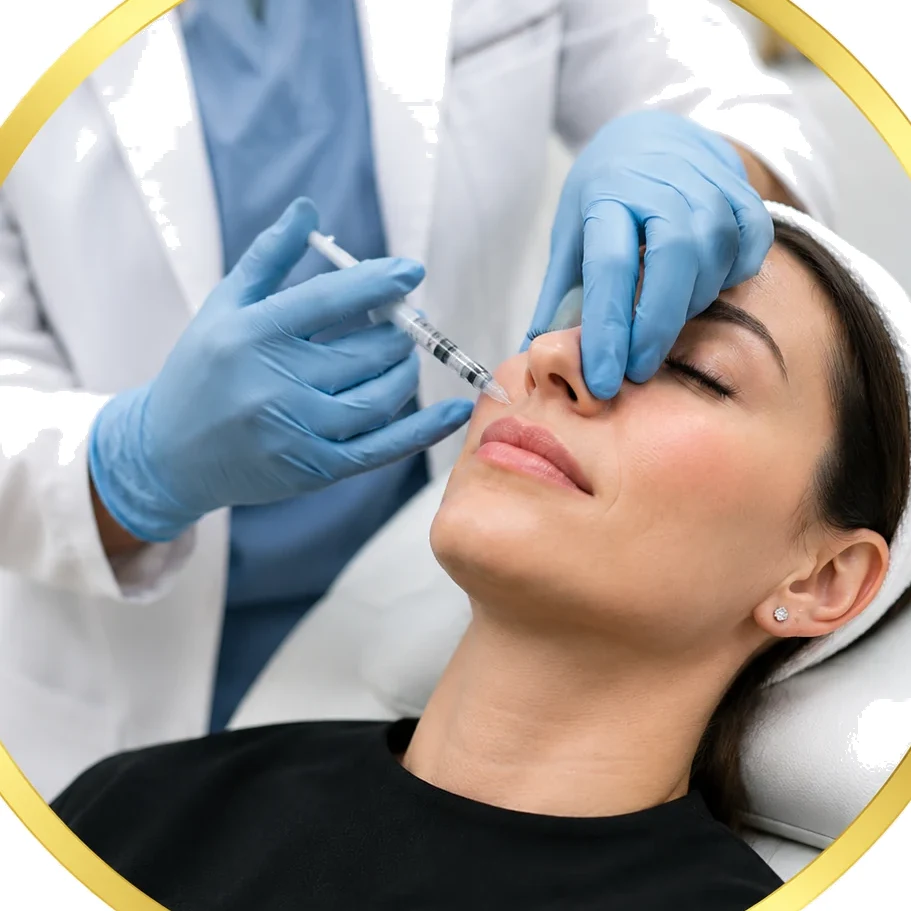

Yes, vascular laser treatment commonly reduces facial broken capillaries, but the result depends on vessel type, device selection and aftercare. Pulsed dye laser, KTP and long-pulsed Nd:YAG are the main clinical options, with IPL used for more diffuse redness. Most people need an assessment, several sessions, and accept a small risk of bruising, pigment change, or scarring along the way.
TL;DR:
- Different laser devices, such as pulsed dye laser, KTP, and Nd:YAG, are suited for specific vessel types, depths, and skin tones, requiring tailored assessment.
- Most treatments need multiple sessions, with pain or visible bruising expected temporarily, and pigment change or scarring possible in some cases.
- Proper pre- and post-treatment care, especially sun protection, significantly influences the durability and appearance of results.
- Cost varies widely depending on device, area size, and provider, with cosmetic treatments usually privately paid and not covered by public healthcare.
- Correct diagnosis between isolated vessels, rosacea, or spider naevi is essential, as treatment approaches differ and underlying causes may require additional medical management.
Table of Contents
- Which lasers and devices treat broken capillaries and how they work
- What to expect during assessment and treatment sessions
- Risks, side effects and who should have a medical assessment first
- Cost, availability and whether public healthcare will fund treatment
- Before and after care to protect your skin and improve outcomes
- How to choose a clinic: checklist of questions and regulatory checks
- Differentiating isolated vessels from rosacea or spider naevi
- Comparing laser with sclerotherapy and topical treatments
- Long-term maintenance and the likelihood of recurrence
- Author perspective: why personalised diagnosis matters
- How NexGen Clinics can help with broken capillaries
- Sources
- FAQ
Which lasers and devices treat broken capillaries and how they work
Vascular lasers work on a principle called selective photothermolysis: light of a specific wavelength is absorbed by the blood inside the vessel, heating it until the vessel seals, clots or shrinks. The wavelength, pulse duration and spot size are all adjusted to match the vessel's depth and colour, according to NHS clinic guidance on facial threadveins.
Different devices suit different presentations:
- Pulsed dye laser (PDL): effective for superficial red vessels, though it commonly causes visible purpura for around 7 to 14 days.
- Long-pulsed Nd:YAG: penetrates deeper, making it suitable for darker or deeper veins, with shorter visible bruising but possible soreness or crusting.
- KTP laser: used for certain superficial red vessels where a shorter recovery is wanted.
- IPL (intense pulsed light): not a true laser, but a broader spectrum light that can help diffuse redness across larger areas.
No single device suits every patient. A clinician assessing vessel colour, depth and your skin type should guide which option is used, rather than a fixed idea of what "laser for redness" means.
What to expect during assessment and treatment sessions
A proper pathway starts well before the laser is switched on. According to NHS clinic guidance, assessment and patch testing help match the device to your skin and reduce avoidable risk.
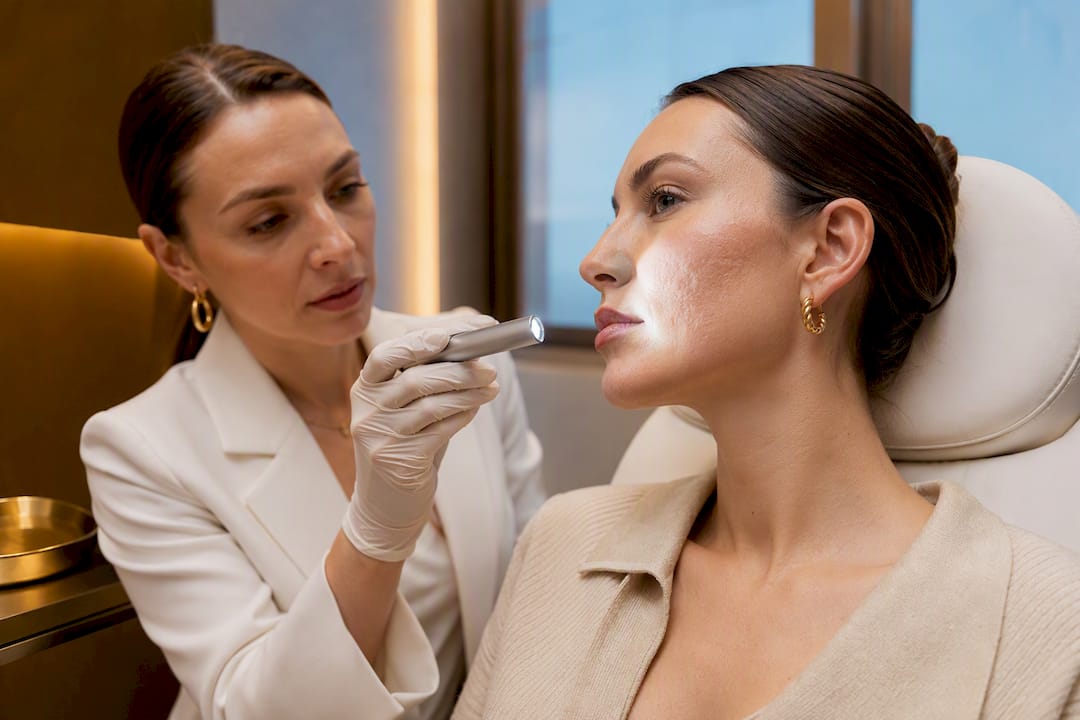
- Consultation: your medical history, current medications, skin type, and any recent sun exposure or tanning are reviewed, often alongside photography of the area.
- Patch test: a small trial area may be treated first, particularly for darker skin types or when a new device is being used.
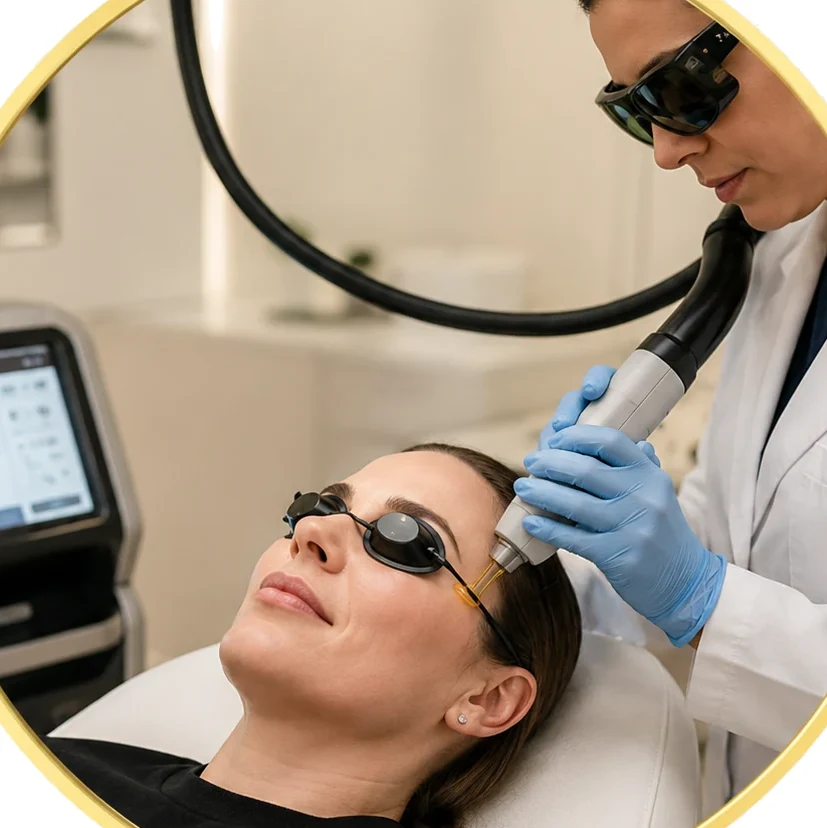
- Protective measures: you will wear protective eyewear, and the skin is usually cooled during treatment to limit discomfort and protect surrounding tissue.
- The session itself: appointments are typically short, and most people describe a hot or sharp sensation with each pulse.
- Follow-up planning: because vessel number and depth vary, multiple sessions are commonly required, with review points built in before further treatment is booked.
Risks, side effects and who should have a medical assessment first
Most side effects are short-lived, but it helps to know what is normal and what is not. Redness and swelling are common in the first few days, and PDL treatment often causes purpura lasting about 10 to 14 days, while Nd:YAG can leave soreness or crusting for a few days, as described by Leeds Teaching Hospitals' laser service.
- Purpura, redness, and mild swelling are expected in the days following treatment.
- Pigmentary change and, rarely, scarring are possible, with higher risk after recent tanning or in certain skin types.
- New or changing lesions, bleeding spots, or signs of persistent facial flushing should be assessed by a doctor before any cosmetic treatment is booked.
Pro Tip: Disclose any recent isotretinoin use, anticoagulant medication or tanning history at your consultation, since these materially change the risk profile and patch test decision.
Cost, availability and whether public healthcare will fund treatment
Prices vary by device, provider experience and how much of the face needs treating. Hospital price lists show a wide range, from modest patch test charges up to several hundred pounds for more extensive treatment, and cosmetic requests are typically private pay rather than publicly funded, according to NHS price guidance from North Bristol and Salisbury trusts.
- Public healthcare providers generally reserve funded laser treatment for clinically indicated cases, not cosmetic ones.
- Private session costs depend on the device used, the size of the treatment area, and the experience of the clinician.
- A test patch is often priced separately from a full treatment session, and it is worth asking for both figures before committing.
Before and after care to protect your skin and improve outcomes
Good preparation and aftercare make a real difference to how your skin recovers and how well the result holds. NHS clinic advice places particular weight on sun protection as a factor in cosmetic outcome, noting that strict sun avoidance for several weeks after treatment reduces the chance of pigment change, according to NHS clinic guidance.
- Before treatment: avoid sun exposure, disclose any medications or recent tanning, and follow any instructions to pause active skincare ingredients.
- Immediately after: use cold compresses if advised, avoid active skincare products for a short period, and resist picking at treated skin.
- Longer term: attend your follow-up review and maintain daily sun protection to limit recurrence and pigment risk.
If you want to check how your skin reacts to a new product before a procedure, patch testing skincare over 7 to 10 days before your appointment is a sensible precaution, particularly if you plan to introduce a new moisturiser or sunscreen around treatment time.
How to choose a clinic: checklist of questions and regulatory checks
Choosing a clinic is as important as choosing a device. In England, providers must meet local registration requirements, and some devices fall under specific licensing regimes depending on their classification, according to Gov.
Before booking, ask:
- Who will actually perform the treatment, and what is their clinical background?
- Which device and wavelength will be used for your specific vessels?
- Is a patch test offered, and what does the written aftercare and complication policy cover?
- What is the likely number of sessions, and what does each one cost?
- Confirm the clinic's local registration or licensing status.
- Ask how complications are handled if they arise.
- Be wary of any provider promising a permanent result, since no laser treatment can honestly claim that.
Differentiating isolated vessels from rosacea or spider naevi
Not every visible facial vessel is the same problem, and treating the vessel alone will not always solve the underlying cause. A single, clearly defined broken capillary is often an isolated vessel that responds well to a targeted laser pass. Spider naevi, small vessels radiating from a central point, are usually treated with pulsed dye laser and are described as highly effective with a low scarring risk, sometimes needing a second session around eight weeks later, according to NHS patient information on spider naevi.
Rosacea is different. Persistent flushing, background redness and inflammatory bumps are a chronic skin condition, and treating the visible vessels with laser is not the same as treating rosacea itself. A Cochrane review of laser and IPL for telangiectasia notes that persistent flushing and inflammatory lesions may need medical therapy alongside any laser work, since the laser addresses the visible vessels rather than the process causing them. If your redness comes and goes, worsens with triggers like heat or alcohol, or is accompanied by bumps or sensitivity, that pattern points towards rosacea, and a medical assessment should come before any cosmetic laser booking.
Comparing laser with sclerotherapy and topical treatments
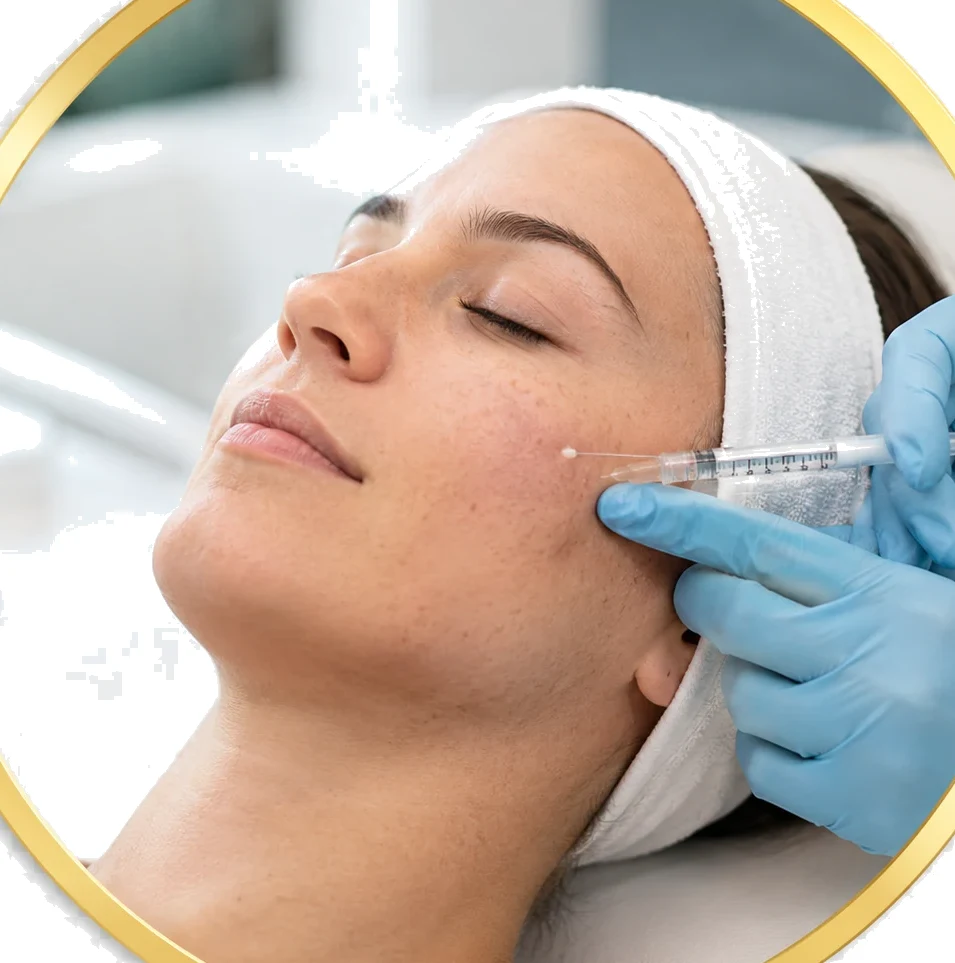
Laser is not the only option for visible facial vessels, and it is worth knowing what else exists before choosing a path. Sclerotherapy, which involves injecting a solution into the vessel to close it, is used far more often for leg veins than facial ones, since the fine, superficial vessels on the face are generally better suited to light-based treatment. Topical creams marketed for redness can calm the skin's appearance temporarily by reducing surface inflammation, but they do not close or seal the vessel itself, so any visible capillary will still be there once the product wears off.
Home light devices are sometimes sold as an alternative to clinic treatment, but professional guidance cautions that there is no reliable at-home laser equivalent to a clinician-selected vascular device, since consumer devices generally lack the targeting and safety features needed for vascular lesions, according to professional commentary on vascular laser treatment. For an isolated broken capillary, a properly selected laser remains the option with the clearest evidence behind it, even though that evidence is still described as limited in quality by systematic review.
Long-term maintenance and the likelihood of recurrence
Treating an existing vessel does not prevent new ones from forming. The vessels you had lasered are generally gone for good once they have sealed and faded, but new broken capillaries can appear over time, particularly if the same triggers, sun exposure, temperature extremes, alcohol or an underlying condition like rosacea, remain unaddressed.
This is why aftercare is described as an ongoing habit rather than a short window after treatment. Daily sun protection is the single most consistent factor in reducing pigment risk and supporting a lasting result, based on NHS clinic aftercare advice. For people with rosacea, ongoing medical management of the underlying condition alongside occasional laser touch-ups tends to give a more stable long-term result than laser alone. A sensible expectation is periodic review rather than a single, final treatment, with your clinician assessing whether new vessels have appeared at each follow-up.
Author perspective: why personalised diagnosis matters
I think the biggest mistake people make is choosing a laser before anyone has properly looked at their skin. AI-assisted analysis can map vessel pattern and skin characteristics in detail, but it still needs a clinician's judgement to decide which device fits your vessels and what a realistic outcome looks like. At NexGen, that pairing sits alongside a regenerative focus on skin quality overall, not just vessel reduction. If you are unsure what you are dealing with, consider booking a consultation before treatment.
— Ms Sandra Petraskaite
How NexGen Clinics can help with broken capillaries
Working out which device suits your skin is easier with a proper consultation rather than guesswork from a price list. Laser treatment typically starts with skin analysis reviewed by a clinician, so the device, expected session count and aftercare plan can be set out before commitment.
- A consultation that includes skin analysis alongside clinician review of your vessels.
- A patch test when appropriate, based on skin type and history.
- Clear guidance on realistic session numbers and aftercare, rather than a single quoted figure with no context.
If you would like to discuss options for facial redness or broken capillaries, you can view our full range of treatments and book a consultation on the NexGen Clinics treatments page.
This article is general information, not a substitute for advice from a qualified doctor. Consult a qualified healthcare professional about your own circumstances before acting on anything here.
Sources
- Facial threadveins and redness | North Bristol NHS Trust
- Which LASER will be used for my treatment? - Leeds Teaching Hospitals NHS Trust
- Cochrane review on laser/IPL for telangiectasia
- Gov
FAQ
Does laser treatment work on broken capillaries?
Vascular laser commonly reduces visible facial broken capillaries by heating the blood inside the vessel until it seals or shrinks. A Cochrane review found laser and IPL can be effective for telangiectasia, though it judged the underlying evidence as limited in quality, so results vary between individuals.
How much does it cost to get broken capillaries lasered off?
Cost depends on the device used, the treatment area and the provider, with hospital price lists showing charges ranging from modest test-patch fees to several hundred pounds for more extensive sessions, as shown in NHS trust pricing guidance. Cosmetic cases are usually privately funded rather than covered by public healthcare.
Is there an at-home laser for broken capillaries?
There is no reliable at-home device that matches a clinician-selected vascular laser, since home devices generally lack the targeting and safety features needed for facial blood vessels, according to professional commentary on vascular laser treatment. A clinical assessment remains the safer route for facial vessels.
What is the best treatment to get rid of broken capillaries on the face?
For most superficial facial vessels, pulsed dye laser or long-pulsed Nd:YAG are the main clinical options, chosen according to vessel depth and colour, while IPL suits more diffuse redness rather than a single defined vessel. The right choice depends on an individual assessment rather than a single universal answer, and some clinics offer consultations that review your skin before recommending a device.
How many laser sessions are usually needed for broken capillaries?
Most people need more than one session, since vessel number, depth and colour all affect how quickly they respond. Clinics typically build in a review point several weeks after each session, as vessels can continue to fade gradually before a decision is made on further treatment.
Explore related NexGen treatments
- Explore our full treatment menu
- Book a consultation with our clinicians
- Contact our Cambridge team
- Read more articles in the NexGen Journal
Ready to explore your options?
Speak with a NexGen clinician for a personalised consultation. We’ll listen, assess, and recommend the safest and most effective route — always led by evidence, always tailored to you.
Book a consultation or get in touch with our Cambridge team.