
TL;DR:
- HydraFacial offers immediate surface hydration and glow with minimal downtime, suitable for most skin types. Microneedling provides progressive collagen remodeling, targeting scars and deep texture issues through controlled skin injury. Combining both treatments requires careful sequencing, with consultation recommended to personalize the safest, most effective approach.
Choose HydraFacial for an immediate surface refresh and hydration boost; choose microneedling when your goal is longer-term collagen remodelling, acne scarring, or deeper texture improvement. The mechanism behind each treatment is fundamentally different, and that difference determines which one will actually address your concern.
TL;DR at a glance:
- Glow and hydration: HydraFacial delivers visible results the same day with no downtime.
- Acne scarring, enlarged pores, or uneven texture: Microneedling (or RF microneedling) works deeper and produces progressive improvement over a course of sessions.
- Pigmentation: HydraFacial with a brightening booster suits mild cases; microneedling can address post-inflammatory pigmentation once active breakouts are controlled.
- Sensitive or reactive skin: HydraFacial is the lower-risk starting point; always confirm suitability with a clinician first.
A personalised consultation with a qualified practitioner, such as those at Nexgen Clinic, is the safest way to confirm which option suits your skin.
This comparison focuses on clinic-led treatments in the UK, not at-home devices. The sections below move from quick-pick guidance through treatment deep dives, a side-by-side table, safety and regulation, UK costs, sequencing advice, and a consultation checklist.
Nexgen Clinic's clinician-led, AI-informed approach runs throughout as the recommended route for a personalised plan.
Table of Contents
- What does a HydraFacial actually involve?
- How does microneedling work, and what are the main variants?
- HydraFacial vs microneedling: key differences side by side
- Which treatment suits your skin concern?
- Downtime, side effects, and safety in the UK
- How much does each treatment cost in the UK?
- Can you combine HydraFacial and microneedling, and how?
- What to ask at your consultation, and what to walk away from
- Key takeaways
- A clinical perspective on choosing between these treatments
- What a personalised consultation at Nexgen Clinic looks like
- Useful sources and further reading
- FAQ
What does a HydraFacial actually involve?
HydraFacial is a branded, multi-step facial delivered with a patented medical-grade device that uses sonophoresis for skincare to enhance serum penetration without needles. The handpiece uses a vortex action to cleanse, exfoliate, extract debris from pores, and simultaneously infuse skin with proprietary serums. No needles, no ablation, and no downtime for most people.
Sessions are typically offered in three tiers:
- Classic (around 30 minutes): cleanse, exfoliate, extract, hydrate.
- Deluxe (around 45 minutes): adds a targeted booster serum, such as a brightening or growth-factor formula.
- Platinum (around 60–75 minutes): includes lymphatic drainage, a booster, and LED light therapy.
The immediate effects are a noticeable glow, improved hydration, and reduced surface congestion. Most people return to normal activity straight away. Because the treatment is non-penetrative, it suits a wide range of hydrafacial skin types, including sensitive and rosacea-prone skin, provided a clinician screens for active inflammation first.
Aftercare is minimal: avoid heavy make-up for a few hours, use SPF, and keep the skin hydrated. The results are real but surface-level; they reflect light better and feel cleaner rather than structurally remodelled.
Pro Tip: Book a HydraFacial Platinum tier at least a week before a significant event rather than the day before. The LED component can cause mild transient redness in sensitive skin, and a few days' buffer gives you the glow without the risk of looking flushed on the day.
How does microneedling work, and what are the main variants?
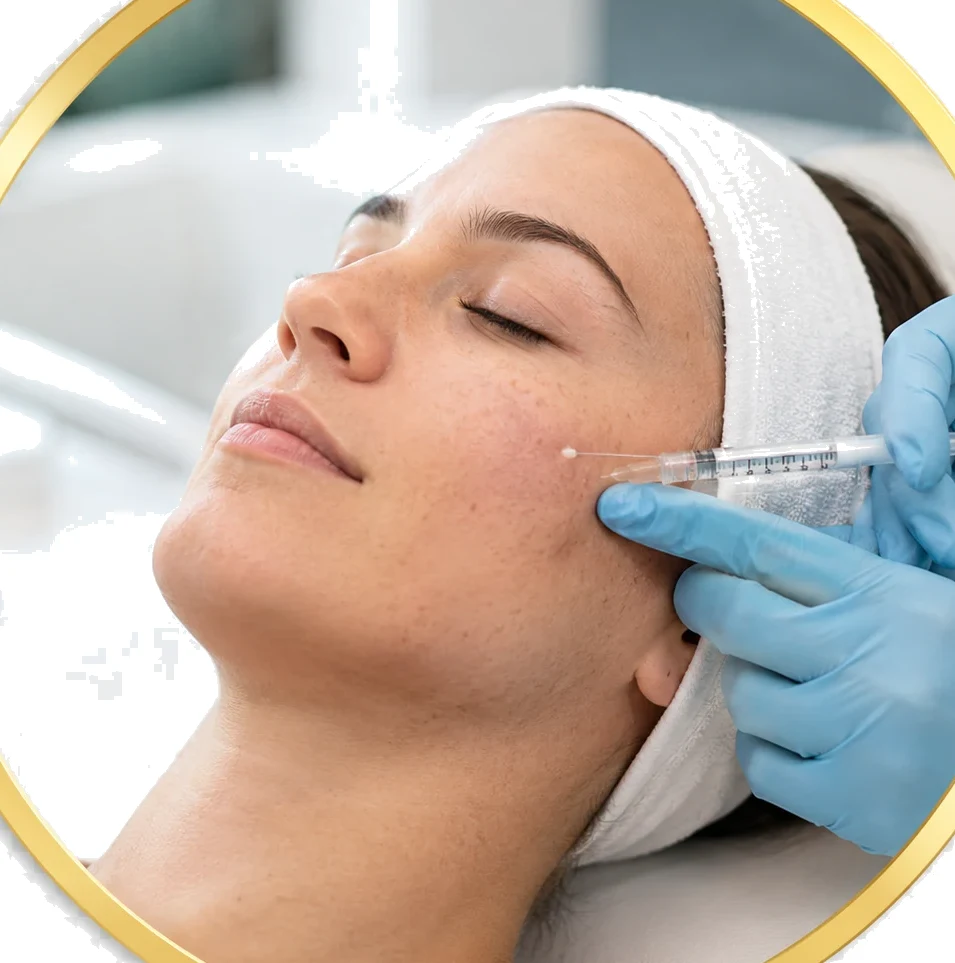
Microneedling, also known as collagen induction therapy, uses fine sterile needles to create controlled micro-injuries in the skin. These tiny channels trigger the body's wound-healing cascade, stimulating new collagen and elastin production as the skin repairs itself. The GOV.UK consultation on non-surgical cosmetic procedures explicitly names microneedling among procedures under consideration for mandatory licensing, which reflects how seriously regulators treat it as a skin-penetrating intervention.
Three main variants are used in UK clinics:
- Manual dermaroller: lower cost, less precise depth control, less commonly used in professional settings now.
- Motorised automated device: adjustable needle depth, more consistent penetration, the standard in reputable clinics.
- RF microneedling: combines needle channels with radiofrequency energy delivered into the dermis, increasing collagen remodelling and adding a skin-tightening effect for concerns such as acne scars, enlarged pores, and mild laxity.
Post-treatment, expect redness, light to moderate swelling, and sensitivity. According to the BABTAC Sharp Standards toolkit, these effects typically subside within around 48 hours, though deeper settings or RF energy can extend recovery. Infection prevention is non-negotiable: single-use sterile cartridges and a trained practitioner are the baseline minimum.
HydraFacial vs microneedling: key differences side by side
The core distinction is treatment depth. HydraFacial works at the surface; microneedling works beneath it. Everything else, from downtime to cost to the concerns each addresses, follows from that single fact.
| Dimension | HydraFacial | Microneedling (standard / RF) |
|---|---|---|
| Mechanism | Vortex extraction and serum infusion; non-penetrative | Controlled micro-injuries; collagen induction therapy |
| Invasiveness / downtime | Non-invasive; minimal to none | Minimally invasive; 24–48 hours redness, longer with RF |
| Primary target concerns | Dullness, dehydration, mild congestion, surface glow | Acne scarring, enlarged pores, texture, fine lines, mild laxity |
| Suitability | Most skin types including sensitive; avoid active inflammation | Most skin types; avoid active acne, keloid tendency, pregnancy |
| Pain / side effects | Suction sensation; minimal redness | Mild discomfort (numbing cream used); redness, swelling, peeling |
| Sessions / frequency | Single session or monthly maintenance | Course of 3–6 sessions, spaced 4–6 weeks apart |
| Results speed and durability | Immediate glow; requires regular upkeep | Progressive over weeks; longer-lasting structural improvement |
| Typical UK price range | £80–£380 depending on tier and location | £100–£250 (standard); £350–£800 (RF) per session |
| Aftercare and infection risk | Low; SPF and gentle products | Moderate; sterile cartridges and aftercare protocol required |
| Can they be combined? | Yes, with correct sequencing and healing time | Yes; HydraFacial often used as prep or maintenance |
Who benefits most from each? If your skin looks dull, feels congested, or you want a pre-event refresh, HydraFacial is the practical choice. If you are working through acne scarring, persistent pore enlargement, or early signs of collagen loss, microneedling offers more meaningful structural change. Before-and-after photos from a clinic's own patient portfolio, clinician-led consultation, and documented practitioner qualifications are the trust signals worth insisting on for either treatment.
Which treatment suits your skin concern?
Matching the treatment to the concern is more useful than picking a favourite. Here is how the two options map to the most common reasons people book:
- Acne scarring and deep texture: Microneedling, particularly RF microneedling, is generally preferred. It targets the collagen changes beneath depressed scars that surface treatments cannot reach. Active acne must be controlled before needling begins; treating over inflamed breakouts raises infection risk.
- Surface congestion, enlarged pores (mild), and dehydration: HydraFacial clears debris, infuses hydration, and leaves skin looking cleaner. For pores enlarged by structural collagen loss rather than congestion, microneedling addresses the underlying cause more effectively.
- Pigmentation: A HydraFacial with a brightening booster suits mild surface pigmentation and general uneven tone. Microneedling can help with post-inflammatory hyperpigmentation, but only once active breakouts are resolved and with careful aftercare, since needling can temporarily worsen pigmentation in darker skin tones without proper management.
- Fine lines and early ageing: Microneedling stimulates collagen renewal and produces progressive improvement. HydraFacial can make fine lines look softer temporarily by improving hydration, but it does not replicate the structural effect.
- Sensitive skin and rosacea: A non-penetrative HydraFacial is the lower-risk option. Rosacea is not an automatic contraindication, but clinician screening is essential before either treatment.
- When to consult a specialist first: Active acne, keloid scarring history, immunosuppression, current pregnancy, or any active skin condition warrants a clinician assessment before booking either treatment.
Downtime, side effects, and safety in the UK
HydraFacial side effects are generally mild. Temporary redness or tightness can occur, particularly with extraction on sensitive skin, and usually resolves within a few hours. Serious adverse events are rare when the device is used correctly.
Microneedling side effects are more pronounced. Redness, warmth, swelling, and tenderness are normal for 24–48 hours after a standard session. RF microneedling can extend this to several days. Less common but important risks include infection, post-inflammatory pigmentation, and scarring, particularly when performed by an inadequately trained practitioner or with non-sterile equipment. The BABTAC Sharp Standards toolkit sets out infection-control requirements, documentation standards, and the training levels practitioners should hold.
On the regulatory side, the GOV.UK consultation response confirms microneedling is in scope for mandatory licensing in England. Wales already requires mandatory licensing under the Public Health (Wales) Act 2017. Scotland's equivalent legislation is awaiting Royal Assent. In England, many local authorities already classify microneedling as a skin-piercing procedure under existing legislation; check with your local council.
Pro Tip: Ask your clinic whether their microneedling device uses single-use sterile cartridges and request to see the sealed packaging before treatment begins. A reputable clinic will show you without hesitation.
Common side effects by treatment:
- HydraFacial: transient redness, mild tightness, rare sensitivity reaction to serums.
- Microneedling: redness, swelling, tenderness (24–48 hours); peeling; rare infection, pigment change, or scarring.
How much does each treatment cost in the UK?
Prices vary by tier, device, practitioner qualification, and location. London and the South East consistently sit at the higher end of the ranges below.
| Treatment | Tier / Type | Typical UK price per session |
|---|---|---|
| HydraFacial | Classic | £80–£180 |
| HydraFacial | Deluxe | £130–£260 |
| HydraFacial | Platinum | £200–£380 |
| Microneedling | Standard (motorised device) | £100–£250 |
| Microneedling | RF microneedling | £350–£800 |
Price data sourced from SalonSearcher's 2026 HydraFacial cost guide and ClinicSpark's 2026 microneedling cost guide.
HydraFacial can be booked as a one-off or as a monthly maintenance session. Microneedling is most effective as a course of 3–6 sessions spaced 4–6 weeks apart, so the total investment for a standard course runs from roughly £300 to £1,500 depending on device and location. RF microneedling courses sit considerably higher.
Higher prices often reflect single-use sterile consumables and regulated clinician involvement, both of which reduce clinical risk. Paying less at an unverified provider is rarely a saving.
Can you combine HydraFacial and microneedling, and how?
Yes, combining both treatments is clinically common and can be genuinely effective, provided the sequencing is right. The rationale is straightforward: HydraFacial addresses surface congestion and hydration, while microneedling targets deeper structural concerns. Used together thoughtfully, they complement rather than compete.
Clinical practice often uses HydraFacial as preparatory or maintenance care around a microneedling course. A well-hydrated, congestion-free surface responds better to needling, and a HydraFacial after a course has concluded can support skin recovery and extend results.
A safe sequencing plan to discuss at consultation:
- Start with a HydraFacial at least one to two weeks before your first microneedling session to clear congestion and optimise skin condition.
- Complete your microneedling course (typically 3–6 sessions, 4–6 weeks apart), allowing full healing between each session.
- Wait a minimum of two weeks after your final microneedling session before booking a HydraFacial.
- Use HydraFacial as maintenance every four to six weeks once the needling course is complete.
- Avoid combining both treatments in the same session unless your clinician has specifically planned a protocol for this; casual same-day stacking risks over-stimulating the skin.
- Plan around seasons: skin tends to be more reactive in summer heat; autumn and winter are popular for needling courses.
What to ask at your consultation, and what to walk away from
A good consultation protects you before any treatment begins. Go in with specific questions and pay attention to how the clinic responds.
Questions to ask:
- What are your qualifications and training for this specific treatment?
- What device do you use, and are the cartridges single-use and sterile?
- Can I see a before-and-after portfolio from your own patients?
- What is your emergency protocol if I have an adverse reaction?
- What does aftercare involve, and what is included in the price?
Red flags that should prompt you to leave:
- Unusually low prices with vague or unverifiable credentials.
- No written consent form or documented aftercare instructions.
- Reluctance to discuss complications or downtime honestly.
- No patch test offered for HydraFacial serums, or no skin assessment before microneedling.
- Pressure to book on the spot without time to consider.
Trust signals worth insisting on: clinician-led consultation, involvement of a regulated healthcare professional, documented accredited training (a Level 4 qualification in microneedling is the recommended minimum per BABTAC), and premises registered with the relevant local authority. Choosing a regulated healthcare professional with accredited skin training provides a clearer complaint pathway if something goes wrong.
Key takeaways
HydraFacial suits immediate surface refresh and hydration; microneedling delivers progressive collagen-driven improvement for scarring, texture, and deeper concerns, and always requires a clinician-screened treatment plan.
| Point | Details |
|---|---|
| Match treatment to concern | HydraFacial for glow and hydration; microneedling for scarring, texture, and collagen loss. |
| Downtime differs significantly | HydraFacial has minimal downtime; microneedling typically causes 24–48 hours of redness and sensitivity. |
| Budget realistically | HydraFacial costs £80–£380 per session; standard microneedling £100–£250; RF microneedling £350–£800. |
| Sequencing is safe and effective | A HydraFacial one to two weeks before needling prepares the skin; allow two weeks after needling before the next surface treatment. |
| Nexgen Clinic | Offers AI-driven skin analysis and clinician-led treatment planning to match you to the right option for your concerns. |
A clinical perspective on choosing between these treatments
The question I see most often is not "which treatment is better?" but "which one will actually do something for my skin?" That distinction matters more than people realise, because the answer depends entirely on what the skin needs, not what sounds most appealing.
HydraFacial is genuinely excellent at what it does. The problem is that it is sometimes sold as a solution for concerns it cannot structurally address. Hydration and surface clarity are real benefits, but they do not remodel scar tissue or rebuild collagen. Patients who book a course of HydraFacials for deep acne scarring and feel disappointed are not wrong to be disappointed; they were simply pointed towards the wrong tool.
Microneedling, on the other hand, is sometimes underestimated because the results are gradual. Collagen remodelling takes weeks. Patients who expect the same immediate visual payoff as a HydraFacial will find the first few days discouraging, particularly when they are dealing with post-treatment redness. The improvement is real, but it arrives quietly over a course of sessions rather than in the mirror the next morning.
What Nexgen Clinic's AI-assisted assessment does well is remove the guesswork from this decision. Skin analysis that maps hydration levels, pigmentation distribution, and textural irregularities before a single treatment is booked means the plan is built around what the skin actually shows, not what the patient assumes they need. That approach reduces the risk of choosing the wrong treatment and, in my view, is the standard every clinic should be working towards.
What a personalised consultation at Nexgen Clinic looks like
Nexgen Clinic's process begins with AI-driven skin analysis, which maps your skin's specific concerns before a clinician reviews the findings and builds a bespoke treatment pathway. Whether that leads to a surface-refresh programme, a microneedling course, or a combined plan such as the NexGen Age Reset™ or Facial Balance™, the recommendation is grounded in what your skin actually needs rather than a generic menu.
The clinic's 98% client satisfaction rate reflects that clinician-led, technology-assisted approach. Transparent pricing, documented aftercare, and a clear escalation pathway are built into every consultation. If you are weighing up HydraFacial and microneedling and want a clear answer for your specific concerns, the most direct route is a personalised skin assessment at Nexgen Clinic. You can also browse the full range of precision treatments and signature programmes to understand what a combined plan might look like before you book.
Useful sources and further reading
- GOV.UK: Licensing of non-surgical cosmetic procedures in England — the primary regulatory document confirming microneedling is in scope for mandatory licensing; essential reading for understanding your rights as a patient.
- BABTAC Sharp Standards toolkit — the UK's leading good-practice guide for microneedling practitioners, covering infection control, training standards, and legal obligations across all four nations.
- ClinicSpark: Microneedling Cost UK 2026 — detailed UK price benchmarking for standard and RF microneedling, with notes on how device quality and practitioner credentials affect pricing.
- SalonSearcher: HydraFacial Cost UK 2026 — tier-by-tier UK pricing guide for HydraFacial Classic, Deluxe, and Platinum, with regional variation notes.
FAQ
Is 40 too old for microneedling?
No. Microneedling is suitable for adults across a wide age range and often sought for collagen-related concerns such as fine lines, laxity, and texture. A clinician assessment confirms suitability based on skin condition and health history, not age.
Should you have a HydraFacial before or after microneedling?
A HydraFacial one to two weeks before a microneedling session can optimise skin condition by clearing congestion and improving hydration. After needling, wait at least two weeks before any surface treatment to allow full healing.
What are the downsides of a HydraFacial?
The main limitation is that results are surface-level and temporary without regular maintenance. HydraFacial does not remodel scar tissue or stimulate collagen in the way microneedling does, so it is not the right choice for structural skin concerns.
Is there anything more effective than microneedling for acne scars?
RF microneedling adds radiofrequency energy to the standard needle channels, increasing collagen remodelling and skin-tightening effects, making it a stronger option for deeper scarring in suitable patients. Other clinic-led treatments such as laser resurfacing may also be considered; a clinician assessment at Nexgen Clinic can identify the most appropriate approach for your specific scarring pattern.
Which treatment is better for sensitive skin?
HydraFacial is generally the lower-risk option for sensitive or reactive skin because it is non-penetrative. Microneedling can be performed on sensitive skin but requires careful clinician screening, conservative needle settings, and a thorough patch assessment beforehand.
This article is for general information only and does not constitute medical or clinical advice. Always confirm suitability and current treatment protocols with a qualified healthcare professional before booking any aesthetic procedure.
Recommended
- Skin Boosters vs Profhilo: Which Treatment Is Right?
- Facials & Skin Health | NexGen Clinic Journal
- Skin Boosters & Profhilo | NexGen Clinic Journal
- Advanced Facial Treatments Cambridge | NexGen Clinic
Explore related NexGen treatments
- Explore our full treatment menu
- Book a consultation with our clinicians
- Contact our Cambridge team
- Read more articles in the NexGen Journal
Ready to explore your options?
Speak with a NexGen clinician for a personalised consultation. We’ll listen, assess, and recommend the safest and most effective route — always led by evidence, always tailored to you.
Book a consultation or get in touch with our Cambridge team.