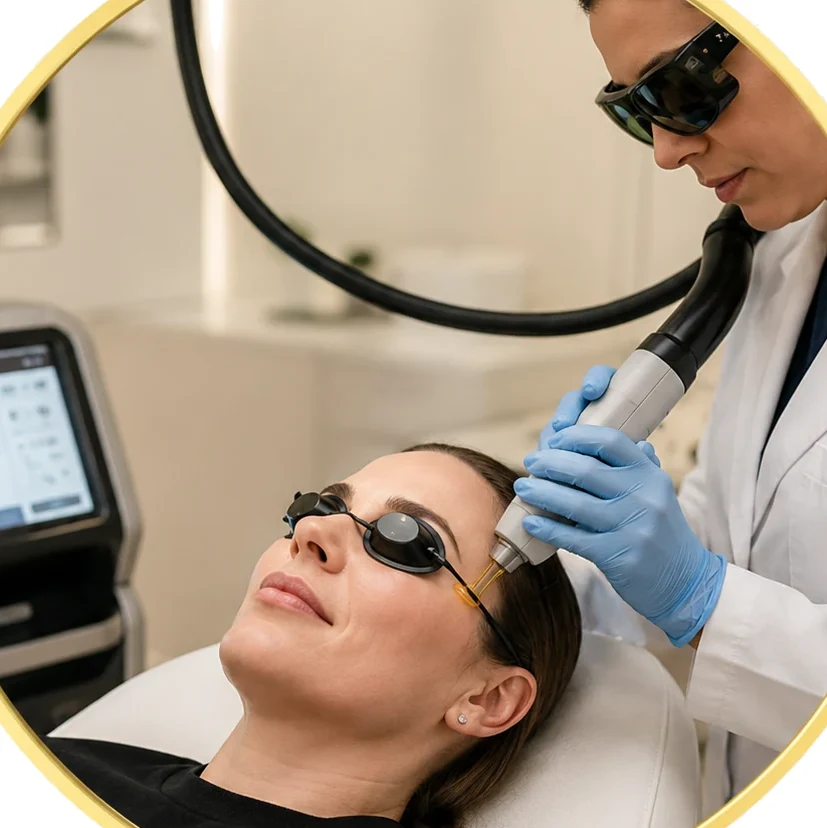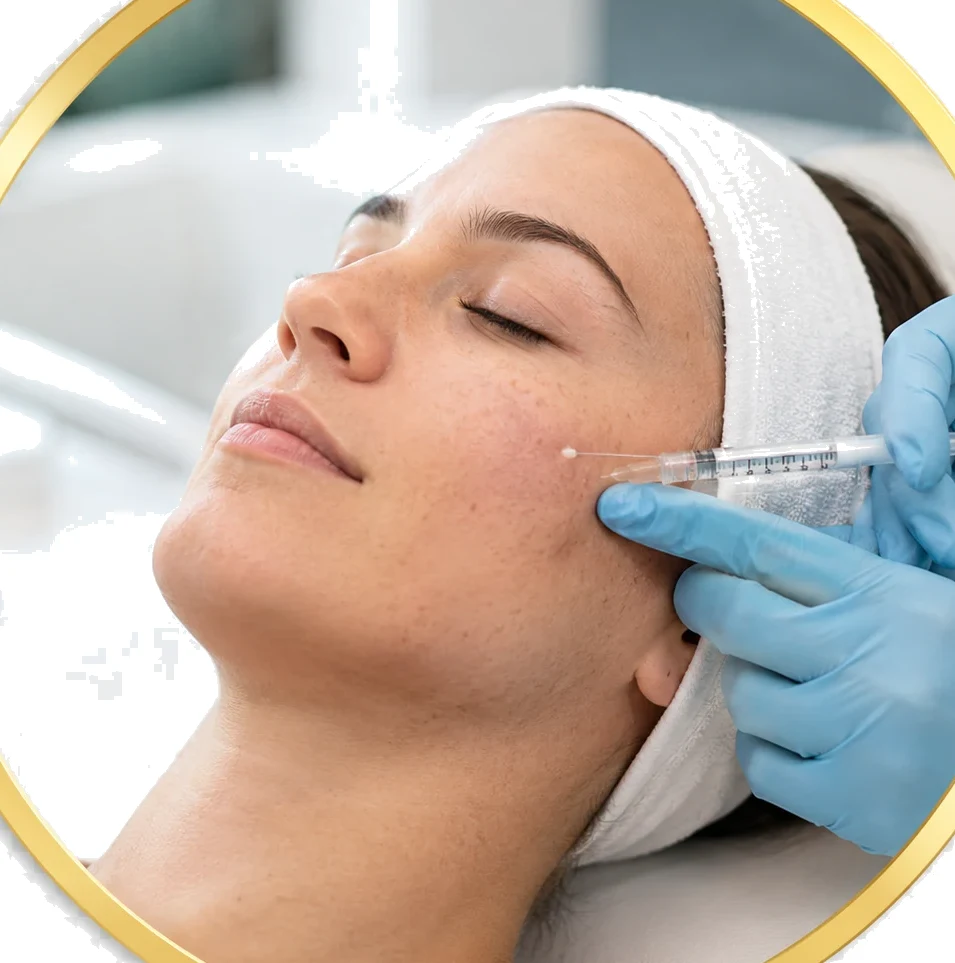

Laser treatment can be used safely on darker skin when a qualified clinician selects the right wavelength and follows a conservative, staged protocol. The long-pulsed Nd:YAG 1064nm laser is widely regarded as the safer option for melanin-rich skin, and the British Association of Dermatologists stresses that outcomes depend heavily on operator experience. We build every laser pathway around a documented patch test, careful sun-avoidance guidance and a clinician who understands how pigment behaves under heat.
TL;DR:
- For hair removal on Fitzpatrick III to VI skin, long pulsed 1064nm Nd:YAG is preferred; IPL and shorter wavelengths carry greater pigment risk.
- Require a documented patch test, conservative settings, photographs, and roughly four weeks of observation before treatment, since pigment changes can appear later.
- Avoid tanning for at least six weeks before and during treatment, use SPF 30 to 50 sunscreen daily, and follow aftercare instructions.
- Laser treatment manages melasma rather than resolving it, and recurrence is common; ask how the clinician will address future pigment changes.
Table of Contents
- Why darker skin needs a different approach to laser treatment
- What a thorough consultation and patch test should include
- Which lasers and devices are genuinely safer for melanin-rich skin
- Risks on darker skin and how clinics reduce them
- Pre and post-treatment care that protects your results
- How to choose a qualified clinic for laser treatment
- Why clinician expertise shapes how we approach laser treatment
- Combining laser with regenerative treatments on darker skin tones
- Clinician priorities when treating skin of colour
- How NexGen Clinics supports a safer laser pathway
- FAQ
- Sources
Why darker skin needs a different approach to laser treatment
Laser hair removal and pigment-correcting lasers work by targeting melanin, the pigment that gives skin and hair their colour. The laser's energy is absorbed by melanin and converted to heat, which damages the targeted hair follicle or pigmented lesion. In darker skin, the epidermis itself contains notably more melanin, so the surrounding skin competes with the intended target for that same energy. This is what clinicians mean by contrast: the laser needs a clear difference between the colour of the target and the colour of the skin around it, and that contrast narrows as skin tone deepens.
When contrast is poor, more heat spreads into the surrounding tissue, raising the chance of burns, blistering and post-inflammatory hyperpigmentation, dark patches that can take months to fade.
The Fitzpatrick scale, originally designed to predict sunburn chance rather than laser response, is still used in most clinics to categorise skin tone. However, it has real limitations: two people with the same Fitzpatrick rating can tan or pigment very differently. Researchers at the British Association of Dermatologists have proposed the Eumelanin Human Skin Colour Scale as a more objective alternative, measuring actual pigment rather than self-reported tanning history.
What this means in practice for anyone booking a laser consultation:
- Your clinician should assess your actual skin response, not just tick a Fitzpatrick box.
- The laser's wavelength matters more on darker skin than on lighter skin.
- An experienced operator who treats skin of colour regularly will adjust settings accordingly, a point the NHS Leeds Teaching Hospitals guidance reinforces for anyone considering hair-reduction lasers.
What a thorough consultation and patch test should include
A proper consultation goes well beyond a quick visual check. Before any laser touches your skin, your clinician should ask about your pigmentary history (including any past hyperpigmentation or melasma), current medications, hormonal factors such as pregnancy or contraceptive use, recent sun exposure and the skincare products you use regularly. Hair colour, density and the location of any lesion also affect both suitability and what results you can realistically expect.
A patch test should follow a clear sequence:
- The clinician selects a small, inconspicuous test area that represents your skin type and the treatment zone.
- Settings start conservatively, well below the fluence likely to be used for full treatment.
- The area is photographed immediately and the response is documented.
- You wait roughly four weeks before the full session, giving enough time to check for delayed post-inflammatory hyperpigmentation.
You should also expect written consent that spells out the risks specific to your skin tone, along with a clear aftercare plan.
Pro Tip: Ask to see photographs of your own patch test result before your first full treatment session, not just a verbal description of how it looked.
Which lasers and devices are genuinely safer for melanin-rich skin
For hair removal on Fitzpatrick III to VI skin, the long-pulsed 1064nm Nd:YAG laser is the wavelength most consistently recommended in clinical literature. Its longer wavelength penetrates deeper while bypassing much of the epidermal melanin that shorter wavelengths would heat directly, which is why it carries a lower documented chance of post-inflammatory hyperpigmentation than IPL devices.
A systematic review covering 13 studies and 734 patients concluded that ND:YAG 1064nm shows promising safety and efficacy for epilation, while also noting that the evidence base still needs more standardised trial protocols before firmer conclusions can be drawn.
For pigment correction and skin resurfacing, non-ablative fractional lasers are generally considered a gentler option than fully ablative devices, because they leave more of the surrounding tissue intact and tend to carry a lower complication rate on richly pigmented skin. The right device is only half the picture, though. Clinicians treating skin of colour should also be using:
- Long pulse durations, which spread energy delivery over time and reduce peak heat in the epidermis.
- Integrated cooling, whether contact cooling plates or cryogen spray, to protect the skin surface during treatment.
- Conservative starting fluence with staged escalation across sessions rather than aggressive settings from day one.
- Test spots before committing to a full treatment area, even outside the initial patch test.
IPL systems and shorter laser wavelengths are generally considered higher risk for hair removal on richly pigmented skin, since their energy is absorbed more readily by epidermal melanin rather than the follicle itself. This is one of the clearest reasons why wavelength selection, not just clinic reputation, should guide your choice.
Risks on darker skin and how clinics reduce them
The adverse outcomes associated with laser treatment on darker skin are well documented, and knowing them helps you ask the right questions before you book.
- Post-inflammatory hyperpigmentation (PIH): dark patches that develop after inflammation, usually the most common complication and the one most clinics plan around.
- Hypopigmentation: lighter patches where melanin production is disrupted, less common but harder to reverse.
- Burns and blistering: typically linked to excessive fluence or inadequate cooling.
- Scarring: rare with modern devices and correct technique, but possible with aggressive settings.
- Paradoxical darkening: occasional worsening of the treated pigment rather than improvement, particularly with certain pigmented lesions.
Clinics reduce these risks through the same measures already described: patch testing, cooling, conservative fluence and a staged approach that builds up over several sessions rather than one aggressive pass. When PIH does occur, management typically involves topical agents, strict sun protection and time, with most cases fading over weeks to months, though some pigmentary conditions resolve more slowly than others.
For conditions like melasma specifically, the British Association of Dermatologists is clear that laser is a management tool rather than a resolution, and recurrence is common even after successful treatment. Realistic expectations matter as much as the treatment itself.
Pro Tip: If you have a history of melasma or hormonally driven pigmentation, ask your clinician how they plan to manage recurrence, not just the initial result.
Pre and post-treatment care that protects your results
What you do before and after treatment affects your risk of complications as much as the device settings do.
- Avoid all tanning, including sun exposure, sunbeds and fake tan, for at least six weeks before treatment and throughout a treatment course.
- Apply a daily broad-spectrum sunscreen of SPF 30 to 50, and pause irritating actives such as retinoids or strong acids in the days leading up to your session.
- In the immediate aftermath, stick to soothing, fragrance-free products and avoid anything abrasive or exfoliating until the skin has settled.
- Maintain strict photoprotection for months after resurfacing treatments in particular, since newly treated skin is more reactive to UV exposure.
Timelines matter too. Expect roughly four weeks between your patch test and first full session, sensible spacing between subsequent sessions to let the skin recover, and a realistic course of treatments rather than a single visit, particularly for hair reduction or stubborn pigmentation.
How to choose a qualified clinic for laser treatment
Choosing where to have laser treatment on darker skin matters as much as choosing the device. Look for a medically led clinic with genuine, demonstrable experience treating skin of colour, where decisions about settings and suitability are made by a clinician rather than left to a standard protocol.
Before booking, it is worth asking:
- What is your patch testing policy, and how long do you wait before full treatment?
- Which device and wavelength will you use, and why is it suitable for my skin tone?
- What cooling method do you use during treatment?
- Do you photograph and document outcomes, including patch test results?
- What happens if I develop pigment changes after treatment?
You should also expect written consent, a clear aftercare plan, appropriate insurance and a clinician who is willing to talk through risk management rather than rushing to book you in. Under Gov, practitioners using certain laser and IPL classes in England may need to register, so it is reasonable to ask about this directly.
Why clinician expertise shapes how we approach laser treatment
Our approach at NexGen Clinics pairs AI-driven skin analysis with clinician interpretation, so the technology informs the plan without replacing the judgement that actually keeps treatment safe. We hold the view, consistent with NHS and British Association of Dermatologists guidance, that operator experience matters more than any single device when treating skin of colour, a principle we set out in our own discussion of why clinician skill outweighs device choice in laser care.
We reference NHS and Cochrane evidence when explaining laser indications to patients, and our AI-assisted approach is designed to support, rather than substitute, a clinician's assessment of pigmentary history and skin response. We report a high client satisfaction rate across our treatments, and our laser pathways sit within clinics that specialise in regenerative and personalised skin care.
Combining laser with regenerative treatments on darker skin tones
Laser is rarely the only tool worth considering for skin concerns on darker complexions, and combining it with regenerative treatments is an area we think about carefully for every treatment plan. Polynucleotides, which work by supporting the skin's own repair processes, are sometimes used alongside or after laser sessions to help calm inflammation and support healthier-looking recovery, particularly relevant given that inflammation is the trigger behind post-inflammatory hyperpigmentation. Profhilo, a hydrating bio-remodelling treatment, is another option some patients consider for improving overall skin quality between or after laser sessions, rather than as a replacement for the laser itself.
For darker skin tones specifically, the appeal of combining these approaches lies in supporting the skin's resilience around a laser course, rather than relying on the laser alone to carry both the correction and the recovery. We always sequence these treatments individually, based on the specific laser used, the area treated and how your skin has responded to previous sessions, because what works well for one person's pigmentation and recovery pattern will not necessarily suit another's.
Clinician priorities when treating skin of colour
Working with darker skin demands patience over speed. The clinicians I respect most in this field would rather under-treat and build up over several sessions than risk a complication that takes months to resolve.
Choose a clinic that documents its patch tests, explains recurrence honestly and follows up with you after treatment. That follow-up is where real accountability shows.
— Ms Sandra Petraskaite
How NexGen Clinics supports a safer laser pathway
We structure every laser consultation at NexGen Clinics around the same safeguards covered throughout this piece: a thorough assessment of your pigmentary history, a documented patch test and a conservative, staged treatment plan built around your skin's actual response rather than a generic protocol.
If you are considering laser treatment and want a clinician-led assessment first, here is what to expect when you book with us:
- A consultation that reviews your medical history, skin tone and treatment goals before any settings are chosen.
- A patch test with photographic documentation and a recommended waiting period before full treatment.
- Access to our policies and procedures so you can see exactly how we manage safety and consent.
Before your first visit, it is worth getting into the habit of patch testing any new skincare product you plan to use around treatment, reading INCI names and giving each product seven to ten days before introducing the next. You can browse our full range of treatments or book a consultation to discuss whether laser is the right option for your skin.
This article is general information, not a substitute for advice from a qualified doctor. Consult a qualified healthcare professional about your own circumstances before acting on anything here.
FAQ
Is Moxi laser safe for dark skin?
Moxi is a non-ablative fractional laser sometimes used for resurfacing, and its safety on darker skin depends heavily on the settings and the clinician's experience with melanin-rich skin. As with any resurfacing laser, a patch test and conservative approach reduce the chance of post-inflammatory hyperpigmentation, so ask your clinician directly about their experience with your specific skin tone before proceeding.
What type of laser hair removal is best for dark skin?
The long-pulsed 1064nm Nd:YAG laser is widely considered the safest wavelength for hair removal on Fitzpatrick III to VI skin, because it penetrates deeper while reducing the chance of epidermal damage compared with IPL. A systematic review of 734 patients found promising safety and efficacy results for this wavelength in epilation.
What are the disadvantages of laser on the face?
Facial laser treatment carries a chance of post-inflammatory hyperpigmentation, temporary redness, swelling and, less commonly, burns or scarring, with the chance varying by device, settings and your skin tone. Conservative settings, proper cooling and a qualified operator reduce these risks considerably, which is why NHS guidance recommends sun avoidance and professional assessment before any session.
Is laser hair removal permanent?
Laser hair removal is not assured to remove hair permanently for everyone, and most people need several sessions followed by occasional maintenance treatments as some follicles regrow over time. Results vary by hair colour, hormonal factors and skin type, so a clinician assessment gives a more realistic expectation than a general claim.
Sources
- PubMed: Nd:YAG 1064nm laser PIH study
- Systematic review: efficacy and safety of ND:YAG 1064 nm lasers for photoepilation
- British Association of Dermatologists: melasma information
- Leeds Teaching Hospitals: Laser hair reduction patient leaflet
- Gov
Recommended
Explore related NexGen treatments
- Explore our full treatment menu
- Book a consultation with our clinicians
- Contact our Cambridge team
- Read more articles in the NexGen Journal
Ready to explore your options?
Speak with a NexGen clinician for a personalised consultation. We’ll listen, assess, and recommend the safest and most effective route — always led by evidence, always tailored to you.
Book a consultation or get in touch with our Cambridge team.