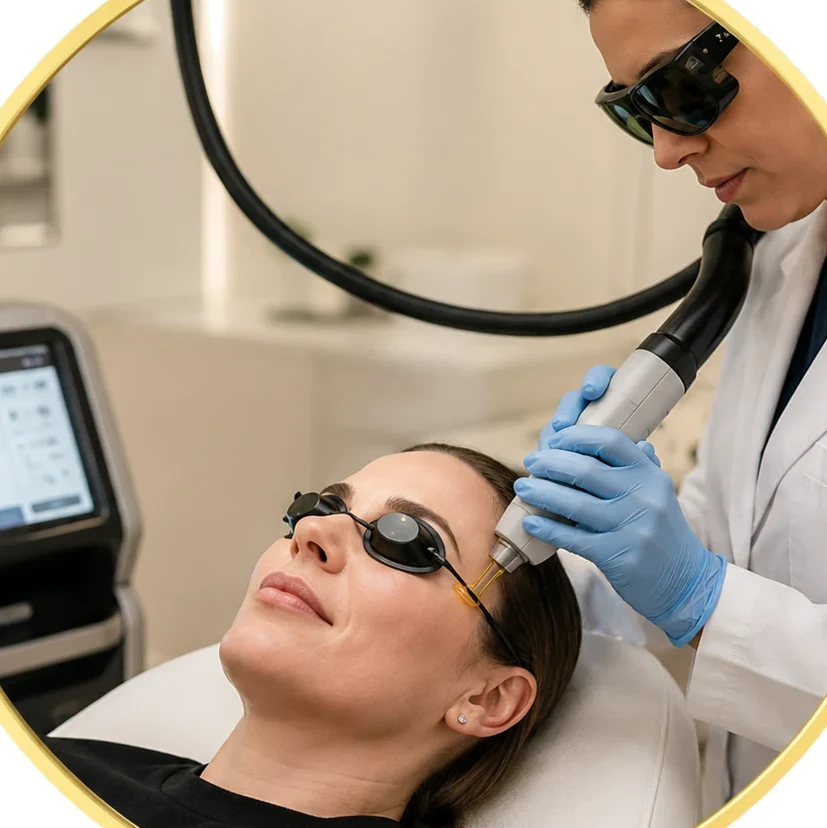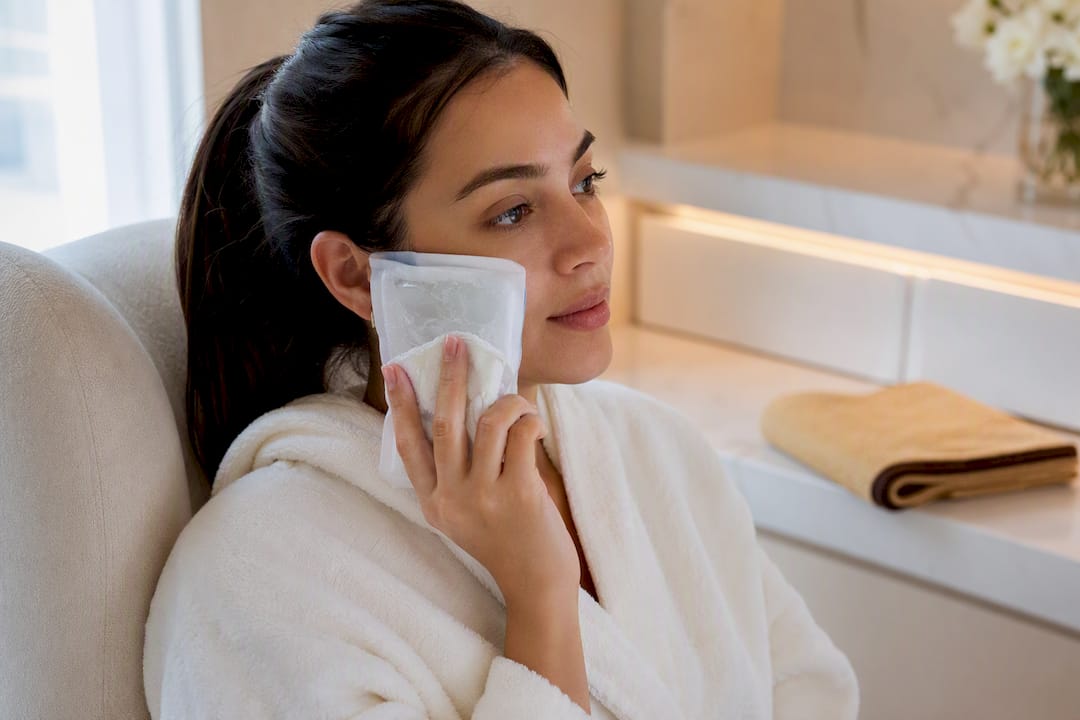

Laser skin tightening uses controlled light energy to heat the deeper layers of the skin and stimulate collagen. It can improve mild to moderate looseness, fine lines and texture. It will not lift heavy jowls or remove significant excess skin, and the results depend heavily on the person holding the device. This guide explains how it works, what to expect, the risks, and the other non-surgical options worth comparing.
TL;DR
- Laser tightening works by heating the dermis to stimulate collagen. Gains are gradual and modest, not surgical.
- It suits early to moderate laxity and surface texture. Marked sagging usually needs a different approach, sometimes surgery.
- Skin type matters. Darker skin carries a higher risk of pigment change, so the practitioner's judgement counts for more than the brand of laser.
- Recovery ranges from a few days of redness to about a week of healing, depending on how deep the treatment goes.
- In our clinic every plan starts with an assessment, and we will tell you honestly if laser is not your best option.
Table of Contents
- How laser skin tightening works
- What results can you realistically expect?
- Risks and side effects
- Recovery: what the first week looks like
- Who should be doing your treatment?
- Does the NHS cover it, and what does it cost?
- Laser versus other ways to tighten skin without surgery
- Our view: the clinician matters more than the device
- Preparing for treatment
- Book a consultation in Cambridge
- FAQ
- Sources
How laser skin tightening works
The skin's firmness comes largely from collagen and elastin in the dermis, the layer beneath the surface. With age, sun exposure and weight change, those fibres thin and loosen. Laser energy creates controlled heat in the dermis. The body responds by repairing the area and producing new collagen, which is why NHS patient information describes laser as stimulating collagen production, a protein linked to skin texture, elasticity and suppleness.
This is a slow process. New collagen builds over weeks and months, so you will not see the final effect the day after treatment.
Ablative and non-ablative lasers
There are two broad categories, and the difference shapes everything else: downtime, risk and results.
| Ablative | Non-ablative | |
|---|---|---|
| What it does | Removes or vaporises the top skin layer while heating the dermis | Leaves the surface intact and heats the dermis beneath |
| Typical effect | Stronger change in texture and lines | Gentler, gradual firming |
| Recovery | Several days to a week or more | Often a day or two of redness |
| Sessions | Fewer | Usually a course |
| Risk profile | Higher | Lower |
The NHS describes this same split between ablative and non-ablative approaches. "Laser skin tightening" on a clinic menu can mean either, so ask which type is being used and why.
What results can you realistically expect?
Most people who see good results describe smoother, slightly firmer and brighter skin, with softer fine lines. That is a real improvement, but it is a different category from a facelift.
One published clinical overview of resurfacing notes that laser may give a slight lift but will not correct significant jowling or loose skin. We would rather you hear this from us than discover it after a course of treatments. As a guide:
- Good candidates: early laxity, crepey texture, fine lines, uneven tone, mild loss of definition.
- Limited benefit: heavy jowls, pronounced neck bands, large amounts of excess skin after weight loss.
- Often better served by another treatment: volume loss, deep folds, and dehydration without true laxity.
Results vary between people. Age, skin thickness, sun history, smoking and the starting point all play a part, so nobody can promise a set outcome.
Risks and side effects
Lasers are powerful devices, and the risks are real. Common effects include redness, swelling and temporary pigment change. More serious but less common problems include scarring, lasting pigment change and infection.
A few points matter most:
- Skin type. Expert consensus stresses that selecting patients by Fitzpatrick skin type is critical to limit post-inflammatory hyperpigmentation, where skin darkens after inflammation. If you have brown or black skin, the choice of wavelength and settings is decisive. We have written separately on why laser on dark skin needs an expert.
- Cold sores. If you get them, tell your practitioner. NHS guidance notes laser near the mouth can trigger an outbreak, and anti-viral tablets are often started a week before and continued for a week after.
- Scabs. After deeper resurfacing, skin can crust over within days. The same leaflet warns that picking scabs is a common cause of permanent scarring.
- Medical history. Tell the practitioner about medication, recent sun or tanning, a history of keloid scarring, and any skin conditions. Melasma in particular can worsen with heat, so the British Association of Dermatologists' melasma guidance is worth reading if that applies to you.
If something looks wrong after treatment, such as spreading redness, pus, severe pain or blistering, contact the clinic straight away. Out of hours, call NHS 111 or seek urgent care.
Recovery: what the first week looks like
Recovery depends on depth.
Non-ablative treatment. Expect pinkness and warmth, similar to mild sunburn, usually settling within a day or two. Most people return to work quickly, which suits busy schedules.
Ablative treatment. NHS patient information explains that you can go home the same day, but the skin can feel raw, weep fluid and form scabs within 3 to 7 days, and some people need about a week off work. Sleeping with your head raised for the first few nights helps with swelling.
Aftercare principles are consistent across NHS trusts. For instance, Leeds Teaching Hospitals advises keeping the treated area dry for two days and gently patting it dry if it gets wet. Follow the specific instructions your practitioner gives you, and use daily SPF 30 or higher while the skin heals.
Who should be doing your treatment?
This is the question that matters most, and it is where the UK market is unusual. Local authority guidance confirms that practitioners offering non-surgical laser and IPL treatments are not required to be medically qualified. The same guidance stresses that results depend less on the brand of machine than on the operator's judgement and safety protocols.
In England, some practitioners must also register with the Care Quality Commission, and the government's licence page explains who needs to apply. Local councils may have separate registration requirements for laser and IPL premises. The government has also consulted on licensing non-surgical cosmetic procedures, but check the current position rather than assuming a scheme is in force.
Before you book anywhere, ask:
- Who will perform the treatment, and what are their qualifications?
- Is there a medical professional overseeing the clinic?
- Which type of laser is used, and why is it right for my skin type?
- What are the risks for me specifically, and what happens if something goes wrong?
- Is the clinic insured, and for which treatments? (Our article on aesthetics insurance questions explains what clinicians should be asking.)
- Will I have a patch test or a full consultation first?
A good practitioner will welcome these questions. Be wary of anyone who skips the consultation, pushes a course on the day or promises a surgical-level lift.
Does the NHS cover it, and what does it cost?
Laser skin tightening for cosmetic reasons is self-funded. NHS policies limit laser resurfacing to specific medical cases, and local commissioning policies such as NHS Birmingham and Solihull's skin policy set out the narrow circumstances in which it is considered.
Prices vary widely by clinic, device, area and number of sessions, so we will not quote a generic figure. At NEXGEN Clinic, laser treatments do not have a published price, because the right plan depends on your assessment. We give you a clear quote after your consultation, before anything is booked.
Laser versus other ways to tighten skin without surgery
Laser is one option among several. Which suits you depends on what is causing the laxity.
| Concern | Often considered | Why |
|---|---|---|
| Fine lines, texture, uneven tone | Laser, microneedling | Surface and upper dermis remodelling |
| Dehydrated, thin, tired-looking skin | Skin boosters such as Profhilo, polynucleotides | Hydration and skin quality with little downtime |
| Mild lower-face laxity | Threads, collagen-stimulating injectables | Support plus collagen over time |
| Lines from muscle movement | Anti-wrinkle injections | Relaxes the muscles causing the lines |
| Volume loss | Dermal fillers | Replaces lost structure |
A few of these deserve a closer look.
Skin boosters and polynucleotides
Many clients now choose biostimulators alongside or instead of laser. A UK-focused 2025 systematic review of injectable bio-revitalisers looked at this group of treatments, and downtime is generally lower than with ablative laser. At our Cambridge clinic, Profhilo starts from £250 per session and polynucleotides from £180 per session. If you are weighing the two, a consultation will help you choose based on your skin rather than a trend.
Threads
PDO threads, from £350, are placed under the skin to give mild support and stimulate collagen. They suit selected cases of early laxity, and we will say so plainly if your skin is better suited to something else.
Collagen-stimulating injectables and PRP or PRF
Treatments such as Sculptra work gradually. Our guide to the timeline for Sculptra explains why patience matters. If you are exploring blood-derived treatments, read our PRF versus PRP checks first.
Combination plans
Recent dermatology reviews describe a shift towards combining fractional laser with biostimulators rather than relying on one device. That fits how we think about skin: laser for texture, boosters for hydration and quality, injectables where structure is needed.
Our view: the clinician matters more than the device
People often ask us which machine is best. The honest answer is that it is the wrong first question.
We have more than 15 years of experience in aesthetics, and what we have learned is that outcomes follow assessment. Two people can come in asking for "skin tightening" and need completely different plans: one with sun-damaged texture, another with volume loss and early laxity. Treating both with the same laser would serve neither.
So every treatment at NEXGEN begins with an individual assessment of skin health, facial harmony and your goals. We discuss your skin type and the risks in plain language. We would rather recommend fewer treatments and spaced sessions than a large course on day one. If laser is not the right answer, we will say that and explain what is.
The same principle applies to the evidence. Lasers remain a useful tool, but they sit inside a wider regenerative toolkit, and we choose between them for you, not for a sales target.
— Ms Sandra Petraskaite
Preparing for treatment
A few steps make a real difference to safety and results:
- Avoid sunbeds and strong sun for several weeks before, and use SPF daily.
- Tell your practitioner about all medication, including retinoids and anything that thins the blood.
- Mention any history of cold sores, keloid scars or pigmentation problems.
- Do not arrive with a fresh tan or irritated skin.
- Plan your calendar. For an event such as a wedding, allow plenty of time for healing and for any course to finish, and talk to us about timing early.
Book a consultation in Cambridge
If you are considering laser tightening, a boosted skin-quality plan or a mix of both, we will start with an assessment and give you honest recommendations, including when not to treat. You can see everything we offer on our treatments page, including anti-wrinkle injections and skin boosters. Book a consultation and bring your questions.
FAQ
Does laser skin tightening work?
It can, for mild to moderate laxity and for texture. Heat in the dermis stimulates new collagen, so improvement is gradual and modest. It is not a substitute for a facelift when there is significant sagging.
Can saggy skin be tightened without surgery?
Early or mild looseness often responds to non-surgical options such as laser, microneedling, threads or collagen-stimulating treatments. Heavy sagging or large amounts of excess skin generally respond better to surgery. A consultation with a qualified practitioner will tell you which group you fall into.
What is the downside of laser resurfacing?
The main downsides are downtime, redness, swelling and the risk of pigment change or scarring, which is higher on darker skin and with deeper treatment. NHS information describes scabbing and the need for careful aftercare. Choosing an experienced practitioner lowers these risks but cannot remove them.
How expensive is laser skin tightening?
It is a private treatment, and cost depends on the clinic, the device, the area and the number of sessions. At NEXGEN Clinic we give a quote after your assessment rather than a standard price. Always ask what a full course costs, not only the first session.
Is laser skin tightening safe for darker skin?
It can be, but only with the right wavelength, settings and an experienced practitioner, because the risk of post-inflammatory hyperpigmentation is higher. Discuss this openly at your consultation, and ask whether a non-ablative approach is safer for you.
Sources
- NHS patient information: laser resurfacing
- PubMed: expert review on laser and biostimulator combinations
- British Association of Dermatologists: melasma
- Leeds Teaching Hospitals: after your laser treatment
- Luton Council: laser and IPL safety in the beauty industry
- GOV.UK: laser or IPL treatment registration in England
- GOV.UK: licensing of non-surgical cosmetic procedures consultation
- NHS Birmingham and Solihull: skin policy
- Systematic review of injectable bio-revitalisers in the UK
Recommended
- Laser on Dark Skin in the UK: Why 1064 nm Needs an Expert
- Clinician Matters More Than Device: Acne Scar Laser Care
- NHS and Cochrane Evidence for Laser Treatment of Broken
- Laser Freckle Removal in the UK: What to Expect
Ready to explore your options?
Speak with a NexGen clinician for a personalised consultation. We’ll listen, assess, and recommend the safest and most effective route — always led by evidence, always tailored to you.
Book a consultation or get in touch with our Cambridge team.