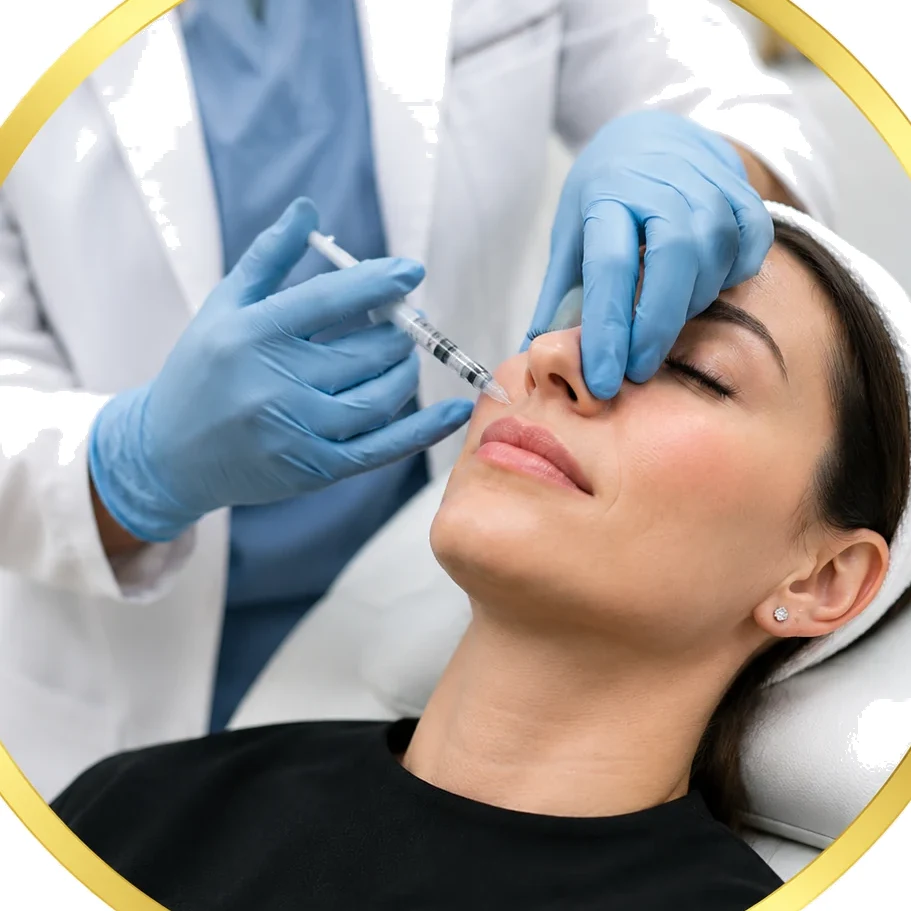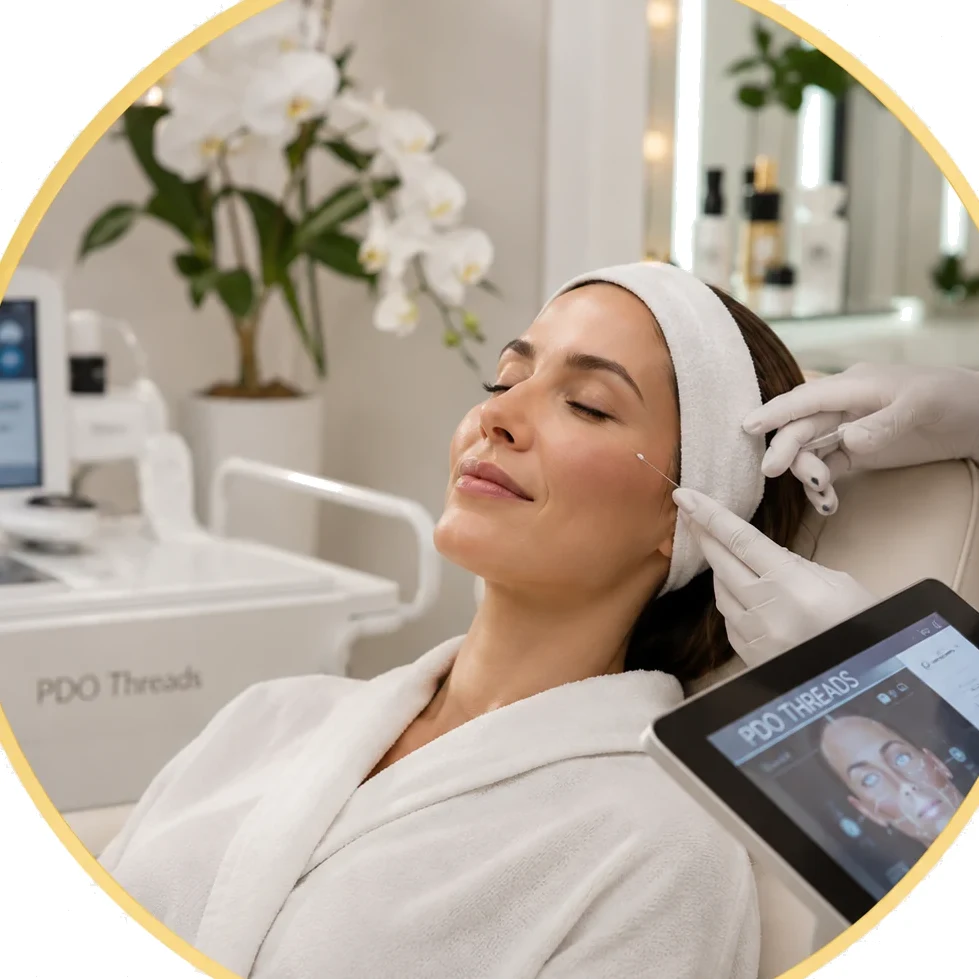
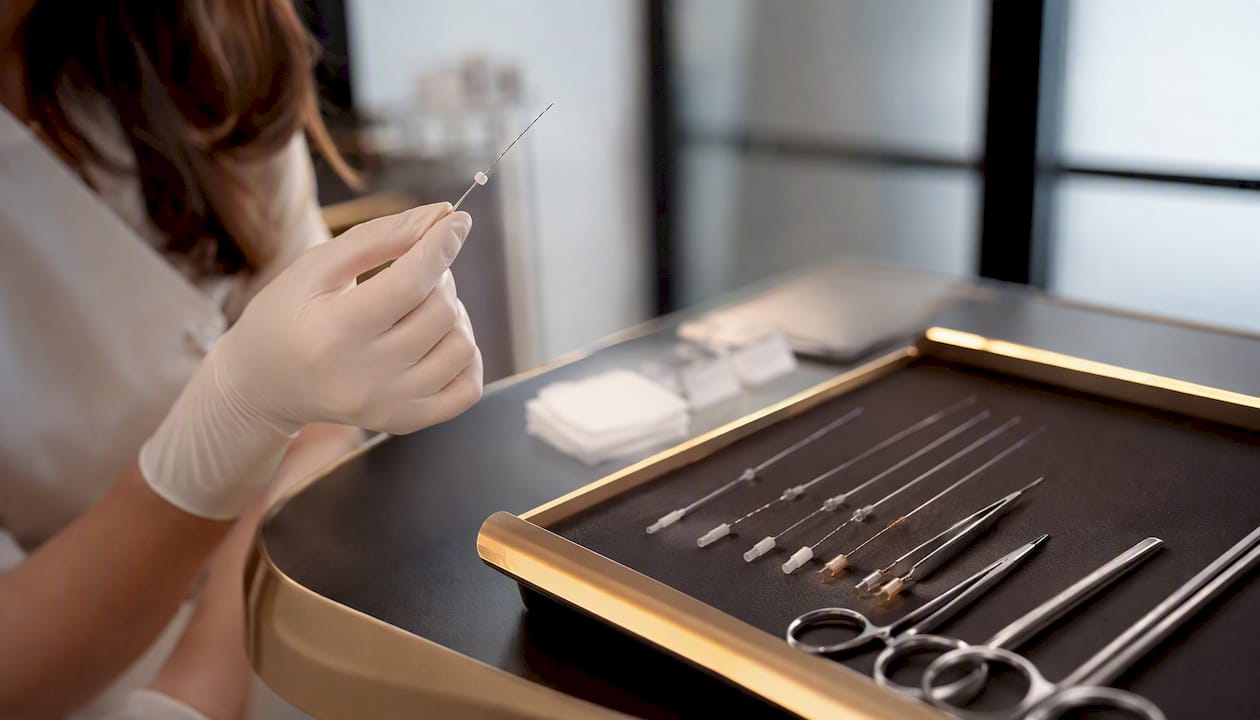
A PDO thread lift uses fine polydioxanone sutures inserted beneath the skin to produce an immediate mechanical lift and, as the threads dissolve over roughly 4–6 months, to stimulate new collagen formation that sustains the result. For most patients, the combined effect lasts 12–18 months.
At a glance:
- Immediate lift from barbed threads repositioning soft tissue on the day of treatment
- Collagen stimulation as the PDO polymer dissolves, improving skin quality and firmness over 6–12 weeks
- Minimal downtime compared with surgical options, typically 1–2 weeks to social recovery
- Main risks include bruising, swelling, dimpling, thread visibility, and rare infection or migration
- Typical duration is 12–18 months; up to around 24 months in well-selected cases
UK safety note: The Care Quality Commission (CQC) classifies cogged PDO thread lifts as a regulated surgical activity in England. Always confirm that your clinic holds CQC registration for surgical procedures before booking.
Table of Contents
- What is a PDO thread lift and how does it compare with fillers and a surgical facelift?
- Which thread types are used and how does the choice affect your result?
- What happens from your first consultation through to immediate aftercare?
- Risks and complications: what you need to know before proceeding
- Why facial anatomy and clinician skill determine your safety and outcome
- Recovery and aftercare: planning your downtime and follow-up
- Who is suitable for a thread lift, and when is it not the right choice?
- Questions to ask at your consultation and red flags to watch for
- Key takeaways
- The case for honest patient selection over optimistic promises
- PDO thread lifts at Nexgen Clinic: medically led care from consultation to follow-up
- Useful sources and further reading
- FAQ
What is a PDO thread lift and how does it compare with fillers and a surgical facelift?
PDO stands for polydioxanone, a synthetic absorbable polymer that has been used in surgical sutures for decades. When formed into fine threads and inserted beneath the skin, it works in two distinct stages. First, barbed or cog threads physically grip and reposition lax tissue, producing a visible lift immediately after the procedure. Second, as the polymer breaks down by hydrolysis over approximately 4–6 months, the body responds by depositing new collagen along the thread tract, maintaining firmness even after the material has fully dissolved.
This dual mechanism sets PDO threads apart from dermal fillers, which add volume rather than reposition tissue, and from a surgical facelift, which removes excess skin and tightens deeper structures under general or sedation anaesthesia. Threads are the right tool for repositioning, not for replacing lost volume; combining them with fillers or skin boosters often produces more balanced results.
Common treatment areas include the jawline and jowls, mid-face and cheeks, neck, brow, and nasolabial folds.
| Feature | PDO threads | Dermal fillers | Surgical facelift |
|---|---|---|---|
| Primary action | Tissue repositioning + collagen | Volume replacement | Skin excision + deep tissue tightening |
| Anaesthesia | Local infiltration | Topical or none | General or sedation |
| Procedure time | 45–90 minutes | 20–45 minutes | 3–5 hours |
| Downtime | 1–2 weeks | 1–3 days | 2–4 weeks |
| Typical duration | 12–18 months | 6–18 months | 5–10 years |
| Best suited for | Mild–moderate laxity | Volume loss, lines | Moderate–severe laxity |
According to the American Society of Plastic Surgeons, threads suit mild to moderate laxity and are not a substitute for surgery when tissue descent is heavy.
Which thread types are used and how does the choice affect your result?
Not all PDO threads are the same. Clinicians select thread type based on the degree of laxity, the treatment area, and the goal, and understanding the differences helps you assess whether a proposed plan makes sense.
Mono (smooth) threads Smooth, single-strand threads with no barbs. They do not lift tissue mechanically; their role is to stimulate collagen and improve skin texture, hydration, and fine lines. Often placed in a mesh or grid pattern across the cheeks, neck, or décolletage. Frequently combined with cog threads to address both skin quality and structural laxity in the same session.
Cog (barbed) threads These carry tiny projections, or cogs, along the shaft. Unidirectional cogs grip tissue in one direction; bidirectional cogs anchor from both ends without a fixed point. When inserted and pulled, the cogs engage the soft tissue and hold it in a lifted position. Cog threads are the primary tool for mechanical repositioning of the jawline, jowls, mid-face, and brow. The ISAPS guidance on barbed suture lifts emphasises that these require specialist anatomical knowledge and careful vector planning.
Screw (spiral/twist) threads Two threads wound around the insertion needle in a helix. The spiral structure creates a localised volumising effect, useful for areas with mild volume deficit such as the cheeks or temples. They are less commonly used as a standalone treatment and more often as part of a multi-thread plan.
Common combinations: A typical mid-face or jawline treatment uses cog threads for lift alongside mono threads for skin quality, addressing both structure and texture in one appointment.
What happens from your first consultation through to immediate aftercare?
Knowing the full patient pathway removes uncertainty and helps you prepare properly.
Consultation. Your clinician assesses the degree of skin laxity, photographs your face in standardised positions, and discusses which areas concern you most. They will explain the proposed thread type, the planned insertion vectors, and the number of threads. Written consent and a full medical history are taken at this stage.
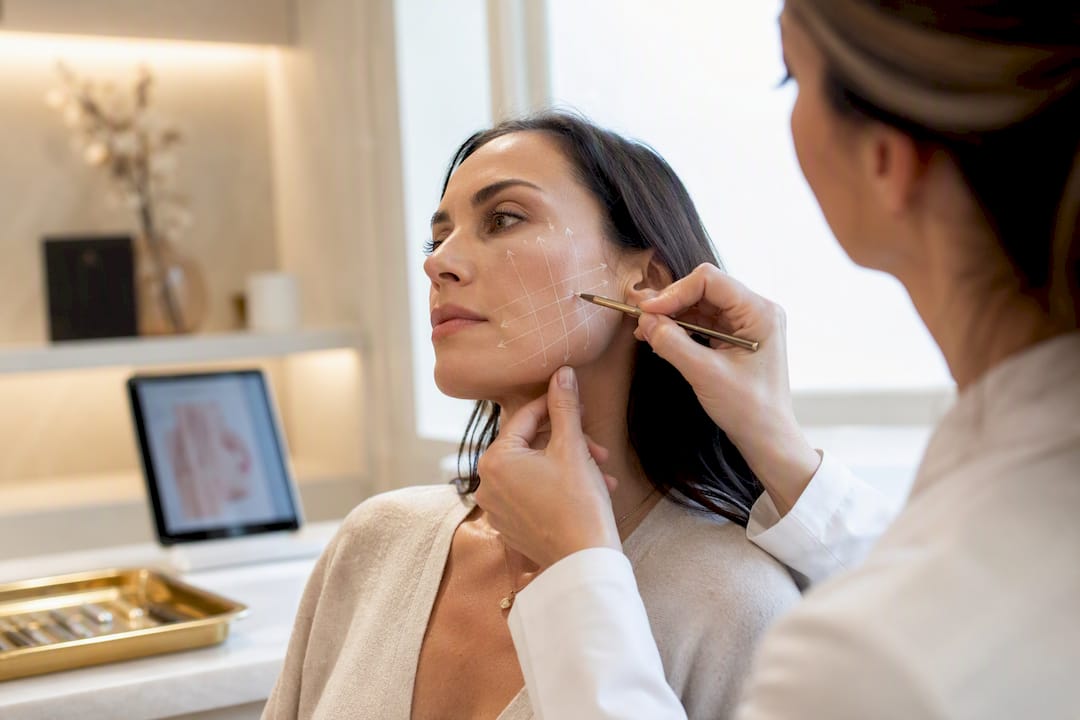
Preparation. On the treatment day, your face is cleansed and antiseptic solution applied. Markings are drawn with you sitting upright, because lying down shifts tissue and alters the lift vectors. Local anaesthetic is infiltrated along each planned thread tract.
Insertion. The clinician uses either a blunt-tipped cannula or a sharp needle to create an entry point, then advances the thread along the planned plane. For cog threads, gentle traction engages the barbs against the tissue and the thread is anchored. Most full-face treatments take 45–90 minutes. You will feel pressure and mild discomfort despite the local anaesthetic, but sharp pain should be minimal.
Immediate post-procedure care in clinic. The entry points are cleaned and any small sutures or steristrips applied. You will be given written aftercare instructions before leaving. Ice packs can reduce early swelling.
First 48–72 hours at home. Sleep on your back with your head slightly elevated. Avoid touching, pressing, or massaging the treated areas. Cold compresses for 10–15 minutes at a time help with bruising. Avoid alcohol, strenuous exercise, and heat exposure (saunas, steam rooms, hot showers) during this period.
Pro Tip: Attend your consultation with no make-up and bring a list of all medications, including supplements, as anticoagulants and high-dose fish oil can increase bruising risk.
Risks and complications: what you need to know before proceeding
Every aesthetic procedure carries risk. With PDO threads, most complications are mild and self-resolving, but a small number require prompt clinical attention.
Common complications (usually self-resolving):
- Bruising and swelling at entry points and along thread tracts
- Mild dimpling or puckering of the skin, particularly in the first 1–2 weeks
- Temporary asymmetry as swelling settles unevenly
- Tenderness along the thread tract for several weeks
Less common complications requiring clinical review:
- Thread visibility or palpability beneath the skin
- Thread migration from the original placement site
- Infection at entry points or along the tract (requires antibiotics; rarely, thread removal)
- Prolonged dimpling that does not resolve spontaneously
Rare but serious:
- Vascular injury to superficial facial vessels
- Nerve injury causing temporary or, very rarely, lasting weakness or altered sensation
The Cleveland Clinic's patient guidance on thread lifts notes that most complications are manageable with conservative measures, and that choosing a trained, experienced clinician is the single most effective risk-reduction strategy.
UK regulatory context: Since December 2018, the CQC has interpreted cogged PDO thread lifts as a regulated surgical activity in England. Clinics offering this procedure must hold CQC registration for surgical procedures. Performing thread lifts without appropriate registration carries criminal liability. Patients should ask for written confirmation of CQC registration before consenting to treatment. This is not a bureaucratic detail — it is a meaningful indicator of clinical governance and accountability.
Pro Tip: If you develop increasing pain, redness, or warmth at the treatment site after 48 hours, contact your clinic the same day. Early-onset infection responds well to antibiotics but deteriorates quickly if left untreated.
Why facial anatomy and clinician skill determine your safety and outcome
The difference between a good result and a complication often comes down to where, precisely, the thread is placed. PDO threads are most commonly inserted in the subcutaneous plane or just above the SMAS (superficial musculoaponeurotic system), a layer of fibromuscular tissue that connects the facial muscles to the overlying skin. Placement in this supra-SMAS or subcutaneous zone allows effective engagement of the retaining ligaments that hold facial fat compartments in position, producing a durable lift without the risks associated with deeper dissection.
The PMC anatomical review of thread lifting details how retaining ligament engagement improves longevity and reduces the risk of thread migration, and why supra-SMAS placement is preferred for both safety and efficacy.
Two anatomical structures deserve particular attention:
- Superficial temporal artery (STA): — Runs in the temporal region and is at risk during brow and temple thread placement. Inadvertent puncture causes haematoma and, in rare cases, more serious vascular events.
Anatomical mapping studies confirm that precise knowledge of these landmarks is non-negotiable for safe temporal and brow thread work.
Clinical insight: Unsatisfactory outcomes are frequently attributed to the wrong thread type for the degree of laxity, incorrect insertion vectors, or an insufficient number of threads for the area treated, rather than to the procedure itself. Technique and patient selection account for the majority of poor results.
This is supported by practitioner-focused research identifying selection and technique errors as the primary drivers of unsatisfactory outcomes. Anatomy training, cadaveric experience, and a documented case portfolio are therefore meaningful indicators of a clinician's competence, not optional extras.
Recovery and aftercare: planning your downtime and follow-up
Recovery from a PDO thread procedure is manageable for most patients, but it does require some practical planning, particularly around social commitments and physical activity.
Recovery timeline:
- Days 1–3: Peak swelling and bruising. Most patients prefer to stay at home during this period.
- Days 4–7: Bruising begins to yellow and fade; swelling reduces noticeably.
- Week 2: Most patients feel comfortable returning to work and social settings, though residual tenderness may persist.
- Weeks 3–6: Full tissue settling. Minor irregularities usually resolve within this window.
Dos and don'ts in the first four weeks:
- Sleep on your back with your head elevated for at least the first week.
- Apply cold compresses (not ice directly on skin) for the first 48 hours.
- Avoid strenuous exercise, heavy lifting, and anything that significantly raises blood pressure for two weeks.
- Avoid facial massage, facial treatments, and any manipulation of the treated area for four weeks.
- Postpone dental work for at least four weeks, as wide mouth opening can displace threads.
- Avoid saunas, steam rooms, and prolonged sun exposure for four weeks.
- Keep the entry points clean and dry for 48 hours; apply any prescribed topical antibiotic as directed.
Follow-up: Most clinics schedule a review at 2–4 weeks to assess settling and address any concerns. If you notice increasing pain, redness, warmth, or discharge at any point, contact your clinic promptly rather than waiting for a scheduled appointment.
Who is suitable for a thread lift, and when is it not the right choice?
Thread lifts produce their best results in a specific patient profile. Understanding where you sit on that spectrum helps you have a more productive consultation and set realistic expectations.
Ideal candidates:
- Adults with mild to moderate skin laxity, typically in their mid-30s to mid-60s
- Good underlying skin quality with reasonable tissue thickness
- Realistic expectations about the degree and duration of improvement
- No active skin infections or inflammatory conditions in the treatment area
- Willing and able to follow aftercare instructions
When surgery is more appropriate: Heavy tissue descent, significant skin excess, or very poor skin quality are better addressed with a surgical facelift. Threads cannot remove skin or tighten deep muscular structures to the same degree as surgery. The ASPS guidance is clear that threads are a complement to, not a replacement for, surgical options in patients with advanced laxity.
Absolute contraindications:
- Active infection anywhere in the face or scalp
- Pregnancy or breastfeeding
- Known allergy to PDO or polydioxanone suture material
- Active autoimmune conditions affecting connective tissue (e.g. lupus, scleroderma) — discuss with your treating clinician
Relative contraindications (require careful discussion):
- Anticoagulant therapy (warfarin, direct oral anticoagulants, high-dose aspirin) — increased bruising and haematoma risk
- Strong tendency to keloid or hypertrophic scarring
- Significant volume loss without laxity (fillers are more appropriate)
- Very thin skin with little subcutaneous tissue, which increases thread visibility risk
Older patients or those with heavy tissue descent may still benefit from threads as part of a combined plan, but expectations must be calibrated accordingly.
Questions to ask at your consultation and red flags to watch for
A thorough consultation protects you. Use this checklist before and during your appointment.
Before you attend:
- Verify the clinician's registration with the GMC (doctors), GDC (dentists), or NMC (nurses/midwives) on the relevant register.
- Check that the clinic holds CQC registration for surgical procedures if it is based in England.
- Review before-and-after images from the clinician's own cases, not stock photography.
- Confirm the clinic has a clear protocol for managing complications, including access to medical support.
Questions to ask during the consultation:
- Which thread type and brand do you propose, and why is it appropriate for my degree of laxity?
- In which anatomical plane will the threads be placed?
- How many threads are planned, and what is the rationale for that number?
- What is your personal complication rate, and how do you manage the most common issues?
- What anaesthesia will be used, and what should I expect to feel during the procedure?
- Is a combined approach (threads plus fillers or skin boosters) appropriate for my goals?
Red flags that should prompt you to walk away:
- Unwillingness to show their own before-and-after cases
- Pressure to book immediately or accept a time-limited discount
- Treatment offered in a non-clinical setting (a home, a beauty salon without clinical governance)
- Refusal to confirm GMC/GDC/NMC registration or CQC status in writing
- No written consent form or written aftercare instructions provided
- Inability to explain the proposed thread type, plane of placement, or complication management
Key takeaways
A PDO thread lift delivers an immediate mechanical lift and a sustained collagen response, with results typically lasting 12–18 months, but safety and outcome depend heavily on clinician skill, anatomical knowledge, and UK regulatory compliance.
| Point | Details |
|---|---|
| Two-stage mechanism | Threads reposition tissue immediately, then stimulate collagen as they dissolve over 4–6 months. |
| Typical duration | Results last 12–18 months for most patients; factors include age, skin quality, and thread count. |
| UK regulatory requirement | In England, clinics must hold CQC registration for surgical procedures before offering cogged thread lifts. |
| Clinician skill is decisive | Wrong thread type, poor vectoring, or insufficient thread count are the primary causes of unsatisfactory outcomes. |
| Nexgen Clinic | Offers medically led PDO thread lifts in Cambridge with AI-supported assessment, documented planning, and aftercare. |
The case for honest patient selection over optimistic promises
There is a tendency in aesthetic medicine to present every procedure as suitable for every patient who wants it. With PDO threads, that approach does real harm. The patients who benefit most are those with mild to moderate laxity, good skin quality, and a clear understanding that threads reposition rather than restore. When those criteria are not met, the result is not just disappointing — it can be a complication that requires further treatment to resolve.
What I find most underappreciated is the relationship between thread count and outcome. A single-area treatment with two or three threads is unlikely to produce a meaningful lift in someone with moderate jowling. Clinicians who propose minimal thread counts to keep costs down, or who use mono threads where cog threads are indicated, are setting patients up for a result that underwhelms. The research on causes of poor outcomes consistently points to these technique and selection errors, not to the procedure itself.
Combined approaches, where cog threads address laxity and fillers or skin boosters address volume and skin quality, produce more balanced and durable results than threads alone. The anatomy supports this: repositioning tissue without addressing the volume deficit beneath it often looks incomplete. At Nexgen Clinic, the consultation process is designed to identify whether threads alone, or a combined plan, will genuinely serve the patient's goals, and to be honest when surgery is the more appropriate route.
The CQC registration requirement is not bureaucracy for its own sake. It signals that a clinic has been assessed against clinical governance standards. Patients who skip that check to save money or travel time are accepting a risk that is entirely avoidable.
PDO thread lifts at Nexgen Clinic: medically led care from consultation to follow-up
Nexgen Clinic's approach to PDO thread treatments begins with an AI-supported skin analysis that maps laxity, skin quality, and facial proportions before a single thread is proposed. That assessment informs a documented treatment plan, specifying thread type, count, and vectors, so you know exactly what is being done and why.
Every thread lift at Nexgen Clinic is performed by a medically qualified practitioner with anatomy training and a documented case portfolio. The fee includes your consultation, the procedure, written aftercare, and a follow-up appointment. For patients whose goals extend beyond repositioning, Nexgen Clinic's signature treatment programmes combine threads with dermal fillers and regenerative skin treatments for a more complete outcome. To book a consultation or check availability, visit Nexgen Clinic and speak with the clinical team about whether a thread lift is right for you.
Useful sources and further reading
The following sources informed this guide and are worth consulting directly for clinical detail, regulatory guidance, and patient-facing information.
- Anatomical considerations for thread lifting procedure — PMC
- ncbi.nlm.nih.gov — thread lift clinical review
- Thread Lift: What to Expect, Benefits & Complications — Cleveland Clinic
- What you need to know about thread lifts — ASPS blog
- ISAPS — Barbed suture lift
- When does a non-surgical procedure fall within the scope of CQC registration? An update on cogged PDO thread lifts
- pubmed.ncbi.nlm.nih.gov
FAQ
How long do PDO thread lift results last?
Results typically last around a year to a year and a half for most patients, with some cases extending longer depending on age, skin quality, and the number of threads used. The collagen scaffold that forms as the PDO dissolves sustains the result beyond the thread's physical lifespan.
What are the main downsides of a PDO thread lift?
The most common downsides are bruising, swelling, and temporary dimpling in the first 1–2 weeks. Less commonly, threads can become visible or migrate, and infection, though rare, requires prompt antibiotic treatment. Results are also temporary, lasting 12–18 months rather than the years achieved by surgical facelift.
How much does a PDO thread lift cost in the UK?
Prices for mono thread skin-quality treatments start from several hundred pounds, while full face and neck combined cog lifts can cost several thousand pounds. Single-area cog lifts typically cost from mid-hundreds to low thousands. London clinics generally charge more than regional practices for equivalent treatments.
Why do some plastic surgeons express reservations about thread lifts?
Plastic surgeons note that threads suit only mild to moderate laxity and cannot replicate the skin removal and deep tissue tightening of a surgical facelift. The ASPS advises that patients with significant tissue descent are better served by surgery, and that threads should be positioned as a complementary option rather than a surgical equivalent.
Do I need to check CQC registration before having a thread lift in England?
Yes. The CQC has classified cogged PDO thread lifts as a regulated surgical activity in England since December 2018. Clinics must hold CQC registration for surgical procedures to offer this treatment legally. Ask your clinic for written confirmation of their CQC status before consenting to treatment.
This article provides general information about PDO thread lifts and does not constitute medical advice. Consult a qualified medical professional and verify current regulatory requirements before proceeding with any aesthetic procedure.
Recommended
- PDO Threads Cambridge | NexGen Clinic
- PDO Thread Lifts in Cambridge | Non-Surgical Lifting | NexGen Clinic
- Precision Treatments | NexGen Clinics
- Skin Boosters vs Profhilo: Which Treatment Is Right?
Explore related NexGen treatments
- Explore our full treatment menu
- Book a consultation with our clinicians
- Contact our Cambridge team
- Read more articles in the NexGen Journal
Ready to explore your options?
Speak with a NexGen clinician for a personalised consultation. We’ll listen, assess, and recommend the safest and most effective route — always led by evidence, always tailored to you.
Book a consultation or get in touch with our Cambridge team.