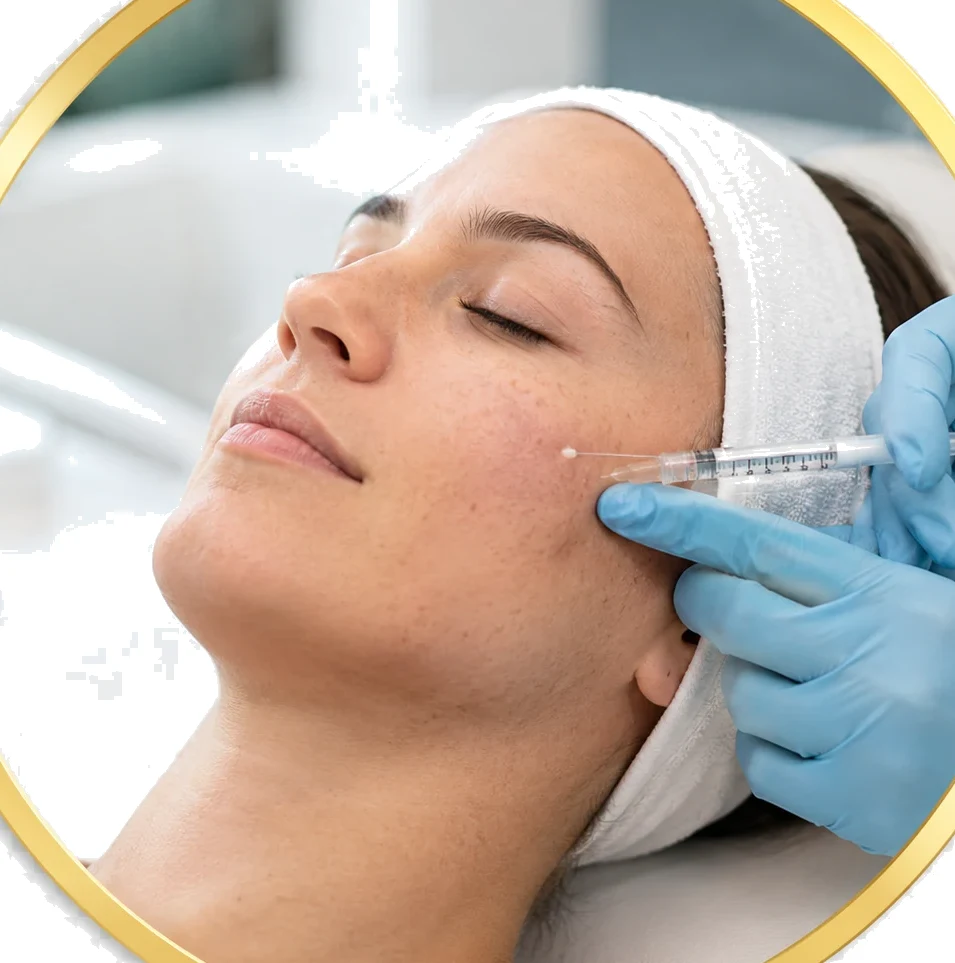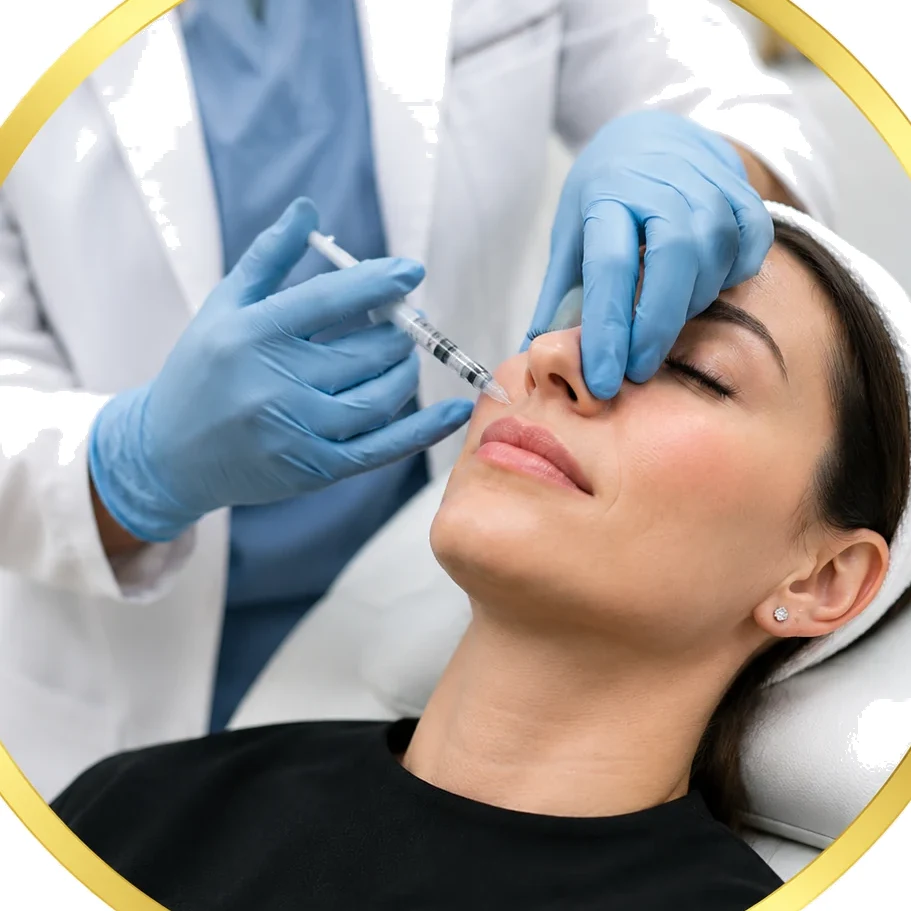

Polynucleotide skin treatments are generally well tolerated, with most side effects being mild, localised, and short-lived. Serious adverse events are rare across the published clinical literature. If you are considering treatment or have recently had it, three things matter most right now:
- Watch for normal short-term reactions — redness, swelling, tenderness, and minor bruising at injection sites are expected and typically settle within 24–72 hours.
- Use simple self-care — cold compresses, paracetamol if needed, and rest reduce discomfort without any special products.
- Know when to escalate — contact your treating clinic if symptoms worsen after 72 hours; for serious or persistent reactions, the UK statutory reporting route runs through the Office for Product Safety and Standards (OPSS) and the MHRA.
Key takeaways
Polynucleotide treatments are well tolerated by most patients, with serious adverse events rare across the published evidence and most common reactions resolving within 24–72 hours.
| Point | Details |
|---|---|
| Most side effects are mild and short-lived | Redness, swelling, tenderness, and bruising typically resolve within 24–72 hours; small bumps within 12–48 hours. |
| The 72-hour rule | If symptoms worsen rather than improve after 72 hours, contact your treating clinic without delay. |
| Red flags need immediate action | Spreading redness, fever, rapidly expanding swelling, or vision changes require NHS 111 or A&E, not watchful waiting. |
| Product certification matters | Ask your practitioner to confirm CE marking or UKCA conformity before treatment; this is a basic safety check. |
| Nexgen Clinic | Offers medically led PN treatments in Cambridge with certified products, written aftercare, and accessible follow-up appointments. |
Table of Contents
- What are polynucleotides and how do they differ from other skin treatments?
- Common polynucleotides side effects and how to manage the first 72 hours
- Less common and rare side effects you should recognise
- How long do side effects typically last?
- Aftercare do's and don'ts to support your recovery
- When to seek help and how to report serious effects in the UK
- How to choose a reputable clinic and what credentials to check
- What does the long-term evidence show about polynucleotide safety?
- An editorial perspective on safety, honesty, and aftercare access
- Polynucleotide treatments at Nexgen Clinic: medically led care with follow-up built in
- Sources
- FAQ
What are polynucleotides and how do they differ from other skin treatments?
Polynucleotides (PNs), also referred to as polydeoxyribonucleotides (PDRNs), are fragments of purified DNA extracted primarily from salmon or trout sperm. When injected into the skin, they work by stimulating fibroblast proliferation, supporting angiogenesis, and promoting extracellular matrix remodelling. The result is gradual improvement in skin texture, hydration, and elasticity rather than an immediate volumising effect.
This mechanism sets PNs apart from hyaluronic acid (HA) fillers. HA fillers add volume by physically occupying space in the dermis, which carries a potential risk of vascular occlusion if injected incorrectly. PNs carry no equivalent vascular occlusion risk, though injection-related risks such as bruising and infection remain. Clinical authors describe PNs as biocompatible and non-immunogenic, though this does not mean they are without risk for everyone.
One important regulatory point: PN injectables are supplied as medical devices in the UK and may fall into higher-risk device classes. Patients should ask their practitioner to confirm CE marking or UKCA conformity before treatment. The Health and Care Act 2022 also introduced new licensing requirements for non-surgical cosmetic procedures, making formal practitioner qualifications and clinic governance more important than ever.
Because most PN preparations are fish-derived, anyone with a significant fish allergy or hypersensitivity should avoid treatment. Patients with active autoimmune or inflammatory skin disease should be fully assessed and cleared by a clinician before proceeding.
For a deeper overview of how Nexgen Clinic uses these treatments in practice, the polynucleotides beginner's guide covers indications and clinical context in plain language.
Common polynucleotides side effects and how to manage the first 72 hours
Most side effects settle within 24–72 hours; small bumps at injection sites generally resolve within 12–48 hours. The following reactions are expected and do not indicate a problem with the treatment:
- Redness (erythema) at and around injection points
- Swelling (oedema) — usually mild and localised
- Tenderness or sensitivity when touching the treated area
- Bruising (ecchymosis) — more likely in thinner-skinned areas such as under the eyes
- Small temporary bumps or nodularity at injection sites
- Mild itching in the hours immediately after treatment
Practical self-care for the first 72 hours
Clinic aftercare guidance consistently recommends the following:
- Apply a cold compress (wrapped in a clean cloth, not directly on skin) for short intervals during the first 24 hours to reduce swelling and discomfort.
- Take paracetamol at the standard adult dose if you need pain relief. Avoid ibuprofen and aspirin unless your clinician has specifically said otherwise, as NSAIDs can increase bruising.
- Elevate your head slightly when sleeping on the first night to reduce localised oedema.
- Avoid strenuous exercise and alcohol for at least 24–48 hours after treatment.
Pro Tip: Certain supplements — including high-dose fish oil, vitamin E, and garlic — can increase bleeding and bruising potential. Discuss stopping these a few days before treatment with your clinician. Small-gauge needles and careful injection technique also reduce bruising significantly, so asking about your practitioner's technique is a reasonable pre-treatment question.
Less common and rare side effects you should recognise
The vast majority of patients experience only the mild, transient reactions listed above. Rarer effects do occur, and knowing what they look like helps you act quickly if one develops.
Persistent nodules are the most commonly reported less-common effect. These are firm lumps under the skin that do not resolve within the expected 12–48 hour window. They are usually benign and respond to conservative management, but they warrant a clinic review if they persist beyond two weeks or feel hard and growing.
Infection at the injection site is uncommon when sterile technique is used, but it can occur. Signs include increasing warmth, spreading redness, pain that worsens rather than improves after 48 hours, and discharge. This needs prompt clinical assessment and may require antibiotics.
Allergic reactions range from localised urticaria (hives) to, very rarely, a systemic hypersensitivity response. Given the fish-derived origin of most PN products, patients who did not disclose a fish allergy at consultation are at higher risk. Any sign of widespread rash, facial swelling, or difficulty breathing requires immediate emergency care.
Prolonged discolouration or hyperpigmentation can occur, particularly in patients with Fitzpatrick skin types IV–VI or those who expose treated areas to UV light too soon after treatment. This usually fades over weeks to months with appropriate sun protection.
Any of the following should prompt you to contact your clinic without delay: increasing pain after 48 hours, spreading redness or warmth, fever, a firm lump that is growing, or any change in vision if the periorbital area was treated.
How long do side effects typically last?
The table below summarises the expected timeline for common reactions and the thresholds at which you should seek further advice.
The 72-hour mark is the practical escalation threshold. If redness, swelling, or pain is getting worse rather than better at that point, contact your treating clinic. Red-flag symptoms — fever, spreading infection signs, rapidly expanding swelling — warrant action at any stage, not just after 72 hours.
Bruising can persist for up to two weeks in some patients, particularly in periorbital treatments. This is not unusual, but photograph it with dates so you can track whether it is improving or worsening.
Aftercare do's and don'ts to support your recovery
Good aftercare reduces both the severity and duration of side effects. The guidance below is consistent with standard clinic recommendations for injectable skin treatments.
Do
- Apply a cold compress for short intervals in the first 24 hours.
- Take paracetamol at the standard adult dose if you need pain relief.
- Cleanse the treated area gently with a mild, fragrance-free cleanser.
- Sleep with your head slightly elevated on the first night.
- Contact your clinic promptly if you notice any worsening or unexpected symptoms.
- Photograph the treated area with dates so you have a clear record of progression.
Don't
- Avoid hot baths, saunas, steam rooms, or intense heat for at least 48 hours.
- Do not exercise strenuously or raise your heart rate significantly for 24–48 hours.
- Avoid alcohol for 24–48 hours, as it dilates blood vessels and can worsen bruising and swelling.
- Do not apply make-up to injection sites for at least 12 hours, or longer if your clinician advises.
- Avoid retinoids, AHAs, BHAs, and other active skincare ingredients on treated areas for 48–72 hours.
- Do not massage the treated area unless your clinician specifically instructs you to.
Pro Tip: When you contact your clinic about a concern, have the following ready: the date and time of treatment, a description of when the symptom started, dated photographs, a list of your current medications and any supplements, and any known allergies. This speeds up clinical assessment considerably.
When to seek help and how to report serious effects in the UK
Most polynucleotide adverse effects resolve without any clinical intervention. When they do not, a clear escalation pathway exists in the UK.
Contact your treating clinic first for any symptom that concerns you, including persistent swelling, nodules that are not softening, or bruising that is spreading rather than fading. A reputable clinic will have a named aftercare contact and a follow-up policy.
Use NHS 111 or attend A&E if you experience any of the following at any point after treatment:
- Spreading redness, warmth, or swelling that extends beyond the injection site
- Increasing pain after 48 hours rather than improvement
- Fever or general feeling of illness
- Rapidly expanding swelling, particularly around the eyes or mouth
- Any change in vision following periorbital treatment
- Signs of a systemic allergic reaction (widespread rash, throat tightening, difficulty breathing)
Reporting serious undesirable effects (SUEs): Under the Cosmetic Products Enforcement Regulations 2013, UK regulations define Undesirable Effects and Serious Undesirable Effects and require SUEs to be reported to the Secretary of State and notified to OPSS. If you believe you have experienced a serious adverse event, you or your clinician can report it via the OPSS reporting route. The MHRA Yellow Card scheme is the parallel route for adverse events linked to medical devices. Collect dates, photographs, a symptom timeline, and your product details before submitting a report.
How to choose a reputable clinic and what credentials to check
The safety of polynucleotide treatment depends as much on the practitioner and the product used as on the treatment itself. Clinical authors consistently emphasise that practitioner competence, sterile technique, and certified product sources are the primary safety variables.
Pre-treatment checklist
- Confirm the prescriber is a registered clinician (GMC, NMC, or equivalent).
- Ask for the product name and request evidence of CE marking or UKCA conformity.
- Expect a full consultation, written consent, and a documented treatment plan before any injection.
- Ask about the clinic's follow-up policy and aftercare contact details.
- Review before-and-after photographs and check for evidence of consistent, natural-looking results.
Red flags to watch for
- A practitioner who refuses to name the product or cannot provide certification details.
- Clinics offering heavily discounted multi-session packages without a prior consultation.
- No written aftercare plan provided after treatment.
- No clear route to contact a clinician after hours if a concern arises.
Pro Tip: You can verify a clinician's registration on the GMC register (for doctors) or the NMC register (for nurses and midwives) in under two minutes online. For clinics that carry out regulated activities, CQC registration can be checked at cqc.org.uk. Both checks take seconds and give you significant reassurance before you book.
For a detailed, locally focused guide, Nexgen Clinic's article on choosing the right aesthetic clinic in Cambridge covers the full selection process step by step.
What does the long-term evidence show about polynucleotide safety?
The published evidence on polynucleotide safety is encouraging, though it carries important limitations. Across multiple small studies and reviews, PN injections show statistically significant improvements in skin texture, elasticity, and patient satisfaction, with adverse events described consistently as mild and transient. No serious systemic adverse events were reported in the reviewed literature.
Compared with HA fillers, PNs offer one notable comparative advantage: the absence of vascular occlusion risk. This matters particularly for anatomically sensitive areas. That said, injection-related risks such as infection and bruising apply to any injectable treatment, and practitioner training remains a critical safety variable.
The evidence gaps are real and worth understanding:
- Most studies have small sample sizes and short follow-up periods.
- Peer-reviewed reviews call for larger randomised controlled trials and longer post-marketing surveillance to establish incidence rates for rare adverse events with confidence.
- Long-term data on repeated treatment cycles over several years is limited.
This does not mean the treatment is unsafe. It means the evidence base is still maturing, and patients benefit from choosing clinics that use certified products and contribute to post-marketing safety data through proper adverse event reporting.
An editorial perspective on safety, honesty, and aftercare access
The conversation around polynucleotide safety in UK aesthetics has improved, but one gap persists: patients often receive thorough pre-treatment information and then find it difficult to reach anyone with clinical authority if something unexpected happens post-procedure.
The side effects themselves are rarely the problem. What erodes trust is the absence of a clear, accessible follow-up route. A clinic that provides a written aftercare plan, a named contact for post-treatment concerns, and a genuine follow-up appointment is not offering a luxury. It is meeting a basic standard of care.
The regulatory framework supports this. The OPSS and MHRA reporting routes exist precisely because rare adverse events need to be captured systematically, not managed quietly. Patients who understand these routes are better protected, and clinics that encourage reporting rather than discouraging it are the ones worth trusting.
The evidence on polynucleotides is genuinely positive, but it is also genuinely limited. Patients deserve to know both things. A practitioner who presents this treatment as entirely without risk, or who cannot name the certified product they are using, is not giving you the full picture. Ask the questions. Expect clear answers.
Polynucleotide treatments at Nexgen Clinic: medically led care with follow-up built in
Patients who want the benefits of polynucleotide treatment without uncertainty about aftercare will find Nexgen Clinic's approach straightforward. Every treatment begins with a personalised consultation using AI-driven skin analysis, so the plan is matched to your skin's specific needs rather than a generic protocol. Certified products, written aftercare, and a clear follow-up pathway are standard, not optional extras.
Nexgen Clinic operates from Cambridge and offers a full range of regenerative skin treatments, including skin boosters and PN-based protocols, delivered by medically trained practitioners who hold current registrations and work within a clinical governance framework. If you have questions about suitability, contraindications, or what to expect, the consultation is the right starting point. Book your consultation at Nexgen Clinic and get a treatment plan grounded in your skin's actual condition.
Sources
- Polynucleotides Explained: Uses, Safety, and Suitability
- Polynucleotide Injectables: What the Evidence Shows in 2026 · Aesthetics Unlocked®
- Polynucleotides in aesthetic medicine: the science, mechanisms and clinical considerations - Journal of Aesthetic Nursing
- Cosmetic Products Enforcement Regulations 2013 – Great Britain
- PMC article (systematic review / narrative review) on polynucleotide evidence
- Aftercare to reduce polynucleotide injection side effects
FAQ
What can go wrong with polynucleotides?
The most common problems are mild injection-site reactions: redness, swelling, bruising, and temporary small bumps, which usually resolve within 24–72 hours. Rarer complications include persistent nodules, infection, allergic reactions (particularly in patients with fish allergies), and prolonged discolouration.
Are polynucleotides safe long term?
Short-term safety data is consistently positive across multiple studies, with no serious systemic adverse events reported in the reviewed literature. Long-term data is limited by small study sizes and short follow-up periods, and clinical reviewers call for larger randomised controlled trials to confirm safety over extended treatment cycles.
What should you not do after polynucleotides?
Avoid strenuous exercise, alcohol, hot baths, saunas, and active skincare ingredients such as retinoids and AHAs for at least 24–48 hours. Do not apply make-up to injection sites for at least 12 hours, and avoid massaging the area unless your clinician specifically advises it.
How long does it take for polynucleotides to wear off?
Polynucleotides work by stimulating the skin's own regenerative processes rather than adding volume, so results develop gradually over weeks and typically last several months. Unlike HA fillers, they do not dissolve in a predictable way; the effects fade as the skin's natural renewal cycle continues.
How do I report a serious reaction to polynucleotides in the UK?
Contact your treating clinic first. For urgent symptoms, use NHS 111 or attend A&E. For serious undesirable effects, the statutory reporting route in the UK runs through OPSS; the MHRA Yellow Card scheme covers adverse events linked to medical devices. Collect dated photographs, a symptom timeline, and product details before reporting.
This article provides general information about polynucleotide treatments and is not a substitute for professional medical advice. Always consult a qualified clinician for guidance specific to your health and circumstances, and verify current regulatory requirements with the relevant UK authorities.
Recommended
- Polynucleotides Explained: A Beginner’s Guide
- PDO Thread Lifts in Cambridge | Non-Surgical Lifting | NexGen Clinic
- Precision Treatments | NexGen Clinics
- PDO Threads Cambridge | NexGen Clinic
Explore related NexGen treatments
- Explore our full treatment menu
- Book a consultation with our clinicians
- Contact our Cambridge team
- Read more articles in the NexGen Journal
Ready to explore your options?
Speak with a NexGen clinician for a personalised consultation. We’ll listen, assess, and recommend the safest and most effective route — always led by evidence, always tailored to you.
Book a consultation or get in touch with our Cambridge team.