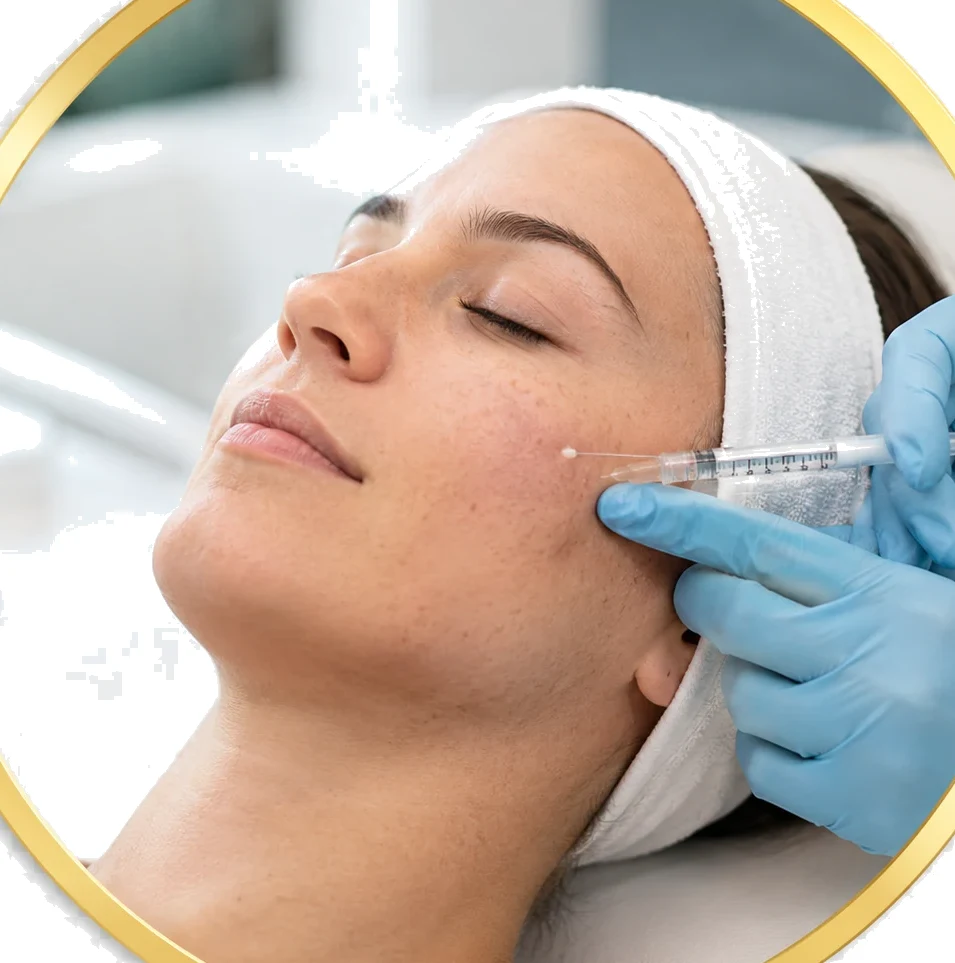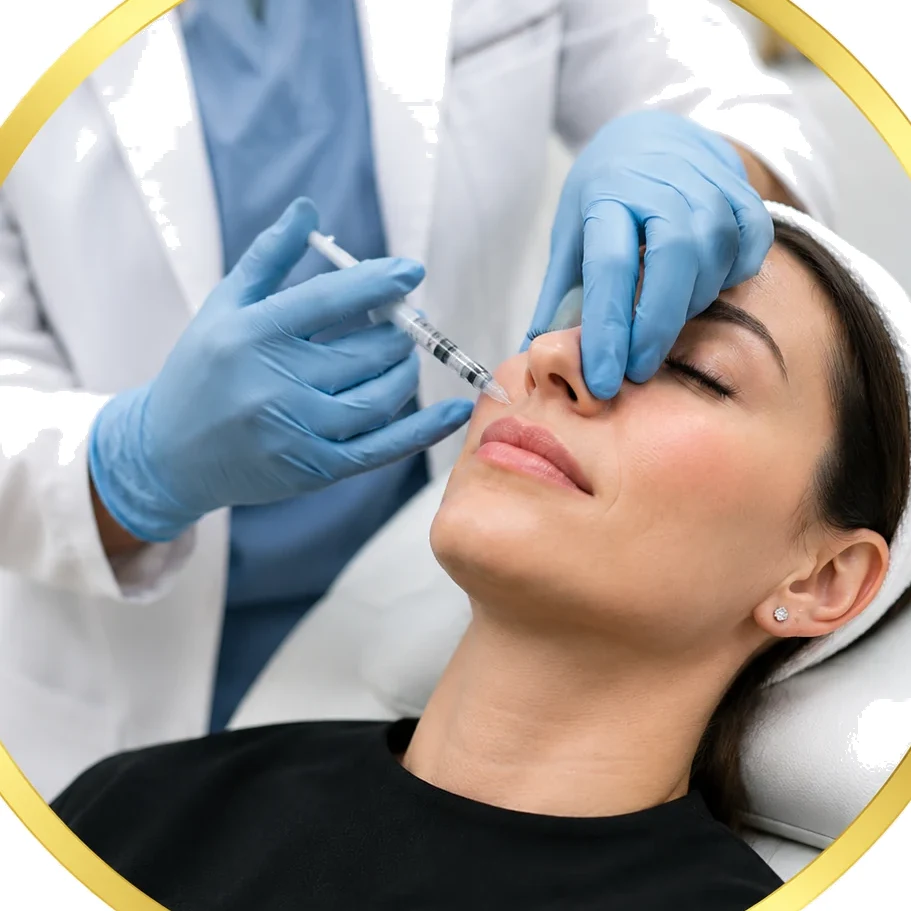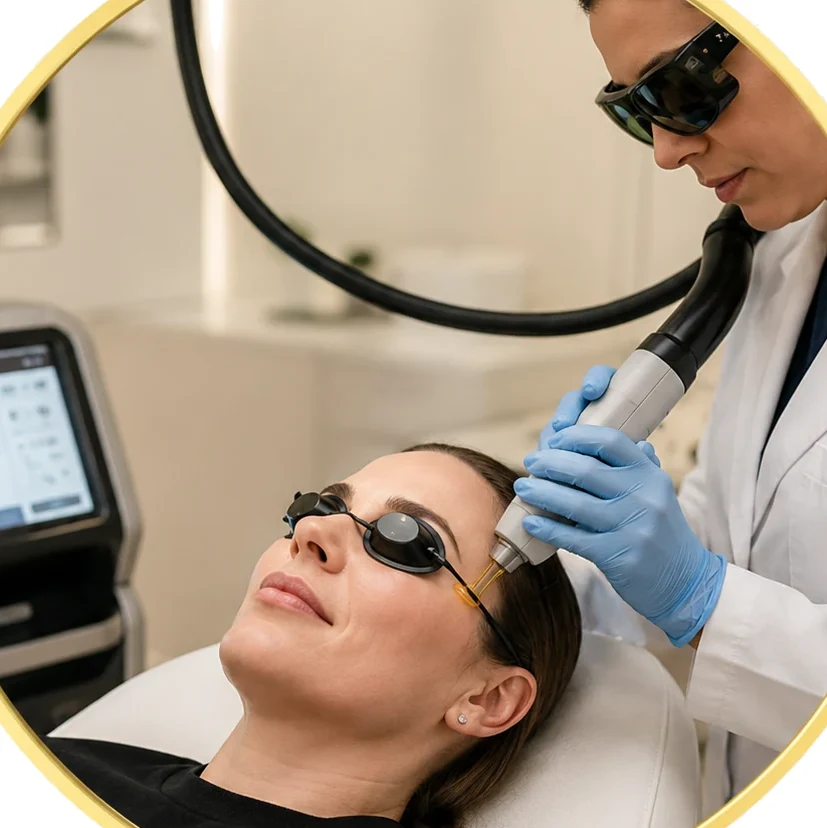

The most reliable approach to under eye rejuvenation is a personalised, medically led plan built around the specific cause of your concern. Treating dark circles with a lightening cream when the real problem is a structural hollow, for example, will not produce results. The correct therapy depends on which of the following is driving the change you see.
- Volume loss (tear trough hollowing as fat pads thin with age)
- Fat prolapse (fat pads shifting forward, creating visible bags)
- Skin laxity (thinning, crepey skin with fine lines)
- Pigmentation (melanin-related discolouration)
- Vascular or structural shadowing (visible blood vessels or shadows cast by anatomy)
Book a clinically led assessment as your first step. Everything else follows from that diagnosis.
Key takeaways
The most effective under eye rejuvenation starts with correctly identifying the cause, because volume loss, fat prolapse, skin laxity, and pigmentation each require a different clinical approach.
| Point | Details |
|---|---|
| Cause determines treatment | Hollows need filler or fat transfer; fat prolapse may need surgery; pigmentation needs peels or laser. |
| Staged plans outperform single treatments | Combining volume correction with skin quality treatment produces better, longer-lasting outcomes. |
| NHS surgery has strict criteria | Blepharoplasty is NHS-funded only where visual field impairment is formally demonstrated by testing. |
| Risks are real and manageable | Vascular occlusion from filler is rare but serious; choose a clinic with hyaluronidase on site. |
| Nexgen Clinic offers a personalised pathway | AI-assisted skin analysis and medically led consultation at Nexgen Clinic identify the right plan from the start. |
Table of Contents
- What causes under-eye ageing, and why does it matter?
- What happens at a clinical assessment for under-eye concerns?
- Which clinic treatments are available, and what does each one do?
- Which treatment is likely right for your concern?
- What should you expect during and after treatment?
- What are the risks, side effects, and contraindications?
- How much do under-eye treatments cost in the UK?
- Why choose a medically led, personalised plan at Nexgen Clinic?
- How to verify a clinic's credentials and what a good before-and-after gallery shows
- An editorial perspective on under-eye treatment
- Book your under-eye consultation at Nexgen Clinic
- Sources
- FAQ
What causes under-eye ageing, and why does it matter?
Under-eye ageing is not one condition. It is a cluster of distinct anatomical changes that happen to share the same address. The tear trough, the groove running from the inner corner of the eye towards the cheek, deepens as the fat pad beneath it thins and the overlying skin loses collagen. Separately, the orbital fat that cushions the eye can shift forward through weakened septum tissue, creating the classic puffiness associated with eye bags. Skin becomes thinner and more translucent, making the underlying muscle and vasculature more visible.
Natural ageing is the primary driver, but genetics, poor sleep, fluid retention, allergies, sun damage, and smoking all accelerate the process. Fat redistribution and tissue weakening allow puffiness to develop, while fluid can pool in the lower eyelid area overnight and persist into the day.
The distinction that matters most clinically is between structural shadowing and true pigmentation. A hollow tear trough casts a shadow that looks dark, but no amount of topical lightening will correct it because the darkness is caused by depth, not melanin. Correctly identifying this difference is essential because treatments differ entirely, and misdiagnosis is one of the most common reasons patients are disappointed by topical or cosmetic-only approaches.
Pro Tip: Try this at home: hold a torch or phone torch at a 45-degree angle to your face in a darkened room. If the dark area lightens or disappears when the light source changes, it is likely a structural shadow. If it persists regardless of lighting, pigmentation or vascularity is more probable. This simple test gives you a useful starting point before your consultation.
What happens at a clinical assessment for under-eye concerns?
A thorough consultation does more than look at your eyes. It builds a picture of your anatomy, your health, and your goals, so the clinician can recommend a plan that is both safe and genuinely effective.
What the clinician reviews
- Full medical history including any history of dry eye, previous eye surgery, thyroid disease, or bleeding disorders
- Medication and allergy check covering anticoagulants, aspirin, supplements, and any known sensitivities
- Clinical photography taken in standardised lighting and angles for accurate before-and-after comparison
- Dynamic and static examination assessing the area at rest and during facial movement to identify muscle activity, fat pad position, and skin quality
- Skin quality assessment evaluating thickness, elasticity, pigmentation, and vascular visibility
- Discussion of aesthetic goals including what the patient wants to change, what they want to preserve, and their tolerance for downtime
How clinicians distinguish the different causes
Clinicians look at the shape, depth, and colour of the under-eye area under different lighting conditions. A hollow that deepens with overhead lighting points to structural volume loss. A persistent dark discolouration that does not change with lighting or position suggests pigmentation or vascularity. A forward-projecting fat pad that is soft and mobile on gentle palpation indicates fat prolapse rather than hollowing.
Bags under the eyes are commonly caused by weakened tissues and fat redistribution, and distinguishing this from simple hollowing changes the treatment pathway significantly. Fat prolapse may require surgical correction, whereas hollowing typically responds well to filler.
When upper-lid drooping is present and affects vision, the clinician may refer to an oculoplastic surgeon and request formal visual field testing before any treatment proceeds.
What to bring to your consultation
- A list of all current medications and supplements
- Any previous treatment records or photographs
- A clear description of your main concern and what you have already tried
- Photographs of yourself from five to ten years ago if available, to help the clinician understand your baseline anatomy
Which clinic treatments are available, and what does each one do?
A range of non-surgical and surgical options exists, and combined approaches often produce better outcomes for multifactorial ageing than any single modality alone. The table below summarises the main options.
| Treatment | Main indication | Session time | Downtime | Result durability |
|---|---|---|---|---|
| Tear trough filler (hyaluronic acid) | Volume loss, hollow tear trough | 30–45 min | 3–7 days (bruising/swelling) | several months |
| Skin boosters / Profhilo | Skin quality, hydration, fine lines | 30 min | Minimal (1–2 days) | several months |
| Anti-wrinkle injections | Crow's feet, lower lid lines | around 20 minutes | Minimal | 3–4 months |
| Laser resurfacing (non-ablative) | Skin texture, pigmentation, fine lines | 30 minutes or more | 3–7 days | several months with maintenance |
| Ablative laser / fractional CO₂ | Significant skin laxity, deeper lines | around 60 minutes | about one to two weeks | up to 24 months |
| Chemical peel | Pigmentation, texture, mild laxity | 30–45 min | a few days | Variable |
| PRP (platelet-rich plasma) | Skin quality, collagen stimulation | around 45 minutes | 2–5 days | several months |
| Nanofat / fat transfer | Volume loss, skin quality | around 60 minutes | about one to two weeks | Long-lasting |
| PDO threads | Mild skin laxity, lifting | 30–45 min | 3–7 days | longer periods |
| Blepharoplasty (lower eyelid surgery) | Fat prolapse, significant skin excess | 1–2 hours | 2–4 weeks | Long-lasting |
Laser resurfacing and chemical peels primarily address skin quality — texture, fine lines, and pigmentation — rather than underlying volume loss. They are most appropriate when skin laxity or pigmentation is the dominant problem. Tear trough filler and nanofat, by contrast, address structural hollowing. Combining a volumising treatment with a skin quality treatment is a well-established staged approach for patients with multiple concerns.
Skin boosters and Profhilo work by improving hydration and stimulating collagen within the dermis, making them particularly useful for thin, crepey skin that lacks the volume loss to justify filler but needs more than a topical product can provide.
Which treatment is likely right for your concern?
The right starting point depends on your primary complaint. Here is a practical guide to the most common clinical pathways.
Hollow tear troughs or a sunken appearance — Hyaluronic acid tear trough filler is usually the first-line option. It restores volume precisely and is reversible with hyaluronidase if needed. Results typically last several months.
Prominent fat pads or persistent puffiness — Fat prolapse that does not resolve with rest or lifestyle changes usually requires either lower blepharoplasty (surgical removal or repositioning of fat) or, in milder cases, a conservative filler approach to blend the fat pad with the surrounding area. A clinician will advise which is appropriate based on the degree of prolapse.
Thin, crepey skin with fine lines — Skin boosters, Profhilo, non-ablative laser, or a series of chemical peels are the typical first-line options. These improve collagen density and hydration without adding volume. Skin tightening treatments can complement injectable approaches when laxity is moderate.
Pigmentation — True melanin-based discolouration responds to topical agents (such as vitamin C or azelaic acid), chemical peels, or targeted laser. Vascular dark circles may respond to vascular laser or, in some cases, camouflage techniques.
Mixed concerns — Most patients over 40 present with a combination of volume loss, skin laxity, and some degree of pigmentation. A staged plan, addressing the most structurally significant problem first and then the skin quality layer, consistently produces better outcomes and reduces the risk of overtreatment.
Three typical scenarios illustrate this well. A patient in their late 30s with early hollowing and good skin quality is likely to do well with tear trough filler alone. A patient in their mid-40s with hollowing plus crepey skin benefits from filler followed by a course of skin boosters three to four weeks later. A patient in their 50s with significant fat prolapse and skin excess is best assessed for surgical consultation before any injectable treatment is planned.
What should you expect during and after treatment?
Understanding the recovery timeline before you book helps you plan realistically and get the best outcome from your treatment.
Typical patient timeline
- Consultation: Assessment, photographs, personalised plan agreed, consent signed
- Treatment day: Topical anaesthetic applied 20–30 minutes before most procedures; treatment carried out; immediate aftercare instructions given
- First 48–72 hours: Swelling and bruising are normal after fillers, PRP, and laser; avoid alcohol, strenuous exercise, and heat exposure
- Days 3–7: Bruising fades; initial swelling reduces; skin may feel tight after laser or peels
- Weeks 1–2: Most non-surgical treatments settle; filler integrates; laser-treated skin resurfaces
- Full result: Fillers settle at 2–4 weeks; skin boosters show progressive improvement over 4–8 weeks; surgical results continue to refine for 3–6 months
Aftercare checklist
- Sleep with your head elevated for the first 48 hours after fillers or surgery
- Apply cold compresses gently (not directly on the skin) to reduce swelling
- Use only clinician-recommended products on treated skin for the first week
- Avoid direct sun exposure and apply SPF 50 daily from day one post-treatment
- Do not apply make-up for 24 hours after injections, or as directed after laser
- Attend all scheduled review appointments
Activities to avoid
- Heavy exercise for 24–48 hours after injectables (longer after surgery)
- Alcohol for 24–48 hours before and after treatment
- Blood-thinning medications or supplements unless medically necessary (discuss with your clinician)
- Facial massage or pressure over treated areas for two weeks after filler
| Milestone | Fillers | Skin boosters / PRP | Laser / peels | Blepharoplasty |
|---|---|---|---|---|
| Initial swelling resolves | A few days | A few days | About a week | A few weeks |
| Visible improvement | 2–4 weeks | 4–8 weeks | 4–8 weeks | several weeks |
| Full result | Several weeks | Several weeks | Several months | Several months |
| Review appointment | 2–4 weeks | 4–6 weeks | 4–6 weeks | 6 weeks |
What are the risks, side effects, and contraindications?
Every treatment carries some level of risk. Understanding these before you consent is not just good practice; it is your right as a patient.
Common side effects by treatment
- Fillers: Bruising, swelling, tenderness, temporary asymmetry; rarely, nodule formation or filler migration
- Skin boosters / PRP: Mild swelling, redness, small injection-site bumps settling within 24–48 hours
- Anti-wrinkle injections: Temporary bruising, headache, rarely lid heaviness if product migrates
- Laser / peels: Redness, peeling, temporary pigment changes; risk of post-inflammatory hyperpigmentation in darker skin tones
- Blepharoplasty: Bruising, swelling, temporary dry eye, scarring, asymmetry; rarely, visual complications
The most serious risk associated with tear trough filler is vascular occlusion, where filler inadvertently enters or compresses a blood vessel. This is rare but requires immediate management. Clinics should have hyaluronidase on site and a clear emergency protocol. Eyelid surgery carries its own surgical risks, including scarring, asymmetry, and, very rarely, visual problems.
Contraindications
- Active skin infection or inflammation in the treatment area
- Pregnancy or breastfeeding
- Certain autoimmune conditions or blood-thinning medications (discuss with your clinician)
- Unrealistic expectations or body dysmorphic disorder (a responsible clinician will identify and address this at consultation)
Red flags requiring referral
- Upper-lid drooping that affects your field of vision (refer to oculoplastic surgeon)
- Sudden changes in vision after any periorbital treatment (seek urgent medical review)
- Signs of vascular compromise after filler: blanching, pain, or vision changes (immediate clinic contact required)
Mitigation steps used by responsible clinics include test patches for chemical agents, conservative filler volumes, staged treatments rather than large single-session corrections, and immediate management protocols for adverse events.
How much do under-eye treatments cost in the UK?
Prices vary by clinic, clinician seniority, and the complexity of your case. The ranges below reflect typical private clinic pricing in the UK.
| Treatment | Typical UK price range | Frequency of repeat |
|---|---|---|
| Tear trough filler (per syringe) | £350 | Every several months |
| Skin boosters / Profhilo (per session) | £250 | 2–3 sessions initially, then several months |
| Anti-wrinkle injections (crow's feet) | £150 | Regular treatments needed |
| PRP (per session) | £250 | 3 sessions initially, then annually |
| Non-ablative laser (per session) | £200 | Course of 3–6 sessions |
| Ablative / fractional laser | £500 | Usually 1–3 sessions |
| Chemical peel (medium depth) | £100 | Course of 3–6 sessions |
| Blepharoplasty (lower eyelid, private) | Private clinics typically charge a few thousand pounds | Usually a one-off procedure |
NHS funding for blepharoplasty is limited to cases where excess eyelid skin causes demonstrable visual field impairment, confirmed by formal testing such as the Esterman binocular visual field test. Cosmetic blepharoplasty is a private procedure.
Planning your treatment timeline
- Budget for an initial consultation fee (typically £50–£150, often redeemable against treatment)
- Non-surgical treatments usually require a course of sessions for optimal results, not a single visit
- Review appointments are standard and should be included in your treatment agreement
- Aftercare products recommended by your clinician are an additional cost worth factoring in
Oral collagen supplements are sometimes used alongside clinic treatments as an adjunct for skin quality. If you are considering this, choosing the right collagen supplement is worth researching carefully, as formulations vary considerably.
Why choose a medically led, personalised plan at Nexgen Clinic?
Nexgen Clinic's approach to under-eye concerns begins with objective data, not assumptions. AI-assisted skin analysis is combined with a medically led consultation to stratify patients accurately: identifying whether the primary issue is volume, skin quality, fat prolapse, or a combination. This matters because the same dark circle can have three different causes, and the treatment plan should reflect that.
The clinic's signature programmes, the NexGen Age Reset™ and Facial Balance™, are built around staged, personalised protocols that address structural and skin quality concerns in the correct sequence. Medically trained injectors carry out all injectable treatments, and conservative dosing in the tear trough area is standard practice.
The typical Nexgen Clinic patient pathway
- AI-assisted skin analysis and medical consultation to identify the primary cause and rule out contraindications
- Personalised treatment plan agreed with the patient, including realistic timelines and expected outcomes
- Treatment delivery by a medically trained practitioner using clinically appropriate volumes and techniques
- Follow-up review to assess results, address any concerns, and plan the next stage if required
- Ongoing skin quality maintenance through skin boosters, professional-grade skincare, or further staged treatments as needed
Nexgen Clinic reports a high level of patient satisfaction, reflecting its emphasis on natural-looking results and clear communication.
How to verify a clinic's credentials and what a good before-and-after gallery shows
Before committing to any treatment, you should be able to verify the clinic's credentials and review genuine outcome evidence.
What a genuine before-and-after gallery demonstrates
- Consistent lighting and camera angle across before and after images (not flattering lighting in the after shot)
- Honest timelines stated clearly (e.g. "four weeks post-treatment", not simply "after")
- A range of patient ages, skin types, and starting points, not only ideal cases
- Realistic improvements rather than dramatic transformations that suggest heavy editing
Credentials and trust signals to check
- Clinician's GMC (General Medical Council) or NMC (Nursing and Midwifery Council) registration number, verifiable online
- Clinic insurance covering aesthetic procedures
- Clear written consent process and documented aftercare policy
- Membership of a recognised professional body such as the British College of Aesthetic Medicine (BCAM) or the Aesthetic Complications Expert (ACE) group
- Transparent pricing with no hidden fees
Clinically led consultations should include medication and allergy screening, documented informed consent, and clear aftercare instructions as a minimum standard of safe practice.
NHS blepharoplasty is only funded where visual field impairment is formally demonstrated. If a clinician suggests you may qualify on functional grounds, ask for a formal visual field test and an oculoplastic surgeon referral before proceeding. Cosmetic blepharoplasty, carried out privately, does not require this threshold but should still be performed by a qualified surgeon with appropriate training.
An editorial perspective on under-eye treatment
The under-eye area is one of the most technically demanding zones in aesthetic medicine, and it is also one of the most frequently overtreated. The temptation to fill every hollow aggressively is understandable, but the tear trough has very little tolerance for excess volume. Overfilled tear troughs produce a puffy, unnatural appearance that is often harder to correct than the original concern.
What the evidence consistently supports is a staged, conservative approach: address the dominant structural problem first, then layer in skin quality treatments once the foundation is correct. Patients who understand this from the outset, and who are guided by a clinician willing to say "not yet" or "not that treatment", tend to have the best long-term outcomes.
Informed consent is not a form to sign quickly before treatment. For under-eye work specifically, it should include a frank discussion of what the treatment cannot achieve, what the recovery looks like, and what the plan is if the result needs adjustment. That conversation, more than any single technique, is what separates a good clinic from a great one.
Book your under-eye consultation at Nexgen Clinic
Nexgen Clinic offers a medically led, AI-assisted consultation that gives you a clear diagnosis before any treatment is recommended. Rather than guessing at the cause of your under-eye concern, the clinic's assessment process identifies whether you are dealing with volume loss, fat prolapse, skin laxity, pigmentation, or a combination, and builds a plan around that finding.
The first appointment includes a full skin analysis, clinical photography, a review of your medical history, and a personalised treatment plan with realistic timelines and costs. There is no obligation to proceed on the day. Explore the full range of treatments available at Nexgen Clinic, or visit the signature packages page if you are considering a staged or combined approach. To book your consultation and take the first step towards a genuinely personalised plan, visit Nexgen Clinic.
Sources
- Bags under eyes - Symptoms and causes (Mayo Clinic)
- How to get rid of bags under your eyes (Johns Hopkins Medicine)
- Commissioning policy: Blepharoplasty (NHS Gloucestershire)
- Eyelid surgery - NHS
- Bags under eyes — American Academy of Ophthalmology
This article is general information, not a substitute for advice from a qualified doctor. Consult a qualified healthcare professional about your own circumstances before acting on anything here.
FAQ
What is the best treatment for under-eye rejuvenation?
There is no single best treatment because the correct option depends on the cause. Tear trough filler suits volume loss; blepharoplasty suits significant fat prolapse; laser or skin boosters suit skin laxity and pigmentation. A medically led consultation is the only reliable way to identify the right approach for your anatomy.
How do you rejuvenate the under-eye area effectively?
A clinician first identifies whether the concern is structural (hollowing or fat prolapse), skin-related (laxity or pigmentation), or a combination, then builds a staged plan accordingly. Combining a volumising treatment with a skin quality treatment, such as filler followed by skin boosters, often produces the most natural and lasting result.
Does under-eye rejuvenation actually work?
Yes, when the treatment is matched to the correct cause. Fillers, laser resurfacing, PRP, and blepharoplasty each have established clinical uses and produce measurable improvements. Home remedies can reduce temporary puffiness but do not resolve structural hollows or fat prolapse.
How do you rebuild collagen under the eyes?
Skin boosters, Profhilo, PRP, and non-ablative laser treatments all stimulate collagen production in the periorbital area. Results build progressively over four to twelve weeks and are typically maintained with repeat sessions every six to twelve months. Sleep quality also plays a measurable role in skin repair and collagen synthesis, making it a useful adjunct to clinical treatment.
How do I know if my dark circles are pigmentation or shadows?
Structural shadows from anatomy or fat pads respond to volume correction or surgery, not topical lightening. A simple at-home check is to observe whether the dark area changes under different lighting angles. A clinician will confirm the cause during assessment using clinical examination and photography.
Recommended
- Non-Surgical Facial Rejuvenation Cambridge
- Skin Boosters in Cambridge | NexGen Clinic
- Anti Wrinkle Treatment Cambridge | NexGen Clinic
- Jawline Filler Cambridge | NexGen Clinic
Explore related NexGen treatments
- Explore our full treatment menu
- Book a consultation with our clinicians
- Contact our Cambridge team
- Read more articles in the NexGen Journal
Ready to explore your options?
Speak with a NexGen clinician for a personalised consultation. We’ll listen, assess, and recommend the safest and most effective route — always led by evidence, always tailored to you.
Book a consultation or get in touch with our Cambridge team.