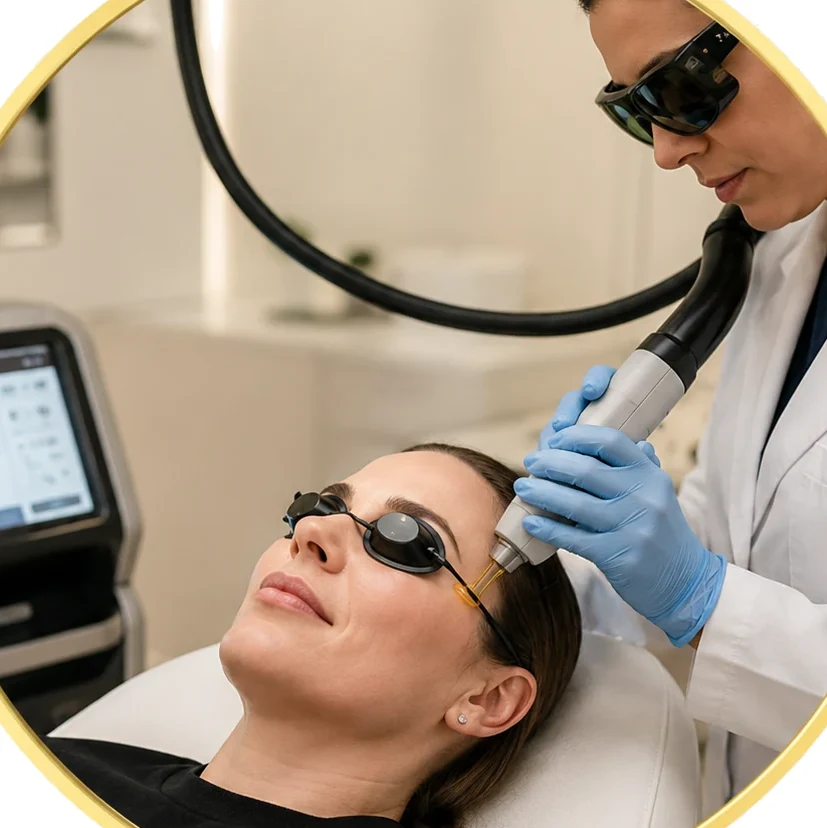
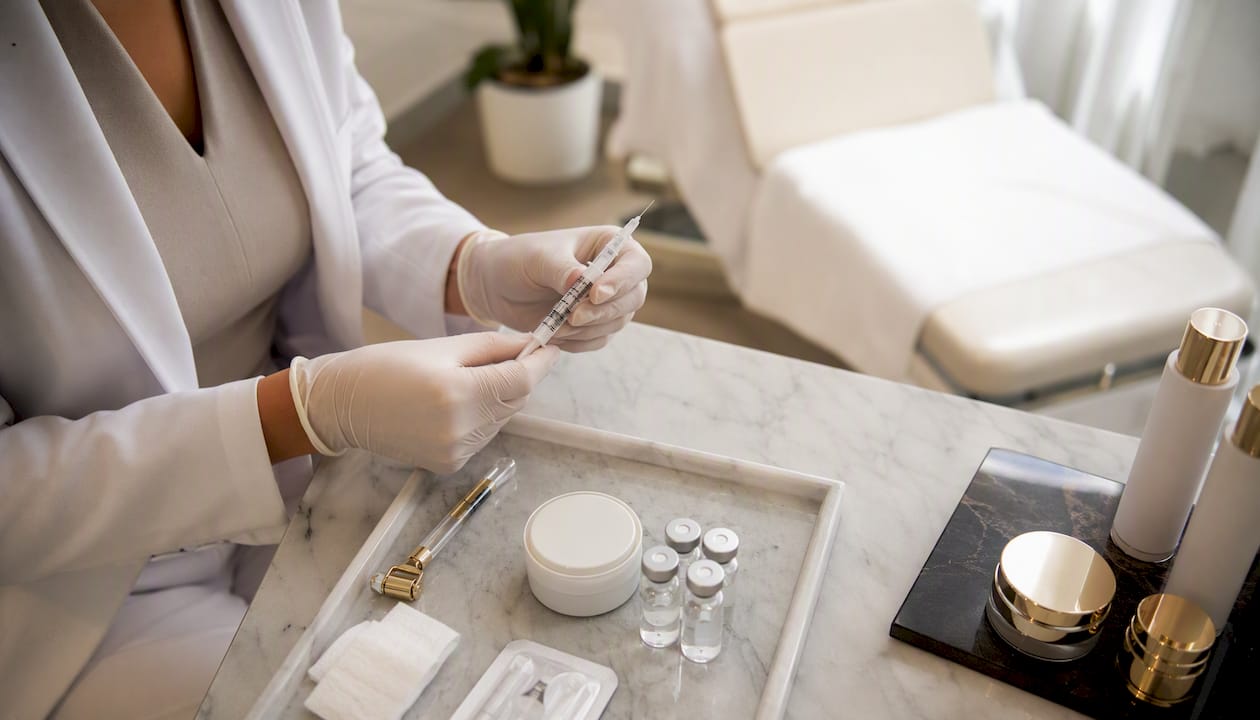
Hyaluronic acid dermal fillers, targeted anti-wrinkle injections to the depressor anguli oris (DAO) muscle, and PDO thread lifts are the most effective non-surgical approaches to marionette lines treatment available in the UK today. For mild to moderate lines, fillers offer immediate volume restoration lasting 9–18 months; DAO botulinum toxin relaxes the muscle pulling the mouth corners down, with results lasting roughly 3–4 months; and thread lifts provide a mechanical lift that stimulates collagen over 12–24 months. Surgery, specifically a lower facelift or fat grafting, is reserved for severe skin laxity where non-surgical options cannot adequately address excess skin. The right starting point for any of these is a consultation with a GMC-registered prescriber, in line with NHS guidance on cosmetic procedures.
The three most evidence-backed options at a glance:
- Hyaluronic acid fillers: best for moderate volume loss and visible creasing; immediate results, minimal downtime
- DAO anti-wrinkle injections (botulinum toxin): best for a downturned mouth caused by overactive depressor muscles; subtle lift, repeated every 3–4 months
- PDO/PLLA thread lifts: best for mild to moderate tissue laxity; combines mechanical lift with collagen stimulation over several months
Pro Tip: Start with structural mid-face or jowl support (via biostimulation or cheek filler) before placing product directly into the marionette line itself. Filling the line in isolation, without addressing the underlying volume deficit, often produces an overfilled, unnatural result.
Key takeaways
The most effective marionette lines treatment in the UK combines hyaluronic acid fillers for immediate volume, DAO anti-wrinkle injections to relax the downward-pulling muscle, and skin-quality treatments to extend and refine results.
| Point | Details |
|---|---|
| Best non-surgical options | Hyaluronic acid fillers (9–18 months), DAO injections (3–4 months), and PDO thread lifts (12–24 months) are the most evidence-backed choices. |
| Sequence matters | Address mid-face structural support before filling the line directly to avoid overfilling and achieve natural results. |
| Safety and registration | Injectables are prescription-only in the UK; always verify GMC registration and check NHS guidance before proceeding. |
| Prevention routine | Daily broad-spectrum SPF, a topical retinoid, and a stable weight are the most effective at-home measures to slow progression. |
| Nexgen Clinic approach | Nexgen Clinic offers AI-assisted assessment and staged programmes (NexGen Age Reset™, Facial Balance™) for personalised, medically led lower-face rejuvenation. |
Table of Contents
- What are marionette lines, and how do they differ from nasolabial folds?
- What causes marionette lines and when do they appear?
- What non-surgical treatments are available for marionette lines?
- When should you consider surgical options?
- How do clinicians decide which treatment is right for you?
- What should you expect from treatment: steps, downtime, and costs?
- What are the risks, and how do you stay safe in the UK?
- How can you slow the progression of marionette lines at home?
- What a medically led clinic consultation looks like at Nexgen Clinic
- Ready to book a consultation at Nexgen Clinic?
- Sources
- FAQ
What are marionette lines, and how do they differ from nasolabial folds?
Marionette lines are vertical creases that run from the corners of the mouth downward to the jaw or chin. The name comes from the hinged jaw of a marionette puppet, and the visual effect is similar: a resting expression that appears downturned or sad, even when the face is relaxed. According to NHS cosmetic procedures guidance, they are a recognised feature of facial ageing driven by loss of dermal support and volume.
Nasolabial folds sit higher on the face, angling outward from the nose. Treating nasolabial folds alone will not correct marionette lines, and vice versa. A clinician assessing the lower face will evaluate both areas together, because volume loss in the mid-face (cheeks and lateral face) contributes to the appearance of both.
What causes marionette lines and when do they appear?
The primary driver is biological: as collagen and elastin production slows with age, the skin loses its structural scaffolding. Simultaneously, soft-tissue volume in the mid-face descends, reducing the support that previously held the lower face taut. These two processes together allow the skin at the mouth corners to fold downward.
Most people notice the earliest signs in their late thirties to mid-forties, though genetics can shift this window significantly in either direction. Once visible at rest (rather than only when smiling or speaking), lines tend to deepen progressively without intervention.
Contributing risk factors include:
- Sun exposure: UV radiation degrades collagen and elastin, accelerating skin thinning; broad-spectrum SPF is the single most evidence-backed preventive measure
- Smoking: reduces skin oxygenation and collagen synthesis, and the repetitive pursing action compounds mechanical creasing
- Repetitive facial expressions: habitual downward muscle activity from the DAO muscle reinforces the crease over time
- Weight fluctuations: repeated cycles of gain and loss stretch and slacken the skin, reducing its ability to spring back
- Genetics: facial bone structure, skin thickness, and the rate of collagen decline all have a heritable component
What non-surgical treatments are available for marionette lines?
Non-surgical and minimally invasive options cover a broad range of modalities, from injectable volume replacement to energy-based skin tightening. The most effective plans typically combine two or three approaches rather than relying on a single treatment.
Hyaluronic acid dermal fillers
Fillers remain the most widely used marionette lines treatment in the UK. A hyaluronic acid gel is placed along and beneath the crease to restore lost volume and soften the line. Results are immediate, and lower-face fillers typically last 9–18 months before a top-up is needed. Because the lower face is subject to significant muscle movement and gravitational forces, this area tends to require slightly more product and more frequent maintenance than, say, the tear trough.
For a fuller picture of filler techniques and what to expect, the dermal fillers guide at Nexgen Clinic covers placement, risks, and recovery in detail. A partner resource from Rivers Edge Skin Studio also explains how dermal filler treatment works for those wanting a second technical perspective.
Pros: immediate result, reversible with hyaluronidase, minimal downtime Cons: temporary, requires repeat treatment, risk of overfilling if mid-face support is not addressed first
Anti-wrinkle injections targeting the DAO muscle
The depressor anguli oris (DAO) is the muscle responsible for pulling the corners of the mouth downward. Small doses of botulinum toxin injected into this muscle relax its activity, allowing the opposing elevator muscles to lift the mouth corners slightly. The effect is subtle but meaningful, particularly when combined with fillers. Results last approximately 3–4 months and require repeat treatment to maintain. More detail on the protocols used for lower-face anti-wrinkle work is available in the anti-wrinkle treatment guide from Nexgen Clinic.
Pros: precise, low-risk when administered correctly, complements fillers well Cons: short duration, must be administered by a registered prescriber, subtle rather than dramatic effect in isolation
Skin boosters and high-density hyaluronic acid
Skin boosters such as Profhilo and similar products are injected superficially to improve dermal hydration, elasticity, and overall skin quality rather than to add structural volume. They do not fill the marionette line directly but improve the quality of the overlying skin, making other treatments more effective and results more natural-looking. A course of two to three sessions is standard, with maintenance every six months.
Thread lifts (PDO and PLLA)
Dissolvable threads with barbs or cones are inserted beneath the skin to mechanically lift sagging tissue around the jowl and lower face. Beyond the immediate lift, the threads stimulate new collagen formation as they dissolve. Effects typically last about one to two years. This makes threads one of the longer-lasting non-surgical options. Recovery involves several days of swelling and bruising, and strenuous activity should be avoided for a week or two.
Pros: longer duration than fillers, addresses laxity rather than just volume, collagen-stimulating Cons: more downtime than fillers, technique-sensitive, not suitable for significant skin redundancy
Biostimulators (poly-L-lactic acid and calcium hydroxylapatite types)
Biostimulating injectables work by triggering the body's own collagen production over several months rather than providing immediate volume. They suit patients who want gradual, longer-lasting structural improvement and are particularly useful when repeated filler top-ups are not the preferred approach. Results build progressively and can last considerably longer than standard hyaluronic acid fillers.
Energy-based tightening: radiofrequency and HIFU
Radiofrequency (RF) and high-intensity focused ultrasound (HIFU) devices deliver controlled energy to the deeper skin layers, stimulating collagen contraction and new collagen synthesis. Neither modality fills a line directly, but both can tighten the overlying skin and improve the appearance of mild laxity. They are often used as part of a maintenance programme between injectable treatments.
Resurfacing: microneedling, laser, and chemical peels
Microneedling creates controlled micro-injuries that prompt collagen remodelling in the dermis. Laser resurfacing (fractional CO₂ or erbium) goes deeper, improving skin texture and tightening. Chemical peels address surface skin quality. None of these resurfacing approaches correct volume loss or laxity directly, but they improve skin quality and can make the overall result of a combined programme more refined.
Treatment comparison by modality:
Cost figures are typical UK estimates for guidance only. Actual pricing depends on the clinic, the clinician's experience, and the volume of product used.
On sequencing: experienced practitioners increasingly favour a multi-modality approach: begin with structural rebuilding (mid-face filler or biostimulator) to restore the foundation, add targeted DAO injections to relax the downward-pulling muscle, and then address residual skin quality with a booster or resurfacing treatment. Combining mid-face structural support with direct lower-face treatment consistently produces more balanced, natural results than filling the marionette line in isolation.
When should you consider surgical options?
Non-surgical treatments address volume loss, skin quality, and mild to moderate laxity effectively. They cannot, however, remove excess skin or correct the structural changes that come with significant jowling. Surgery becomes the appropriate conversation when non-surgical options have reached their limit.
Suitability cues for surgical assessment:
- Long-standing, heavy jowling that has not responded adequately to fillers or threads
- Marked skin redundancy along the jawline and lower face
- A patient seeking a more permanent correction rather than ongoing maintenance
- Good general health and realistic expectations about surgical recovery (typically 2–4 weeks of downtime)
Fat grafting, often performed alongside a facelift, transfers the patient's own fat to restore volume in areas where fillers would be insufficient or impractical long-term. The two approaches are complementary: surgery addresses structure and excess skin; non-surgical maintenance (skin boosters, biostimulators, SPF) preserves the result over time.
How do clinicians decide which treatment is right for you?
A thorough consultation is the foundation of safe, effective treatment. A well-structured assessment covers far more than simply looking at the lines themselves.
What a clinician should assess:
- Full medical and aesthetic history, including prior treatments, allergies, and any prescription medicines
- Photographic analysis at rest and during movement (smiling, speaking) to understand the dynamic contribution of muscle activity
- Skin quality assessment: thickness, laxity, hydration, and surface texture
- Degree of mid-face volume loss and its contribution to the lower-face appearance
- Patient expectations: improvement versus erasure, maintenance commitment, budget
Questions you should ask your clinician:
- Are you GMC-registered or on the relevant professional register for prescribing injectables?
- How much experience do you have specifically with lower-face and jowl treatments?
- What is your emergency protocol if I experience a complication such as vascular occlusion?
- What realistic improvement can I expect, and what will it not correct?
- What is the full cost, including any follow-up or top-up appointments?
- What aftercare support do you provide, and how do I contact you if I have concerns?
Red flags to watch for:
- No requirement for a consultation before treatment
- Heavily discounted "deals" on high volumes of filler
- No written consent process or aftercare information
- Clinician unable to confirm their registration or prescribing authority
- Pressure to book immediately or to purchase more product than discussed
The NHS advises patients to carefully consider who will perform any cosmetic procedure, to verify qualifications, and to confirm that aftercare is clearly explained before proceeding.
What should you expect from treatment: steps, downtime, and costs?
Understanding the patient journey before you book reduces anxiety and helps you plan practically around recovery.
Timeline by treatment:
Downtime after fillers is typically minimal: most patients return to light activity the same day, with mild swelling or bruising resolving within a few days. Thread lifts involve several days of more noticeable swelling, and surgical facelifts require 2–4 weeks before most social activities are comfortable.
First 72 hours after injectable treatment:
- Avoid touching or pressing the treated area
- Sleep with your head slightly elevated to reduce swelling
- Skip strenuous exercise, saunas, and alcohol for 24–48 hours
- Apply a cold compress gently if bruising appears (never ice directly on skin)
- Contact your clinician immediately if you notice blanching, severe pain, or any vision changes
What are the risks, and how do you stay safe in the UK?
Most side effects from non-surgical marionette lines treatment are mild and temporary. Knowing what is normal and what requires urgent attention is important.
Common, expected side effects:
- Swelling and bruising at injection sites (resolves within days for fillers, up to a week for threads)
- Temporary asymmetry as swelling settles
- Mild tenderness or firmness at the treatment site
- Small lumps that resolve as product integrates (usually within 1–2 weeks)
Less common but serious complications:
- Vascular occlusion: filler inadvertently injected into or compressing a blood vessel, potentially causing tissue damage. Requires immediate clinical intervention with hyaluronidase.
- Infection: rare but possible; presents as increasing redness, warmth, or discharge beyond the first 48 hours
- Nerve injury: uncommon with experienced practitioners; presents as altered sensation
UK regulatory context: dermal fillers and anti-wrinkle injections are prescription-only medicines in the UK and must be administered by or under the supervision of a registered medical prescriber. You can verify a clinician's registration on the GMC register at gmcuk.org. The MHRA oversees the licensing of injectable medicines; the NHS provides guidance on how to check credentials and what questions to ask before any cosmetic procedure.
How can you slow the progression of marionette lines at home?
No topical product reverses established marionette lines, but a consistent daily routine meaningfully slows their progression and extends the results of clinical treatments.
Daily skincare priorities:
- Broad-spectrum SPF 30–50: apply every morning; reapply if outdoors for extended periods
- Topical retinoid: retinol (over-the-counter) or prescription tretinoin stimulates collagen synthesis and accelerates cell turnover; start low and build gradually to avoid irritation
- Moisturiser with ceramides or hyaluronic acid: maintains the skin barrier and reduces transepidermal water loss, keeping skin plumper and more resilient
- Antioxidant serum (vitamin C): neutralises free radical damage from UV and pollution; apply in the morning before SPF
Lifestyle measures:
- Stop smoking: the collagen-degrading and vascular effects of smoking accelerate ageing more than almost any other modifiable factor
- Maintain a stable weight: repeated fluctuations stretch and slacken the lower-face skin over time
- Sleep on your back where possible: side sleeping creates repeated mechanical pressure on the lower face
- Protect from sun year-round: UV exposure is cumulative, and winter sun at altitude or through car windows still degrades collagen
Pro Tip: Incorporating regular skin-quality treatments, such as skin boosters or in-clinic collagen stimulation, between your procedural appointments helps maintain dermal hydration and elasticity, making your filler or thread results last longer and look more natural.
What a medically led clinic consultation looks like at Nexgen Clinic
A well-structured clinic consultation is not simply a product-selection appointment. At Nexgen Clinic, the process begins with AI-assisted skin analysis that maps individual ageing patterns before any treatment is discussed. This technology-led assessment informs a personalised plan rather than a one-size-fits-all recommendation.
What Nexgen Clinic offers for lower-face rejuvenation:
- AI-driven skin analysis to identify the specific drivers of your marionette lines (volume loss, laxity, skin quality, or muscle activity)
- Hyaluronic acid dermal fillers for immediate volume restoration and crease softening
- Skin boosters and biostimulators for gradual collagen rebuilding and skin quality improvement
- PDO thread lifts for patients with mild to moderate laxity seeking longer-lasting lift
- Anti-wrinkle injections for DAO muscle relaxation, administered by registered prescribers
- Bespoke programmes including the NexGen Age Reset™ and Facial Balance™, which stage treatments in a logical sequence for natural, cumulative improvement
- Photographic analysis and staged consent, with clear follow-up and aftercare support
The signature treatment programmes at Nexgen Clinic are designed specifically for patients who want a coordinated plan rather than isolated appointments. Every treatment is administered by a clinician with the appropriate prescribing authority, in line with UK regulatory requirements.
The case for patience and staged care
The patients who are most satisfied with their results are rarely those who sought the most dramatic change in a single session. Most people want improvement: a rested appearance, a softened crease, a mouth corner that no longer pulls downward at rest. That is an achievable goal with the right combination of treatments, delivered in the right sequence.
What matters most is choosing a clinician who assesses the whole face, explains the reasoning behind each recommendation, and sets expectations that are honest rather than optimistic. Maintenance is a normal part of non-surgical care, not a sign that treatment has failed. A staged approach, beginning with structural support and building in skin quality over time, consistently produces results that look natural because they work with the face rather than against it.
Ready to book a consultation at Nexgen Clinic?
Nexgen Clinic offers medically led, AI-assisted consultations for patients across Cambridge and beyond who want a clear, personalised plan for lower-face rejuvenation. Rather than a single-product appointment, you receive a full facial assessment, photographic analysis, and a staged treatment plan built around your specific anatomy and goals.
Treatments available include hyaluronic acid fillers, skin boosters, PDO thread lifts, biostimulators, and DAO anti-wrinkle injections, all administered by GMC-registered prescribers. The NexGen Age Reset™ and Facial Balance™ programmes are designed for patients who want a coordinated, multi-modality approach rather than piecemeal appointments.
To book or enquire, visit the Nexgen Clinic treatments page or the main clinic page for full service details. Before booking anywhere, check your clinician's GMC registration and confirm that a written consent and aftercare policy is in place.
Sources
The following UK-focused resources provide regulatory guidance and clinical background for patients researching marionette lines and facial ageing treatments.
- NHS — Advice about cosmetic procedures
- Mouth to chin wrinkles treatment: the ultimate guide to restoring lower face volume — Metapress
- Marionette lines: complete UK treatment guide — Salon Searcher
- How to treat marionette lines: causes & options — Ancabreahna blog
To verify a clinician's registration, use the GMC register at gmcuk.org. For device and medicine oversight, refer to the MHRA at gov.uk/government/organisations/medicines-and-healthcare-products-regulatory-agency.
FAQ
What is the best procedure for getting rid of marionette lines?
Hyaluronic acid dermal fillers combined with DAO anti-wrinkle injections are the most effective non-surgical approach for most patients, with fillers lasting 9–18 months and DAO injections requiring repeat treatment every 3–4 months. For moderate laxity, adding a PDO thread lift to the programme extends results to 12–24 months.
Can you lift marionette lines without fillers?
Yes. PDO thread lifts, biostimulating injectables, radiofrequency tightening, and HIFU all address laxity and skin quality without placing hyaluronic acid filler directly into the crease. DAO anti-wrinkle injections also reduce the downward muscle pull without filler.
What do celebrities typically do for marionette lines?
Publicly available information suggests that a combination of dermal fillers, anti-wrinkle injections, and skin-quality treatments is the most common non-surgical approach, often alongside regular skin booster courses and, in some cases, surgical lower facelifts for longer-lasting correction.
What is the best marionette lines treatment in 2026?
A staged, multi-modality plan remains the clinical preference: structural support via mid-face filler or biostimulator first, followed by targeted DAO injections and a skin-quality treatment such as a skin booster or microneedling. Nexgen Clinic's AI-assisted consultation process is designed to map exactly this kind of personalised programme based on your individual facial anatomy.
Are marionette line treatments safe in the UK?
When administered by a GMC-registered prescriber in a regulated clinical setting, non-surgical treatments carry a well-understood and manageable risk profile. Serious complications such as vascular occlusion are rare but require immediate clinical attention; always confirm your clinician's registration and ensure a clear aftercare policy is in place before proceeding.
This article provides general information only and is not a substitute for professional medical advice. Always consult a qualified, GMC-registered clinician before undergoing any cosmetic procedure, and verify current guidance with the NHS or MHRA.
Recommended
- Precision Treatments | NexGen Clinics
- Botox Near Me Cambridge - Expert Aesthetic Treatments
- Expert Guide to Dermal Fillers in Cambridge
- Beauty and Makeup Monaco: Trends and Treatments
Explore related NexGen treatments
- Explore our full treatment menu
- Book a consultation with our clinicians
- Contact our Cambridge team
- Read more articles in the NexGen Journal
Ready to explore your options?
Speak with a NexGen clinician for a personalised consultation. We’ll listen, assess, and recommend the safest and most effective route — always led by evidence, always tailored to you.
Book a consultation or get in touch with our Cambridge team.