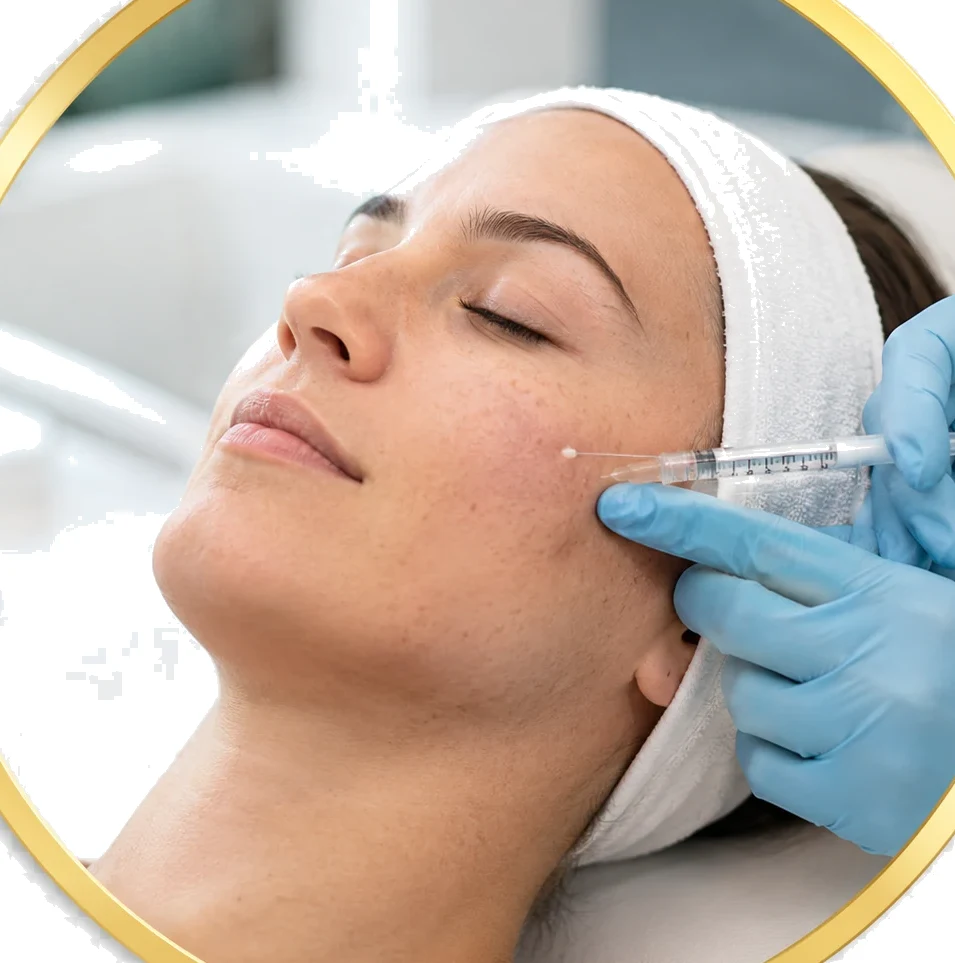

Polynucleotides are injectable skin-quality treatments that are studied for calming facial redness and supporting a weakened skin barrier, two things rosacea-prone skin often struggles with. A typical course is three sessions a few weeks apart, aimed at the cheeks, and it starts with an individual assessment of your skin. At NEXGEN Clinic in Cambridge, polynucleotides start from £180 per session, and each treatment begins with a consultation about your skin health and goals.
This guide explains what the research says, how a course works, what you will see afterwards, what it costs and who should speak to their GP first.
TL;DR
- Polynucleotides are being used for redness linked to rosacea and similar inflammatory conditions, with the strongest support so far coming from clinician surveys and small clinical reports.
- They are designed to support hydration, barrier repair and calmer skin rather than to act as a rosacea treatment.
- A common protocol is three sessions at roughly three-week intervals, with results building over weeks and lasting several months.
- Expect small bumps for a few hours to a couple of days, and redness for one to three days.
- Rosacea should be diagnosed by your GP or a dermatologist first. At NEXGEN, polynucleotides start from £180 per session.
Table of Contents
- What rosacea does to the skin
- What polynucleotides are
- What the evidence says about polynucleotides and rosacea
- How polynucleotides may support rosacea-prone skin
- Start with a diagnosis
- What a course looks like
- When will you see results?
- Side effects, bumps and downtime
- Who should avoid polynucleotides
- How much do polynucleotides cost in the UK?
- Polynucleotides compared with other options for redness
- Our perspective
- Book polynucleotides in Cambridge
- FAQ
- Sources
What rosacea does to the skin
Rosacea is a long-term inflammatory skin condition that mainly affects the central face. Persistent redness, flushing, visible small blood vessels and sometimes spots are the usual signs. The skin is often sensitive, stings with products that other people tolerate and feels tight or dry.
The barrier is a large part of that picture. A 2026 expert opinion article explains that rosacea skin shows higher transepidermal water loss, lower lipid content and less hydration than healthy skin. When the barrier loses water easily, the skin becomes more reactive, which feeds the cycle of redness and discomfort.
Considering treatment? Explore our Polynucleotide treatment in Cambridge — consultation-led regenerative care from our registered medical team at NexGen Clinic.
This is why polynucleotides attract interest. They are not a vascular treatment that closes vessels. They are a regenerative, hydrating injectable, and the question is whether better barrier function and lower inflammation translate into calmer-looking skin.
What polynucleotides are
Polynucleotides (PNs) are chains of DNA fragments, usually purified from fish sources, that are injected into the skin in small amounts. They bind water, and they are thought to signal skin cells to repair themselves and to calm inflammation. The same ingredient family is often written as PDRN (polydeoxyribonucleotide).
In the UK and Europe, polynucleotide products are classified as CE-marked medical devices, and the same source notes they are not available in the United States. In the UK they are administered by trained practitioners as an in-clinic treatment.
They differ from a traditional dermal filler. A filler adds volume or structure. Polynucleotides are used to improve skin quality: hydration, texture, elasticity and resilience. If you are comparing them with other skin boosters, our Profhilo treatment works differently, spreading hyaluronic acid through the tissue to improve hydration and skin quality, and an assessment helps decide which suits your skin.
What the evidence says about polynucleotides and rosacea
The research is growing, and it points in a consistent direction. Here is what each piece actually shows.
Clinician experience
A 2023 survey of 557 physicians found that 84.4% used PNs for erythema caused by inflammatory facial dermatosis, and 88.1% of those users rated them effective or highly effective. Respondents agreed PNs have wound-healing and regenerative properties (95.8%), protect the skin barrier (92.2%), hydrate (90.5%), stabilise blood vessels (81.0%) and have anti-inflammatory effects (79.5%).
The 2026 expert opinion article reports that about 25% of surveyed dermatologists named rosacea as an indication that could benefit from PN treatment, and identifies barrier repair in rosacea and eczema as a key clinical application.
Clinical reports
A 2024 clinical letter described two patients who had three sessions of intradermal injections containing polynucleotides with hyaluronic acid. Their erythema scores improved from 3 to 1 in one case and from 4 to 1 in the other over eight weeks, and satisfaction scores rose. The authors link this to the anti-inflammatory properties of polynucleotides and their role in DNA synthesis, and they call for controlled trials. Two patients is a small sample, so it is best read as an encouraging early signal.
The mechanism
A narrative review in the Journal of Cosmetic and Aesthetic Surgery explains that PDRN helps restore a damaged skin barrier through genes such as filaggrin and through immune signalling, which is why it is considered helpful for sensitive skin. In a preclinical model described in the 2026 article, a combination of PNs and hyaluronic acid significantly reduced water loss and inflammation while increasing filaggrin levels.
The UK picture
A 2025 systematic review of licensed injectable bio-revitalisers in the UK covered 26 studies involving 2,450 patients. Polynucleotide-based therapies showed sustained results for up to six months, minimal adverse effects and improved firmness of 18 to 22%. The review recommends national guidelines, registries and training on appropriate use, which is a sensible direction for the field and a reason to choose a clinician who works to clear protocols.
How doctors use them in practice
The 2023 survey also found that most respondents combined PNs with lesion-targeting devices, ranging from 31.5% for atopic dermatitis to 48.3% for rosacea, or with regenerative devices. In other words, polynucleotides are commonly part of a wider plan rather than a single step.
If you are also curious about lifestyle factors, rosacea diet triggers are worth reading about, since personal triggers vary and reports are not proof for everyone.
How polynucleotides may support rosacea-prone skin
Three effects explain the interest.
- Hydration and moisture retention. PNs have hydrophilic properties that support barrier recovery by improving moisture retention. Better hydration can make skin feel less tight and reactive.
- Calmer inflammation. Anti-inflammatory signalling is the property clinicians rate most consistently when they use PNs for redness.
- Tissue quality. Over a course, skin often looks smoother and more even, which many people notice as a general glow.
At home, a gentle routine matters as well. Ingredients such as niacinamide for rosacea-prone skin are widely discussed for redness and barrier support, and a simple routine with daily sun protection sits well alongside injectable skin treatment.
Start with a diagnosis
Rosacea has several forms and can look like other conditions. Before any aesthetic treatment, speak to your GP or a dermatologist if you have not had a diagnosis, or if your skin is flaring, burning or producing pustules.
NICE guidance for clinicians sets out the medical routes. For persistent redness, topical brimonidine 0.5% gel once daily may be offered for temporary relief. For mild to moderate papules and pustules, topical ivermectin is recommended, with metronidazole or azelaic acid as alternatives. For moderate to severe disease, a topical is combined with oral doxycycline. The same guidance says electrodessication, intense pulsed light or pulsed dye or Nd:YAG laser may be considered for persistent redness and visible vessels.
Local NHS guidance advises referral to dermatology for flushing, persistent redness, visible vessels or phymatous rosacea that has not responded to first-line treatment or is causing psychological or social distress. It also notes MHRA warnings on brimonidine gel concerning cardiovascular effects and possible worsening of rosacea, which is worth discussing with your prescriber.
Tell us about any prescribed treatment, including oral antibiotics or isotretinoin, at your consultation. If your rosacea is in an active flare, with open spots or broken skin, treatment is normally timed for when the skin is settled, and your practitioner will advise on that after assessing you.
What a course looks like
Protocols vary by product and by person, and your practitioner will set yours. For reference, the 2026 expert article describes this approach for rosacea:
- Intradermal injections using a fine 34G, 4 mm needle, with small amounts of 0.02 to 0.04 mL per site, spaced 3 to 5 mm apart.
- Around 2 mL per session, with a blunt cannula of 25G or 27G sometimes considered for deeper placement.
- Treatment typically focused on the cheeks, with three sessions at three-week intervals.
Other sources describe 3 to 4 sessions two to three weeks apart, with results lasting 6 to 12 months. That fits the general pattern: a short loading course, then maintenance timed to how your skin behaves.
Your appointment, step by step
- Consultation. We look at your skin health, your facial features, your concerns and your long-term goals. Nothing is booked in on the day you ask unless it is right for you.
- Preparation. Your skin is cleansed and prepared. You will be told what to avoid beforehand, such as strong active products on the day.
- Treatment. Tiny injections are placed across the area. Sensations vary, and most people describe pricking and mild pressure.
- Aftercare advice. You leave with clear instructions and a plan for your next session.
At NEXGEN Clinic, every treatment begins with an individual assessment, and we give honest recommendations rather than adding treatments you do not need. Book a consultation to talk through your skin.
When will you see results?
Polynucleotides are gradual. Skin hydration often feels better first, and redness and tone tend to settle over the weeks of a course rather than overnight. In the 2024 clinical letter, the improvement was assessed over eight weeks across three sessions. The 2025 UK review reports sustained effects for up to six months, and other sources describe six to twelve months depending on the person and the protocol.
Smoking, strong sun exposure, an unchanged skincare routine and individual rosacea triggers all influence how long benefit lasts. Your practitioner will agree a maintenance rhythm based on how your skin responds.
Side effects, bumps and downtime
The safety record in the literature is reassuring. The 2026 expert article reports a favourable profile, with no reported cases of granuloma or vascular occlusion in the literature to date, and describes PNs as biocompatible and tolerable, particularly for sensitive or barrier-compromised skin. In the physician survey, 96.6% said they had rarely seen adverse reactions, and most were mild local injection reactions. A 2024 systematic review of nine studies and 219 patients found no severe adverse events, with side effects generally mild and transient, usually resolving within a week.
How long do the bumps last?
Small bumps at the injection sites are normal. The narrative review notes that a few bumps may be present for a few hours to a day or two. Redness and swelling typically last one to three days after intradermal injections, and bruising, when it occurs, usually clears within a week.
Aftercare
- Avoid sun lamps and direct sunlight for 48 hours, as recommended in a consensus statement cited in the same review. Wear SPF afterwards, which suits rosacea in any case.
- Keep your routine simple and fragrance-free for the first few days.
- Avoid heat triggers such as saunas, hot yoga and very hot showers while the skin settles, since heat is a common rosacea trigger.
- Do not massage or pick at the area.
Contact your practitioner if swelling, pain or colour change is increasing rather than settling, and seek urgent medical help if you notice severe pain, blanching of the skin or changes to your vision.
Who should avoid polynucleotides
Tell your practitioner before treatment if any of these apply, as treatment may need to be delayed or may not be suitable:
- You are pregnant or breastfeeding.
- You have an active skin infection, a cold sore or an open flare at the treatment site.
- You have a known allergy to fish-derived products or to any ingredient in the product.
- You have an autoimmune condition or take medicines that affect healing or clotting.
- You are unwell with a fever.
Because assessment is part of every NEXGEN treatment, you will go through your medical history before anything is injected.
How much do polynucleotides cost in the UK?
UK pricing is commonly quoted at £200 to £400 per session for treatments of this type. At NEXGEN Clinic, polynucleotides start from £180 per session. With a typical course of three sessions, the total depends on the number of sessions your practitioner recommends and the areas treated, so the consultation is where you get a plan that is specific to you.
Prices on our site were last read in 2026 and the treatments page holds the current figures.
Polynucleotides compared with other options for redness
| Option | What it mainly does | Typical use |
|---|---|---|
| Polynucleotides | Hydration, barrier support, calmer-looking skin | Course of sessions, cheeks and full face |
| Skin boosters such as Profhilo | Deep hydration and skin quality | Short course, then maintenance |
| Prescription topicals | Reduce redness or spots (prescribed) | Daily, ongoing, via GP or dermatologist |
| Vascular laser or IPL | Target visible vessels and persistent redness | Course, clinical assessment needed |
The options are not either-or. The 2023 survey shows doctors often combine polynucleotides with other devices, and an assessment can place each in the right order for your skin.
Our perspective
When someone with rosacea-prone skin comes to us, the first thing we look at is how the skin behaves, not which product is trending. Redness, sensitivity and dehydration often travel together, and a treatment that improves hydration and barrier function can make a visible difference to how comfortable and even the skin looks.
That is why we value polynucleotides within a consultation-led plan. Over more than 15 years in aesthetics, our approach has been to combine established techniques with regenerative treatments, and to be honest about what is right for each person. For some clients that is a short course of polynucleotides. For others it is a skin booster, a facial, or a different sequence entirely.
Our aim is natural-looking, healthy skin that you feel confident in, without unnecessary treatments.
Ms Sandra Petraskaite
Book polynucleotides in Cambridge
NEXGEN Clinic offers polynucleotides from £180 per session, delivered after an individual assessment that looks at your skin condition, facial harmony and goals. If you are unsure whether polynucleotides, Profhilo or another skin treatment suits you, the consultation is the place to decide.
See polynucleotide treatment at NEXGEN Clinic or browse all our treatments to plan your course.
FAQ
Can polynucleotides help with rosacea?
No. Rosacea is a long-term condition and polynucleotides are not a treatment. They are used to support hydration and barrier function and to calm the look of redness, alongside the care your GP or dermatologist recommends.
Are polynucleotides safe if I have rosacea?
The literature describes polynucleotides as biocompatible and well tolerated, including in sensitive or barrier-compromised skin, with mostly mild and short-lived local reactions. Your suitability depends on your medical history and the state of your skin, which we review at consultation.
How long do polynucleotide bumps last?
Small bumps usually last from a few hours to a day or two. Redness and mild swelling commonly settle within one to three days, and any bruising usually clears within a week.
How many sessions will I need?
A common protocol is three sessions about three weeks apart, and some protocols use three to four sessions two to three weeks apart. Your practitioner sets the exact number after assessing your skin.
How much do polynucleotides cost in the UK?
Quoted UK prices are often between £200 and £400 per session. At NEXGEN Clinic, polynucleotides start from £180 per session, and your course total depends on the plan agreed at consultation.
Sources
- Expert Perspectives: Evidence-Based Applications of Polynucleotides (Dove Press, 2026)
- Current practices and perceived effectiveness of polynucleotides (PMC, 2023)
- Clinical effects of polynucleotide with hyaluronic acid (PMC, 2024)
- Polynucleotides and polydeoxyribonucleotides in dermatology: a narrative review
- Efficacy and safety of injectable bio-revitalizers: UK systematic review (2025)
- The Effectiveness of Polynucleotides in Esthetic Medicine (PMC)
- NICE CKS: Rosacea management
- Rosacea guideline (Nottinghamshire APC, 2025)
- Polynucleotides for skin rejuvenation (AestheticMedGuide, 2026)
- 5% niacinamide for rosacea-prone skin
- Rosacea diet triggers
Explore related NexGen treatments
- Explore our full treatment menu
- Book a consultation with our clinicians
- Contact our Cambridge team
- Read more articles in the NexGen Journal
Ready to explore your options?
Speak with a NexGen clinician for a personalised consultation. We’ll listen, assess, and recommend the safest and most effective route — always led by evidence, always tailored to you.
Book a consultation or get in touch with our Cambridge team.