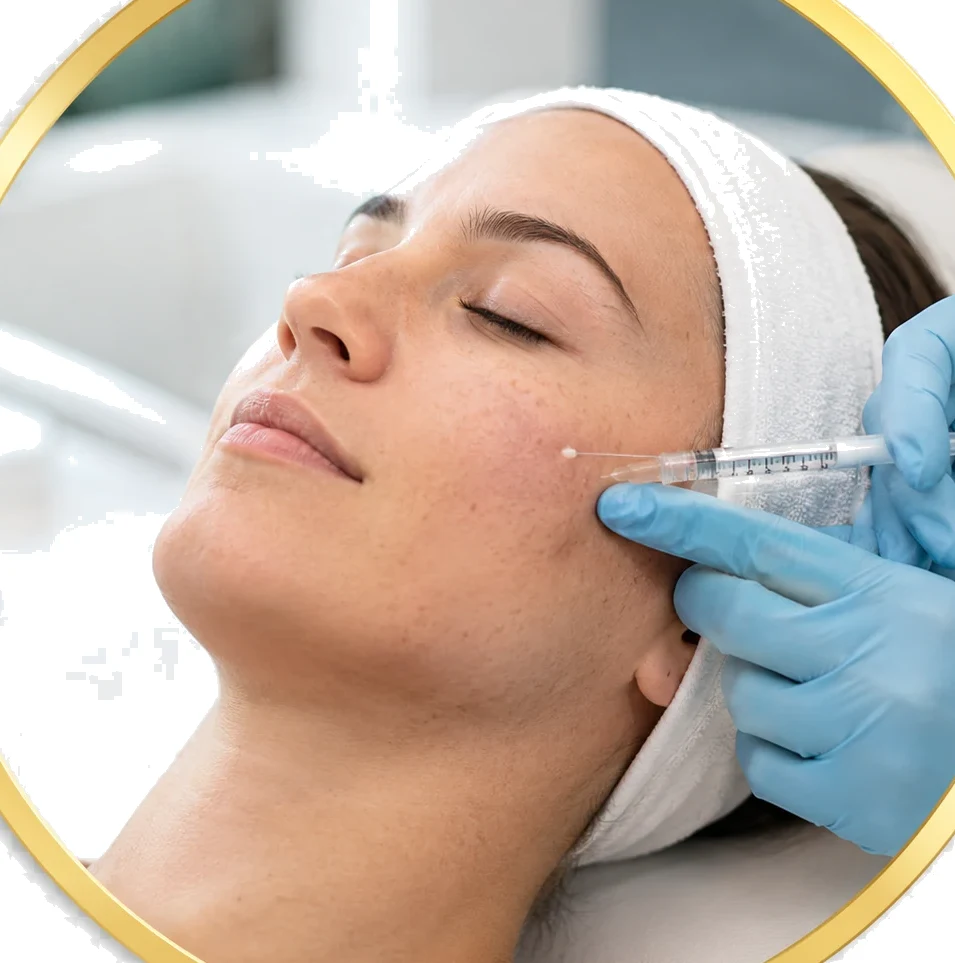

Skin boosters work gradually. Most people feel their skin is more hydrated within one to two weeks, and the clearer improvement in texture and glow builds over about four weeks. Results from a course of sessions typically last around six months, sometimes longer, and downtime is usually a few days of mild redness or small bumps. Below, we explain what to expect at each stage, what changes the outcome and how to judge whether the treatment has worked for you.
TL;DR
- Skin boosters are not instant. Expect a subtle first change in hydration, then a fuller result over several weeks.
- A course of 2 to 3 sessions, a few weeks apart, is the usual starting point, followed by maintenance.
- Studies report effects averaging around 6 months after three sessions, with some products reported for longer. Individual results vary.
- Downtime is minimal. Mild redness, swelling, small bumps or bruising settle within a few days.
- Your skin condition, product choice and aftercare all affect the result. A consultation is where this is assessed.
Table of Contents
- What skin boosters are designed to do
- Skin booster results: a realistic timeline
- What skin booster before and after photos can and cannot show
- How long do skin booster results last?
- How many sessions do you need?
- Skin booster downtime and recovery time
- Aftercare that protects your result
- Who tends to see the best results
- Profhilo, polynucleotides and other boosters
- How to judge whether your skin booster worked
- Our perspective
- Book a skin booster consultation in Cambridge
- FAQ
- Sources
What skin boosters are designed to do
Skin boosters are injectable treatments placed in the skin itself, rather than under it as a filler would be. Their aim is to improve hydration, smoothness and overall skin quality, not to add volume or change the shape of your face. An expert panel reviewing stabilised hyaluronic acid products agreed that they are designed to improve skin texture and maintain skin quality through hydration and collagen stimulation.
That difference explains why the results look the way they do. You are unlikely to see a visible "change" in your features. What people notice is skin that looks fresher, feels softer and reflects light more evenly. If you are curious how hydration and collagen relate to each other, this explanation of hyaluronic acid and collagen working together gives useful background.
Considering treatment? Explore our Skin Boosters in Cambridge treatment — consultation-led care from our registered medical team at NexGen Clinic.
For a fuller introduction to the treatment itself, see our guide on what skin boosters are.
Skin booster results: a realistic timeline
Exact timing depends on the product, your skin and the area treated. The pattern below is the one we describe to clients at consultation.
| Stage | What you may notice |
|---|---|
| First 24 hours | Redness, small raised bumps at injection points, a slightly tight feeling |
| 24 to 48 hours | Bumps flatten and skin settles |
| 2 to 5 days | Skin looks as normal, with a possible early softness |
| 1 to 2 weeks | Skin feels more hydrated and looks fresher |
| 3 to 4 weeks | Smoother texture, more even glow, fine lines softer |
| After a full course | The most consistent result, which you and your practitioner review together |
The first few days
Immediately after treatment, patients may notice subtle improvements in hydration and radiance, but this is not the final result. Tiny bumps where the product was placed can make skin look slightly uneven for a day or two. This is normal and not a sign the treatment has failed. Please do not judge the outcome at this point, and avoid photographs taken in the first 48 hours as a comparison.
One to two weeks
This is when many people say their skin feels different: less tight, more supple, and make-up sitting better. The improvement is often described as a "healthy" look rather than a visibly treated one, which suits clients who want natural results.
Three to four weeks and beyond
Over the following weeks, as collagen production is stimulated, fine lines and skin texture can become increasingly improved. Four weeks is the sensible point for a first review. If you are having a course, your second session is usually booked around then, so we can look at how your skin has responded before the next one.
What skin booster before and after photos can and cannot show
Before and after images are the most searched part of this topic, and they deserve some caution. Skin quality changes are subtle, and lighting, camera angle, make-up and even how hydrated you were that day can alter how skin appears. A fair comparison uses the same light, the same angle, no make-up and the same time of day.
When you look at any clinic's images, check for these things:
- Are the before and after photos taken in the same lighting and position?
- Is the time since treatment stated?
- Does the image show a single session or a full course?
- Is the skin type similar to yours?
It is also worth knowing how the evidence stands. A 2026 evidence review concluded that the research supports hydration and modest improvements in elasticity, while noting that trials are often small and manufacturer-supported. In practice, that means good results are realistic when expectations are set honestly: better hydration, smoother-looking skin and a more refreshed appearance, not a dramatic transformation.
How long do skin booster results last?
Most people can expect results lasting several months, with six months a common figure. An overview of injectable skin boosters reports effects averaging about 6 months after three hyaluronic acid sessions, and a European consensus on polynucleotides cited in the same paper reports 6 to 12 months after three sessions spaced three weeks apart. Some clinical studies summarised by Dermatology UK suggest effects can last up to 15 months, though they stress that results vary by individual.
The practical message is that longevity is a range, not a promise. Skin boosters do not stop working on a particular day. The glow and hydration fade gradually, and most people choose to repeat treatment when they notice their skin returning to how it looked before.
What affects how long results last
- The product. Hyaluronic acid boosters, Profhilo-style products and polynucleotides work differently, so their timelines differ.
- Number of sessions. A completed initial course generally gives a more consistent result than a single treatment.
- Your skin's starting point. Dehydrated, tired or sun-affected skin often shows change more readily, but may also need more support to maintain it.
- Age and skin laxity. Skin that has lost more collagen may respond more modestly.
- Sun exposure and skincare. Daily SPF and a gentle routine help protect the result.
- Lifestyle. Smoking, poor sleep and heavy sun exposure all affect skin quality over time.
How many sessions do you need?
A series of 2 to 3 sessions, spaced 2 to 4 weeks apart, is generally recommended, with maintenance often suggested every 4 to 6 months. Some UK providers describe courses of up to four sessions, with maintenance at 6 to 12 months. The right plan depends on your skin and the product, which is why we assess you first and do not apply a fixed schedule to everyone.
A single session can leave skin feeling better hydrated, but the more reliable improvement comes from completing the course. If a single session is all you want, we will tell you honestly what that is likely to achieve.
Skin booster downtime and recovery time
Downtime is one of the reasons busy professionals choose this treatment. Downtime is generally minimal, and most patients return to normal activities shortly after treatment. Mild redness, swelling or bruising can occur at the injection sites.
A 2025 study reported that adverse events were slight, considered usual and resolved within a few days. That matches what we tell clients to expect:
- Redness and small bumps: most visible in the first day.
- Swelling: mild, often settling within 48 hours.
- Bruising: possible, and more likely in some areas such as around the eyes. It can usually be covered with make-up once any skin marks from the needles have settled.
- Tenderness: brief and mild.
If you have an event, we suggest booking your first session at least two to four weeks beforehand. That allows time for any bruising to clear and for the hydration benefit to build. Brides and wedding guests often plan their course this way.
Aftercare that protects your result
Good aftercare helps comfort and healing. Typical guidance from UK clinics is to keep active skincare out of your routine for the first week, avoid heat for 24 hours and use broad-spectrum SPF 30 or higher daily. We give written aftercare tailored to your product and your skin. In general:
- Leave the treated skin alone for the first few hours and wash your hands before touching your face.
- Avoid saunas, steam rooms, hot baths and intense exercise for 24 hours.
- Hold off strong actives such as retinoids and exfoliating acids for the first week, unless we advise otherwise.
- Use a gentle cleanser, a simple moisturiser and daily SPF.
- Avoid further facial treatments until we confirm it is suitable.
Our full guides on skin booster aftercare and post-treatment skincare go through each step in detail.
When to contact us
Contact the clinic if you notice increasing redness, warmth, pus, severe pain or numbness that does not go away. These can be signs of infection or another complication and need to be assessed by a clinician. If you have signs of a severe allergic reaction, such as swelling of the lips or throat or difficulty breathing, call 999 or go to A&E.
Who tends to see the best results
Skin boosters are commonly chosen by people with tired, dull or dehydrated skin, those wanting a preventative approach, and clients who want a refreshed look without changing their features. They suit men and women, and busy people who cannot plan around long recovery.
Results are usually most noticeable where skin quality is the main concern. If your main concern is volume loss, deeper folds or a change in facial shape, a different treatment such as dermal filler may be a better fit, sometimes alongside a booster. If lines caused by facial movement are your priority, anti-wrinkle injections work in a different way. Our guide on what age to start skin boosters covers timing in more depth.
Profhilo, polynucleotides and other boosters
Clients often ask which product will give the best result. They are different in what they contain and how they work:
| Treatment | What it is designed to do | Our published starting price |
|---|---|---|
| Profhilo | Hydrates and improves skin quality, with a focus on skin laxity | From £250 per session |
| Polynucleotides | Supports skin regeneration and quality, including delicate areas | From £180 per session |
| Hyaluronic acid skin boosters | Deep hydration and smoother skin texture | Confirmed at consultation |
Prices are "from" prices and the final cost depends on your plan, which we confirm after your assessment. For a breakdown of what affects the price, see our guide to skin booster costs in the UK.
How to judge whether your skin booster worked
A useful review looks at more than a mirror. At around four weeks, we suggest you ask yourself:
- Does my skin feel less dry or tight through the day?
- Does make-up sit more smoothly?
- Do fine lines look softer in daylight?
- Does my skin look less dull in the morning?
We compare this with your starting photographs and notes, taken in consistent conditions. If the change is smaller than you hoped, we talk through the reasons honestly, which might include the number of sessions, the product or lifestyle factors, and agree what, if anything, would add value.
Our perspective
Skin boosters are one of the treatments where honest expectations matter most. The result is quiet. Clients who understand that from the start are usually the happiest, because they are looking for better skin, not a visibly treated face.
In our experience, the best outcomes come from a consultation that looks at your skin health, your facial features and your long-term goals before any product is chosen. Some people need a booster course. Some do better with polynucleotides or Profhilo. Some benefit from combining skin quality treatments with other approaches over time. We would rather recommend what suits you than offer a one-size-fits-all plan.
We also believe in review. A course of skin boosters should be assessed at the right time, with consistent photographs and a clear conversation about what has changed. That is how we keep results natural and treatment proportionate.
Ms Sandra Petraskaite
Book a skin booster consultation in Cambridge
Every treatment at NEXGEN Clinic begins with an individual assessment of your skin health, facial harmony and goals. We can explain which option suits you, how many sessions are realistic and what recovery will look like around your diary.
See our skin boosters in Cambridge page, or browse all our treatments. To plan your course, book a consultation with our team.
If you are travelling from the surrounding area, our guide to skin boosters near Huntingdon and our Cambridge skin booster guide may help you plan. You can also read more in our skin boosters and Profhilo journal.
FAQ
How long before you see results from skin boosters?
Most people notice their skin feeling more hydrated within one to two weeks. The fuller improvement in texture and glow builds over around four weeks. We review your skin at that point before deciding on further sessions.
How long do skin boosters last?
Studies report effects averaging around six months after a course of three sessions, and some report longer. Results vary from person to person. Maintenance sessions are commonly suggested every 4 to 6 months, and we will advise what suits your skin.
What is the downtime after skin boosters?
Downtime is minimal. You may have redness, small bumps, mild swelling or bruising, which usually settle within a few days. Most people go back to normal activities soon after, although we advise avoiding heat and strenuous exercise for the first 24 hours.
What should you avoid after skin boosters?
Avoid heat such as saunas, hot baths and intense exercise for 24 hours, and hold off active skincare for the first week. Use daily SPF 30 or higher. Do not massage or press the treated skin unless we have told you to.
Are skin boosters the same as dermal fillers?
No. Skin boosters are placed in the skin to improve hydration and quality, while dermal fillers add volume or shape to the face. Some clients benefit from both, and we will explain which is right for your concerns at consultation.
Sources
- Injectable Non-Animal Stabilized Hyaluronic Acid as a Skin Quality Booster (expert panel abstract)
- The Lowdown on Skin Boosters, Dermatology UK
- Skin boosters, Profhilo and beyond: an evidence review
- Injectable skin boosters in aging skin rejuvenation (PMC)
- Clinical and biometric assessment of a hyaluronic acid skin booster (PMC)
- Skin booster aftercare advice template
- Ialuronico e collagene insieme: come e quando abbinarli
Recommended
- Skin Booster Aftercare: Essential Tips for Best Results
- Skin Boosters vs Profhilo: Which Treatment Is Right?
- What Are Skin Boosters?
- What age should you start skin boosters?
Ready to explore your options?
Speak with a NexGen clinician for a personalised consultation. We’ll listen, assess, and recommend the safest and most effective route — always led by evidence, always tailored to you.
Book a consultation or get in touch with our Cambridge team.