TL;DR:
- Laser treatment effectively reduces the vascular signs of rosacea, such as redness and visible blood vessels. It is most beneficial after controlling inflammation with medication, with options like pulsed dye laser, Nd:YAG, and IPL. Private clinics offer these treatments, but NHS funding is rare, and outcomes depend on device choice, operator skill, and individual skin type.
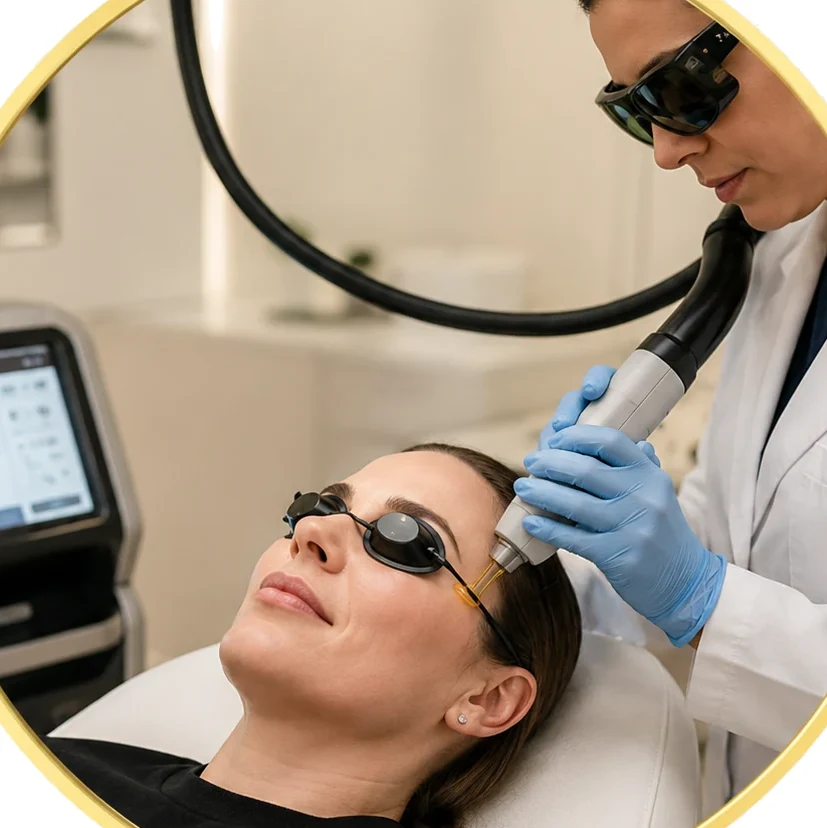
Laser treatment is an effective option for the persistent facial redness and visible blood vessels (telangiectasia) that characterise rosacea, though it is not a reliable standalone treatment for inflammatory papules or pustules. The three devices you will encounter most often in UK private clinics are pulsed dye laser (PDL), Nd:YAG, and intense pulsed light (IPL). NHS guidance confirms that these are recognised specialist options for persistent erythema and telangiectasia, yet laser treatment is rarely funded by the NHS and is primarily available privately.
The recommended first step: see your GP or a dermatologist to bring any active inflammation under control with topical or oral medication. Once the inflammatory component is stable, a medically led laser consultation can assess whether vascular-targeted treatment is appropriate for you.
- Lasers work best on: persistent background redness, thread veins, and diffuse erythema
- Lasers have limited effect on: inflammatory papules, pustules, and phymatous (thickened skin) changes
- Key devices: PDL, Nd:YAG, IPL
Table of Contents
- How vascular lasers and light therapies work on rosacea
- Which rosacea signs does laser therapy actually improve?
- Common devices used in UK clinics: PDL, Nd:YAG, IPL and more
- What the clinical evidence says about effectiveness
- Who is a good candidate, and what are the contraindications?
- What to expect: sessions, costs, and NHS availability
- Risks and side effects: what to know before you proceed
- How laser fits with your broader rosacea treatment plan
- How to choose a safe clinic and what to ask at consultation
- Nexgen Clinic's approach to rosacea laser treatment
- Key takeaways
- Nexgen Clinic: book a medically led rosacea consultation
- FAQ
How vascular lasers and light therapies work on rosacea
Lasers and light devices reduce rosacea redness by targeting haemoglobin in the blood vessels beneath the skin. The device emits a specific wavelength of light that is selectively absorbed by the blood, generating heat that coagulates and collapses the vessel wall. Over the following weeks, the body reabsorbs the treated vessel, and the visible redness fades.
This principle is called selective photothermolysis. The key word is selective: the light targets the chromophore (in this case, oxyhaemoglobin) while leaving surrounding tissue largely unaffected. That selectivity is why vascular lasers are effective for erythema and telangiectasia but do not address the bacterial or immune-driven processes behind inflammatory bumps.
IPL differs from true lasers in that it emits a broad spectrum of wavelengths rather than a single, precise one. Filters narrow the output to a clinically useful range, making IPL versatile for diffuse redness and mixed pigment or vascular presentations. Wavelength-specific lasers such as PDL and Nd:YAG offer more targeted delivery, which can be an advantage for discrete thread veins or deeper vessels.
Which rosacea signs does laser therapy actually improve?
Laser and light therapies produce their clearest results on the vascular features of rosacea: persistent background redness (erythema) and visible thread veins. For these signs, the evidence is consistent across multiple device types.
Clinical note: Medical experts are clear that lasers do not treat inflammatory papules or pustules. Those require medical management with topical agents or oral antibiotics before laser is considered.
Patients with predominantly erythematotelangiectatic rosacea (subtype 1) tend to see the most meaningful improvement. Those with papulopustular rosacea (subtype 2) should prioritise medical control first; laser can then address any residual vascular signs once inflammation has settled.
Ideal candidate features for vascular-targeted treatment:
- Stable rosacea with no active widespread inflammation
- Primarily vascular signs: persistent redness, visible thread veins, or flushing-related erythema
- Fitzpatrick skin types I–III (lighter skin tones respond most predictably)
- Realistic expectations: improvement, not assured outcomes
Common devices used in UK clinics: PDL, Nd:YAG, IPL and more
No single device suits every rosacea presentation. Device choice depends on your specific symptoms, vessel depth, skin phototype, and how much downtime you can tolerate. Operator skill and pulse settings influence outcomes as much as the device itself.
| Device | Best suited for | Typical downtime | Key trade-off |
|---|---|---|---|
| Pulsed Dye Laser (PDL) | Superficial thread veins, diffuse erythema | Variable downtime (possible purpura) | Gold standard for superficial vessels; purpura risk at higher settings |
| Nd:YAG | Deeper or larger-calibre vessels | Variable downtime | Penetrates deeper; often used alongside PDL |
| Intense Pulsed Light (IPL) | Diffuse redness, mixed pigment/vascular | Minimal to short downtime | Broad coverage; less precise than laser |
| KTP laser | Superficial vessels, facial telangiectasia | Variable downtime | Well tolerated; strong clearance rates in practice |
| CO2 / Er:YAG | Phymatous (thickened) skin changes | Longer downtime | Ablative; not for vascular signs |
PDL is widely regarded as the gold standard for superficial vascular lesions, emitting in the yellow spectrum where oxyhaemoglobin absorption is high. It remains the most studied device for rosacea-related erythema.
Nd:YAG penetrates deeper tissue and is particularly useful for larger-calibre or deeper vessels. Clinically, it is often used as a complement to PDL rather than a first-line choice for diffuse redness.
IPL covers larger facial areas efficiently and suits patients with mixed redness and pigmentation concerns. Some meta-analyses report strong clearance rates for erythema, though heat sensation during treatment can be a limiting factor for highly reactive skin.
Pro Tip: Ask your clinician to name the exact device model and the settings they plan to use. Vague answers like "we use a laser" are a red flag. Documented device calibration and a patch test are non-negotiable for safe treatment.
What the clinical evidence says about effectiveness
Systematic reviews and clinical studies consistently show meaningful reductions in erythema and telangiectasia following laser and light-based therapy. The most recent systematic review and network meta-analysis of randomised controlled trials found that radiofrequency microneedling produced the greatest reduction in erythema (MD –1.44; 95% CI –1.96 to –0.91), while the combination of oxymetazoline and PDL showed the highest relative efficacy for telangiectasia (MD –0.58; 95% CI –1.03 to –0.14) among the laser-based approaches studied.
That said, the same review notes that the evidence supporting laser and energy-based devices for rosacea remains relatively uncertain, with most studies showing unclear or high risk of bias. KTP lasers, though less represented in RCTs, have long-established clinical records of high clearance rates and strong patient satisfaction in routine practice.
Realistic expectations:
- Meaningful improvement in redness and thread veins is achievable for most patients
- Maintenance sessions are often required; long-term permanence is not assured
- Outcome measures vary across studies, making direct device comparisons difficult
- Rosacea is a chronic condition; laser manages symptoms rather than resolving the underlying cause
Who is a good candidate, and what are the contraindications?
Suitable candidates have stable rosacea, primarily vascular signs, and no active widespread inflammation. Lighter Fitzpatrick skin types (I–III) respond most predictably, though treatment is possible for darker skin tones with appropriate device selection and settings.
Contraindications and cautions to discuss at consultation:
- Recent sun exposure, active tan, or sunburn in the treatment area
- Active skin infection or open lesions
- Pregnancy or breastfeeding
- Photosensitising medications (certain antibiotics, retinoids, diuretics)
- History of isotretinoin use within the past 6–12 months
- Clotting disorders or anticoagulant therapy
- Darker Fitzpatrick skin types (IV–VI): require longer wavelengths such as Nd:YAG, adjusted settings, and a conservative test patch; clearance rates may be lower and pigmentary change risk is higher
- Recent use of topical vasoconstrictors such as brimonidine, which can affect treatment timing
For darker skin tones specifically, selecting Nd:YAG with appropriate cooling and conservative fluence is the safer approach, though a test patch is always advisable before a full session.
What to expect: sessions, costs, and NHS availability
Most treatment courses involve several sessions spaced several weeks apart. Downtime varies by device and settings, from minimal with low-fluence IPL to several days with higher-energy PDL.
Typical treatment process:
- Initial consultation: medical history, skin assessment, photographs, discussion of realistic outcomes
- Patch test: usually performed at least 24–48 hours before the first full session
- Pre-treatment: avoid sun exposure, discontinue photosensitising agents as advised
- Aftercare: strict sun protection (SPF 50+), gentle fragrance-free skincare, avoid heat and exercise for 24–48 hours post-treatment
- Follow-up: review at 4–8 weeks to assess response and plan next session
For a gentle aftercare routine that supports your skin between sessions, fragrance-free, barrier-supporting products are the priority.
UK costs and NHS access:
| Details | |
|---|---|
| Private cost per session | Typically £150–£400 depending on device, area, and clinic |
| Typical course | 3–6 sessions; package pricing often available |
| NHS availability | Not routinely funded; available privately in most cases |
| NHS exceptional funding | Individual Funding Request (IFR) process; rare and for exceptional clinical need only |
Regional NHS formularies confirm that laser for telangiectasia is listed but not funded in most cases. Private treatment is the realistic route for the majority of patients in the UK.
Risks and side effects: what to know before you proceed
Most side effects are temporary. Redness and swelling in the treated area for 24–72 hours are the most common responses and settle without intervention. Purpura (bruising-like discolouration) can occur with PDL, particularly at higher fluence settings, and may take 7–14 days to resolve.
Common side effects:
- Transient erythema and oedema (swelling) lasting 1–3 days
- Purpura: more likely with PDL at higher settings; modern pulse parameters reduce but do not eliminate this risk
- Crusting or mild blistering in the treated area
- Temporary darkening or lightening of the skin (more likely in darker skin tones)
Less common but serious complications:
- Scarring (rare; associated with inappropriate settings or undertreated infection)
- Persistent pigment change (hypo- or hyperpigmentation)
- Paradoxical worsening of redness in highly reactive skin
Red-flag signs requiring urgent review: blistering beyond the expected area, signs of infection (increasing pain, warmth, discharge), or pigment change that does not resolve within 4–6 weeks.
Pro Tip: Purpura risk is tied to pulse duration and fluence. Shorter pulses and conservative fluence reduce purpura but may require more sessions. Ask your clinician how they balance these parameters for your skin type.
How laser fits with your broader rosacea treatment plan
Laser works best as part of a combined approach, not as a replacement for medical therapy. The standard clinical flow is: control inflammation medically first, then address residual vascular signs with laser or light therapy, then maintain with ongoing topicals.
Typical combined approach:
- GP or dermatologist prescribes topical or oral treatment to control inflammatory papules and pustules
- Once inflammation is stable, a laser assessment determines suitability for vascular-targeted treatment
- Laser or IPL sessions address persistent redness and thread veins
- Ongoing topical maintenance (for example, ivermectin, azelaic acid, or topical metronidazole) supports durability of results
- Oral tetracyclines may be continued alongside laser if inflammatory activity persists
NICE/CKS guidance positions laser and light therapies as specialist-level options within a broader management plan, not as first-line treatment. Combining laser with topical anti-inflammatory maintenance can improve the durability of cosmetic gains, with timing being key: control inflammation first, then target the vascular component.
A simple, consistent skincare routine for sensitive skin supports both medical and procedural treatment by reducing background irritation.
How to choose a safe clinic and what to ask at consultation
Choose a medically led clinic that can name the exact device, show documented outcomes, and provide written aftercare. In the UK, laser treatments for rosacea should be performed by or under the supervision of a qualified clinician with specific training in laser and light-based therapies.
Questions to ask at your consultation:
- What are your qualifications and laser-specific training?
- Which exact device and model will you use, and why is it appropriate for my skin?
- What settings do you plan to use, and how will you adjust for my skin phototype?
- Can I see before-and-after photographs from patients with similar presentations?
- What downtime should I expect, and what does the aftercare protocol involve?
- How many sessions do you recommend, and what is the cost per session and as a package?
- What is your follow-up protocol if I experience an adverse reaction?
Red flags to walk away from:
- Vague device descriptions ("we use a laser" with no model name)
- No patch test offered before the first full session
- No written aftercare instructions
- No medical oversight or clinician involvement
- Pressure to purchase a full course of sessions at the first appointment
Nexgen Clinic's approach to rosacea laser treatment
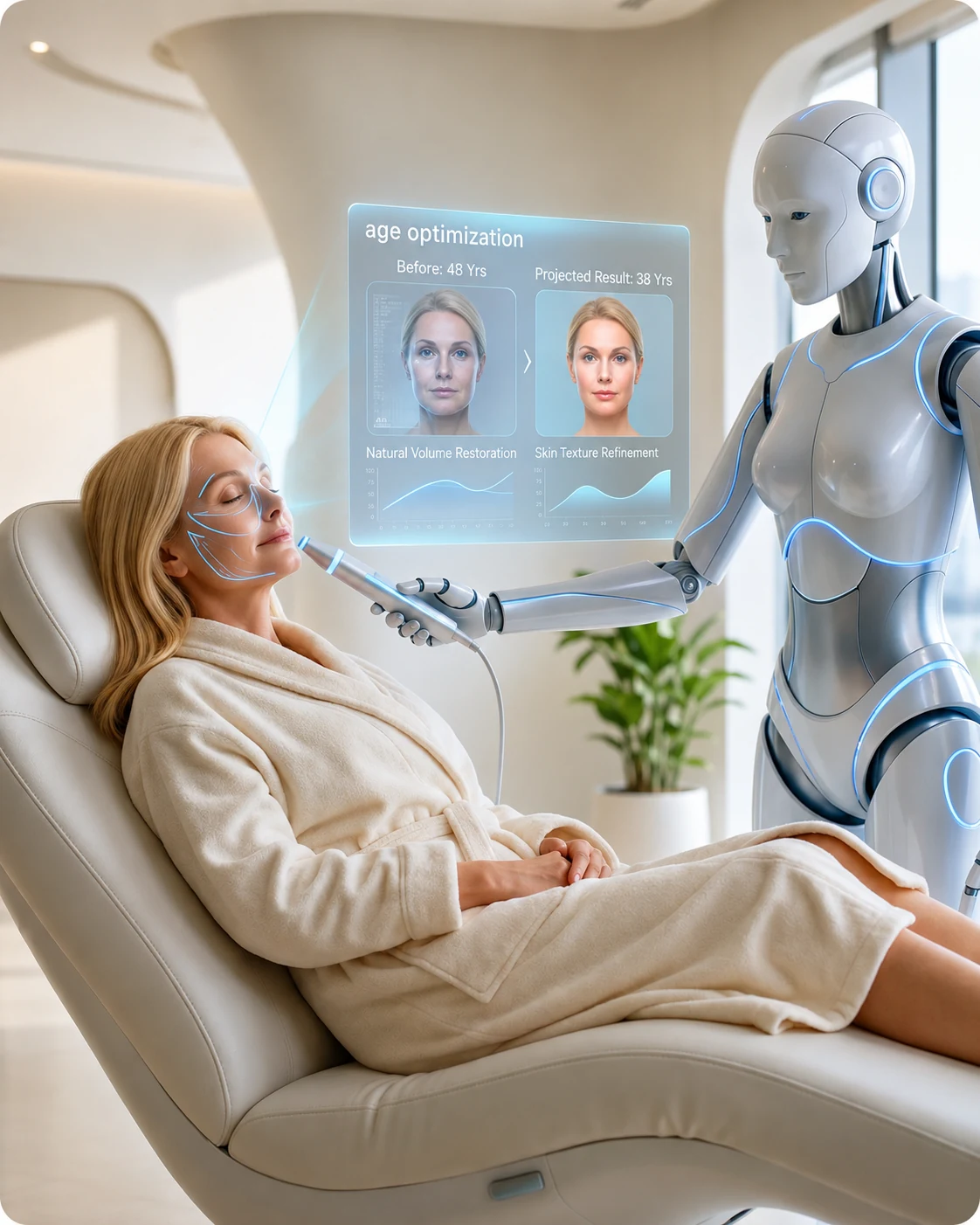
Nexgen Clinic combines medical oversight, AI-driven skin analysis, and evidence-based use of vascular lasers and IPL to create personalised treatment plans for rosacea patients. Rather than applying a one-size-fits-all approach, the clinic's medically qualified team assesses each patient's rosacea subtype, skin phototype, and treatment history before recommending a device or session plan.
What Nexgen Clinic offers for rosacea:
- Medically led consultation with detailed skin assessment and photography
- AI skin analysis to map vascular and pigmentation patterns precisely
- Vascular laser and IPL treatments tailored to your presentation
- Personalised session plans with clear intervals and follow-up reviews
- Clinical-grade aftercare guidance and product recommendations
- Device compliance awareness and documented treatment protocols
Nexgen Clinic operates from Cambridge and serves patients across the UK. The clinic's 98% patient satisfaction rate reflects a commitment to natural-looking, medically grounded results. Before-and-after case examples are available at consultation to help you set realistic expectations.
Key takeaways
Laser and light-based therapy is a clinically recognised, evidence-backed option for the vascular features of rosacea, but it works best as part of a medically supervised plan that addresses inflammation first.
| Point | Details |
|---|---|
| Lasers treat vascular signs | PDL, Nd:YAG, and IPL reduce persistent redness and thread veins; they do not reliably treat inflammatory papules or pustules. |
| Control inflammation first | See a GP or dermatologist to stabilise active inflammation before pursuing laser therapy. |
| Typical course and cost | Most courses involve 3–6 sessions spaced 4–8 weeks apart; private costs typically run £150–£400 per session in the UK. |
| NHS access is limited | Laser for rosacea is not routinely funded by the NHS; private treatment is the realistic route for most patients. |
| Nexgen Clinic | Nexgen Clinic offers medically led laser and IPL consultations with AI skin analysis for personalised rosacea treatment planning. |
A clinician's perspective on realistic outcomes
Patients often arrive hoping laser will be a lasting fix for their rosacea, and it is worth being honest about what that means in practice. Laser therapy can produce genuinely significant improvements in persistent redness and thread veins, and for many patients those results are long-lasting with appropriate maintenance. But rosacea is a chronic condition with triggers that continue to drive flushing and vascular changes over time. The patients who do best are those who combine laser with consistent medical management and a considered daily skincare approach, not those who treat laser as a one-off solution.
What I find underappreciated is how much device selection and operator experience matter relative to the device brand itself. A well-calibrated PDL in experienced hands will outperform a more expensive device used without appropriate settings for your skin type. That is why the consultation process, the clinician's willingness to explain their rationale, and the presence of a patch test protocol are more meaningful quality signals than the name on the machine.
Nexgen Clinic: book a medically led rosacea consultation
If persistent redness or visible thread veins are affecting your confidence, a personalised assessment at Nexgen Clinic is the clearest next step. The clinic's medically led team uses AI skin analysis to map your vascular patterns precisely before recommending a treatment plan, so you know exactly which device, how many sessions, and what outcomes are realistic for your skin.
Nexgen Clinic operates from Cambridge with a commitment to medical governance, documented treatment protocols, and follow-up care at every stage. Whether you are at the early research stage or ready to proceed, the consultation is designed to give you clear, honest answers without pressure.
Book your consultation or explore the full range of precision treatments available at Nexgen Clinic.
This article provides general information about laser treatments for rosacea and does not constitute medical advice. Please consult a qualified clinician or your GP for guidance specific to your own condition and circumstances.
Useful sources for further reading
- NICE/CKS: Rosacea management — the UK's primary clinical guideline, covering medical and specialist treatment options including laser and light therapies.
- North Bristol NHS Trust: Rosacea laser information — patient-facing summary of how vascular lasers work and which devices are available at an NHS laser centre.
- Systematic review and network meta-analysis of laser and energy-based devices for rosacea (PMC) — the most comprehensive comparative review of RCT evidence across device types.
- Laser-Based Therapies in Rosacea: A Comprehensive Review (MDPI) — detailed clinical review covering device mechanisms, outcomes, and side-effect profiles.
- Bucks Formulary: Rosacea guidance — example of regional NHS formulary confirming that laser for telangiectasia is listed but not routinely funded.
FAQ
Is laser treatment a good option for rosacea?
Yes, for the vascular features of rosacea. Laser and light therapies such as PDL, Nd:YAG, and IPL are recognised specialist options for persistent erythema and telangiectasia, though they do not treat inflammatory papules or pustules.
Can rosacea get worse after laser treatment?
Temporary flaring in the days immediately after treatment is normal. Paradoxical worsening is uncommon but possible, particularly in highly reactive skin or when settings are not appropriate for the patient's skin type. A patch test and conservative initial settings significantly reduce this risk.
How much does laser treatment for rosacea cost in the UK?
Private costs typically range from £150 to £400 per session depending on the device, treatment area, and clinic. Most courses involve 3–6 sessions. The NHS does not routinely fund laser treatment for rosacea; access is primarily through private clinics.
How many sessions will I need?
Most patients require 3–6 sessions spaced 4–8 weeks apart for meaningful improvement in redness and thread veins. Maintenance sessions are often needed over time, as rosacea is a chronic condition and vascular changes can recur.
Where can I get medically led laser treatment for rosacea in the UK?
Nexgen Clinic in Cambridge offers medically led consultations with AI skin analysis and vascular laser and IPL options tailored to your rosacea presentation. You can book a consultation directly through the clinic's website.
Recommended
- Laser Skin Treatments in Cambridge | Tone & Texture | NexGen Clinic
- Skin Glow Treatment Cambridge | NexGen Clinic
- Non-Surgical Facial Rejuvenation Cambridge
- Skin Lesion Removal Cambridge | NexGen Clinic
Explore related NexGen treatments
- Explore our full treatment menu
- Book a consultation with our clinicians
- Contact our Cambridge team
- Read more articles in the NexGen Journal
Ready to explore your options?
Speak with a NexGen clinician for a personalised consultation. We’ll listen, assess, and recommend the safest and most effective route — always led by evidence, always tailored to you.
Book a consultation or get in touch with our Cambridge team.