A personalised skin plan is a clinician-led programme that diagnoses your skin, prescribes a tailored at-home regimen and schedules staged treatments and reviews to reach realistic goals. It suits anyone with persistent concerns, a history of reacting badly to products, or ambitions that stretch beyond a serum, into procedures. Done properly, it replaces guesswork with a written diagnosis, fewer wasted purchases, and clinical oversight of anything active enough to cause harm.
TL;DR:
- A personalised skin plan includes a written diagnosis, a tailored at-home skincare routine, and staged in-clinic treatments scheduled with clear review points.
- Clinical consultations typically last 20 to 45 minutes and should result in a document detailing the diagnosis, recommended treatments, risks, and review schedule.
- Budgeting should account for consultation fees usually ranging from free to £100, with treatment costs starting from around £160 for fillers and increasing based on the procedure.
- Proper monitoring combines photos or skin scans with scheduled reviews every 6 to 12 weeks to assess progress and adjust the plan accordingly.
- Clinics prioritising documented plans over diagnostic technology tend to deliver more reliable, personalized outcomes than those relying solely on advanced scanning tools.
Table of Contents
- What does a personalised skin plan include?
- How does the process work, from consultation to review?
- Who benefits most from a personalised skin plan?
- What should you expect at your first consultation?
- How does Nexgen Clinic approach a personalised skin plan?
- What does a personalised skin plan look like in practice?
- Why documentation matters more than technology
- Ready to start your own personalised skin plan?
- Sources
- FAQ
What does a personalised skin plan include?
A genuine personalised skin plan has two halves that work together: what you do at home, and what happens in the clinic.
The at-home regimen is built around your actual skin, not a generic routine. A cleanser, one or two targeted actives, a moisturiser and daily SPF form the backbone, with ingredient strength and sequencing matched to your skin type and sensitivity. Getting this wrong is more common than people assume, which is why clinical skincare guidance on product safety and aftercare is essential to avoid harm, as detailed on AM Rx's skincare resource. Mismatched actives or the wrong order of application can irritate skin and cancel out any benefit, which is precisely why correct diagnosis and sequencing sits at the centre of any credible plan.
The in-clinic side covers whatever your skin needs beyond topical care. Depending on the assessment, this might include:
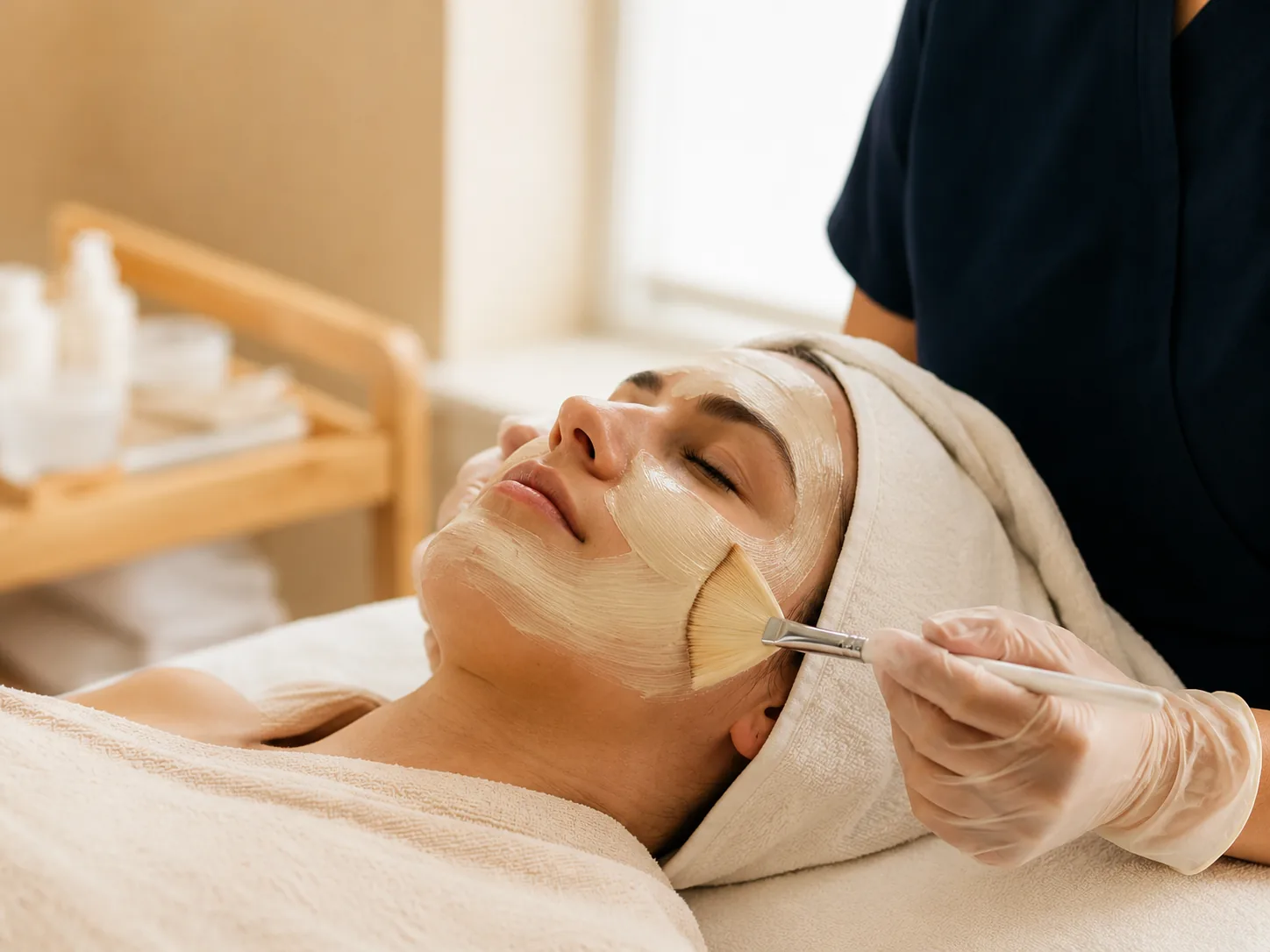
- Advanced facials or chemical peels for texture and tone
- Microneedling to support collagen response
- Laser treatments for pigmentation or resurfacing
- Skin boosters for hydration at a deeper skin level
These sit within a staged plan rather than being offered all at once. A professional skin analysis is what allows a clinician to match in-clinic procedures to your home care, rather than treating the two as separate decisions.
Monitoring closes the loop. Expect standardised photos, sometimes a skin scan, and a review schedule that tells you when the plan changes and why. "Medical-grade" in this context means higher active concentrations than shop-bought products, clinician oversight, and prescriptions where a treatment needs one, not just a premium price tag on the packaging.
How does the process work, from consultation to review?
The path from first appointment to a working routine follows a fairly consistent structure across reputable clinics.
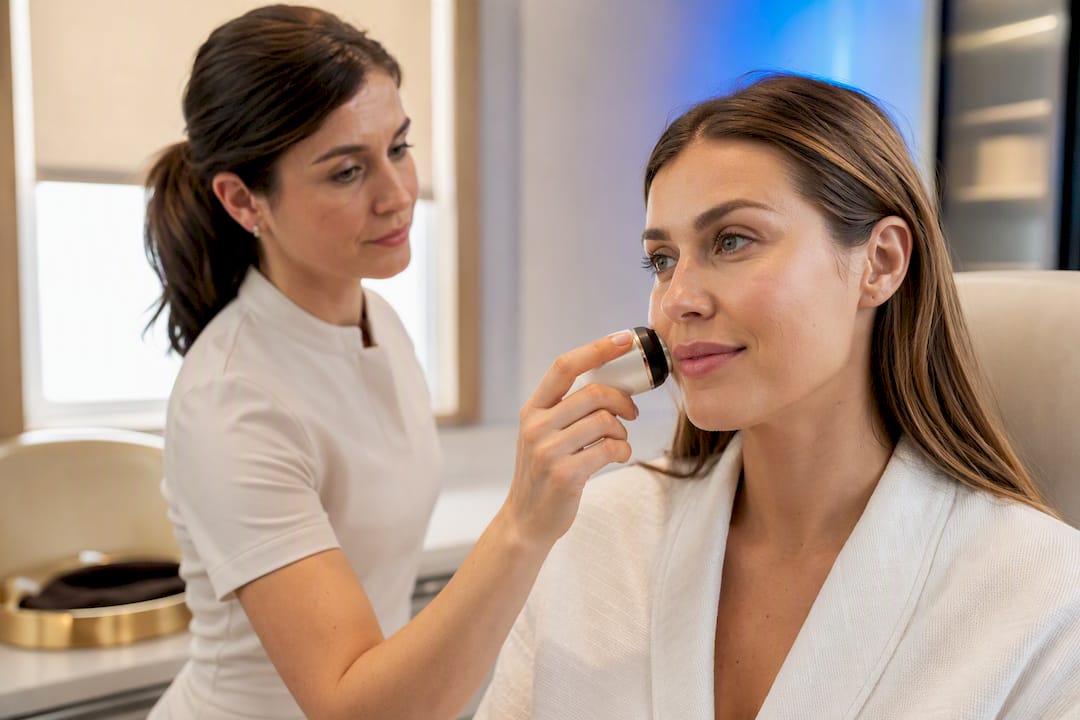
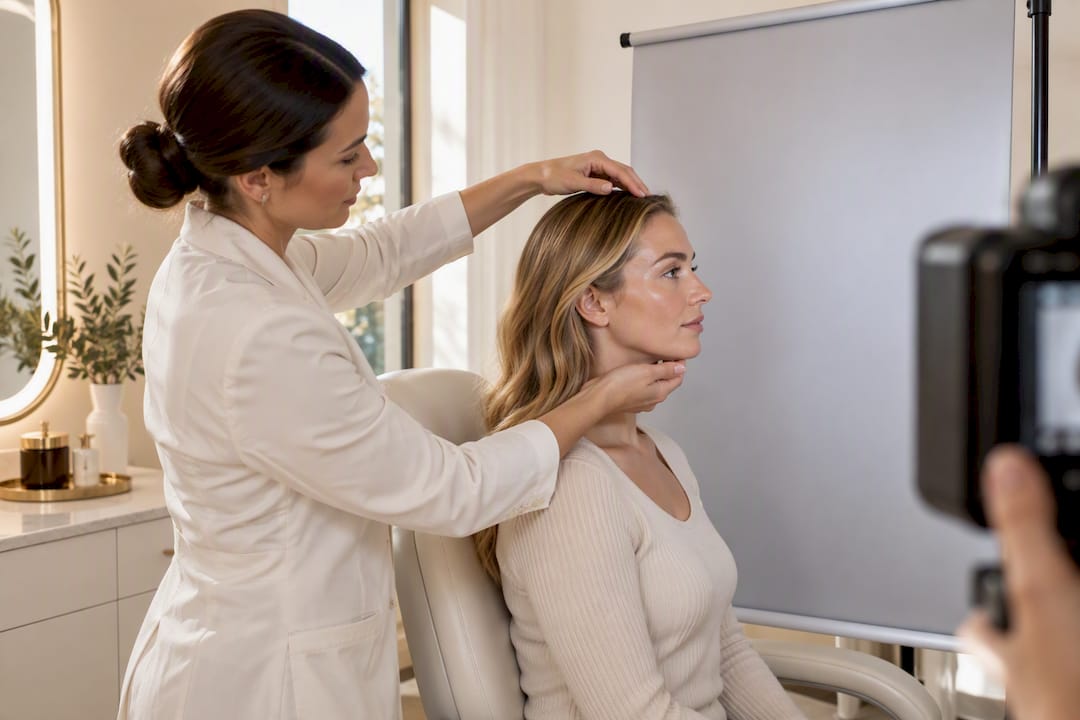
- Clinical consultation. Your practitioner takes a history, checks current medications, and often takes photos or runs a skin scan. This appointment typically runs 20 to 45 minutes.
- Assessment and written plan. You receive a document naming the recommended options, the risks of each, and the alternative of doing nothing at all.
- Staged treatment scheduling. Procedures are booked in sequence rather than stacked into one visit, and many clinics separate the consultation from the first treatment appointment to give you time to think it over.
- Review point. Progress is checked against the original goals, with the plan adjusted, or escalated to a different treatment, if results are falling short.
Pro Tip: Ask what "success" looks like before you start. A plan without a defined checkpoint at 6 to 12 weeks is a plan with no way of knowing whether it's actually working.
Diagnostic inputs increasingly draw on more than a visual check. Genetics, environment, hormones and lifestyle all feed into how treatments are personalised, and some clinics now use software to help weigh these factors consistently rather than relying purely on practitioner instinct.
Who benefits most from a personalised skin plan?
The benefits are practical rather than aspirational: targeted improvement instead of trial and error, safer use of actives and procedures, and fewer products bought and abandoned half-used.
You're likely a strong candidate if any of the following apply:
- You have a persistent concern, such as melasma or acne scarring, that hasn't responded to shop-bought products
- You've reacted badly to skincare before and want ingredients checked before you use them
- You want both topical care and procedures considered together, not booked separately with no coordination
- Your skin goals have changed with age, hormones or a new environment and your routine hasn't kept pace
A simplified, well-matched routine often achieves more than a crowded one. Clinician selection tends to reduce the number of products a person uses while improving results, which is the opposite of what most people expect a "plan" to mean.
DIY skincare can suffice for straightforward maintenance, sun protection and mild dryness. Escalate to a clinician when concerns persist beyond a few months, when you're combining several actives without knowing how they interact, or when you're considering anything injectable or laser-based.
What should you expect at your first consultation?
A proper consultation is a clinical appointment, not a sales pitch, and it should feel like one from the moment you sit down.
Appointment length is typically 20 to 45 minutes, and pricing commonly ranges from free to around £100, sometimes redeemable against treatment if you go ahead. By the end, you should have something in writing that names the diagnosis, the treatment or product recommended, the quantity where relevant, the risks involved, and the plan for review.
Watch for red flags. Same-day pressure to book, discounts that expire before you leave the building, and deposits requested before any assessment has taken place are all signs to walk away.
Six questions are worth asking at every consultation, whichever clinic you visit:
- What are your qualifications, and who exactly will treat me?
- Who prescribes, and who will actually be in the room?
- What product, and what exact quantity, are you recommending?
- What's a realistic outcome, and what won't this treatment do?
- What's the plan if something goes wrong, and is there an out-of-hours contact?
- What happens if I choose to do nothing?
Clinics that build in a gap of 24 to 48 hours between the consultation and the treatment appointment tend to be the ones taking consent seriously, giving you a genuine cooling-off period rather than a same-visit upsell.
How does Nexgen Clinic approach a personalised skin plan?
Nexgen Clinic's own workflow is a useful reference point for what a medically led, technology-supported plan looks like in practice.
- AI-driven skin analysis feeds into curated signature packages, including the NexGen Age Reset™ and Facial Balance™ programmes, rather than a single fixed treatment being applied to every patient
- The clinic's bespoke laser plans use AI to help reduce dosage variability and personalise settings, an example of how technology is applied to a specific procedure rather than the whole plan
- A regenerative science focus underpins the approach, with staged protocols, written consent and separation between consultation and procedure where appropriate
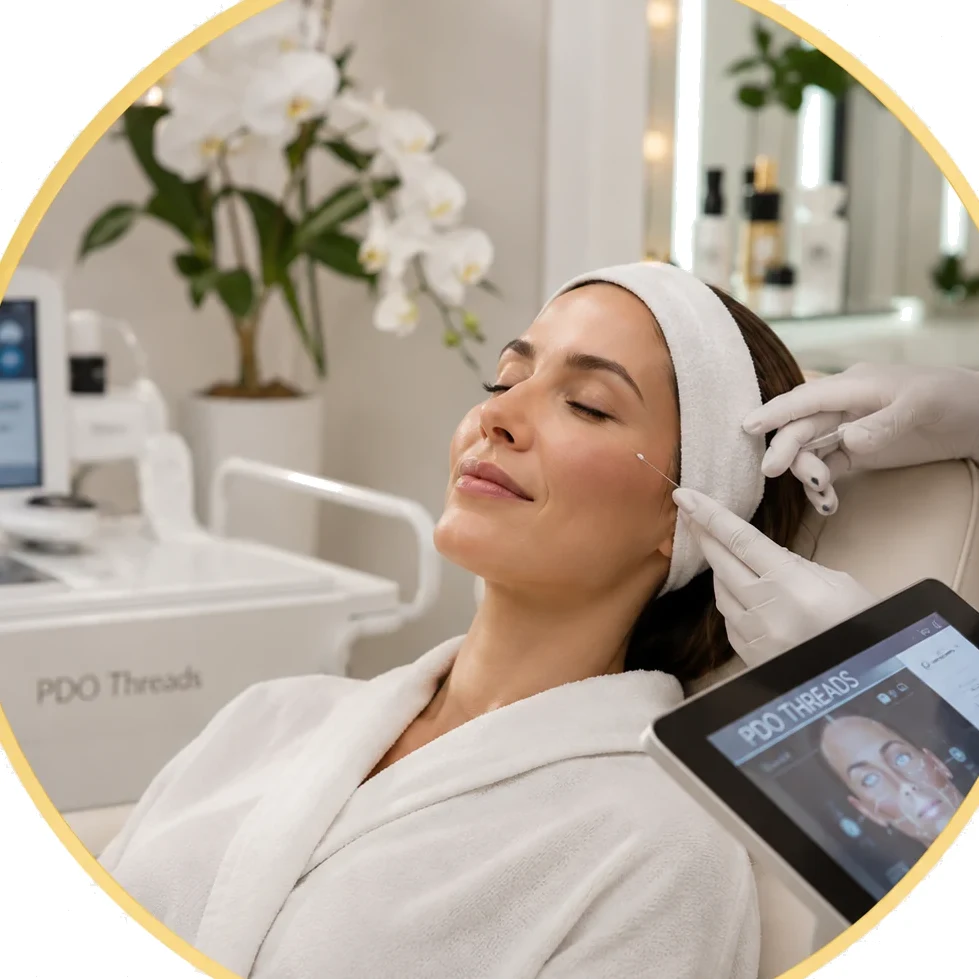
- Nexgen Clinic reports a 98% client satisfaction rate, and treatment categories including dermal fillers, skin boosters, PDO threads and laser treatments are available as next steps for readers who want clinic-led care
The point isn't that AI replaces clinical judgement. It's that a doctor-led protocol backed by consistent diagnostics is harder to get wrong than one relying purely on a practitioner's memory of what worked last time.
What does a personalised skin plan look like in practice?
Two composite scenarios illustrate how the process typically plays out, drawn from common patterns rather than any single patient's record.
Consider someone in their late thirties dealing with post-inflammatory pigmentation after years of inconsistent sun protection. A consultation identifies the pigmentation pattern, rules out other causes, and produces a plan combining a targeted topical regimen with staged in-clinic sessions, spaced several weeks apart to allow the skin to respond before the next step. A review at around 8 weeks confirms whether the pigmentation is fading as expected, and the plan adjusts if it isn't.
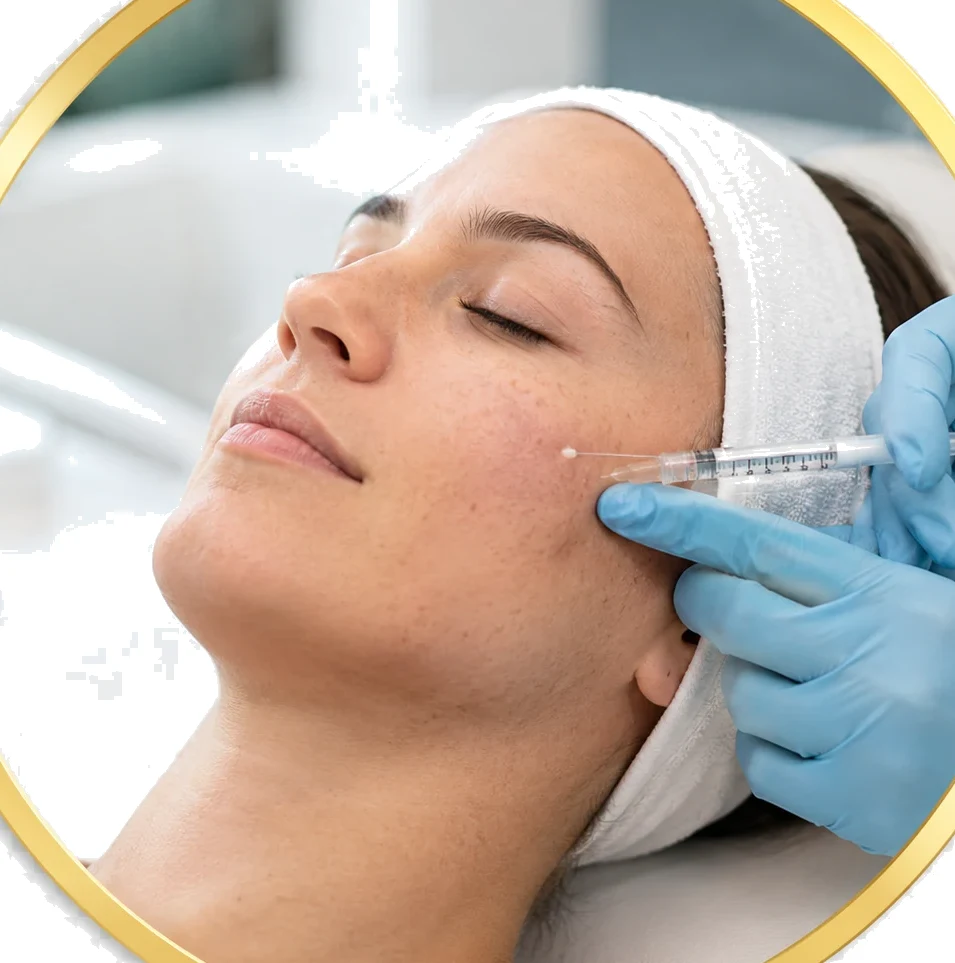
Or take someone in their fifties whose main concern is loss of facial volume and skin laxity. Here the plan might pair a hydration-focused skin booster with a discussion of dermal fillers for contouring, sequenced rather than done in one sitting, with a written note of what each stage is expected to achieve and what the alternative of skipping a stage would mean.
Both cases share the same structure: diagnosis first, a written plan naming alternatives, staged treatment, and a review point built in from the start. What changes is the combination of concerns and the pace at which stages are introduced, which is exactly what "personalised" is meant to describe.
Why documentation matters more than technology
Most of the marketing around personalised skincare leans hard on diagnostic tools, AI matching, skin scans, algorithmic product recommendations. All of that has genuine value. But the research behind this article points to something less flashy and more decisive: a written plan, an honest account of risk, and a defined review point predict good outcomes far more reliably than the sophistication of the diagnostic tech used to get there.
The conventional advice tells people to seek out the clinic with the most advanced scanner. The better question is whether that clinic will hand you a document naming the diagnosis, the exact product and quantity, the risks, and what happens if you do nothing. A basic consultation with excellent documentation beats an impressive scan with a vague verbal recommendation, every time.
If there's one thing to prioritise first, it's asking for that plan in writing before any product is opened or any procedure booked. Technology should support that document, not substitute for it.
— Ms Sandra Petraskaite
Ready to start your own personalised skin plan?
If you're preparing for a first consultation, bring a list of current medications and skincare products, photos of any areas of concern taken in good daylight, and a note of what's changed recently, new sensitivities, sun exposure, hormonal shifts. That short preparation gives your practitioner a proper starting point rather than a guess.
Nexgen Clinic's approach differs from a standard skincare counter in one concrete way: every plan starts with an AI-supported diagnostic assessment before any product or treatment is recommended, so you're not buying on the strength of a sales conversation. The full range of treatments, from dermal fillers and PDO threads to skin boosters and laser treatments, is listed with the clinical detail you'd expect from a doctor-led clinic, and prices are published rather than negotiated on the day. Dermal fillers start from £180, lip fillers from £160, and PDO threads from £350, all one-off costs shown on the treatments page.
Before you book anywhere, run through the six essential questions from this article, and check that whatever price you're quoted matches what's written down. If Nexgen Clinic's approach fits what you're looking for, book a consultation to get a diagnosis and a written plan before committing to anything further.
Sources
Cosmetic Journal's guidance on aesthetic consultations sets out what a clinically sound appointment should include. Skin Type Solutions and Forefront Dermatology offer useful grounding in diagnosis-led skincare and personalisation drivers for readers who want to go deeper.
This article is general information, not a substitute for advice from a qualified doctor. Consult a qualified healthcare professional about your own circumstances before acting on anything here.
- What a good aesthetic consultation looks like | Cosmetic Journal
- Personalized Skin Care | Skin Type Solutions
- Personalized Skincare: Tailoring Treatments to Individual, Genetic, and Environmental Factors - Forefront Dermatology
- The Importance of Professional Skin Analysis | Roxana Aesthetics
FAQ
What is a personalised skin plan?
It's a clinician-led programme that diagnoses your skin condition, then combines a tailored at-home routine with staged in-clinic treatments and scheduled reviews. It replaces generic product advice with a written diagnosis and a defined plan matched to your specific concerns.
How long does a skin consultation take?
Most consultations run between 20 and 45 minutes, covering your history, current medications, and often photos or a skin scan. You should leave with a written plan, not just a verbal recommendation.
How much does a personalised skin plan cost?
Consultation fees are commonly free to around £100 and sometimes count towards treatment costs. Procedure pricing varies by treatment; for example, Nexgen Clinic lists dermal fillers from £180 and Profhilo from £250 per session on its treatments page.
What should be in writing after a consultation?
A proper written plan names the diagnosis, the recommended treatment or product, the quantity where relevant, the risks involved, and the review schedule. If a clinic won't put this in writing, treat that as a red flag rather than an oversight.
Can I get a personalised skin plan without seeing a doctor?
Some elements, such as online triage and product recommendations, can be handled remotely, but hands-on procedures still require in-person clinical oversight. Anything involving injectables, lasers or prescription-strength actives needs a face-to-face assessment first.
How often should a personalised skin plan be reviewed?
Most staged plans build in a review point around 6 to 12 weeks after treatment begins, when progress is checked against the original goals. The plan is adjusted, or escalated, based on what that review shows rather than left to run indefinitely unchanged.
Recommended
- Private Aesthetic Consultation
- Skin texture treatments for smoother, healthier skin
- Bespoke Laser Plans Backed by AI for Safer Skin Rejuvenation
- Collagen stimulating treatments: what a clinician recommends
Ready to explore your options?
Speak with a NexGen clinician for a personalised consultation. We’ll listen, assess, and recommend the safest and most effective route — always led by evidence, always tailored to you.
Book a consultation or get in touch with our Cambridge team.