
A digital skin consultation is an assessment of your skin carried out remotely, usually through a questionnaire, photographs you upload and sometimes a video call. It can be a sensible first step: it saves travel, helps you describe your concerns clearly and tells you whether an in-person visit is needed. It is not a full substitute for being examined in a clinic, and the quality of what you get depends on the clinician behind it and on the quality of your photographs.
This guide explains how digital and virtual skin consultations work in the UK, what they can and cannot decide, how to prepare, and how to tell a clinical tool from a marketing gimmick.
TL;DR
- A digital skin consultation usually combines a questionnaire, photographs and a video or phone review by a qualified clinician.
- It is often a gateway to care rather than the final answer: the clinician may ask to see you in person before recommending or starting treatment.
- Photo quality matters most. Good light, a plain background and sharp focus lead to better advice.
- "AI skin analysis" can mean a clinically regulated medical device or a cosmetic scanning tool. Ask the clinic which one it is.
- Injectable treatments such as anti-wrinkle injections, fillers, Profhilo and polynucleotides need a proper assessment of your face and medical history before they go ahead.
Table of Contents
- What a digital skin consultation involves
- What a remote consultation can and cannot do
- How to prepare: getting the photographs right
- AI skin analysis: clinical tool or cosmetic scan?
- Digital consultation before aesthetic treatment
- Where to go for a medical skin concern
- Our perspective
- Planning your assessment with NEXGEN Clinic
- Frequently asked questions
- Sources
What a digital skin consultation involves
The terms "digital", "virtual" and "online" are used loosely. In practice, most services follow the same pattern as NHS teledermatology, which the British Association of Dermatologists describes as using clinical images and video consultations to support remote assessment, diagnosis, management and monitoring of skin conditions.
A typical process has three steps:
- History. You complete a questionnaire about your skin, symptoms, medicines, allergies and past treatments.
- Images. You capture or upload photographs following the clinic's instructions.
- Review. A clinician looks at the information and gives advice, a plan, or a recommendation to be seen in person. The UK teledermatology workflow described for NHS buyers follows this same sequence.
Some services add a live video call. Others work entirely from photographs and written answers. Neither format is automatically better. A video call lets you ask questions and lets the clinician see your skin moving and in changing light, while a photo-based review gives the clinician time to study the images carefully.
Medical consultations and cosmetic skin analysis
These are two different things, and the difference matters.
| Medical teledermatology | Cosmetic digital skin analysis | |
|---|---|---|
| Purpose | Assess skin conditions, triage and plan care | Describe skin features such as hydration, texture and pores, and suggest routines or treatments |
| Who reviews it | A dermatologist or other qualified clinician | A clinician, therapist or sometimes only software |
| Regulation | Clinical governance, with regulated software where it is used for diagnosis | Varies widely |
| Typical outcome | Management plan, discharge advice or referral | Skincare and treatment recommendations |
A mole that has changed, a rash that will not settle or a lesion that bleeds is a medical matter. See your GP, who can refer you to a dermatologist, rather than relying on a cosmetic scan.
What a remote consultation can and cannot do
Patients often expect a final answer in one sitting. The British Association of Dermatologists notes that a remote review can lead to a request for a face-to-face appointment instead of an immediate treatment plan. The digital step is often the gateway.
What it does well:
- Lets you explain your concerns and goals without travelling.
- Gives the clinician a clear picture of your skin type, routine and history before you meet.
- Helps sort simple questions from those that need examination.
- Supports follow-up, for example comparing photographs over weeks.
What it cannot replace:
- Feeling the skin, checking tissue quality and looking at facial structure from several angles.
- Examining a lesion with a dermatoscope.
- Treatments that require injections, needles or devices applied to the skin.
The General Medical Council expects doctors to consider whether the mode of consultation suits the patient, taking account of any need for physical examination or other assessments, and whether they have enough information to prescribe safely. A responsible clinic will tell you honestly when a screen is not enough.
How to prepare: getting the photographs right
Image quality is the most common reason a remote review stalls. The Bristol Royal Infirmary teledermatology service advises a well-lit space, a plain uncluttered background and a charged phone. Poor pictures can lead to an inconclusive result and a further appointment.
A practical checklist:
- Use daylight. Stand facing a window, not with the window behind you. Avoid overhead lights that cast shadows under the eyes.
- Skip the flash, unless the clinic asks for it. It flattens texture and washes out redness.
- Remove make-up and sunscreen unless told otherwise, so the clinician sees your real skin.
- Lock focus. Tap the area on the screen until the focus holds, then take the picture.
- Take several views. For the face: straight on, and both sides at 45 degrees. For a specific spot: one wider shot for context and one close-up.
- Keep the same set-up each time if you are tracking change over weeks.
- Do not use filters or beauty modes. They change the very features being assessed.
For a specific mark or lesion, the Bristol guidance describes a set of three images: one regional, one close-up and one dermoscopic with a millimetre scale. Dermoscopic images need a clinical device, so for anything that worries you the right step is your GP, not a home photo.
What to have ready to say
- Your main concerns, in your own words, and how long you have had them.
- Products and prescription creams you use now.
- Medicines, allergies, pregnancy or breastfeeding, and past reactions to treatments.
- Any procedures you have had, including fillers or lasers and when.
- What you hope to achieve, and what you do not want.
AI skin analysis: clinical tool or cosmetic scan?
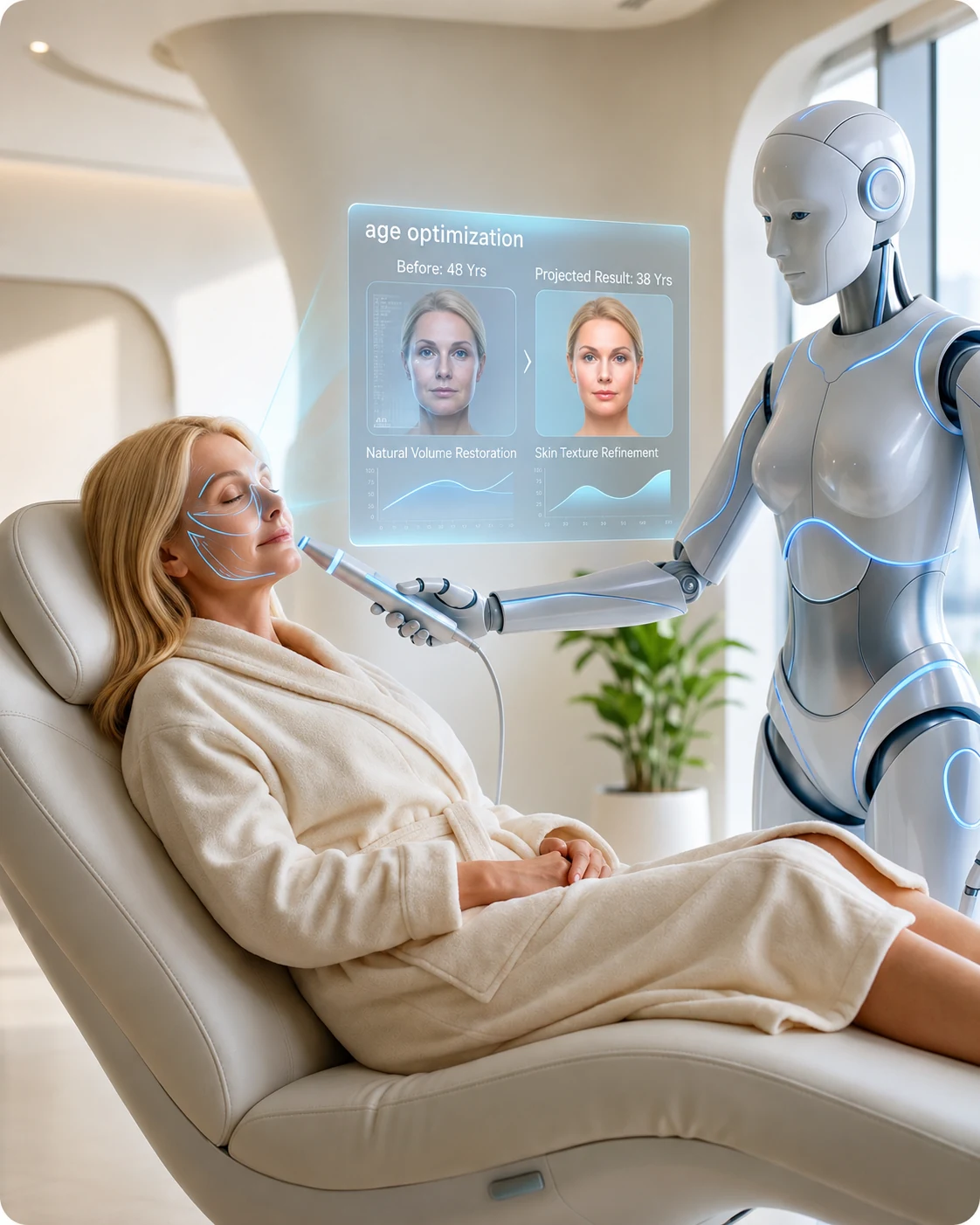
Many clinics now offer scanning tools that analyse a photograph and produce a report on lines, pigmentation, pores or hydration. These can be useful for showing you where your skin is and for tracking change. They are not all the same thing.
In the UK, software and AI used for medical purposes are regulated as medical devices. The MHRA is also testing AI health tools through its AI Airlock programme, a regulatory sandbox for AI as a medical device, including tools aimed at detecting skin cancer.
That sets up a clear question to ask any provider: is this a clinically validated diagnostic tool, or a cosmetic and educational tool used to choose products and treatments? Both can have a place. Problems start when a cosmetic scan is presented as a diagnosis.
Questions worth asking:
- What is the tool for: diagnosis, or advice on skincare and aesthetic treatment?
- Who reads the result: a qualified clinician or only the software?
- Does the tool carry the regulatory marking it needs for its stated purpose?
- What happens if the scan shows something unexpected?
- How are my images stored, who sees them and for how long?
On the last point, the British Association of Dermatologists stresses valid consent when photographs are used beyond your immediate care, for example for teaching. You should be asked, and you can say no.
We have written separately about how MHRA rules, data protection and clinician oversight apply to AI in UK aesthetic clinics, if you want the regulatory detail.
Digital consultation before aesthetic treatment
For aesthetic care, a digital consultation works best as preparation. It can cover your history, your goals and your skin routine, and help the clinician suggest what to discuss at the in-person appointment. Treatments that involve injections, such as anti-wrinkle injections, dermal fillers, skin boosters, Profhilo and polynucleotides, need an assessment of your face and medical history before anything is done.
Here is how that usually plays out, depending on what you are considering:
| Concern | What a digital step can do | What needs an in-person visit |
|---|---|---|
| Dull, dehydrated skin | Review routine, identify likely causes, plan next steps | Choosing between skin treatments after seeing the skin close up |
| Fine lines | Discuss goals and options | Assessing muscle movement and skin quality before any injection |
| Skin quality and laxity | Compare options such as Profhilo and polynucleotides | Examination and treatment planning |
| Pigmentation or marks | Initial triage | Examination, and medical review of any lesion that has changed |
| Event preparation | Build a timeline backwards from the date | Treatment itself, with time for any downtime |
If you have a particular date in mind, such as a wedding, tell the clinician at the start. Some treatments work over several weeks and are best planned well ahead. Our guide to how long Sculptra takes to work shows how timelines can run to several weeks, and our piece on peptides in skincare explains why some products need 8 to 12 weeks before you can judge them.
Red flags in an online consultation
- A prescription-only product recommended or supplied without any real assessment of you.
- A diagnosis offered from a single low-quality photograph.
- No information about who the clinician is or their registration.
- Pressure to buy a course of treatments straight away.
- No explanation of how your images and data will be used.
Where to go for a medical skin concern
If you have a skin problem that is not cosmetic, the NHS route is usually through your GP. In Cambridge, Cambridge University Hospitals runs teledermatology clinics in the community at a number of GP practices for patients referred to dermatology, which may spare some patients a hospital visit. A private aesthetic clinic is the right place for cosmetic goals, not for investigating a changing mole or a non-healing sore.
Our perspective
We see digital tools as a way to make consultations better informed, not to shorten them. At NEXGEN Clinic, every treatment begins with an individual assessment that looks at skin health, facial harmony and your goals. Technology can support that conversation, but it does not replace clinical judgement.
We would add three points of our own.
First, honesty about what a tool is. A scan that measures hydration or texture is useful for tracking and for explaining a plan. It should be described as that, and a clinician should be able to say clearly what it can and cannot tell you.
Second, fewer treatments are often the better recommendation. A consultation-led approach means we would rather advise you to wait, or to do less, than add treatments you do not need. After more than 15 years in aesthetics, we think natural-looking results come from that restraint.
Third, a clinician must stay accountable for the decision. Software can organise information. The recommendation, the consent and the aftercare are a professional's responsibility. We cover how we think about this in our article on clinician-led AI in aesthetics, and our policies and procedures set out how the clinic operates.
— Ms Sandra Petraskaite
Planning your assessment with NEXGEN Clinic
If you are comparing options such as skin boosters, we can help you work out which suits your skin and your timeline. Profhilo is available from £250 per session and polynucleotides from £180 per session, and each has its own page with details of what the treatment involves: Profhilo and polynucleotides. You can also see the full range, including dermal fillers from £180, lip fillers from £160 and PDO threads from £350, on our treatments page.
To start with an honest recommendation rather than a sales pitch, book a consultation at our Cambridge clinic. Tell us what bothers you, what you want to keep and any date you are working towards.
Frequently asked questions
Is a virtual skin consultation as good as seeing someone in person?
For some purposes, yes: discussing concerns, reviewing a routine and deciding next steps. For anything that needs touch, close examination or a procedure, it is a first step. A good clinician will tell you when you need to be seen in person.
Can a digital consultation diagnose a skin condition?
In medical teledermatology, a specialist can review photographs and history and offer a management plan, discharge advice or a referral. A cosmetic skin scan is different and should not be treated as a diagnosis. If a mark has changed in size, shape or colour, or is bleeding, see your GP.
How should I photograph my skin for an online assessment?
Use natural daylight facing a window, a plain background, no flash and no filters, and lock the focus before you shoot. Take a straight-on view and two side views for the face, plus a wider and a close-up shot of any specific area. Clear images help the clinician reach a useful answer, and unclear ones can delay it.
Is AI skin analysis safe and accurate?
It depends on the tool and its purpose. Software used for diagnosis is regulated as a medical device in the UK, while many cosmetic scanners are used only to guide skincare and treatment choices. Ask the clinic what its tool is for, who interprets the results and how your images are stored.
Can I get injectables after an online consultation alone?
You should not expect to. Treatments such as anti-wrinkle injections, fillers, Profhilo and polynucleotides need your face and medical history to be assessed properly. An online conversation can prepare the ground, but the decision to treat belongs at an in-person appointment.
Sources
- British Association of Dermatologists: Teledermatology
- British Association of Dermatologists: Teledermatology patient information
- British Association of Dermatologists: Advice and guidance services for dermatology
- University Hospitals Bristol NHS Foundation Trust: Teledermatology
- Cambridge University Hospitals: Teledermatology service
- GOV.UK: Medical devices, software and artificial intelligence
- GOV.UK: MHRA AI Airlock programme
- GMC: Deciding if it is safe to prescribe
- Digital Marketplace: UK teledermatology service description
Recommended
- Glass Skin Facial: AI Assessment Beyond the Instant Glow
- Neck Lines: Tech Neck Treatment Guide
- Red vs Blue Light for Skin: What 31 Trials Mean
- Sun Damage Face Treatment
Ready to explore your options?
Speak with a NexGen clinician for a personalised consultation. We’ll listen, assess, and recommend the safest and most effective route — always led by evidence, always tailored to you.
Book a consultation or get in touch with our Cambridge team.