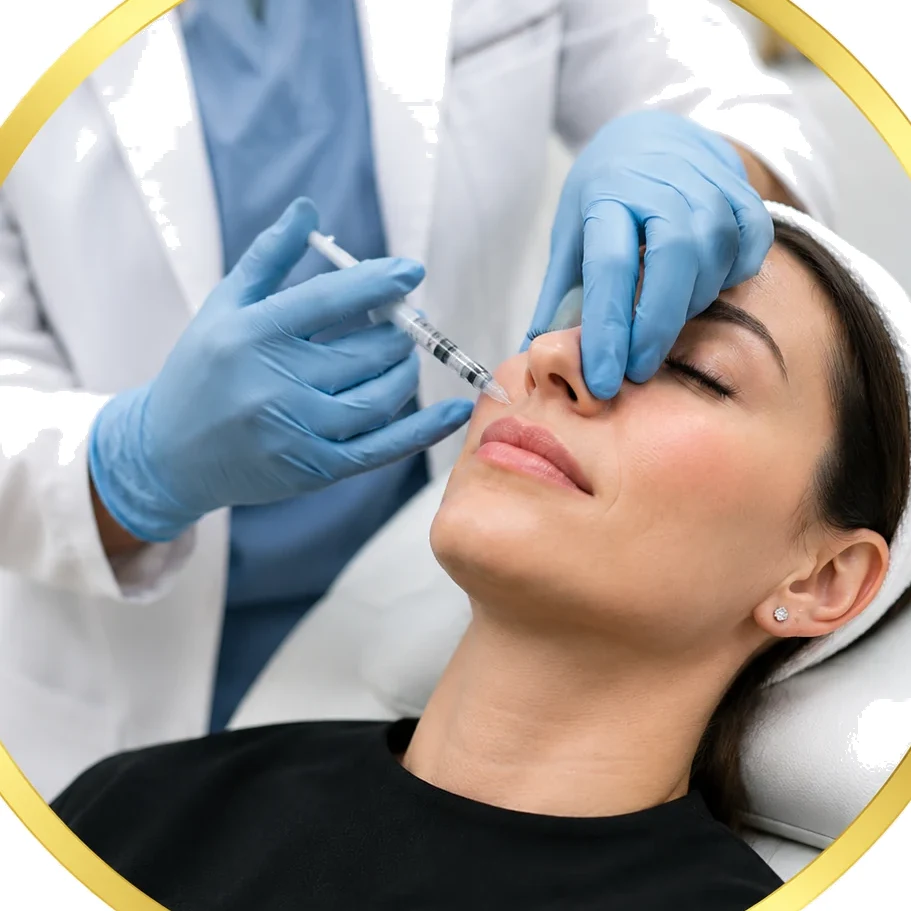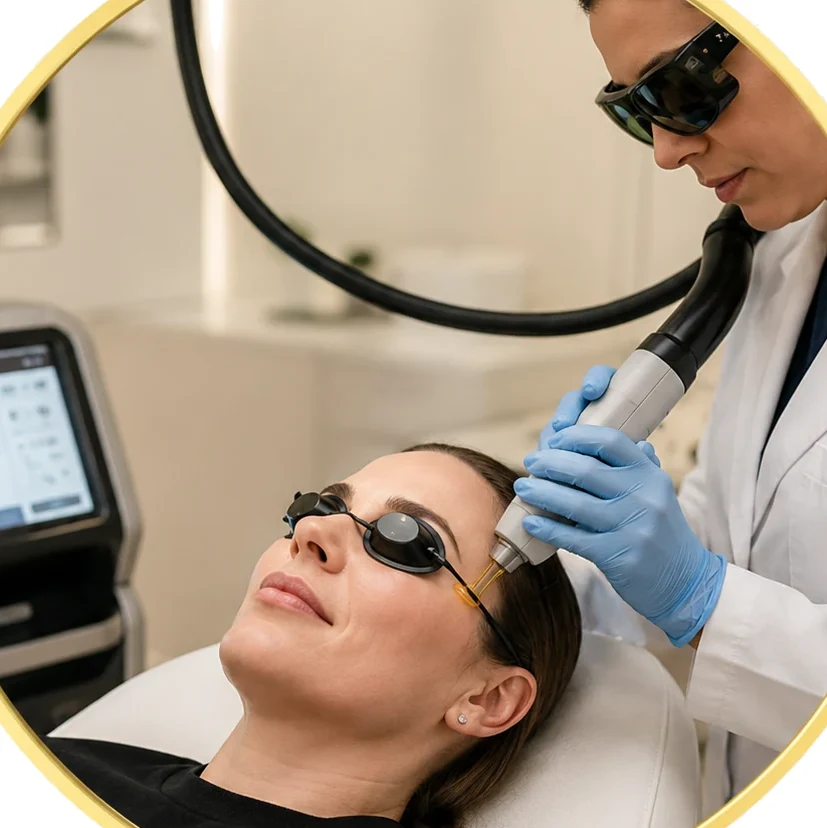

AI in aesthetics gives clinicians objective facial measurement, realistic outcome simulation, and personalised treatment planning that manual assessment cannot match on its own. It does not replace clinical judgement. UK practitioners deploying these tools must maintain human oversight, follow MHRA guidance where a system qualifies as software or AI as a medical device, and complete a Data Protection Impact Assessment under UK GDPR before processing patient images or health data.
TL;DR:
- AI facial measurement tools help standardize assessments and reduce practitioner variability, leading to more consistent treatment recommendations.
- Objective indices endorsed by experts prevent overcorrection and improve accuracy in treatment planning, especially when combined with 3D visualization.
- The accuracy of AI analysis depends heavily on proper training data, standardized photography, and careful interpretation to avoid bias and unreliable scores.
- UK regulations require clinics to perform ongoing evidence collection, lawful data processing, and human oversight when implementing AI tools in aesthetic treatments.
- Responsible AI integration involves consistent imaging protocols, transparent patient consent, clinician review of outputs, and continuous performance monitoring.
Table of Contents
- What does AI actually do in aesthetic medicine?
- Does AI actually improve precision and personalisation?
- What are the limitations of AI skin and facial analysis?
- What UK rules apply to AI tools in aesthetic clinics?
- How can clinics integrate AI safely into everyday practice?
- What does AI-supported treatment look like in practice?
- How do clinics keep AI use ethical and transparent?
- NexGen Clinics' clinical approach to AI-supported aesthetics
- The gap between AI's promise and its responsible use
- Book an AI-supported consultation with NexGen Clinics
- Sources
- FAQ
What does AI actually do in aesthetic medicine?
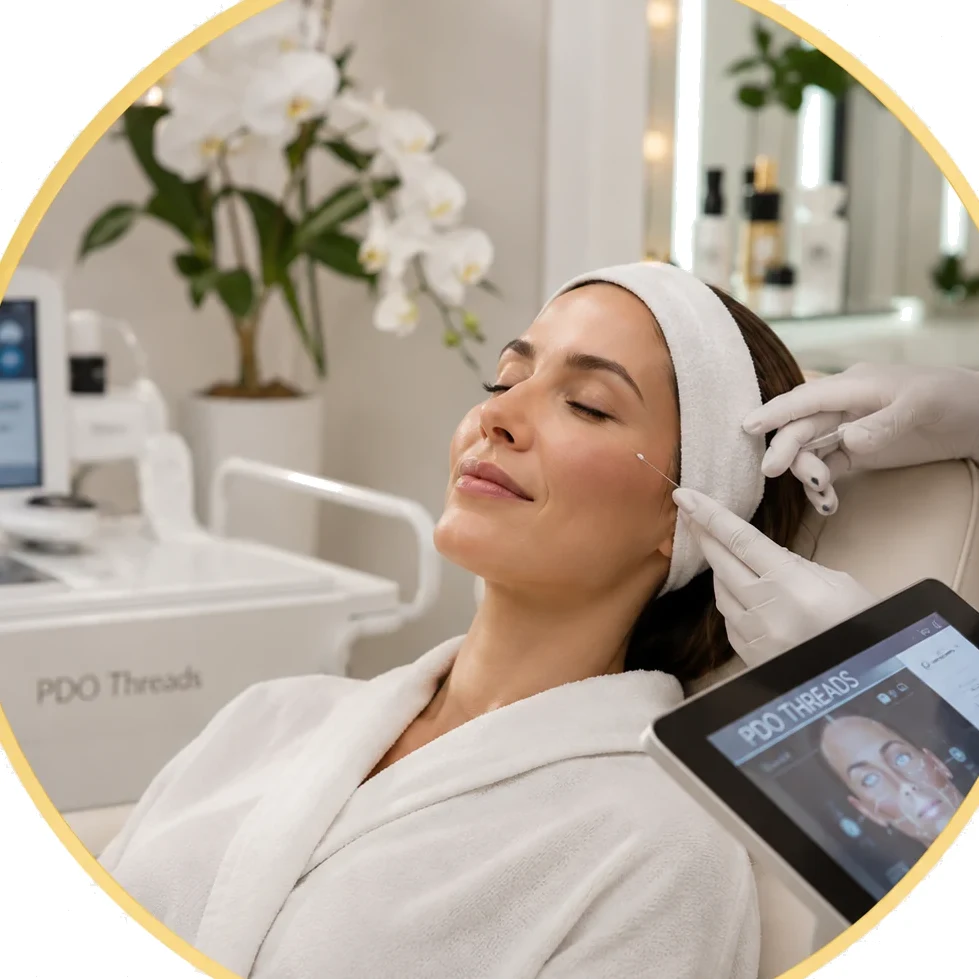
AI in aesthetics works by converting a face or area of skin into measurable data, then using that data to inform a treatment plan rather than a subjective guess. The technology sits across four broad applications, and understanding each helps you see where the real clinical value lies.
Facial landmarking and objective indices, using proven brow mapping techniques, accurately identify fixed points on the face, symmetry, proportion, contour, and skin texture. Software maps dozens of fixed points on the face, symmetry, proportion, contour, and skin texture, then scores them against validated benchmarks. An international consensus of clinicians and researchers has formally recommended three such measures: the Facial Aesthetic Index (FAI), the Facial Youth Index (FYI), and the Skin Quality Index (SQI). These indices give practitioners a shared, objective standard for facial assessment instead of relying purely on visual impression, which varies from one injector to the next.
3D reconstruction and augmented reality visualisation. Rather than a flat photograph, AI-driven imaging builds a three-dimensional model of the face or treatment area. Clinicians and patients can rotate it, layer on a simulated outcome, and compare angles that a static "before" photo would never reveal. Diagnostic studies using this kind of automated three-dimensional analysis have shown it can reduce interobserver variability in measuring skin conditions compared with manual assessment alone.
Predictive analytics for dosing and device settings. Some systems now estimate likely product volume for filler placement, or suggest laser parameters based on skin type and prior response data. This is still an emerging area, and predictions function as a starting point for clinical judgement, not a prescription to follow blindly.
Patient-facing triage and monitoring tools. Apps that let patients photograph their skin at home, track texture or pigmentation change over weeks, and flag concerns before a follow-up appointment are becoming a normal part of aftercare pathways.
Together, these applications point to the same theme: AI in aesthetics narrows the gap between what a clinician sees and what can actually be measured, tracked, and communicated. A tool that combines skin analysis with clinician review rather than an automated score in isolation tends to produce the most reliable outcomes.
Does AI actually improve precision and personalisation?
Objective scoring reduces the variation you'd otherwise get between two equally qualified practitioners looking at the same face. That's the headline benefit, and it's not a marketing claim. It comes from a formal international consensus process involving clinicians and researchers across aesthetic medicine.
The consensus found that AI-assisted assessment tools help prevent overcorrection, a real and persistent risk in injectable and volumising treatments, by anchoring decisions to measurable proportion and symmetry data rather than practitioner instinct alone. That same body of expert opinion recommended the FAI, FYI, and SQI specifically because standardised objective measures improve consistency across different practitioners and different clinics.
Statistic Callout: An international consensus on objective medical standards in aesthetic medicine specifically endorsed AI-supported facial indices, concluding that they can standardise assessment and reduce the risk of overcorrection, a finding drawn from expert consensus rather than a single trial.
Three practical benefits follow from this shift towards measurement:
- Better expectation alignment. A realistic 3D simulation shows a patient what a course of skin boosters or a subtle contouring plan might actually achieve, closing the gap between hope and outcome before treatment even begins.
- Reduced inter-practitioner variability. Two clinicians assessing the same patient with the same objective index are far more likely to land on comparable treatment recommendations.
- Audit-quality follow-up data. Standardised photography and scoring at each visit create a measurable record, useful for tracking response over months and for clinical governance.
There's also a quieter operational gain. Clinics using structured AI-assisted assessment spend less time re-explaining a plan verbally and more time showing it, which shortens consultations without shortening the quality of the conversation. That efficiency matters when a patient's decision to proceed depends on genuinely understanding what will change and what won't.
What are the limitations of AI skin and facial analysis?
No AI tool in aesthetics is more reliable than the data it was trained on, and that's where the caution belongs. Reviews of AI in dermatology and aesthetic medicine consistently flag the same structural problem: many training datasets underrepresent certain skin tones, ages, and ancestries, which means a model's confidence in its own output can be misleadingly high for patients who look nothing like the population it learned from.
A second, more mundane risk sits in how the photo was taken. Lighting, camera angle, distance, and even the time of day change how skin texture and pigmentation appear to an algorithm. A patient photographing themselves under a bathroom light versus a clinic's calibrated setup can generate two meaningfully different "scores" for the same skin, not because the skin changed but because the input did.
There's also a subtler cultural risk worth naming directly: aesthetic homogenisation. When a tool scores faces against a single "ideal" index without adjusting for ethnicity, age-appropriate proportion, or the patient's own stated goals, it can nudge practitioners towards a narrow, generic idea of beauty rather than a result that suits the individual in front of them.
Watch for these failure points specifically:
- Automated recommendations generated from a single low-quality or poorly lit image, with no clinician cross-check.
- Scoring systems applied uniformly across skin tones or ethnic backgrounds without adjustment for natural variation.
- Predictive dosing suggestions treated as final numbers rather than a starting estimate for clinical discussion.
- Any AI output presented to a patient without a plain-language explanation of what it does and doesn't measure.
Pro Tip: Ask your practitioner whether their AI analysis tool was validated across a range of skin tones and ages, not just whether it's "AI-powered." A model that scores beautifully on lighter skin but poorly on darker skin has a real accuracy gap, not a rounding error.
What UK rules apply to AI tools in aesthetic clinics?
If an AI system in your clinic analyses patient data to influence a diagnosis or treatment decision, it may fall under UK medical device regulation, and that has direct consequences for what your clinic must be able to prove. The MHRA and the UK government have set out expectations for Software and AI as a Medical Device (SaMD/AIaMD), covering everything from facial scoring tools to predictive dosing software.
Three regulatory tracks matter here, and each carries its own obligations.
Medical device status and evidence. Where a tool meets SaMD/AIaMD criteria, the MHRA expects manufacturers and users to generate ongoing evidence of safety, accuracy, and clinical performance, not a one-off validation study filed and forgotten. The government's own response on this describes a formal Software and AI as a Medical Device Change Programme, alongside regulatory sandboxes that let developers trial AIaMD products under closer supervision before wider rollout.
Data protection and lawful basis. Any AI tool processing images or health information about an identifiable patient falls under UK GDPR. The Information Commissioner's Office is clear that clinics need an identified lawful basis for that processing, and because facial images and skin data typically count as special category data, they need an Article 9 condition on top of the Article 6 basis. The ICO also notes that the lawful basis for developing an AI model can differ from the basis for deploying it clinically, so a clinic buying in a third-party tool still needs to check its own deployment basis, not assume the vendor's compliance covers it.
Automated decision safeguards. Where an AI system makes a decision with legal or similarly significant effect on a patient without meaningful human review, Article 22 of UK GDPR requires specific safeguards, including the right to human intervention. In aesthetic practice this rarely applies in its strictest form because a clinician reviews the output, but it's a reason in itself never to let a scoring tool auto-generate a treatment plan without sign-off.
A Data Protection Impact Assessment (DPIA) is the practical document that ties all three together: it forces a clinic to record what data the tool processes, where it's stored, who else can access it, and what happens if the output is wrong. The Care Quality Commission has also stated plainly that governance of AI tools remains the provider's responsibility, not the software vendor's, whatever the marketing claims a tool ships with.
How can clinics integrate AI safely into everyday practice?
Deploying AI responsibly in an aesthetic clinic comes down to four disciplines, done consistently rather than perfectly once.
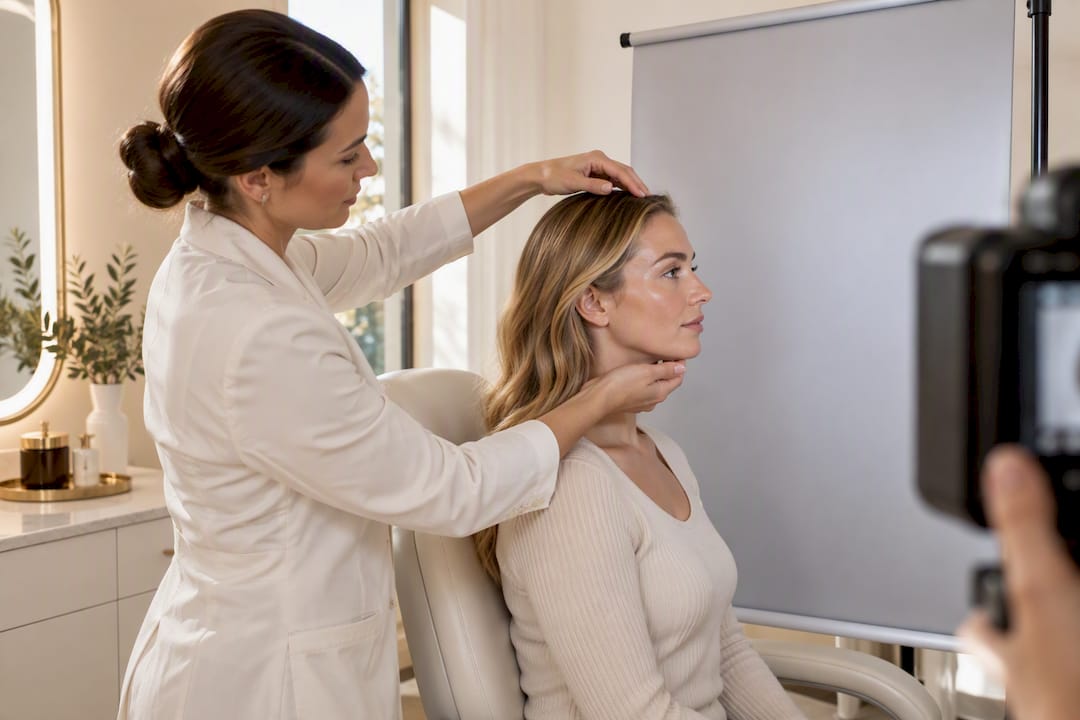
Standardise your photography. Fixed lighting, consistent camera distance, a neutral facial expression, and the same background every time. Document the protocol in writing so any staff member captures comparable images, because inconsistent input is the single most common cause of unreliable AI output in practice.
Build informed consent around AI specifically. Patients should know, in plain language, that an AI tool is involved in their assessment, what data it processes, where that data is stored, and who can access it. Keep an audit trail of consent alongside the clinical notes, not as a separate, easily lost form.
Keep a human in the loop on every decision. An AI-generated score or simulation informs the conversation; it doesn't replace the clinician's judgement about that particular patient's anatomy, skin history, and goals. Document the clinical reasoning behind any decision to follow, adjust, or override an AI recommendation.
Monitor performance after deployment, not just before. Review the tool's outputs periodically against real outcomes, report anything resembling an adverse event through your usual clinical governance channel, and check specifically for bias across different skin tones and ages in your own patient population, not just the vendor's original validation data.
Pro Tip: Keep a simple log of any case where the AI output and your own clinical judgement disagreed, and what you decided. Over a few months, that log becomes one of the most useful bias-detection tools your clinic has, and it costs nothing beyond five minutes per case.
The ICO's guidance on lawful AI use recommends treating a DPIA as a living document rather than a box ticked once at procurement, revisited whenever the tool's use case, dataset, or vendor changes.
What does AI-supported treatment look like in practice?
Three scenarios come up repeatedly across clinics using AI-supported assessment, and each shows a different facet of what the technology adds.
Skin booster planning. A patient with dehydrated, uneven-textured skin has a baseline AI skin analysis, generating an SQI-style score across hydration, texture, and tone. A course of skin boosters follows, and the same analysis repeated at six and twelve weeks gives a measurable before-and-after comparison rather than a subjective "it looks better" note in the file.
Non-surgical contouring expectations. A patient considering dermal filler for jawline or cheek contouring sees an augmented reality simulation of the likely result before committing. This doesn't guarantee the outcome, but it gives both patient and clinician a shared, visual reference point for what "subtle" or "structured" actually means to that specific face.
Identifying likely responders. Predictive models drawing on prior patient response data can flag who's statistically more likely to respond well to a particular laser setting or injectable approach, helping the clinician prioritise the intervention with the best expected outcome for that skin type rather than a generic first choice.
None of these examples involve AI making the final call. In every case, the technology produces a measurement, a visual, or a probability, and a clinician decides what to do with it. That division of labour is precisely what separates responsible AI-supported practice from an automated one.
How do clinics keep AI use ethical and transparent?
Trust in an AI-assisted treatment plan depends far more on what the patient is told than on how sophisticated the underlying model is. Research into AI and public perception has found that people who understand more about how an AI system works tend to judge its use more critically, which cuts against the instinct to downplay AI involvement to avoid awkward questions. The better strategy is the opposite: explain it clearly and let transparency do the trust-building.
A handful of practical commitments make that transparency real rather than nominal:
- Explain, in plain terms, what data the AI tool uses and where clinician oversight sits in the process, using explainable AI outputs where the technology supports it.
- Never let a standardised index override a patient's own aesthetic goals; a tool designed around population norms should inform the conversation, not dictate what "improvement" means for that individual face.
- Offer patients who are uncomfortable with AI involvement a manual assessment alternative, and document that preference in the notes.
- Revisit consent whenever the AI tool, its data handling, or its vendor changes, rather than treating consent as a one-time signature.
The goal isn't AI that removes judgement from the room. It's AI that gives the patient and clinician a shared, honest starting point for a conversation about what's actually achievable and what matters most to that person's face.
NexGen Clinics' clinical approach to AI-supported aesthetics
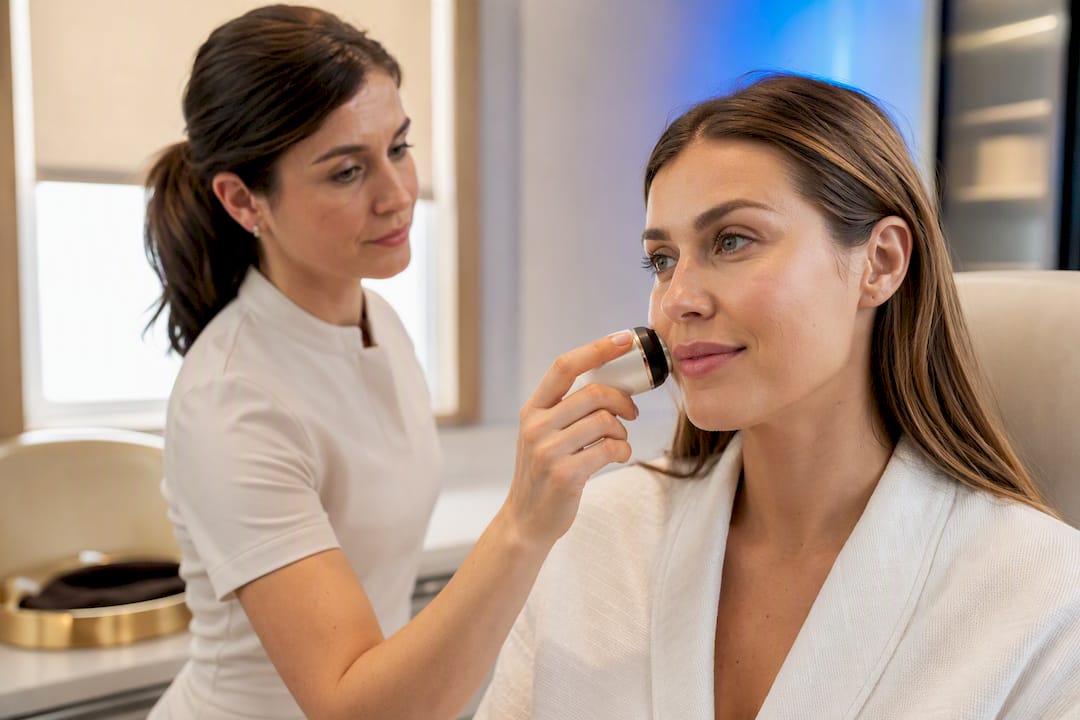
NexGen Clinics operates from Cambridge with AI-driven aesthetic medicine at the centre of its clinical model, not as an add-on to conventional consultation. Every treatment plan begins with advanced skin analysis technology that maps individual skin concerns and ageing patterns before any product or device touches the patient's face.
That data feeds into two signature programmes built specifically around it: NexGen Age Reset™, which targets broader signs of ageing through a regenerative science lens, and Facial Balance™, which uses objective proportion and symmetry assessment to guide subtle, natural-looking contouring rather than a one-size-fits-all template. Both sit on the principle that AI-driven diagnostics should personalise the plan, not standardise the face.
The clinic reports high client satisfaction, which it attributes to combining that data-led precision with doctor-led protocols and a consultation-first approach that keeps the patient's own goals, not a generic beauty index, at the centre of the plan. Regenerative science, rather than purely conventional injectable technique, underpins much of that offering, aiming for results that read as healthier skin rather than obviously "done" work.
The gap between AI's promise and its responsible use
The consensus research is genuinely encouraging: objective indices like the FAI, FYI, and SQI represent real progress towards consistent, measurable aesthetic assessment. But the conventional narrative around AI in aesthetics tends to oversell the technology as a diagnostic authority, when the evidence actually supports something more modest and more useful: a measurement tool that makes a clinician's judgement sharper, not a replacement for it.
Where most advice on this topic falls short is treating regulation as a compliance afterthought rather than a design input. A DPIA completed after a tool is already live in clinic is a DPIA that's missed its purpose. The clinics getting this right build data protection and human oversight into the workflow from the first patient photograph, not the first regulatory query.
If you take one thing from this, prioritise the boring part first: standardised photography, documented consent, and a clinician who reviews every output before it reaches a treatment plan. The exciting AI capabilities mean little without that unglamorous foundation underneath them.
— Ms Sandra Petraskaite
Book an AI-supported consultation with NexGen Clinics
Some clinics use AI-driven skin analysis to inform treatments such as skin boosters, dermal fillers, and laser sessions, aiming to map specific concerns before a treatment decision is made.
That same data underpins the clinic's doctor-led approach to dermal fillers, where facial proportion mapping supports subtle, natural-looking contouring rather than a standardised look. If skin texture and hydration are the priority, skin boosters follow the same measure-first principle, with follow-up analysis to track real change over weeks rather than relying on memory of "before." For those exploring regenerative options, Profhilo sessions start from £250 one-off, and Polynucleotides sessions start from £180 one-off, both assessed against your own skin data first.
Browse the full range of treatments and book a consultation to see what an AI-supported assessment shows about your skin.
Sources
The clinical and regulatory claims in this article draw on peer-reviewed consensus work and primary UK guidance, listed here for anyone who wants to read the source material directly.
- AI assistance in aesthetic medicine–A consensus on objective medical standards
- The regulation of artificial intelligence as a medical device: government response to the RHC
- How do we ensure lawfulness in AI? | ICO
This article is general information, not a substitute for advice from a qualified doctor. Consult a qualified healthcare professional about your own circumstances before acting on anything here.
FAQ
Will aestheticians be replaced by AI?
No. Every piece of consensus and regulatory guidance covered here treats AI as a support tool that requires a clinician to interpret its output and take responsibility for the treatment decision. The MHRA's own framework for AIaMD assumes ongoing human governance, not autonomous operation.
What is aesthetic AI?
Aesthetic AI refers to software used in aesthetic medicine to analyse facial and skin data, generate objective scores like the FAI, FYI, and SQI, simulate likely treatment outcomes, and support dosing or device parameter decisions. It's a clinical support tool, not a diagnostic authority that operates independently of a practitioner.
How does NexGen Clinics use AI in treatment planning?
NexGen Clinics uses advanced skin analysis technology to map individual skin concerns and ageing patterns before building a personalised plan, including its NexGen Age Reset™ and Facial Balance™ programmes. Prices for individual treatments, such as dermal fillers from £160 for lip fillers and £180 for other fillers, are listed on the clinic's treatments page.
Which jobs are considered safest from AI disruption?
Roles built around hands-on judgement, physical technique, and direct human relationships, including most clinical and caring professions, tend to be the most resistant to full automation, since they require contextual decisions AI cannot make alone. Aesthetic practitioners fall into this category precisely because treatment decisions rely on physical assessment and patient rapport that current AI tools are built to support, not to replicate.
Why has interest in aesthetics grown so much among younger patients?
Greater visibility of skin and treatment content online has made younger adults more aware of subtle, preventative options rather than only corrective ones later in life. That awareness has increased demand for transparent, data-led approaches, which is part of why objective, AI-supported assessment tools have gained traction across the industry rather than remaining a niche feature.
Recommended
- Natural-Looking Results in the UK: Consultation-Led, AI-Assist
- Dermal filler safety: what to check before you book
- Facial balancing filler: the UK patient's guide
- 10 Minute Protocol for UK Clinicians Managing Filler Complications
Ready to explore your options?
Speak with a NexGen clinician for a personalised consultation. We’ll listen, assess, and recommend the safest and most effective route — always led by evidence, always tailored to you.
Book a consultation or get in touch with our Cambridge team.