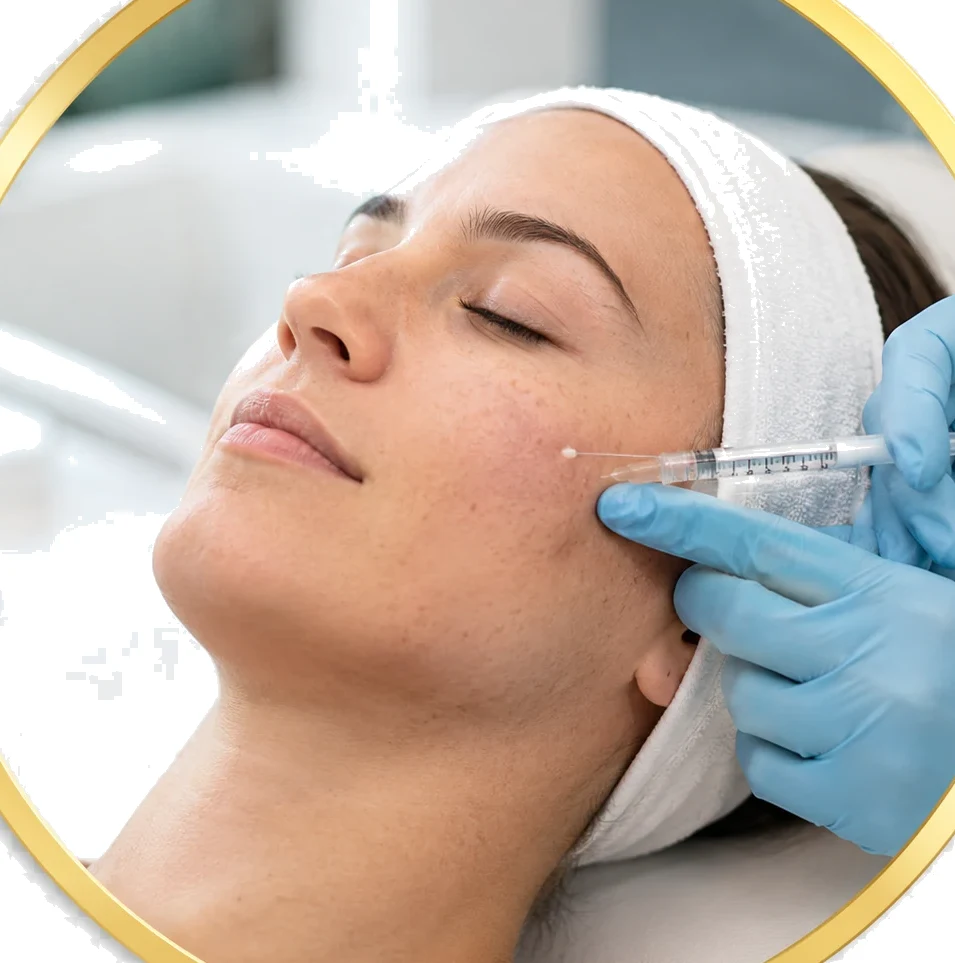

Most people have an initial course of three to four polynucleotide sessions, two to four weeks apart, then a maintenance session every six to twelve months. Where you sit in that window depends on your skin, your age and what you are treating, which is why the interval is set after an individual assessment and not copied from a chart. At NexGen Clinic in Cambridge, polynucleotides start from £180 per session, and the plan we build around them is designed to keep results looking natural without more treatment than you need.
This guide explains each phase of the schedule, what moves your interval, how a first year can look in practice and what to check before you commit.
TL;DR
- The usual pattern is an initial course of three to four sessions, two to four weeks apart, followed by maintenance every six to twelve months.
- Skin that needs structural support, such as laxity, may be treated more often: one expert paper describes a top-up every three months after the first course.
- Results build over weeks to months, so judge the course after it is finished, not after the first session.
- Your interval is set at an individual assessment, by a suitably trained practitioner who examines you in person.
- A fish allergy rules polynucleotides out, so tell your practitioner at the first consultation.
Table of Contents
- The schedule at a glance
- Phase one: the initial course
- Phase two: how often to maintain
- What changes your interval
- A worked example: one possible first year
- Signs a top-up may be due
- Polynucleotides compared with other skin boosters
- Safe use: who should treat you and who should avoid it
- Our perspective
- Plan your course and top-ups with NexGen
- FAQ
- Sources
The schedule at a glance
Polynucleotides are injectable treatments designed to support skin quality, hydration and the structure of the dermis, the layer of skin beneath the surface. Because their effect builds gradually, the schedule has two parts: a short, closely spaced course to start, and widely spaced top-ups afterwards.
| Phase | Typical sessions | Typical spacing | Source |
|---|---|---|---|
| Initial course | 3 to 4 | 2 to 4 weeks apart | The Aesthetic Journal |
| Initial course for hydration and rejuvenation | 3 | 4 weeks apart | Expert opinion paper, PMC, 2026 |
| Maintenance, general skin quality | 1 top-up | Every 6 to 12 months | The Aesthetic Journal |
| Maintenance, facial laxity and structural support | 1 top-up | Every 3 months after the first course | Expert opinion paper, PMC, 2026 |
The ranges differ because the evidence base is still young and because practitioners treat different concerns. That is not a contradiction: a tired, dehydrated cheek and a thin, crepey under-eye area are different jobs, and they get different plans.
Considering treatment? Explore our Polynucleotide treatment in Cambridge — consultation-led regenerative care from our registered medical team at NexGen Clinic.
Phase one: the initial course
The first course is not maintenance, but it decides how long maintenance can be left. Skipping sessions or spacing them too far apart gives your skin less of a foundation to build on.
A typical course looks like this:
- Assessment. Your skin, facial structure, medical history and goals are reviewed. This is where allergies, medication and previous treatments are checked.
- Sessions one to three (sometimes four). Spaced two to four weeks apart. The expert opinion paper published in PMC in January 2026 recommends three sessions at four-week intervals for skin hydration and rejuvenation.
- Settling period. Polynucleotides work over time. The proposed longer-term effect is increased collagen production and improved quality of the extracellular matrix, the supporting scaffold between skin cells, over weeks to months. Expect gradual change, not a result you can judge in the mirror the same week.
- Review. Once the course is complete and the skin has had time to respond, your practitioner compares it with where you started and sets the first maintenance date.
A consensus report in the Journal of Cosmetic Dermatology by a panel of aesthetic physicians looked at the number of sessions and the intervals between them for different areas, including the face, the eye area, the neck and décolleté, hands and stretch marks. The takeaway for you is that the right number varies by area, which is one reason a standard package is a starting point and not a promise.
Phase two: how often to maintain
Standard protocols involve maintenance every six to twelve months after the initial course of three treatments. That is a wide window, and most people fall somewhere inside it for identifiable reasons.
Nearer six months
You may suit the shorter end if your skin is thinner or more lax, if you are treating a delicate area such as under the eyes, or if you want the smoother, more hydrated look you reached after the course to stay constant. For facial laxity, the PMC expert paper describes treatment every three months after the first three sessions. That is a specialist protocol for a specific concern, not a rule for everyone.
Nearer twelve months
If your main goal is general freshness and hydration, and your skin held up well after the course, a yearly top-up may be enough. Many people in their late twenties and thirties who are treating early dullness or dehydration fit here.
Why not simply book every three months?
More frequent treatment is not automatically better. Published studies report a favourable safety profile, with adverse events largely limited to injection-site reactions, but early clinical data is promising rather than conclusive and studies are small. Treating on a schedule your skin actually needs is the approach we take at NexGen: every plan begins with an assessment, and the aim is natural-looking results without unnecessary or excessive treatment.
What changes your interval
No single table can tell you your date. These are the factors your practitioner weighs.
- Your concern. Hydration and radiance suggest a longer interval. Thin, crepey skin or laxity may suggest a shorter one, as the three-monthly protocol above shows.
- The area. Under-eye skin is thin and behaves differently from the cheek. Our guide to polynucleotides under the eyes explains what to expect there.
- Your starting point. Skin that is very dry, thin or sun-affected has more to recover. Your first review shows how much the course achieved.
- Your age and skin stage. The sources describe younger skin as more likely to hold results for longer, and older or thinner skin as more likely to want closer top-ups. Treat this as a tendency, not a prediction.
- Your goals and calendar. A wedding, a holiday or a busy season at work can shape when you want to be at your best, and your top-up can be timed around it.
- What else you are doing. Combining polynucleotides with other treatments or a clinic-grade skincare routine changes the overall plan. See our guide to peptides in skincare for the at-home side, and for a wider look at how peptides are used for skin, skin health and peptide therapy is a useful companion topic.
A worked example: one possible first year
This is an illustration of how a plan can be laid out, not a record of a real patient and not a guarantee of outcome.
Imagine a 38-year-old professional with dull, slightly dehydrated skin who wants a fresher look for the following summer.
| When | What happens |
|---|---|
| Month 0 | Consultation and first session |
| Month 1 | Second session |
| Month 2 | Third session |
| Months 3 to 4 | Skin settles, review against the starting photographs and notes |
| Months 8 to 12 | Maintenance session if the review and your skin suggest it is due |
At the listed starting price of £180 per session at NexGen, a three-session course starts from £540, with a maintenance session starting from £180. The final price depends on the area treated and your plan, and the typical UK range for a single session is £250 to £450. For a fuller breakdown of how courses are priced, see our guide to polynucleotide costs in the UK.
Signs a top-up may be due
You do not need to wait for results to disappear. Common cues that a maintenance review is worth booking:
- Your skin feels tighter or drier than it did a few months after your course.
- Fine lines or crepey texture in treated areas look more visible again.
- Your skin looks duller in photographs than it did at your last review.
- An event is coming and you want your skin in its best state, which usually means treating a few weeks beforehand, not days.
None of these is a diagnosis. A short review shows whether you need a session now, later or a different treatment altogether.
Polynucleotides compared with other skin boosters
If you are choosing between treatments, the schedule is part of the decision. Polynucleotides are usually given as a short course followed by maintenance months apart. Profhilo is a different injectable with its own course and top-up pattern, starting from £250 per session at NexGen, and a consultation compares them against your skin and goals. Our overview of skin booster costs sets the options side by side, and microneedling is another collagen-focused option often discussed in the same appointment.
Safe use: who should treat you and who should avoid it
Polynucleotide products are commonly derived from fish DNA, so polynucleotide treatments are unsuitable for anyone with a fish allergy. Tell your practitioner at consultation about any allergy, medication or condition, and if you are pregnant or breastfeeding or have a skin infection near the treatment area, raise that too so they can advise on timing.
Who treats you matters as much as how often. The Royal College of Surgeons has recommended that non-surgical cosmetic procedures, including injectables, are performed by appropriately trained doctors, dentists and nurses. The same standards say practitioners must manage expectations honestly and avoid unrealistic claims. GMC guidance requires doctors to examine patients in person before prescribing injectable cosmetic medicines.
In England, the Health and Care Act 2022 also gives the Secretary of State power to require licences for specified cosmetic procedures, so the rules around who may treat you are developing. Mild swelling, redness or small bumps at injection sites are the usual reactions; our guide to polynucleotide side effects explains what is normal and when to get in touch. If you develop severe swelling, spreading redness, fever or breathing difficulty, seek urgent medical help.
Our perspective
Patients usually ask us a simple question: "How often do I need to come back?" The honest answer is that it depends on you. We build every plan around an individual assessment of your skin health, your facial harmony and what you want to achieve, because two people with the same schedule on paper can have very different skin.
With over 15 years in aesthetics, our view is that the best maintenance plan is the lightest one that keeps you looking like yourself. Polynucleotides sit comfortably within the regenerative approach we favour: they support skin quality over time and combine well with established techniques, rather than changing how your face looks.
That is why we set a review point after your initial course and let your skin, not a fixed calendar, guide the next step. You leave with a clear plan, a realistic expectation of timing and a recommendation you can trust.
Ms Sandra Petraskaite
Plan your course and top-ups with NexGen
If you are ready to start, or want to understand where your skin sits in the schedule, our Cambridge clinic offers polynucleotide treatment from £180 per session, beginning with an individual assessment of your skin and goals. You leave with a course plan and a recommended review point, so you know when your next session is due. Book a consultation to get started.
You can also see what other treatments we offer on our treatments page, including skin boosters and anti-wrinkle injections.
FAQ
How often should you maintain polynucleotides?
Standard protocols involve maintenance every six to twelve months after an initial course of three sessions. Some concerns, such as facial laxity, may be treated more often, and one expert paper describes a three-monthly pattern. Your own interval is set at review, based on how your skin responds.
How many polynucleotide sessions do I need to start?
Most people have three to four sessions spaced two to four weeks apart. For hydration and rejuvenation, one expert opinion paper recommends three sessions four weeks apart. Your practitioner confirms the number after assessing your skin and the area being treated.
How long do polynucleotide results last?
Results are generally described as lasting around six to twelve months, and they build gradually over weeks to months as skin quality improves. How long yours last depends on your skin, your age and the area treated. A review after your course gives you a personal timeline.
What happens if I miss a maintenance session?
Your skin does not suddenly revert, but the benefits gradually fade over time. If a long gap has passed, you may be advised to repeat a short course instead of a single top-up. Your practitioner will judge this at a quick review.
Can everyone have polynucleotides?
No. Anyone with a fish allergy should not have them, and your practitioner will also ask about medication, pregnancy or breastfeeding, and skin conditions near the treatment area. A full consultation before the first session covers all of this.
Sources
- Polynucleotides: a sober look at the evidence, The Aesthetic Journal
- Expert Perspectives: Evidence-Based Applications of Polynucleotides, PMC
- Consensus report on the use of PN-HPT in aesthetic medicine, PubMed
- Practitioner's Complete Guide to Polynucleotides, ACRE
- Surgeons publish landmark standards for cosmetic practice, Royal College of Surgeons
- Professional Standards for Cosmetic Surgery, Royal College of Surgeons
- Health and Care Act 2022, cosmetic procedures, legislation.gov.uk
- Skin health and peptide therapy
Recommended
- Polynucleotides Cost UK: Treatment Sessions Explained
- Polynucleotides Explained: A Beginner’s Guide
- Polynucleotides side effects: what patients need to know
- Polynucleotides vs Profhilo: Key Differences Explained
Ready to explore your options?
Speak with a NexGen clinician for a personalised consultation. We’ll listen, assess, and recommend the safest and most effective route — always led by evidence, always tailored to you.
Book a consultation or get in touch with our Cambridge team.