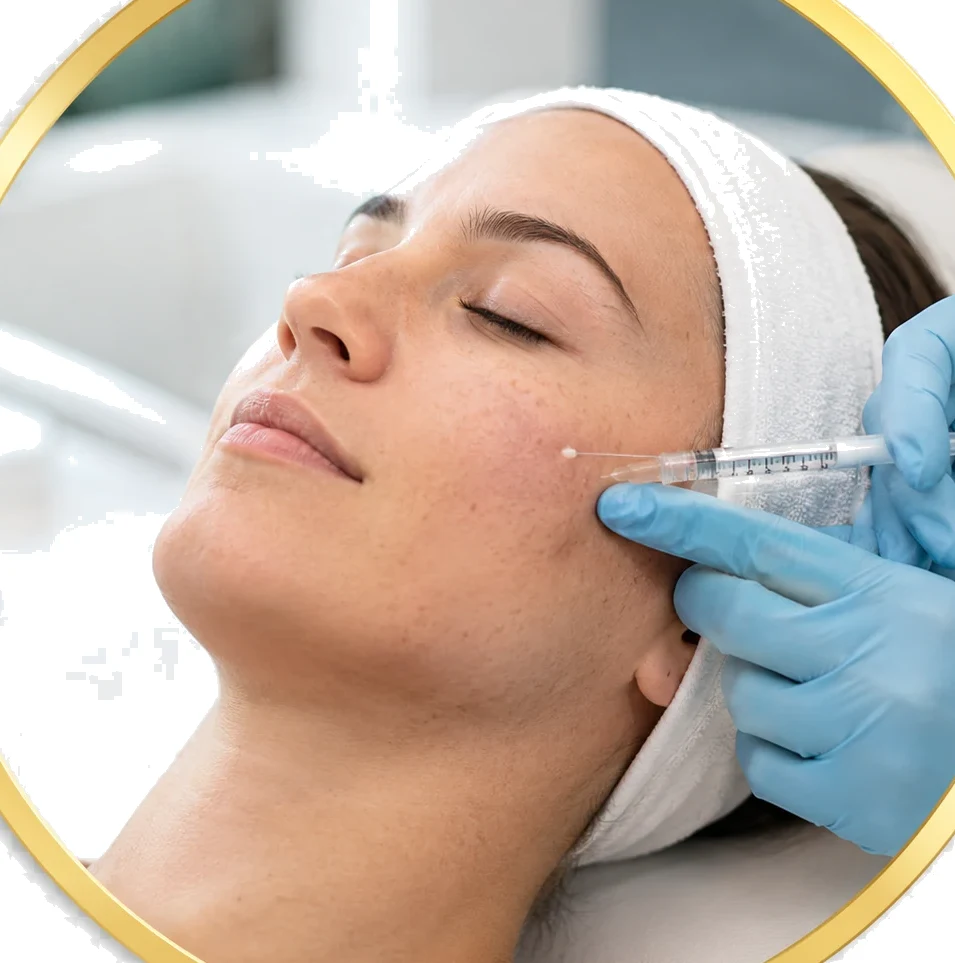

A good UK polynucleotide course is a one-day, CPD-accredited programme that combines theory with supervised injecting on a live model, and it is open to medical professionals and to trained beauty or aesthetics practitioners who meet the entry requirements. The right course depends on your starting qualification, your insurance and how much real treatment you do under supervision. Here is what to look for, and how the treatment itself works, so you can judge a course properly.
At NexGen Clinic in Cambridge we offer polynucleotide treatments to patients and accredited aesthetics training for practitioners, so we see the treatment from both sides: how it is taught and how it is delivered in clinic.
TL;DR
- Most UK polynucleotide courses last one day, often with online theory beforehand, and end in a CPD certificate.
- Entry usually requires a medical registration, a Level 3 beauty qualification or a foundation injectables qualification, plus some months of experience. Requirements differ by provider.
- A credible course includes anatomy, patient selection, contraindications, complication management and supervised treatment of a live model.
- Check your indemnity insurance covers the treatment before you book, and learn the rules on who may inject.
- If you want to see the treatment as a patient first, you can book a polynucleotide consultation with us.
Table of Contents
- What polynucleotides are and why practitioners train in them
- What a good polynucleotide course teaches
- Who can enrol
- Course formats, length and certificates
- Hands-on practice: what to look for
- Insurance, registration and the rules
- How to choose a course: a checklist
- Seeing the treatment as a patient first
- Our perspective
- Polynucleotides at NexGen Clinic
- FAQ
- Sources
What polynucleotides are and why practitioners train in them
Polynucleotides are injectable fragments of DNA, usually fish-derived, used to support skin repair. One UK course describes them as triggering collagen induction and fibroblast production. Fibroblasts are the skin cells that make collagen and elastin. A clinician writing in the UK press describes the effect as hydrating the skin and stimulating collagen and elastin, with a typical plan of 2 to 3 sessions, 2 to 3 weeks apart.
That is why the treatment appeals to practitioners: it suits tired, dull or dehydrated skin, and the area around the eyes, without adding volume. If you are new to the topic, our beginner's guide to polynucleotides explains the treatment from the patient's side.
Considering treatment? Explore our Polynucleotide treatment in Cambridge — consultation-led regenerative care from our registered medical team at NexGen Clinic.
What a good polynucleotide course teaches
Course pages across the UK follow a similar pattern. Together they point to the content you should expect:
- Skin science and anatomy. One academy lists skin science, anatomy, product knowledge and consultation. A more academic syllabus covers the dermal extracellular matrix, fibroblast biostimulation and angiogenesis, meaning the skin's supporting structure, collagen-making cells and new blood vessel formation.
- Patient selection and consultation. Medical history, suitability and treatment planning come before any needle.
- Injection technique. Expect microdroplet, linear retrograde and cannula techniques, and different approaches for the face, the area around the eyes, neck, décolleté and scalp.
- Safety. Contraindications, infection prevention, side effects, complication management and aftercare. One syllabus also names fish-allergy screening, vascular occlusion and anaphylaxis. Vascular occlusion means a blocked blood vessel, a rare but urgent complication.
- Rules and products. UK medical-device rules, consent and record keeping.
If a course page lists only product demonstrations and no safety content, it is teaching less than the standard above.
Who can enrol
There is no single national entry rule. Each provider sets its own, and they are broadly similar:
| Route | Typical requirement |
|---|---|
| Registered medical professional | Nurse, doctor or dentist registration, accepted by several providers |
| Beauty therapist | A Level 3 qualification, sometimes with six months' advanced treatment experience and anatomy and physiology |
| Injectables practitioner | A foundation dermal filler or skin booster qualification plus around six months' experience |
| Needling experience | Six months of documented microneedling or similar, accepted by some academies |
Some providers also set an age minimum of 18 and an online theory test before the practical day: one requires 80% on a 30-question assessment. Another describes its course as CPD and not a replacement for a primary qualification. CPD means continuing professional development: it adds a skill to an existing qualification.
If you are a non-medic starting from scratch, a polynucleotide course is usually a second step. Our guide to becoming an aesthetic practitioner in the UK sets out the order of qualifications.
Course formats, length and certificates
Most courses are short:
- Blended, one day. One well-known academy lists 2 hours of e-learning and 4 hours of practical training, 6 CPD hours in total.
- Classroom day. Another runs 10am to 4pm.
- Demonstration, then model. A typical day has online theory, a live demonstration and supervised live-model practice, ending in a certificate of completion.
- Fully online. Some courses use a manual, videos and an assessment, with a pass mark of 60%. These teach theory only. Injecting is a practical skill, so for treating the public choose a course with hands-on supervised practice.
The certificate is usually CPD-accredited. One provider notes its certificate allows work on the public subject to insurance.
Hands-on practice: what to look for
The practical session is the part that matters most. Look for a tutor who demonstrates a full treatment, then observes you treating a model and gives feedback on consultation, technique, safety and aftercare. Ask how many learners share each tutor and whether models are supplied.
Practice standards from a UK professional body say practitioners should work within competence, assess suitability, obtain informed consent and keep CPD up to date. The same standards expect documented histories, photographs in the record, emergency-kit access and written adverse-event protocols. Your training should prepare you to meet these.
Insurance, registration and the rules
Before paying, check three things.
- Insurance. A UK professional body states practitioners are legally required to have indemnity insurance for the treatments they perform. Confirm with your insurer that your course and the treatments you plan to offer meet its requirements. Providers themselves tell trainees to do this.
- Registration. Patients are advised to check a practitioner's professional-body registration, such as the GMC, GDC, NMC, GPhC or HCPC. If you are registered, your regulator's standards apply to how you practise.
- Competence. A professional code says members should practise within their competence and in suitable clinical environments. A certificate does not widen your scope on its own.
Patients are also advised to expect a face-to-face consultation and a cooling-off period before treatment, so build this into how you plan to work.
How to choose a course: a checklist
- Do you meet the stated entry requirements today?
- Is there supervised injecting on a live model, with feedback?
- Does the syllabus cover contraindications, allergy screening and complications?
- Is the certificate CPD-accredited, and does your insurer accept it?
- Is there support after the day, for example for questions in your first treatments?
- Does the course explain evidence and what polynucleotides can and cannot do for a given patient?
On the last point, one London clinician notes that because polynucleotides stimulate the patient's own cells, results depend on how well the body responds. Good training teaches you to set expectations honestly at consultation.
Seeing the treatment as a patient first
Many trainees find it useful to understand the patient journey before they inject: the consultation, the sensation, the downtime and the sessions. Our pages on polynucleotide side effects, treatment costs in the UK and polynucleotides under the eyes cover that side.
Our perspective
Training shows its value in the consultation room, not the certificate. We approach aesthetics with over 15 years of experience, and every treatment at NexGen begins with an individual assessment of skin health, facial harmony and the person's goals.
That is what we think a polynucleotide course should build in you: clinical judgement, honest recommendations and natural-looking results without unnecessary treatment. Technique can be learned in a day. Knowing when a treatment is right for a patient, and when it is not, takes supervised practice and a consultation-led habit.
If you are choosing between courses, choose the one that makes you a safer, more thoughtful practitioner, and keep learning once the day is over.
Ms Sandra Petraskaite
Polynucleotides at NexGen Clinic
If you are a patient or a practitioner who wants to experience the treatment first, our Cambridge clinic offers polynucleotides from £180 per session, after an individual assessment. Find out more on our polynucleotides page, or see the full list of treatments. Book a consultation to discuss your skin, your goals and a suitable plan.
FAQ
Can I take a polynucleotide course with no experience?
Usually not. Providers generally ask for a medical registration, a Level 3 beauty qualification or a foundation injectables qualification, often with six months of experience. Start with a foundation course, then add polynucleotides.
How long does polynucleotide training take?
Most UK courses are a single day, often with a few hours of online theory first. One provider lists a total of 6 CPD hours. Online-only options exist but teach theory without live injecting.
Do I need insurance to treat patients after the course?
Yes. A UK professional body states practitioners must hold indemnity insurance for the treatments they perform. Ask your insurer to confirm the course and treatments are covered before you book.
Is a CPD certificate enough to practise?
A CPD certificate shows you completed accredited learning. It adds to your existing qualification and does not replace it, so practise within your professional competence and registration.
What results should patients expect from polynucleotides?
A typical plan is 2 to 3 sessions, 2 to 3 weeks apart, with results reported to last 3 to 6 months. Results vary because they rely on the patient's own skin response. A consultation sets realistic expectations.
Sources
- Polynucleotides Training Course, Harley Academy
- Tried & tested: The salmon sperm facial, Women's Health UK
- Polynucleotides Course, Rose Skin Academy
- Polynucleotides Course, National Aesthetic Training Academy
- Polynucleotides Training in Chichester, The Beauty Aesthetics Academy
- Polynucleotide Training London, The Cosmetic College
- CPD Polynucleotide Training Course, BW Training
- Polynucleotides Training Course, EMF Training
- Polynucleotides Training London, London Medical School
- Online Polynucleotides, Allure Training Academy
- Practice Standards, ACE UK
- Polynucleotides, ACE UK
- Code of Professional Conduct, BAMAN, August 2024
- Rejuran polynucleotide treatment, Harper's Bazaar UK
Recommended
- Polynucleotides Cost UK: Treatment Sessions Explained
- Polynucleotides Explained: A Beginner’s Guide
- Polynucleotide Maintenance Schedule
- Polynucleotides vs Profhilo: Key Differences Explained
Ready to explore your options?
Speak with a NexGen clinician for a personalised consultation. We’ll listen, assess, and recommend the safest and most effective route — always led by evidence, always tailored to you.
Book a consultation or get in touch with our Cambridge team.