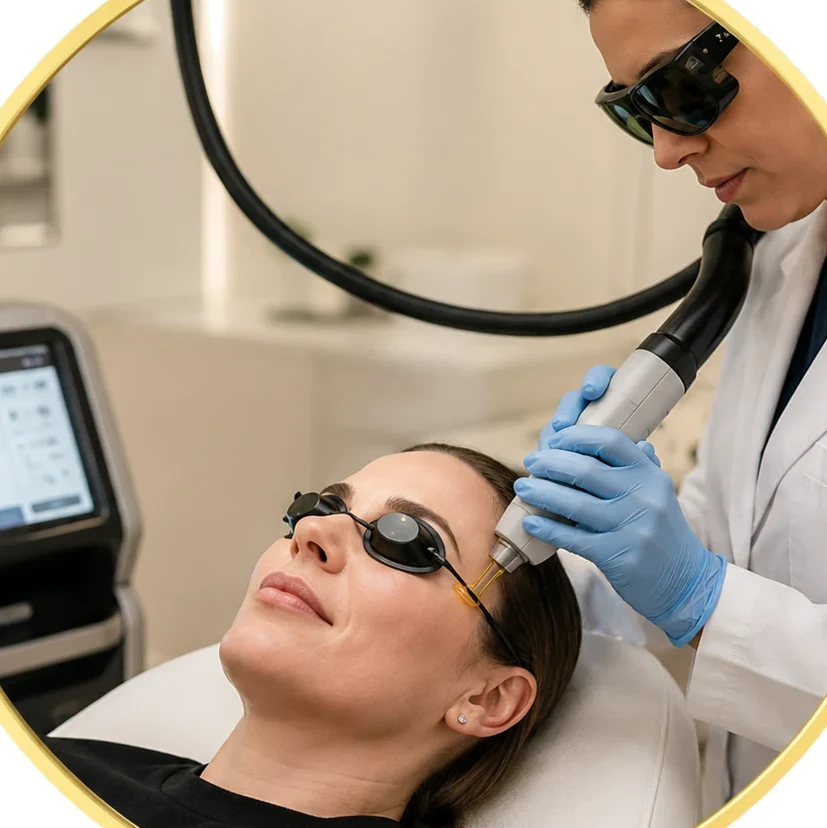

An advanced facial, sometimes called a medical facial, goes further than a spa facial. It combines treatments such as microneedling, skin boosters, polynucleotides or lasers with a proper skin assessment, so the aim is lasting improvement in skin health rather than a glow that fades in days. At NexGen Clinic in Cambridge, every treatment begins with an individual assessment of your skin, facial harmony and goals, and that assessment is what makes the benefits below realistic for you.
TL;DR
- Advanced facials target skin quality: texture, hydration, tone, fine lines and firmness, not just surface cleansing.
- Results build gradually over weeks to months, and most treatments are repeated as a course or maintained over time.
- The right treatment depends on your concern: dullness and dehydration, fine lines, scarring, or early loss of firmness each call for a different approach.
- In the UK, anyone can call a business a clinic, so the consultation and who treats you matter as much as the treatment.
- Our consultation-led approach is built around natural-looking results and honest recommendations.
Table of Contents
- What makes a facial "advanced"
- The main benefits
- Which treatment suits which concern
- How long results take and last
- What a safe consultation looks like
- Our prices
- Book an assessment in Cambridge
- Our perspective
- FAQ
- Sources
What makes a facial "advanced"
A conventional facial typically includes cleansing, exfoliation, steam, extraction, a mask and moisturiser. It works on the surface, and the effect is mostly short-lived.
An advanced facial works deeper. Treatments such as microneedling use fine needles to create controlled micro-injuries that prompt the skin to make new collagen and elastin, according to Dermatology UK's microneedling guide. Lasers work with light energy: a 2024 review in the Journal of Cosmetic Dermatology describes fractional lasers for minimal-downtime rejuvenation and non-ablative lasers that promote collagen with reduced downtime.
UK Parliament's research briefing groups non-surgical cosmetic procedures as treatments done without cutting the skin, with botulinum toxin, dermal fillers, chemical peels and lasers as examples. "Advanced" is therefore a descriptive term, not a regulated one. What matters is what is actually done to your skin and by whom.
The main benefits
Better texture and smoother fine lines
Collagen-stimulating treatments are the best-evidenced route to smoother skin. Over a course, microneedling can soften fine lines, improve texture and help certain scarring, with acne scarring among its better-evidenced uses, according to Dermatology UK. A 2026 systematic review of microneedling with exosomes reported, in one split-face trial at week 12, wrinkle roughness reductions of around 12 to 14% on the treated side against around 7% on the control side.
Our microneedling treatment is one of the options we use for this concern.
Hydration and radiance
Tired, dull or dehydrated skin is one of the most common reasons people book. Skin boosters and polynucleotides are designed to improve hydration and skin quality from within the skin rather than adding volume. Our skin boosters are used for deep hydration, and Profhilo and polynucleotides are the two treatments clients most often ask us to compare.
Tone and pigmentation
Uneven tone responds to a combination of professional treatment and daily skincare. The 2023 British Journal of Dermatology review describes prescription tretinoin as the clinical gold standard for skin rejuvenation, with robust evidence that it reduces wrinkling and hyperpigmentation and improves texture. It is prescription-only, so it needs a clinician's assessment. Lasers can also address tone and texture, and our laser skin treatments are planned around your skin type.
Early signs of lost firmness
For mild laxity, collagen-stimulating approaches can help. Radiofrequency microneedling adds heat for some skin tightening, and its results commonly last around 12 to 18 months with annual maintenance, per Dermatology UK. For more noticeable lower-face changes, we cover options in our guide to non-surgical jowl treatment.
Prevention and skin health
The BJD authors argue for promoting "skin health" rather than "antiageing", with objective, evidence-based and non-judgemental advice. That fits how many of our clients think: small, well-timed treatments that keep skin healthy are often a better plan than waiting for visible change.
Which treatment suits which concern
| Your concern | Treatments we may discuss | What to expect |
|---|---|---|
| Dull, dehydrated skin | Skin boosters, Profhilo, polynucleotides, HydraFacial | Gradual improvement in hydration and glow |
| Fine lines and rough texture | Microneedling, lasers | Builds over weeks to months |
| Scarring | Microneedling, lasers | Course of sessions, gradual change |
| Early sagging | PDO threads, collagen-stimulating programmes | Subtle lift, maintained over time |
| Lost volume | Dermal fillers | Immediate shape change, natural-looking when planned well |
| Expression lines | Anti-wrinkle injections | Softer movement lines |
The BJD review also notes that even the best rejuvenation programme will not reverse volume changes from fat redistribution, atrophy and deeper bone loss. Volume is a different problem from texture, which is why a single treatment is rarely the whole answer. Our guide to full-face rejuvenation and layering explains how treatments are combined safely.
How long results take and last
Advanced treatments are not instant, and they should not be. Microneedling results build gradually over weeks to months and are not permanent. Cellular changes from topical retinoids and peptides also take months, so improvement is gradual, as the BJD review notes.
Downtime is usually modest. After microneedling, redness commonly settles within 24 to 72 hours, with possible mild swelling, tightness or flaking around days 3 to 5, according to Dermatology UK. Afterwards, keep the skin clean, avoid makeup, retinoids, acids and heat at first, and use broad-spectrum SPF. Your practitioner will give you aftercare specific to your treatment.
If you are preparing for a wedding, holiday or event, plan the course well ahead rather than the week before, so any redness has settled and results have time to develop. We can map a timeline at your consultation.
What a safe consultation looks like
In England, a business can call itself a clinic without CQC registration or a medical lead, and the same report says non-medical practitioners can legally administer dermal fillers without oversight. That is why the consultation matters.
The JCCP's definitions paper lists what a proper pre-treatment consultation should include:
- informed consent
- your medical and psychosocial history
- your reasons and expectations
- a physical and psychological assessment
- agreed benefits and risks
- outcome expectations
- follow-up arrangements
The JCCP and CPSA Code of Practice also expects practitioners to base treatment on current evidence about effectiveness, side effects and risks, and to work within their competence. Treatments involving prescription-only medicines, such as anti-wrinkle injections, or higher medical risk, such as dermal fillers and deeper peels, belong with a qualified medical professional, as a consultant dermatologist told Marie Claire UK.
If you are new to aesthetics, read what happens in our private aesthetic consultation, or see how we use a digital skin consultation to assess your skin.
Our prices
Published starting prices on our site: lip fillers from £160, dermal fillers from £180, polynucleotides from £180 per session, Profhilo from £250 per session and PDO threads from £350. Skin boosters, microneedling, lasers, HydraFacial and anti-wrinkle injections are priced after assessment, because the plan depends on your skin.
Book an assessment in Cambridge
If you want to know which advanced treatment fits your skin, start with an assessment rather than a treatment choice. We look at your skin condition, facial features, concerns and long-term goals, then recommend only what you need. You can see everything we offer on our treatments page, or learn more about advanced facial treatments in Cambridge. Book a consultation to get a plan built around you.
Our perspective
Most people who come to us do not want to look different. They want skin that looks rested, even and healthy, and they want an honest view on how to get there.
That is why we begin with assessment, not a menu. Over 15 years, we have combined established aesthetic techniques with newer regenerative approaches, and the best results come from matching the treatment to the skin in front of us, at a pace that keeps the result natural.
An advanced facial is not one product. It is a plan: hydration and collagen support first, volume or lift only where it is needed, and maintenance that is realistic. We would rather recommend less and do it well.
Ms Sandra Petraskaite
FAQ
Is a medical facial worth it compared with a standard facial?
A standard facial cleanses and refreshes the surface for a few days. A medical facial uses treatments that act on deeper skin layers to improve texture, hydration or collagen over time. If you want lasting change rather than a short-term glow, the advanced route is designed for that.
How many sessions will I need?
This depends on the treatment and your skin. Microneedling and similar collagen-stimulating treatments are usually planned as a course, with results building over weeks to months. We confirm the number of sessions at your assessment.
Is there downtime?
Most advanced facials involve limited downtime. Redness after microneedling commonly settles within 24 to 72 hours, and some people notice mild tightness or flaking around days 3 to 5. Your practitioner will advise on makeup, sun protection and skincare afterwards.
Who should avoid these treatments?
Suitability depends on your medical history, medicines and skin condition, which is why a full consultation comes first. Tell your practitioner about pregnancy, skin conditions, recent sun exposure or any medication, so the plan is safe for you.
Can men have advanced facials?
Yes. Many men come to us for subtle improvements in skin quality and confidence, and the same assessment-led approach applies.
Sources
- Skin ageing and topical rejuvenation strategies, British Journal of Dermatology
- Microneedling with exosomes in dermatology, systematic review
- Advancements in laser technologies for skin rejuvenation
- Microneedling UK guide, Dermatology UK
- Regulation of non-surgical cosmetic procedures, UK Parliament
- Ethical dilemmas shaping the UK aesthetics industry
- JCCP medical and cosmetic definitions paper
- JCCP and CPSA Code of Practice
- Aesthetician or dermatologist, Marie Claire UK
Recommended
- Medical facial vs spa facial: which one suits your skin?
- Advanced Facial Treatments Cambridge
- Glass Skin Facial: AI Assessment Beyond the Instant Glow
- Medical grade skincare: what UK consumers need to know
Ready to explore your options?
Speak with a NexGen clinician for a personalised consultation. We’ll listen, assess, and recommend the safest and most effective route — always led by evidence, always tailored to you.
Book a consultation or get in touch with our Cambridge team.