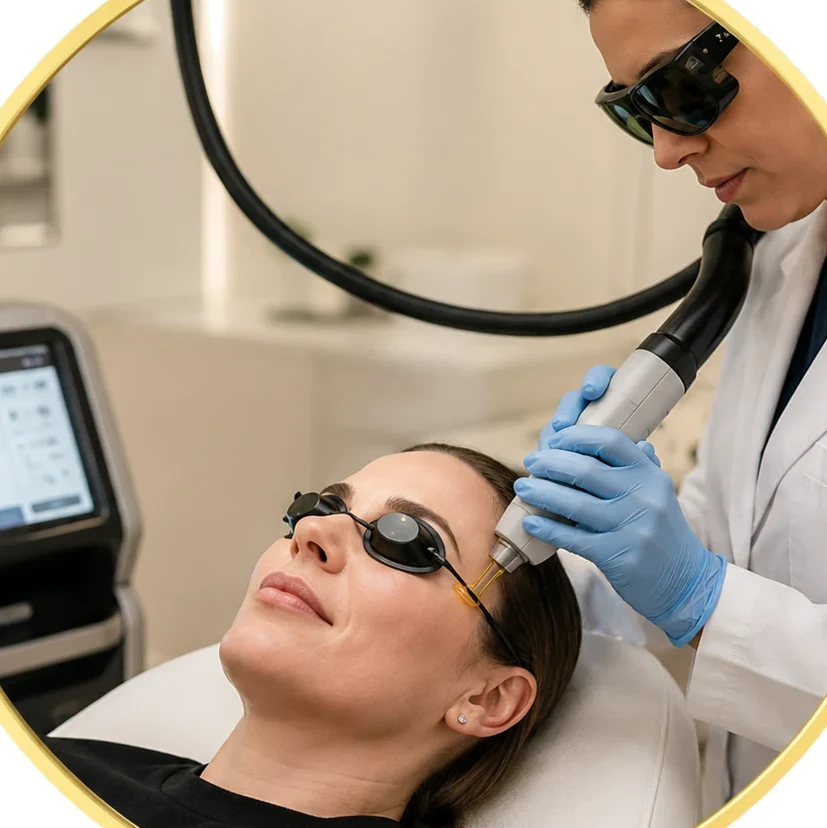

Most everyday skincare is fine while you breastfeed. The short list to pause is retinoids (including retinol) and hydroquinone. Gentle cleansers, ceramide moisturisers, hyaluronic acid, vitamin C, niacinamide, azelaic acid and mineral sunscreen are the usual building blocks of a routine that is both safe and effective. The sections below explain why, how to apply products around your baby, and when to ask a professional.
This guide is general information, not personal medical advice. If you take prescription medicines, have a skin condition such as eczema or acne, or your baby was born early or has health problems, check your routine with your pharmacist, GP or health visitor.
TL;DR
- Pause retinoids (retinol, retinal, tretinoin, adapalene) and hydroquinone while breastfeeding, and ask your pharmacist or GP if you are unsure about a prescription product.
- Hyaluronic acid, ceramides, niacinamide, vitamin C and azelaic acid are widely considered fine to use.
- Choose mineral sunscreen (zinc oxide or titanium dioxide) and a short, fragrance-free routine.
- Keep products off the nipple and areola, and wash your hands before feeding.
- Elective injectable treatments are best delayed until you have finished breastfeeding.
Table of Contents
- Why the advice feels confusing
- Ingredients to pause while breastfeeding
- Ingredients that are generally fine
- How to apply products safely around your baby
- A simple routine you can follow
- Why breastfeeding skin often feels worse than before
- What about clinic treatments while breastfeeding?
- Our perspective
- Planning ahead with NEXGEN Clinic
- When to see a professional
- FAQ
- Sources
Why the advice feels confusing
There are very few clinical trials of cosmetics in breastfeeding women, because researchers rarely test non-essential products on mothers and babies. The NCT notes that there is a cautious approach and few clinical trials of beauty products, so often only the mildest treatments are recommended.
That gap in evidence produces two problems. Some brands and forums say "avoid everything", which leaves you with dry, uncomfortable skin. Others say "it is all natural, so it is fine", which is not a safe rule either. The reality sits between the two.
The breastfeeding list is also shorter than the pregnancy list. In an interview, Dr Jo Mennie explains that the list of things to avoid is shorter than in pregnancy, though a few ingredients carry straight over. She also says breastfeeding mothers often get over-cautious advice about low-risk ingredients.
Ingredients to pause while breastfeeding
Retinoids
Retinoids are vitamin A derivatives: retinol, retinal, tretinoin, adapalene and the oral medicine isotretinoin. UK primary care acne guidance says to avoid topical retinoids in pregnancy or breastfeeding. Another NHS primary care guideline takes the same precautionary position on retinoids: data on nursing infants is limited, so safety has not been established.
You may see sources that call topical retinoids "probably low risk" because very little reaches the bloodstream. That is a fair reading of the pharmacology, but it is not the position of the UK guidelines above. Because retinoids are a skin-quality extra rather than a necessity, the simple approach is to pause them. If you use prescription tretinoin or adapalene for acne, do not simply stop or carry on: speak to your GP, pharmacist or dermatologist about a breastfeeding-compatible plan.
Once you are ready to restart later, our guide to the tretinoin purge timeline explains what to expect and when to ask for a review.
Hydroquinone
Hydroquinone is a skin-lightening agent sometimes used for pigmentation. One expert interview reports that skin absorption is around 35 to 45 percent, which is unusually high for a topical ingredient. For that reason it is generally advised to wait until you have stopped breastfeeding. Hydroquinone is a regulated ingredient in the UK, so it will normally come through a prescriber rather than an ordinary shop.
Unverified and homemade products
The NCT advises avoiding unbranded, internet-sourced or DIY products, because concentrations and safety cannot be verified. Choose products with a full ingredient list from a reputable source. Essential-oil blends are worth treating with particular caution, as there is little safety data on them.
Fragrance and long ingredient lists
This is a precaution, not a prohibition. Because there is so little trial data, the sensible approach is to reduce the number of products and the overall exposure. Short ingredient lists and fragrance-free formulas also lower the chance of irritation, which matters when your skin barrier is already under strain.
Ingredients that are generally fine
The table summarises the usual position. It is a guide to common cosmetic strengths, not a guarantee for every product.
| Ingredient | Typical position while breastfeeding | What it helps with |
|---|---|---|
| Hyaluronic acid | Generally considered fine | Hydration, plumper-feeling skin |
| Ceramides, glycerin | Generally considered fine | Barrier support, dryness |
| Niacinamide | Generally considered fine | Oiliness, uneven tone, barrier |
| Vitamin C | Generally considered fine | Dullness, early pigmentation |
| Azelaic acid | Generally considered fine | Redness, breakouts, post-blemish marks |
| Salicylic acid, low strength | Low risk in wash-off cleansers; ask a pharmacist before using leave-on or large-area products | Blocked pores |
| Mineral sunscreen (zinc oxide, titanium dioxide) | Preferred choice | UV protection |
| Retinoids | Pause | n/a |
| Hydroquinone | Pause | n/a |
Dr Mennie says vitamin C and azelaic acid are perfectly acceptable for managing postpartum skin changes, as long as you avoid applying them where your baby will make contact.
If you are choosing between two of these actives for breakouts or uneven tone, our comparison of azelaic acid and niacinamide sets out what each does best for UK skin.
Sunscreen
Hormonal changes can make pigmentation, such as melasma, more visible in the months after birth, and daily sunscreen is the most useful protection. Mineral filters sit on the skin surface and are generally the preferred option while breastfeeding. Our article on mineral versus chemical sunscreen covers SPF choice and application in more detail.
Peptides
Peptides are not on any common avoid list, but evidence in breastfeeding women is thin, as it is for most cosmetic actives. If you want to try them, a simple single-peptide product with a short ingredient list is a reasonable choice, and our guide to peptides in skincare explains realistic timelines. Keep the routine small while you are tired and your skin is reactive.
How to apply products safely around your baby
The main practical risk is not absorption through the skin. It is your baby touching or swallowing product. The Breastfeeding Network says there is very little absorption of creams into breastmilk and that most products can be applied without interrupting breastfeeding. The same factsheet gives these practical precautions:
- Wash your hands thoroughly after applying anything and before feeding or handling your baby.
- Avoid putting skincare on the nipple or areola. If a cream is needed there, apply it sparingly after a feed and gently wipe off any visible product before the next one.
- Where a product must go on the chest, choose a cream rather than an ointment, as it is easier to wash off completely.
- Let face products absorb before cuddling, so your baby's cheek does not rub against actives.
If your baby develops a rash around the mouth or cheeks after you start something new, stop the product and speak to your health visitor or GP.
A simple routine you can follow
You do not need ten steps. The aim is a barrier-friendly routine you can complete in two minutes with one hand.
Morning
- Rinse with water or use a gentle, fragrance-free cleanser.
- Vitamin C serum if your skin tolerates it.
- Moisturiser with ceramides or hyaluronic acid.
- Mineral sunscreen, SPF 30 or higher.
Evening
- Cleanse gently, and use a balm or micellar-style cleanser to remove sunscreen.
- Azelaic acid or niacinamide, if you need help with redness, breakouts or tone.
- A richer moisturiser.
Introduce one new product at a time and wait a week or two before adding another. That way, if something irritates you, you know what caused it.
Why breastfeeding skin often feels worse than before
The most common complaint is not wrinkles. It is dry, tight, dull skin. Hormonal shifts, broken sleep and the fluid demands of milk production can all weaken the skin barrier. Dr Mennie's interview points out that richer ceramide and hyaluronic acid moisturisers are often more effective than trying to keep up a complex pre-pregnancy anti-ageing routine.
If your skin is stinging, flaking or reacting to products it used to tolerate, strip things back before adding anything. Our skin barrier repair plan sets out a short, step-by-step approach. Drinking enough water, eating regularly and sleeping when you can all help, although none of them replaces a good moisturiser.
What about clinic treatments while breastfeeding?
This is where we are deliberately cautious. Anti-wrinkle injections, fillers and other injectable treatments have no dedicated safety research in breastfeeding women. The NCT's guidance reflects this, and the evidence-based approach is to delay elective aesthetic treatments until breastfeeding has finished.
Some clinics will offer treatments with caveats. At NEXGEN Clinic we think the honest recommendation is to wait, because nothing about an elective treatment is urgent. What you can do now is have a conversation, so that you have a clear plan for when you are ready.
Our perspective
We see many new mothers who have been told to stop everything, or who have been sold a long list of products that they do not need. Neither helps. Our approach starts from your skin health, your concerns and your long-term goals, and in the breastfeeding months that usually means doing less, better.
In practice, we would rather you had a barrier-friendly moisturiser, a mineral sunscreen and one well-chosen active than a shelf of untested products. We would also rather say "wait" than offer a treatment that has no safety data behind it. Natural-looking results come from good skin health and good timing, not from rushing.
When you have finished breastfeeding, we can look at the whole picture together: skin quality, hydration, pigmentation and facial balance. That may include regenerative treatments, but only if they suit you and only at the right time.
— Ms Sandra Petraskaite
Planning ahead with NEXGEN Clinic
We are a medical aesthetics clinic in Cambridge, and every treatment begins with an individual assessment. If you are currently breastfeeding, we are happy to talk through your skin concerns and help you plan treatments for after you have finished. Nothing is booked or started until the timing is right for you.
When you are ready, these are the treatments people most often ask us about:
- Profhilo, a skin booster for hydration and skin quality, from £250 per session.
- Polynucleotides, a regenerative skin treatment, from £180 per session.
- Anti-wrinkle injections, for expression lines, with a natural-looking approach. See our guide to Botox aftercare to know what the process involves.
You can see everything we offer on our treatments page. Book a consultation when you are ready, and we will give you an honest recommendation, including "not yet" if that is the right answer.
When to see a professional
- A prescription product: if you use tretinoin, adapalene or another prescribed cream, ask your GP, pharmacist or dermatologist before changing anything.
- Persistent acne or rash: severe or scarring acne, or a rash that does not settle, needs a proper assessment rather than more products.
- Changing moles or skin lesions: any mole that changes shape, colour or size, or a sore that does not heal, should be seen by your GP promptly.
- Baby reacts: if your baby develops a rash or seems unwell after you start a product, stop it and speak to your health visitor or GP.
FAQ
Is retinol safe while breastfeeding?
UK primary care acne guidance advises avoiding topical retinoids while breastfeeding, because safety data on nursing infants is limited. Some reviews consider topical use low risk, but there is no strong evidence either way. The cautious choice is to pause retinol and use azelaic acid, niacinamide or vitamin C instead. If you use a prescription retinoid, speak to your GP or pharmacist before changing it.
Which skincare ingredients should I avoid while breastfeeding?
The two main ingredients to pause are retinoids and hydroquinone. It is also sensible to avoid unbranded or homemade products whose contents cannot be checked, and to keep fragrance and the number of products low. Most other mainstream ingredients are considered compatible, but ask a pharmacist if you are unsure about a specific product.
Can I use vitamin C and hyaluronic acid while breastfeeding?
Yes. Both are widely regarded as suitable, and they pair well with a ceramide moisturiser and sunscreen. Apply them away from the nipple and areola, and wash your hands before feeding.
Is sunscreen safe while breastfeeding?
Yes, and it is worth using daily. Mineral sunscreens containing zinc oxide or titanium dioxide are generally the preferred choice because they stay on the skin surface. Choose a fragrance-free formula and wash your hands after applying.
Can I have Botox, fillers or skin boosters while breastfeeding?
We recommend waiting. There is no dedicated safety research for these treatments in breastfeeding women, and healthcare guidance favours delaying elective procedures until you have finished. We are happy to hold a consultation now so you can plan for later.
Sources
- NCT: Which beauty and wellbeing treatments are safe during pregnancy and breastfeeding?
- Absolutely Mama: Ask the Experts, Dr Jo Mennie on pregnancy, postpartum and skincare
- Acne Prescribing Guidelines: Clinical Management in Primary Care (Royal United Hospitals Bath NHS)
- Acne Vulgaris Prescribing Guideline (BSW Together)
- The Breastfeeding Network: Creams and Ointments Applied to the Skin and Breastfeeding
Recommended
- SPF 30+ Sunscreen: NHS‑Backed Mineral or Chemical Advice
- Azelaic Acid vs Niacinamide for UK Skin: When 15–20% Azelaic
Ready to explore your options?
Speak with a NexGen clinician for a personalised consultation. We’ll listen, assess, and recommend the safest and most effective route — always led by evidence, always tailored to you.
Book a consultation or get in touch with our Cambridge team.