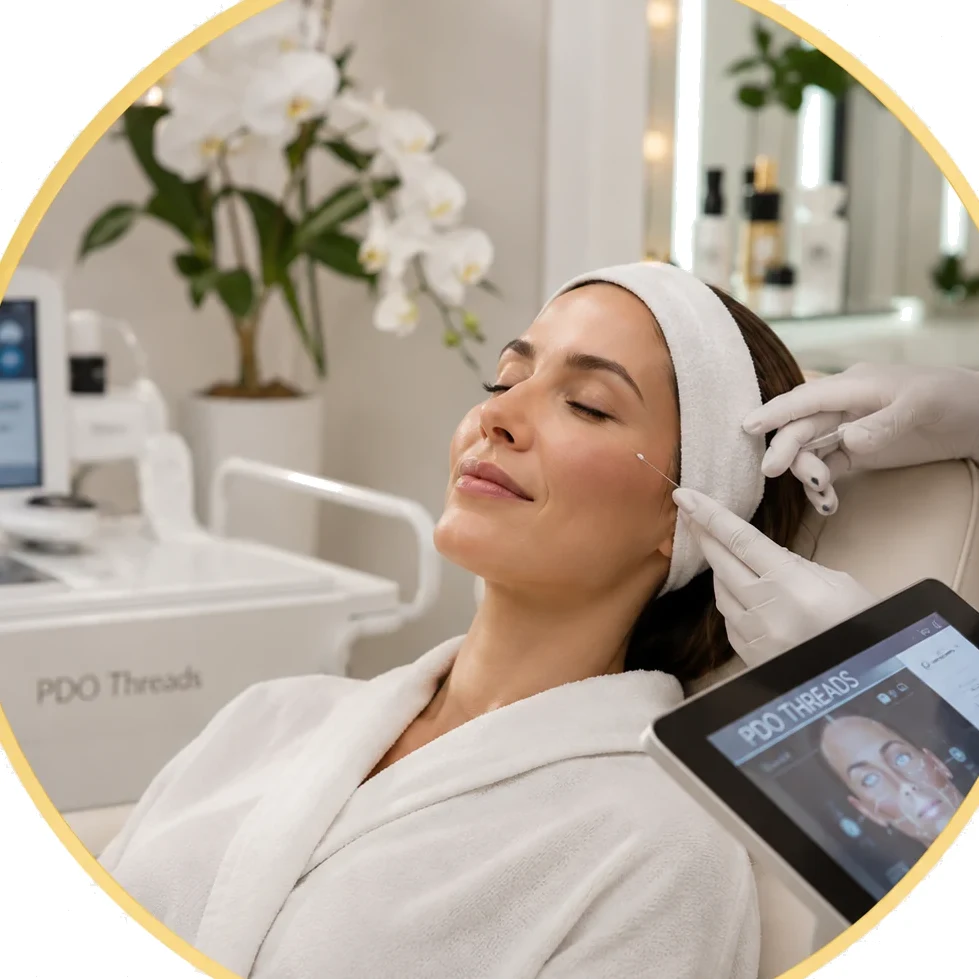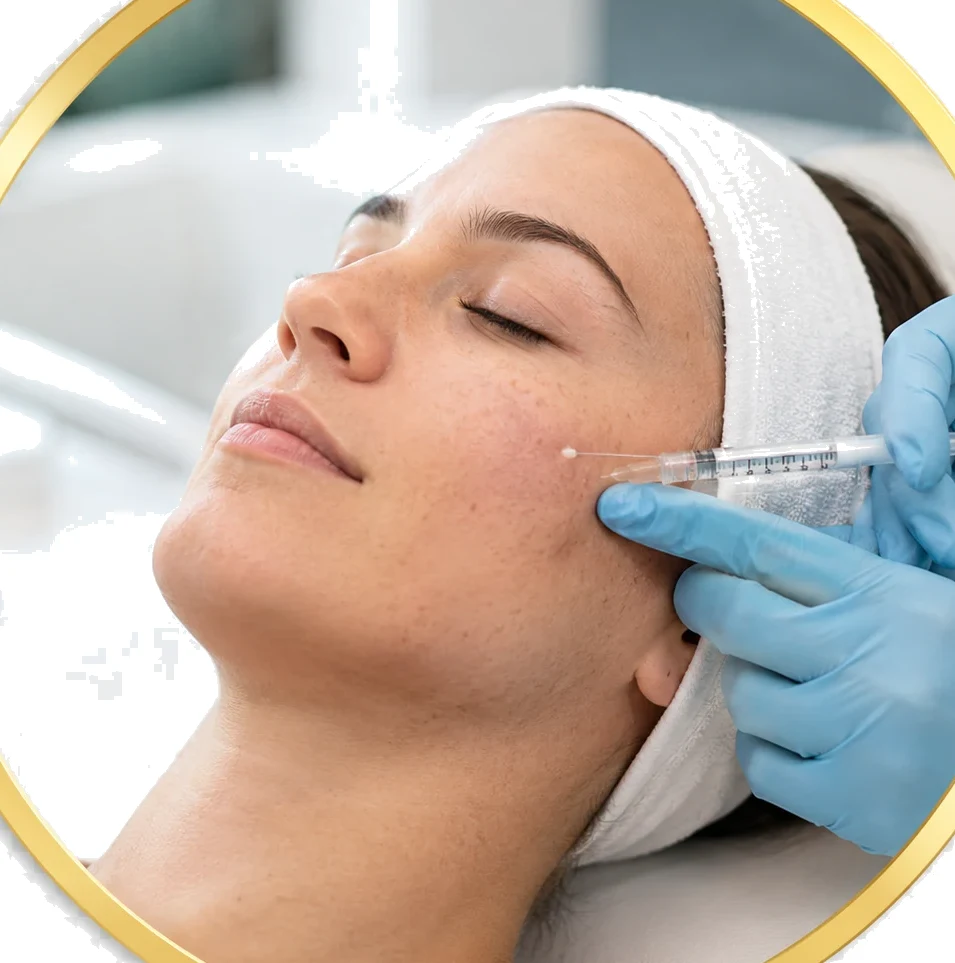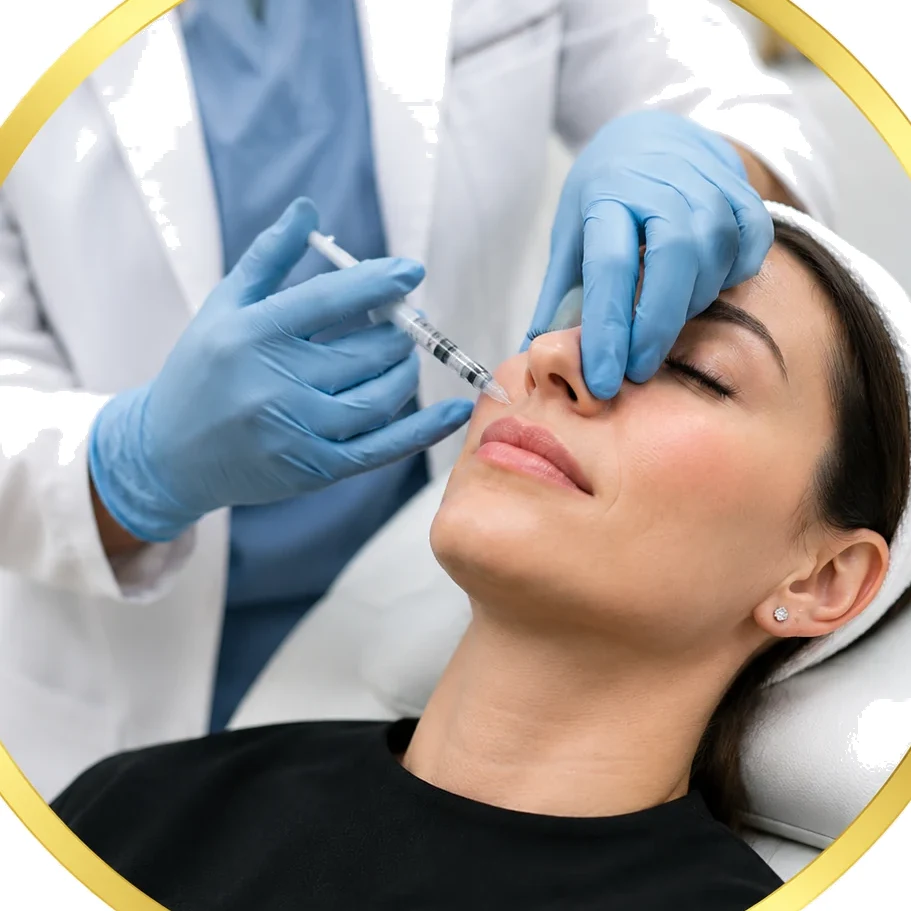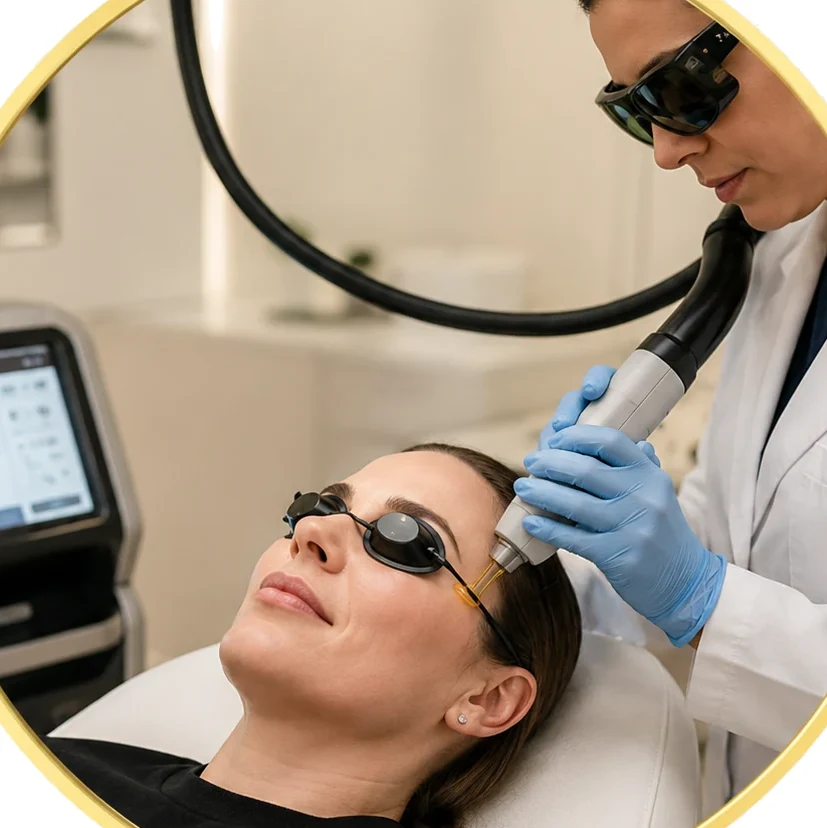

There is no single best age to start preventative Botox. The right time depends on when dynamic lines start lingering after your face relaxes, not on turning a specific number. Most clinicians see this happen somewhere between the mid-to-late 20s and early 30s, but individual skin type, muscle strength, and sun exposure matter more than the calendar. A proper consultation, not a birthday, should make the call.
TL;DR:
- Preventative Botox is typically considered when dynamic lines remain visible at rest, often in the late 20s or early 30s, depending on individual skin behavior.
- The treatment uses lower doses of botulinum toxin to soften muscle activity and slow wrinkle progression, but it cannot stop overall skin aging caused by sun damage or volume loss.
- Long-term effectiveness is supported mainly by observational studies, with about 0.5% of patients developing resistance over repeated treatments, but robust long-term evidence is limited.
- Proper practitioner qualification, product licensing, and personalized treatment planning are essential to safety and achieving natural results.
- Combining Botox with skin health measures like sun protection, retinoids, and skincare can optimize aging prevention without solely relying on injections.
Table of Contents
- What preventative Botox age guidance actually means
- When to consider starting: signs and personal factors
- How Botox prevents ageing: mechanism and realistic timelines
- Is preventative Botox worth the risk? Safety and long-term questions
- Treatment cadence: how often and for how long
- What does preventative Botox cost over time?
- Alternatives that support skin health without injections
- How Nexgen Clinic approaches preventative aesthetics
- A measured, consultation-first view
- Ready to talk to a practitioner about your own skin?
- Sources
- FAQ
What preventative Botox age guidance actually means
Preventative Botox is the targeted use of a neuromodulator to reduce repetitive muscle movement before it carves permanent creases into the skin. It is not a different drug or a special formulation. It is the same botulinum toxin used in corrective treatments, applied earlier and usually in smaller doses, before lines become etched in at rest.
The distinction between preventative and corrective use comes down to timing and intent. Corrective Botox treats lines that are already visible when your face is still. Preventative Botox targets the muscle movement that creates those lines in the first place, aiming to slow the transition from a dynamic wrinkle, one that appears only when you frown or squint, into a static one that stays put.
That word "slow" matters. Preventative Botox does not stop ageing. It has no effect on photoageing from sun damage, no effect on the gradual loss of facial volume, and no effect on skin laxity as collagen production declines. The Cleveland Clinic notes that preventative use can soften targeted expression lines and may slow their progression, but the effects are temporary and the evidence is mixed rather than settled. A person who starts injections at 27 but ignores sunscreen will still see sun-driven changes progress underneath the treated muscles.
Understanding this limitation is the first step to using the treatment sensibly. It is one tool among several, best combined with sun protection and good skincare rather than treated as a stand-alone solution to ageing skin.
When to consider starting: signs and personal factors
The clinical trigger clinicians look for is a dynamic line that stays visible even when your face is at rest. If your forehead still shows horizontal creases after you stop raising your eyebrows, or if frown lines between your brows do not fully soften once you relax your expression, that is the signal worth discussing with a practitioner, according to Geisinger.
Age alone tells you very little. Two people can be the same age with completely different skin behaviour depending on:
- Skin type and thickness — thinner skin creases faster under repeated muscle contraction
- Family history — if a parent developed deep forehead lines young, you may follow a similar pattern
- Sun exposure history — years of unprotected exposure accelerate both static and dynamic wrinkling
- Facial anatomy — strong, expressive muscles (frequent frowning, squinting, or animated expression) create lines earlier
- Lifestyle factors — smoking and significant sun exposure both speed up the breakdown of collagen and elastin
Clinicians commonly cite the late 20s to early 30s as a typical window for prevention when these indicators appear, though the range exists precisely because it depends on the person, not a fixed schedule, per the ASPS. Practitioners are often reluctant to treat anyone under 25 unless the clinical signs are pronounced, since facial maturation and skin elasticity at that age usually mean the muscle movement has not yet caused any lasting change.
If you are weighing up a consultation, come prepared. A good practitioner will want to see your face at rest and in motion, so bringing a few recent photos in natural light, without filters, that show your resting expression helps establish a baseline. Worth asking at that first appointment:
- Which specific lines are dynamic versus already static?
- What dose would be used, and how does that compare with corrective treatment?
- How will progress be reviewed, and at what interval?
- What happens if you decide to stop treatment later?
A Cambridge-based consultation that walks through these questions properly is a good sign of a clinic taking an individualised approach rather than pushing a standard package.
How Botox prevents ageing: mechanism and realistic timelines
Botulinum toxin works by blocking the nerve signals that tell a muscle to contract. Reduced contraction means less repeated folding of the skin above that muscle. Fewer folds over months and years mean less mechanical stress on collagen and elastin fibres in that specific area. That is the entire mechanism, and it explains why preventative use is targeted, not systemic.
Onset typically begins within 3 to 5 days, with full effect visible around the 2-week mark. Most people see the treatment last 3 to 4 months before muscle activity gradually returns, which is why how long Botox lasts is such a common question at first consultations. This is not a one-off procedure. It is a treatment with a defined, temporary window.
Preventative protocols usually rely on what practitioners informally call "baby Botox", meaning a lower dose spread more conservatively than the amount used for established, deeper lines. The goal is softened muscle activity, not full immobilisation. Done well, this preserves natural expression rather than freezing it, which matters enormously for people in their 20s and early 30s who still want their face to move normally in conversation and photographs. Natural-looking results depend heavily on getting this dose calibration right.
Expect subtle softening, not dramatic transformation. If a line is already fully static, preventative-style dosing will do little for it. That is a corrective conversation, requiring a different plan entirely.
Is preventative Botox worth the risk? Safety and long-term questions
Common side effects are usually mild and short-lived: temporary bruising at the injection site, mild headache, or slight asymmetry in expression while the toxin settles. Seek urgent medical attention if you experience difficulty swallowing, breathing problems, or drooping that spreads well beyond the treated area, all rare but serious signs that need immediate review.
Statistic callout: A 2023 meta-analysis estimated the incidence of neutralising antibody formation, the body building resistance to the toxin, at around 0.5% among treated patients. It is uncommon, but it is a real consideration for anyone planning years of repeated treatment.
The bigger honest gap is long-term evidence. Most support for preventative Botox's wrinkle-slowing effect comes from small observational studies and case series, not large randomised controlled trials, according to a review of long-term evidence. Observational reports, including some twin studies, suggest reduced wrinkle severity among long-term users, but that is not the same as controlled proof, a distinction worth sitting with before committing to years of treatment.
Before choosing where to have this done, a short safety checklist helps:
- Confirm the practitioner is a qualified, regulated clinician, not an unlicensed operator
- Ask where the product comes from and confirm it is a licensed, traceable brand
- Check that aftercare guidance and follow-up review are built into the plan
- Be wary of any clinic pushing treatment without examining your specific lines first
The UK government has consulted on unregulated cosmetic procedures, a reminder that this sector still has gaps in oversight. Choosing a properly regulated provider is not optional caution, it is the baseline.
Treatment cadence: how often and for how long
Most practitioners start with a review at the 3 to 4 month mark, the point at which the initial dose is wearing off, to assess how your muscles have responded and whether the pattern of lines has changed at all. From there, the plan is rarely fixed. It evolves.
- Initial treatment and 3 to 4 month review — establishes your baseline response and how your face carries the dose
- Adjusted dosing over the following year — some people need less as muscle memory of the movement weakens; others need a slightly different distribution
- Long-term personalisation — by your third or fourth round, most people and their practitioner have a clear sense of what interval and dose keeps results looking natural without over-treating
Behavioural adjuncts can reduce how often you need to sit in the chair at all. Consciously softening habitual expressions, wearing sunglasses to cut down squinting, and using SPF daily all reduce the mechanical strain that creates the lines you are trying to prevent in the first place.
Pro Tip: Keep a simple photo record every few months, same lighting, same angle, resting expression. It is the easiest way to see whether treatment is actually changing your pattern of lines or whether you are treating out of habit rather than need.
What does preventative Botox cost over time?
Cost depends on the injector's experience, the product brand used, the number of units required, and where the clinic is located. Preventative treatment generally uses fewer units than corrective work on established lines, which usually makes it less expensive per session, though sessions repeat.
At Nexgen Clinic, anti-wrinkle injections are priced according to the treatment plan agreed at consultation, with full details available on request. Budgeting for preventative use means thinking in yearly terms rather than per session. Three to four sessions a year, sustained over a decade, adds up meaningfully more than most people expect when they only price out the first visit.
One practical way to spread that spend is to prioritise skin-health foundations, like Profhilo or topical regenerative treatment, in the years before you need frequent toxin sessions, then layer in Botox only once a genuine dynamic line appears.
Alternatives that support skin health without injections
Injections are not the only lever, and for many people in their 20s, they should not be the first one pulled. Daily broad-spectrum sun protection remains the single most evidence-backed way to slow the formation of new lines, since UV exposure drives most of the collagen breakdown that ages skin ahead of schedule.
Beyond sunscreen, several approaches address the same goal from different angles:
- Topical retinoids support collagen turnover and improve texture over months of consistent use
- Antioxidant serums (vitamin C is the most studied) help protect against everyday environmental damage
- Skin boosters and polynucleotides improve hydration and skin quality from within rather than relaxing muscle movement
- Peels and laser treatments address texture, tone, and early sun damage directly
- Sleep, hydration, and smoking cessation all measurably affect how skin ages, often more than people assume
Combined approaches work best when they are sequenced sensibly: skin health first, targeted muscle-relaxing treatment only once a genuine dynamic line justifies it. A broader look at anti-wrinkle alternatives is worth reading before deciding injections are the right first move for you.
How Nexgen Clinic approaches preventative aesthetics
Specialised aesthetic clinics offer personalised treatment plans using advanced skin analysis technology to address individual skin concerns and ageing patterns. Rather than defaulting every consultation to a prescription of Botox, the assessment process uses skin analysis alongside a doctor-led review of your specific lines to decide whether to treat now, monitor and review later, or recommend a non-injectable route first.
That distinction, treat, watch, or redirect, is the practical output of a proper preventative aesthetics assessment, and it reflects the same evidence-led thinking this article has walked through: age is a starting point for conversation, not a prescription.
A measured, consultation-first view
My honest read on this: treat a need, not a trend. The evidence supports softening genuine dynamic lines early, but it does not support treating on a schedule set by other people's starting age. Get an assessment, understand your own skin, and let that decide.
— Ms Sandra Petraskaite
Ready to talk to a practitioner about your own skin?
If you have read this far, you already know the honest answer isn't a number, it's what your own face is actually doing. Nexgen Clinic's consultation-led approach means an assessment starts with AI-driven skin analysis and a doctor-led look at your specific lines, not a standard package sold to everyone who walks through the door.
A first appointment at Nexgen Clinic typically includes a full skin assessment, a discussion of which lines are dynamic versus static, and an honest conversation about whether treatment is actually needed yet or whether monitoring and skin-health measures make more sense for now. If injections are appropriate, you will get a personalised plan rather than a fixed dose applied regardless of your anatomy. You can find full details and book directly via the anti-wrinkle injections page, where current information on the consultation process and next steps is kept up to date.
This article is general information, not a substitute for advice from a qualified doctor. Consult a qualified healthcare professional about your own circumstances before acting on anything here.
Sources
- Preventative Botox long‑term evidence (PMCID PMC12372128)
- Best age to start Botox | Geisinger
- Does Preventative Botox Work? | Cleveland Clinic
- Does preventative Botox really work? | Allure
FAQ
Will I look older when Botox wears off?
No, your face returns to how it would have looked anyway; Botox does not accelerate ageing once it stops working. Muscle movement simply resumes at its previous level, and any lines that were genuinely dynamic will reappear until treated again.
Is 40 too late to start Botox?
No. Preventative Botox specifically targets lines before they become static, so starting in later adulthood shifts the focus toward corrective rather than preventative use, but the treatment itself remains appropriate at almost any adult age with a proper assessment.
What happens after 10 years of Botox?
Long-term users in observational reports, including some twin studies, show reduced wrinkle severity compared with untreated peers, according to Allure's coverage of preventative Botox research. That said, this comes from observational data rather than randomised trials, so results vary by individual and by how consistently treatment was maintained.
Is preventative Botox worth it?
That depends on whether you already have dynamic lines that linger at rest; if you do, evidence suggests it can soften them and may slow progression. If you don't yet show those signs, most practitioners at Nexgen Clinic would recommend monitoring and skin-health measures first rather than treating pre-emptively.
What is the best age to start preventative Botox?
There isn't one fixed age; clinicians commonly see the late 20s to early 30s as a typical window when dynamic lines start staying visible at rest, per Geisinger. The decision should follow your own skin's behaviour rather than a birthday.
Recommended
- What age should you start skin boosters?
- Skin Longevity Prejuvenation Guide for Your 20s and 30s
- Botox alternatives: 9 effective options for smoother skin
Ready to explore your options?
Speak with a NexGen clinician for a personalised consultation. We’ll listen, assess, and recommend the safest and most effective route — always led by evidence, always tailored to you.
Book a consultation or get in touch with our Cambridge team.